


Pyrroloquinoline quinone, or PQQ, delivers its most consistent human benefits in cognitive performance, with a double-blind, placebo-controlled trial showing that 20 mg/day for 12 weeks produced statistically significant improvements in attention, processing speed, and verbal memory in adults aged 20–65. Preclinical evidence for metabolic and mitochondrial effects is strong, but human data in those areas remains preliminary. PQQ is generally well-tolerated at clinical doses, with mild GI upset as the most commonly reported side effect. Long-term safety data in humans is limited, and use during pregnancy or lactation is not recommended.
The clearest signals from human research:
- Cognition: Replicated in small-to-moderate RCTs at 10–20 mg/day over 8–12 weeks; the most evidence-supported benefit area.
- Energy and fatigue: Small open-label studies report reduced subjective fatigue, but placebo-controlled confirmation remains limited.
- Metabolic markers: Animal models show meaningful effects on insulin sensitivity and fat metabolism; human pilot data is emerging but not conclusive yet.
- Safety: No consistent hepatotoxic signal in trials; avoid in pregnancy and lactation until more data exists.
Key Takeaways
PQQ’s most evidence-supported benefit is cognitive performance, with 20 mg/day over 12 weeks producing statistically significant improvements in attention, processing speed, and verbal memory in a placebo-controlled trial.
| Point | Details |
|---|---|
| Strongest evidence area | Cognitive performance (attention, processing speed, verbal memory) at 20 mg/day over 8–12 weeks. |
| Mechanism distinction | PQQ stimulates mitochondrial biogenesis via PGC-1α; CoQ10 supports existing mitochondrial function — making them complementary. |
| Metabolic claims are preliminary | Animal models show strong metabolic effects; human data on insulin sensitivity and fat metabolism remains limited. |
| Safety profile | Generally well-tolerated at 10–20 mg/day; avoid in pregnancy and lactation; long-term human data beyond 12 weeks is lacking. |
| Superiorformulas quality standard | Physician-formulated, GMP-certified, third-party tested PQQ disodium salt at clinically relevant doses. |
Table of Contents
- What is PQQ and where does it come from?
- How does PQQ affect mitochondria and cellular signaling?
- What does human trial evidence show for each benefit area?
- What do animal and cell studies show, and how much does that translate?
- What dose of PQQ do clinical trials actually use?
- Is PQQ safe, and what are the known side effects?
- How do you choose a PQQ supplement worth taking?
- What research gaps still need to be filled?
- An editorial perspective on when PQQ is worth trying
- Superiorformulas and physician-formulated PQQ supplementation
- Sources
What is PQQ and where does it come from?
Pyrroloquinoline quinone is a small, redox-active quinone molecule first identified as a bacterial enzyme cofactor. Researchers initially speculated it might qualify as a new human vitamin, but current evidence classifies it as a “vitamin-like” accessory factor rather than an essential nutrient. Humans do not synthesize PQQ endogenously in meaningful amounts, yet it appears in trace quantities across a wide range of foods and in breast milk, suggesting a biological role that researchers are still characterizing.
Natural dietary sources include:
- Natto (fermented soybeans): among the richest known food sources
- Kiwi fruit, green peppers, and parsley: moderate concentrations
- Green tea and spinach: lower but measurable levels
- Human breast milk: contains PQQ, pointing to potential developmental relevance
Typical dietary intake from food is estimated in the low microgram range, well below the 10–20 mg doses used in clinical trials. That gap is why supplementation is the focus of most research. The ingredient form used in commercial supplements and clinical studies is PQQ disodium salt, a water-soluble, orally bioavailable compound. UC Berkeley’s chemistry coverage describes PQQ as a “longevity vitamin” in popular science contexts, though that label outpaces the current human evidence.
How does PQQ affect mitochondria and cellular signaling?
PQQ’s biological plausibility rests on three converging mechanisms, each with solid preclinical support and growing human relevance.
Mitochondrial biogenesis via PGC-1α
Mitochondria are the organelles responsible for producing ATP, the cell’s primary energy currency. PQQ activates a signaling cascade involving CREB and DJ-1 proteins that ultimately upregulates PGC-1α, a master regulator of mitochondrial biogenesis. In practical terms, this means PQQ may stimulate cells to build more mitochondria, not just support the ones already present. That distinction separates it mechanistically from CoQ10, which supports electron transport efficiency within existing mitochondria. The two compounds target different points in the same system, which is why they are often combined in longevity protocols.
Redox and antioxidant activity
PQQ functions as a catalytic antioxidant, meaning it can cycle through multiple redox reactions without being consumed. This allows it to neutralize reactive oxygen species (ROS) repeatedly, unlike conventional antioxidants that are used up in a single reaction. A comprehensive review confirms PQQ’s antioxidant properties and its capacity to reduce oxidative stress markers and inflammatory signaling. For adults concerned about cellular aging, this catalytic quality is one of PQQ’s more distinctive features. You can read more about how cellular antioxidants support longevity in the broader context of aging biology.

Neurotrophic signaling
PQQ stimulates nerve growth factor (NGF) production and activates CREB-dependent pathways involved in synaptic plasticity. NGF supports the maintenance and growth of neurons, which is directly relevant to cognitive function and neuroprotection. This mechanism provides a plausible biological explanation for the cognitive improvements observed in human trials.
Mechanism summary:
| Pathway | Effect | Relevance |
|---|---|---|
| PGC-1α activation | Increased mitochondrial number | More cellular energy capacity |
| Catalytic redox cycling | Reduced ROS and inflammation | Slower oxidative cellular aging |
| NGF/CREB stimulation | Synaptic plasticity support | Improved cognitive function |
Pro Tip: PQQ’s catalytic antioxidant activity sets it apart from single-use antioxidants like vitamin C. One PQQ molecule can complete thousands of redox cycles, making it unusually efficient per unit dose.
What does human trial evidence show for each benefit area?
This is where the evidence gets specific, and where separating replicated findings from preliminary signals matters most.
Cognition: the strongest human signal
The most rigorous human data comes from a double-blind, placebo-controlled RCT in which adults aged 20–65 received 20 mg/day PQQ for 12 weeks. Composite cognitive scores improved significantly, with effects on attention, processing speed, and verbal memory appearing at both the 8-week and 12-week assessments. Age-stratified analysis showed effects across the adult age range, not only in older participants. Evidence strength: moderate — replicated small RCTs.
Energy and fatigue: promising but limited
Small open-label studies and non-randomized reports describe reductions in subjective fatigue and improved energy perception with PQQ supplementation. These findings are directionally consistent with the mitochondrial biogenesis mechanism, but the absence of adequate placebo controls in most fatigue studies limits confidence. Evidence strength: weak — open-label and non-controlled studies.
Metabolic markers and insulin sensitivity
Preclinical rodent data shows meaningful improvements in glucose tolerance and insulin sensitivity with PQQ supplementation. Human pilot data on metabolic biomarkers is emerging but not yet replicated in adequately powered trials. Evidence strength: weak to preliminary — animal-backed with limited human pilot data.
Cardiovascular and inflammatory markers
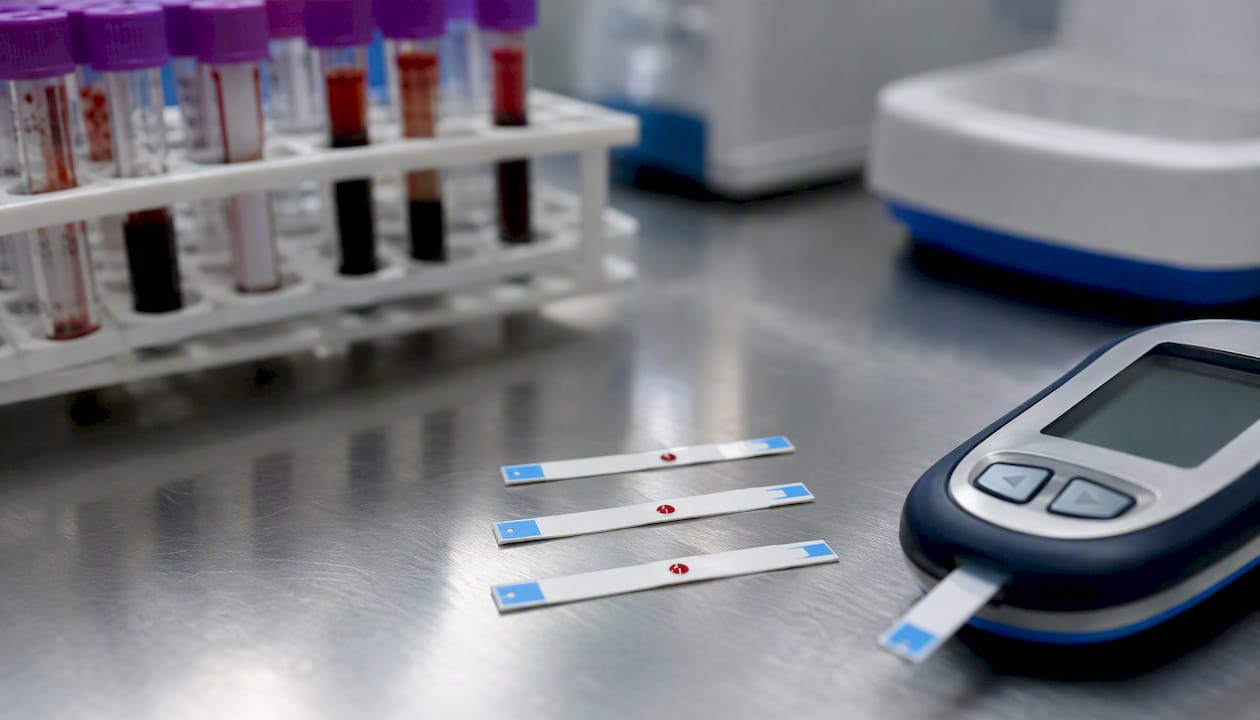
Some biomarker studies report reductions in CRP and IL-6 with PQQ supplementation, consistent with its antioxidant and anti-inflammatory mechanisms. No clinical cardiovascular endpoints (events, hospitalizations) have been studied in humans. Evidence strength: preliminary — biomarker-level only.
Key trial data at a glance:
A systematic review categorizes PQQ as a compound with strong preclinical data but limited large-scale human trials, recommending it be treated as an experimental mitochondrial-support supplement pending larger studies.
What do animal and cell studies show, and how much does that translate?
Preclinical evidence for PQQ is genuinely compelling. Rodent studies in diet-induced obesity models show that PQQ supplementation increases mitochondrial number, enhances fatty-acid oxidation, reduces visceral and hepatic fat accumulation, and improves insulin sensitivity. These are not trivial effects in animal models, and they align precisely with the PGC-1α mechanism described above.
Cell culture experiments also show neuroprotective effects, including reduced neuronal death under oxidative stress conditions. Cancer model data from cell lines suggests PQQ may influence tumor cell metabolism, though this line of research is early-stage and far from clinical application.
Where preclinical evidence is strong:
- Mitochondrial biogenesis and increased mitochondrial density
- Fatty-acid oxidation and fat metabolism in high-fat-diet models
- Reduced markers of oxidative stress and inflammation
- Neuronal survival under stress conditions
Where translation to humans is uncertain:
- Animal doses often exceed human-equivalent doses significantly
- Surrogate endpoints in animals do not guarantee clinical outcomes in people
- Cancer model findings from cell lines are mechanistic hypotheses, not treatment evidence
Preclinical data tells you a mechanism is biologically plausible and worth studying in humans. It does not confirm that a supplement will produce the same effect in a person taking 20 mg/day. The gap between a rodent high-fat-diet model and a healthy adult’s metabolic biology is real and should temper expectations for metabolic and longevity claims specifically.
What dose of PQQ do clinical trials actually use?
The evidence base for PQQ dosing in humans is relatively narrow but consistent. Most trials that showed cognitive or fatigue-related effects used 10–20 mg/day, with 20 mg/day being the dose in the most rigorous cognition RCT. Effects in trials generally emerge after several weeks, suggesting a minimum trial period of 8–12 weeks may be appropriate to assess response.
Practical dosing reference:
| Dose Range | Context | Notes |
|---|---|---|
| 10 mg/day | Starting dose; used in some fatigue studies | Well-tolerated; reasonable starting point |
| 20 mg/day | Primary cognition RCT dose | Most evidence-supported for cognitive outcomes |
| Above 20 mg/day | Not well-studied in humans | No established benefit over 20 mg; avoid until more data |
The supplement form used in virtually all human trials is PQQ disodium salt, which offers reliable oral bioavailability. Products using other forms or undisclosed ingredient sources should be viewed with caution.
PQQ vs CoQ10: complementary, not competing
PQQ stimulates mitochondrial biogenesis, building new mitochondria. CoQ10 supports electron transport efficiency within existing mitochondria. These are distinct mechanisms operating at different points in the same energy production system, which is why combining them is mechanistically rational. Many longevity-focused protocols pair PQQ with CoQ10 and an NAD precursor (such as NMN or NR) to address mitochondrial quantity, efficiency, and the NAD-dependent repair pathways simultaneously.
Pro Tip: If you are already taking CoQ10 and want to add PQQ, start at 10 mg/day for the first four weeks before moving to 20 mg/day. This lets you isolate any tolerability issues before reaching the full clinical dose.
For a broader look at how longevity nutrients work together, the science behind stacking strategies is worth reviewing before building a protocol.
Is PQQ safe, and what are the known side effects?
PQQ has a generally favorable tolerability profile in the doses studied clinically. The most commonly reported side effects are mild gastrointestinal symptoms, including nausea and stomach discomfort, typically at doses above 20 mg/day. No consistent hepatotoxic signal has appeared in human trials, though long-term safety data extending beyond 12 weeks in broad populations is not yet available.
Reported side effects and safety considerations:
- GI upset: Most common at higher doses; usually resolves with dose reduction or food co-administration.
- Liver concerns: No hepatotoxicity confirmed in human trials; precautionary monitoring is reasonable for long-term use.
- Drug interactions: Theoretical cautions exist with anticoagulants and blood-pressure medications due to PQQ’s effects on cellular signaling. Consult a clinician before combining with these drug classes.
- Pregnancy and lactation: Insufficient human safety data. Avoid PQQ supplementation during pregnancy or while breastfeeding.
- Pediatric use: No adequate safety data in children. Not recommended.
The FDA expects manufacturers of dietary ingredients to demonstrate safety and maintain transparent labeling and manufacturing controls. When evaluating any PQQ supplement, FDA dietary supplement guidance makes clear that the burden of safety evidence rests with the manufacturer — not the consumer. That standard should inform which products you choose.
Red flags that warrant stopping and consulting a clinician:
- Persistent nausea, abdominal pain, or jaundice
- Unusual fatigue or changes in urine color (potential liver signals)
- Any new symptom that begins within days of starting PQQ
This article provides general health information and is not a substitute for professional medical advice. Confirm supplement choices with a qualified clinician, especially if you take prescription medications.
How do you choose a PQQ supplement worth taking?
The supplement market for PQQ varies considerably in quality, and label claims do not guarantee what is actually in the capsule. A structured checklist protects you from products that underdeliver or carry unnecessary risk.
Quality checklist for selecting a PQQ supplement:
- Ingredient form: Confirm the label specifies PQQ disodium salt — the form used in clinical trials and with established bioavailability.
- Dose per serving: Look for 10–20 mg per capsule, matching the clinical trial range. Products with vague “proprietary blend” dosing should be avoided.
- Third-party certificate of analysis (COA): A COA from an independent lab confirms potency, purity, and absence of heavy metals or microbial contamination. Ask for it or look for it on the brand’s website.
- GMP-certified manufacturing: Good Manufacturing Practice certification means the facility meets FDA-regulated production standards.
- Transparent sourcing: The label or brand website should disclose the ingredient origin and manufacturing location.
- Absence of unnecessary additives: Fillers, artificial colors, and undisclosed excipients add risk without benefit.
- Batch testing for heavy metals and microbial contamination: Particularly relevant for plant-derived ingredients and fermentation-derived compounds like PQQ.
Pro Tip: A COA dated within the last 12 months, from a recognized third-party lab (such as NSF International or Eurofins), is the single most reliable quality signal you can check before purchasing any supplement.
Superiorformulas manufactures its formulations in GMP-certified facilities with third-party testing for purity and potency, reflecting the physician-formulated standard the brand was built on. For adults 35 and older navigating phytonutrients and aging, product quality is not a secondary concern — it is the foundation.
What research gaps still need to be filled?
PQQ’s evidence base is genuinely promising, but several critical questions remain unanswered. Understanding these gaps helps you calibrate expectations and follow the field as it develops.
- Long-term safety: No human trials have tracked PQQ supplementation beyond 12 weeks in broad populations. Chronic use safety, particularly for liver function and hormonal signaling, requires longer study.
- Dose-response relationships: The field lacks a clear dose-response curve in humans. Whether 10 mg produces half the effect of 20 mg, or whether there is a threshold effect, is not established.
- Clinical endpoints vs surrogate markers: Most human trials measure biomarkers (cognitive test scores, CRP levels) rather than clinical outcomes (dementia incidence, cardiovascular events, diabetes diagnosis). The gap between a biomarker improvement and a meaningful disease outcome is significant.
- Special populations: Pregnant women, children, people with advanced liver disease, and older adults with polypharmacy have essentially no dedicated safety or efficacy data.
- Optimal stacking protocols: The mechanistic rationale for combining PQQ with CoQ10 and NAD precursors is sound, but no adequately powered RCT has tested a combination protocol against individual components in humans.
An editorial perspective on when PQQ is worth trying
The evidence for PQQ sits in a place that requires intellectual honesty: strong enough to be worth serious attention, not strong enough to make sweeping claims. The cognitive data is the most defensible starting point. A replicated, placebo-controlled trial showing improvements in attention and processing speed at 20 mg/day over 12 weeks is meaningful, even if the effect sizes are modest. For a health-conscious adult aged 35 or older who is already managing sleep, diet, and exercise, adding a well-sourced PQQ supplement at 10–20 mg/day represents a reasonable, low-risk experiment with a plausible mechanism behind it.
What I find underappreciated in most PQQ coverage is the catalytic antioxidant distinction. Most antioxidant supplements are consumed in the reaction they participate in. PQQ cycles repeatedly, which means its cellular impact per milligram is structurally different from, say, vitamin C or vitamin E. That property alone makes it worth understanding, even if the clinical evidence is still catching up to the preclinical biology.
The metabolic and longevity claims deserve more caution. Rodent data on visceral fat and insulin sensitivity is compelling in its own right, but the dose-scaling problem and the difference between a high-fat-diet mouse model and a human adult’s metabolic environment are real. Treating PQQ as a proven metabolic intervention would be premature. Treating it as a promising mitochondrial-support compound with solid cognitive trial data and a rational safety profile is the more defensible position.
If you are considering a PQQ protocol, pair it with CoQ10, track subjective energy and cognitive clarity over 8–12 weeks, and consult a clinician if you are on anticoagulants or antihypertensives. Modest, consistent effects over weeks are the realistic expectation, not a rapid transformation.
Superiorformulas and physician-formulated PQQ supplementation
If the evidence above has you ready to trial PQQ, the quality of the product you choose determines whether you are actually replicating the clinical conditions that produced those results. Every formulation is manufactured in a GMP-certified facility, third-party tested for purity and potency, and built around clinically studied ingredient forms at evidence-based doses.
For PQQ specifically, that means PQQ disodium salt at a dose within the 10–20 mg clinical range, with no unnecessary fillers and a transparent COA available. The practical next step: start at 10 mg/day with a meal, track attention and energy over 8–12 weeks, and consult your clinician if you take blood pressure or anticoagulant medications. Browse Superiorformulas’ science-backed supplement formulations to find a PQQ product that meets the quality standard the evidence demands.
This content is informational and does not constitute medical advice.
Sources
The following peer-reviewed studies, institutional reviews, and regulatory documents support the claims in this article. Each is linked to its primary source.


