


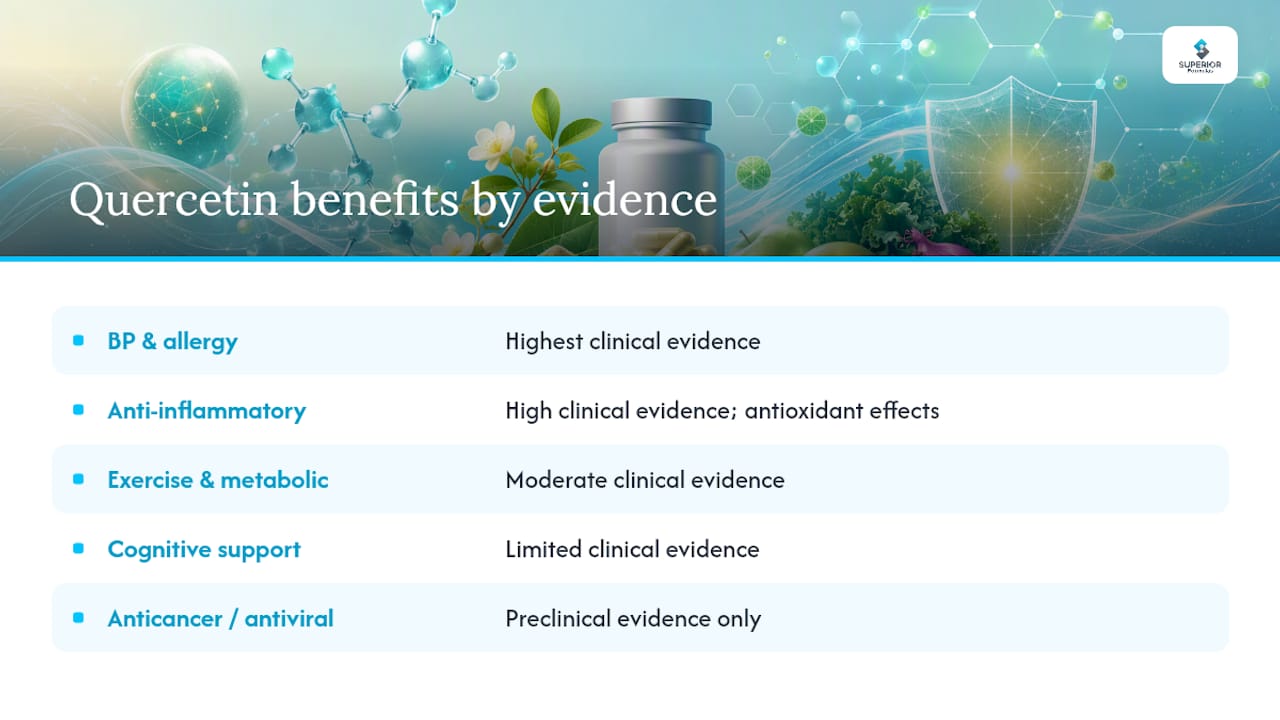
Quercetin supplements offer some of the most studied polyphenol benefits available today, with human trials supporting modest blood-pressure reduction, allergy and immune symptom relief, and meaningful antioxidant and anti-inflammatory cellular support. The overall evidence picture is mixed: antioxidant and anti-inflammatory effects are well-documented in lab settings, several small randomized controlled trials (RCTs) and meta-analyses back cardiovascular and allergy endpoints, and a large body of preclinical work points toward additional benefits that human trials have not yet confirmed.
Highest-confidence benefits at a glance:
- Allergy and immune support (small RCTs, histamine-stabilizing mechanism): quercetin appears to reduce mast-cell histamine release, with human studies reporting reduced seasonal allergy symptoms
- Blood-pressure lowering (meta-analysis of small RCTs): doses above 500 mg/day produced an average systolic reduction of approximately 5.8 mm Hg and diastolic reduction of approximately 2.6 mm Hg
- Antioxidant and anti-inflammatory cellular support (robust preclinical, some human data): quercetin modulates TNFα, IL-6, and the Nrf2 pathway, markers tied to cellular aging and chronic inflammation
- Anticancer and antiviral signals (preclinical only): promising in cell lines and animal models; human clinical evidence is insufficient to support these as established benefits
Safety caveat: Quercetin can interact with anticoagulants (such as warfarin), immunosuppressants (such as cyclosporine), and drugs metabolized by CYP enzymes. Pregnant or breastfeeding individuals, and those with significant kidney disease or complex medication regimens, should consult a clinician before starting any quercetin supplement.
Key Takeaways
Quercetin supplements have meaningful human evidence for blood-pressure support and allergy relief, but formulation quality and dose transparency determine whether you get any real systemic benefit at all.
| Point | Details |
|---|---|
| Strongest human evidence | Blood pressure (meta-analysis: ~5.8 mm Hg systolic reduction at >500 mg/day) and allergy/immune support from small RCTs. |
| Standard clinical dose | 500–1,000 mg/day in divided doses, used over 8–12 week trial periods in most human studies. |
| Formulation matters most | Phytosome or bromelain-paired formulas improve absorption over standard aglycone capsules; check the label for disclosed form and adjuncts. |
| Key safety check | Quercetin interacts with CYP-metabolized drugs, anticoagulants, and immunosuppressants; consult a clinician before starting if you take any medications. |
| Superiorformulas approach | Physician-formulated, GMP-certified, third-party tested quercetin products with transparent dosing and clinically informed polyphenol pairings for cellular health support. |
Table of Contents
- What quercetin is and where it comes from
- Quercetin supplement benefits ranked by human evidence
- How quercetin works in the body
- Dosing, formulations, and what to look for on a label
- Safety, side effects, and drug interactions
- How strong is the current evidence, and where are the gaps?
- Why formulation quality matters as much as the ingredient itself
- An editorial perspective on quercetin’s real-world value
- Superiorformulas quercetin: a clinically grounded option worth considering
- Sources
What quercetin is and where it comes from
Quercetin is a plant-derived flavonoid, a class of polyphenolic pigments responsible for the yellow and red hues in many fruits and vegetables. Its chemical designation as a flavonol places it among the most widely distributed dietary antioxidants in the human food supply. Common dietary sources include:
- Onions (especially red and yellow varieties, among the richest sources)
- Apples (concentrated in the skin)
- Berries (blueberries, cranberries, elderberries)
- Broccoli and kale
- Green and black tea
- Capers (the single highest dietary concentration per gram)
Typical dietary intake from food ranges from roughly 10–100 mg per day depending on eating patterns, well below the 500–1,000 mg/day doses used in most clinical trials. That gap is one reason supplements exist.
Chemically, quercetin in food occurs primarily as glycosides (quercetin bound to a sugar molecule), which are more water-soluble and generally better absorbed from the gut than the aglycone (free, unbound) form. Most supplement capsules and tablets use the aglycone form because it is easier to standardize and manufacture, but this comes at a bioavailability cost. PubChem’s compound entry for quercetin confirms the structural distinction and its relevance to absorption. This chemistry is exactly why formulation choices, discussed in detail below, matter so much when selecting a supplement.
Quercetin supplement benefits ranked by human evidence
Not all quercetin benefits are equal. Here is what the clinical record actually supports, organized by endpoint and evidence strength.
1. Allergy and immune support
Evidence level: Small RCTs, mechanistic support
Quercetin stabilizes mast cells, the immune cells that release histamine during allergic responses. Human trials have shown reductions in nasal allergy symptoms and improved immune markers, though most studies are small and short-term. WebMD’s clinical summary notes that quercetin is widely used for allergy support while cautioning that it is not a replacement for medical treatment and that human effects remain incompletely defined.
2. Blood pressure and cardiovascular markers
Evidence level: Meta-analysis of small RCTs
This is quercetin’s strongest human evidence base. A pooled analysis of multiple small trials found that doses above 500 mg/day reduced systolic blood pressure by an average of approximately 5.8 mm Hg and diastolic by 2.6 mm Hg. These reductions are clinically modest but meaningful for individuals managing borderline hypertension. The proposed mechanism involves quercetin’s effect on endothelial nitric oxide production, which relaxes blood vessel walls. Cholesterol and triglyceride improvements have been reported in some trials, though the evidence there is less consistent.
Statistic callout: In a pooled analysis of several small human trials, quercetin at doses above 500 mg/day reduced systolic blood pressure by an average of ~5.8 mm Hg and diastolic by ~2.6 mm Hg. The trials were short-term and size-limited, so these figures should be interpreted as directional rather than definitive.
3. Anti-inflammatory and antioxidant cellular support
Evidence level: Robust preclinical, some human data
Lab studies consistently show quercetin reduces TNFα and IL-6, two cytokines central to chronic, low-grade inflammation. It also activates the Nrf2 pathway, the body’s master antioxidant regulatory switch. Human trials have reported reductions in C-reactive protein (CRP) and other inflammatory markers, though results vary by population and formulation. For readers interested in how oxidative stress connects to cellular aging, this is quercetin’s most mechanistically grounded benefit.
4. Exercise recovery and performance
Evidence level: Small RCTs, mixed results
Several trials in athletes and active adults have examined quercetin’s effect on exercise-induced inflammation, muscle soreness, and endurance markers. Some showed modest improvements in VO₂ max and reduced post-exercise oxidative stress; others found no significant effect. The heterogeneity in study design makes firm conclusions difficult, but the anti-inflammatory mechanism provides a plausible rationale.
5. Metabolic health and blood sugar
Evidence level: Preclinical, some small human trials
Human data is more limited, with a handful of small trials in people with metabolic syndrome or type 2 diabetes showing modest improvements in fasting blood sugar and insulin resistance markers. This remains an area of active research rather than established clinical guidance.
6. Cognitive and age-related support
Evidence level: Preclinical, early human signals
Quercetin’s proposed senolytic activity, its ability to selectively clear senescent (“zombie”) cells that accumulate with age, has generated significant interest in longevity research. Preclinical models show reduced neuroinflammation and improved cognitive markers. Human trials specifically targeting cognitive outcomes are limited, but the mechanistic rationale connects directly to cellular antioxidant benefits for longevity. This is a promising but still-developing area.
7. Anticancer and antiviral signals
Evidence level: Preclinical only — not established in humans
PubMed-indexed mechanistic studies document these effects in vitro and in animal models. These findings are scientifically interesting but do not establish clinical benefit in humans. Anyone considering quercetin for cancer-related reasons should do so only under oncologist guidance and should not substitute it for evidence-based treatment.
How quercetin works in the body
Quercetin’s effects trace back to several overlapping biological mechanisms. Understanding them helps explain why the same compound appears in research on allergies, cardiovascular health, and aging simultaneously.
Inflammatory cytokine modulation. Quercetin inhibits the production of TNFα and IL-6, two signaling proteins that drive chronic inflammation. It also suppresses NF-κB, a transcription factor that acts as an “on switch” for inflammatory gene expression. This is the mechanism most directly relevant to its anti-inflammatory benefits across multiple organ systems.
Nrf2 pathway activation. Nrf2 is often described as the body’s inner switch for cellular resilience. When activated, it upregulates the production of endogenous antioxidant enzymes such as glutathione peroxidase and superoxide dismutase. Quercetin is one of several polyphenols shown to activate this pathway, which is why it appears in formulations targeting antioxidant support for healthy aging.
Mast-cell stabilization. Quercetin inhibits the release of histamine and other mediators from mast cells and basophils. This is the mechanism behind its use for allergy and immune support, and it is one of the better-characterized effects in human tissue studies.
Endothelial nitric oxide support. Quercetin appears to upregulate endothelial nitric oxide synthase (eNOS), the enzyme that produces nitric oxide in blood vessel walls. Nitric oxide relaxes smooth muscle, reducing vascular resistance, which maps directly to the blood-pressure reductions seen in human trials.
Proposed senolytic activity. At higher concentrations, quercetin may selectively induce apoptosis in senescent cells, those metabolically active but non-dividing cells that accumulate with age and secrete pro-inflammatory signals. This mechanism is the basis for quercetin’s role in longevity research, often studied alongside fisetin (another flavonoid with overlapping senolytic properties). The senolytic evidence remains largely preclinical.
A 2022 review in Frontiers in Nutrition confirmed quercetin’s bioactivity across these multiple pathways while also underscoring that poor solubility limits how much of an oral dose actually reaches target tissues, which is why delivery systems matter.
Dosing, formulations, and what to look for on a label
Typical clinical dose ranges
Most human trials use a moderate daily dose often divided into two doses, over periods of several weeks. Medical News Today’s clinical summary confirms these as the standard trial parameters, with few adverse effects reported at these doses and durations. Long-term safety data above 1,000 mg/day is limited.
Formulation strategies that improve bioavailability
The aglycone form in most standard capsules has lower oral absorption than the glucoside forms naturally present in food. Examine.com’s quercetin analysis identifies co-formulation with bromelain or phytosome/lecithin delivery as the two most practical strategies to improve systemic uptake.
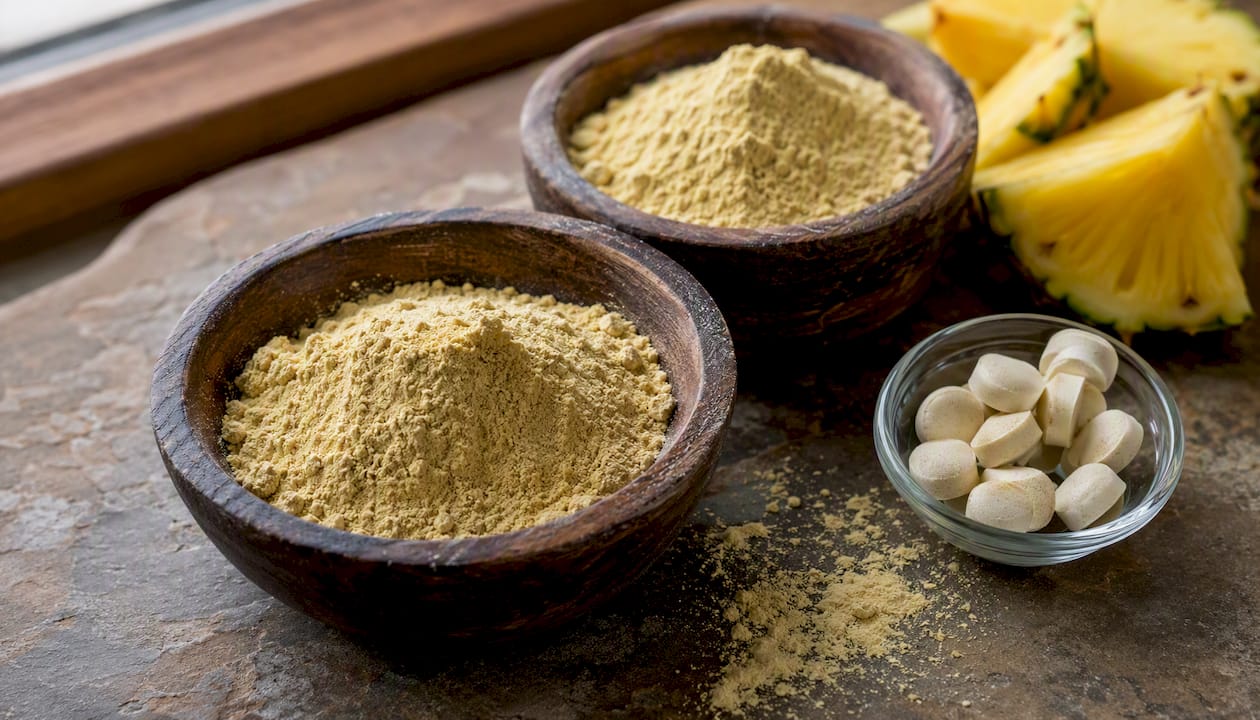
Quercetin phytosome (quercetin bound to phosphatidylcholine from sunflower or soy lecithin) significantly improves absorption by making the molecule more compatible with the gut’s lipid-based absorption pathway. Studies on phytosome formulations show meaningfully higher plasma quercetin levels compared to standard aglycone capsules.
Quercetin with bromelain is another common pairing. Bromelain, a pineapple-derived enzyme, may enhance quercetin’s anti-inflammatory effects through complementary mechanisms and may also support absorption. This combination appears frequently in allergy-focused formulations.
Vitamin C co-formulation is a third option. Vitamin C and quercetin share antioxidant pathways and may have synergistic effects on immune support. For more on how vitamin C with bioflavonoids supports these pathways, Superiorformulas covers this combination in detail.
Label checklist for buyers
When evaluating a quercetin supplement, look for:
- Formulation type disclosed: phytosome, aglycone, or glucoside form stated clearly
- Standardized quercetin content: milligrams of actual quercetin per serving, not just “quercetin complex”
- Adjunct ingredients listed: bromelain, vitamin C, or lecithin if bioavailability enhancement is claimed
- GMP-certified manufacturing: confirms production standards
- Third-party testing: independent verification of purity and potency
- No proprietary blend masking: each ingredient’s dose should be visible
Pro Tip: Take quercetin supplements with a meal that contains some dietary fat. Because quercetin is fat-soluble, food-based lipids support absorption through the lymphatic pathway, particularly for phytosome formulations.
Safety, side effects, and drug interactions
Quercetin is generally well-tolerated at the doses used in clinical trials, but several safety considerations deserve careful attention before you start supplementing.
Common side effects
- Mild gastrointestinal upset (nausea, stomach discomfort) at higher doses
- Headache, reported in some trial participants
- Tingling sensations, particularly with intravenous use (less relevant for oral supplements)
Kidney concerns with high-dose or long-term use
Case reports have raised questions about kidney stress with very high doses or prolonged use above typical trial ranges. This is not well-characterized in controlled studies, but it is a reason to stay within established trial dose ranges and not self-escalate beyond 1,000 mg/day without clinical oversight.
Drug interaction checklist
WebMD’s clinical guidance and pharmacokinetic studies identify the following interaction categories:
- CYP enzyme substrates: Quercetin inhibits CYP3A4 and CYP2C9, enzymes that metabolize a wide range of medications. This can raise blood levels of affected drugs to potentially unsafe concentrations. Common CYP3A4 substrates include statins, calcium channel blockers, and certain antihistamines.
- Anticoagulants and antiplatelet agents: Quercetin may potentiate the effects of warfarin and similar drugs, increasing bleeding risk. This interaction is clinically significant.
- Immunosuppressants: Cyclosporine metabolism may be affected, which is particularly relevant for transplant recipients.
- Blood-pressure medications: Additive effects are possible when combined with antihypertensive drugs.
Populations requiring clinician consultation before use
- Pregnant or breastfeeding individuals: Safety data is insufficient; avoid without medical supervision
- Significant kidney disease: Reduced clearance may increase exposure and risk
- Complex polypharmacy: Multiple drug interactions are possible; a pharmacist or clinician review is necessary
- Children: Pediatric dosing and safety are not established
Red-flag symptoms requiring immediate medical review
- Unexplained muscle pain or weakness
- Unusual bruising or bleeding
- New neurologic symptoms (numbness, vision changes)
- Significant changes in urine output or color
FDA dietary supplement regulations operate under DSHEA, meaning manufacturers are responsible for safety and labeling while the FDA monitors adverse events post-market. The agency does not pre-approve supplements for efficacy. This regulatory structure means the burden of evaluating quality falls on the buyer.
How strong is the current evidence, and where are the gaps?
The honest answer is that quercetin’s evidence base is promising but uneven. Here is how to read it accurately.
Where the evidence is solid: Antioxidant and anti-inflammatory mechanisms are well-characterized in biochemical and cell studies. The blood-pressure meta-analysis provides the clearest human-outcome data. Allergy symptom reduction has support from multiple small RCTs. These are reasonable endpoints to target with a quercetin supplement.
Where the evidence is preliminary: Metabolic health, cognitive support, and senolytic activity have mechanistic rationale and early human signals, but lack the large, long-term RCTs needed to establish clinical guidance. Understanding how to interpret clinical evidence in supplements helps put these gaps in context.
Recurring study limitations across the literature:
- Small sample sizes (most trials involve fewer than 100 participants)
- Short duration (8–12 weeks cannot capture long-term outcomes)
- Heterogeneous formulations and doses across studies, making direct comparisons difficult
- Reliance on surrogate markers (CRP, blood pressure) rather than hard clinical endpoints (cardiovascular events, disease incidence)
- Publication bias toward positive findings
Research questions that would change clinical guidance if answered:
- Large RCTs (500+ participants, 12+ months) examining cardiometabolic outcomes
- Head-to-head bioavailability comparisons of phytosome vs. aglycone vs. glucoside forms at equivalent doses
- Long-term safety data at doses above 1,000 mg/day
- Human trials specifically targeting senolytic endpoints with validated biomarkers
For readers weighing whether antioxidant supplementation is right for their situation, the practical recommendation is a defined trial period (8–12 weeks at a standard dose), monitoring for the specific outcome you are targeting, and reassessing with a clinician.
Why formulation quality matters as much as the ingredient itself
Given the bioavailability challenges quercetin presents, the quality of the supplement you choose is not a secondary consideration. It is central to whether you get any meaningful systemic exposure at all.
A physician-formulated product should meet the following standards, and you should be able to verify each one:
- Disclosed quercetin form: phytosome, aglycone, or glycoside, stated on the label
- Clinically informed dose range: 500–1,000 mg/day, matching the doses used in human trials
- Adjunct ingredients with rationale: bromelain, vitamin C, or lecithin included with a clear explanation of why
- GMP-certified manufacturing: third-party verified production standards
- Independent purity and potency testing: a certificate of analysis available on request
- No unnecessary fillers or proprietary blends: every ingredient and its dose visible on the label
Superiorformulas was founded by a physician-scientist and applies this clinical lens to formulation decisions. Products are manufactured in GMP-certified facilities and undergo third-party testing for purity and consistency. The brand’s approach to ingredient selection, including the use of polyphenols like quercetin alongside complementary compounds such as fisetin for cellular renewal support, reflects the kind of clinically informed pairing that the bioavailability research supports. You can review the science and quality standards behind the formulations on the Superiorformulas science page.
As with any supplement, consult your clinician before starting, particularly if you take medications or have a chronic health condition.
An editorial perspective on quercetin’s real-world value
The quercetin conversation in wellness circles tends to run in one of two directions: either it is presented as a near-universal anti-aging solution, or it is dismissed because the human trial base is not yet large enough to satisfy a cardiologist. Neither framing serves you well.
What the evidence actually supports is a compound with genuinely interesting biology, a few well-replicated human endpoints, and a formulation problem that most products on the market still handle poorly, with blood-pressure data that is real but modest. The allergy mechanism is well-characterized. The senolytic hypothesis is compelling enough that serious longevity researchers are paying attention, even if the human trials are not yet definitive.
The practical question is not “does quercetin work?” in the abstract. It is: “For which specific outcome am I taking it, at what dose and formulation, and how will I know if it is doing anything?” A reader who answers those three questions before purchasing is far more likely to have a useful experience than one who buys a generic aglycone capsule at an undisclosed dose because they read that quercetin is good for aging.
The bioavailability issue is the most underappreciated factor. Two products labeled “quercetin 500 mg” can deliver dramatically different systemic exposure depending on formulation. That gap is where physician-formulated, transparently labeled products earn their place in a serious wellness regimen.
Superiorformulas quercetin: a clinically grounded option worth considering
If you have read this far, you understand that quercetin’s value depends heavily on formulation quality and dose transparency. Superiorformulas addresses both directly.
The brand’s quercetin-containing formulations are physician-designed to match clinically studied dose ranges, pair quercetin with complementary polyphenols such as fisetin for cellular renewal support, and use manufacturing standards (GMP-certified, third-party tested) that verify what is on the label is actually in the capsule. This is not a medical claim. It is a quality standard that the research on bioavailability makes genuinely relevant.
Superiorformulas sells these products directly and discloses that relationship transparently. Supplements support wellness; they are not replacements for medical care. If you take medications or manage a chronic condition, confirm with your clinician that quercetin is appropriate for your situation before purchasing.
To review the clinical rationale behind the formulations and the quality standards applied to every product, visit the Superiorformulas science page.
Sources
The following authoritative sources were used in preparing this article. Each is worth bookmarking if you want to go deeper on specific claims.
- Quercetin: Benefits, Foods, and How to Increase Your Intake
- WebMD: Quercetin uses and risks
- Promising bioactive properties of quercetin for potential food applications and health benefits: A review
- Pubmed
- FDA — Dietary supplements
This article is general information, not a substitute for advice from a qualified doctor. Consult a qualified healthcare professional about your own circumstances before acting on anything here.


