


Nutraceuticals for aging support are dietary compounds that target specific biological pathways linked to healthy aging, including mitochondrial function, muscle preservation, and skin hydration. The term “nutraceutical” sits at the intersection of nutrition and pharmaceuticals, and the industry now uses it to describe food-derived bioactives with clinically measurable effects. For adults 35 and older, the most relevant compounds include NAD+ precursors like nicotinamide riboside (NR) and nicotinamide mononucleotide (NMN), creatine, collagen peptides, polyphenols such as piceatannol, and antioxidant combinations like GlyNAC. Each targets a distinct aging pathway, and the evidence behind them ranges from strong to promising. This article breaks down what the science actually says, compound by compound.
1. NAD+ precursors for cellular energy and longevity
NAD+ (nicotinamide adenine dinucleotide) is a coenzyme central to mitochondrial energy production, DNA repair, and cellular resilience. NAD+ levels decline with age, and restoring them is one of the most studied strategies in longevity research. The three main precursors are NR, NMN, and nicotinamide (Nam), and they are not interchangeable.
A 2026 human study found that NR and NMN equivalently and sustainably increased circulating NAD+ levels after 14 days, while nicotinamide produced only a transient effect. This means that if you are choosing between precursors for sustained cellular support, NR and NMN have a measurable advantage over standard nicotinamide. The mechanism involves gut microbial conversion of NR and NMN to nicotinic acid, which is itself a potent NAD+ booster. This gut microbiome dependency explains why individual responses vary significantly, even at identical doses.
Key considerations when choosing an NAD+ precursor:
- NR and NMN both produce sustained NAD+ increases in human trials; nicotinamide does not
- Gut microbiome composition directly influences how well either compound works for you
- Typical clinical doses range from 250 mg to 1,000 mg daily, with most studies running 2 to 12 weeks
- Combining NAD+ precursors with lifestyle factors like caloric restriction or exercise may amplify effects
- For a deeper look at NAD+ supplementation mechanisms, independent research guides provide useful context
Pro Tip: If you try NR or NMN and notice minimal effect after four weeks, consider supporting your gut microbiome with prebiotic fiber before concluding the supplement does not work for you.
2. Protein and collagen for muscle mass and functional strength
Sarcopenia, the age-related loss of muscle mass, begins as early as the mid-30s and accelerates after 60. Protein and collagen supplementation, when combined with resistance training, directly counter this process. Evidence from 32 human studies confirms that this combination consistently improves muscle mass and physical function in older adults, though dosing and biomarker outcomes vary across populations.

Collagen peptides specifically support joint integrity and skin structure alongside muscle tissue, making them a practical dual-purpose supplement for adults managing both mobility and appearance concerns. Whey protein remains the most studied form for muscle protein synthesis, with leucine content being the key driver of anabolic signaling. For adults 35 and above, a daily protein target of 1.2 to 1.6 grams per kilogram of body weight is supported by current evidence, with collagen peptides adding 10 to 15 grams on top of total protein intake.
Pro Tip: Take collagen peptides within 60 minutes post-exercise. Mechanical loading from resistance training upregulates collagen synthesis in tendons and connective tissue, and the timing amplifies the structural benefit.
| Supplement | Primary benefit | Best combined with |
|---|---|---|
| Whey protein | Muscle protein synthesis | Resistance training, leucine |
| Collagen peptides | Joint, skin, and connective tissue | Post-exercise, vitamin C |
| Plant protein blends | Muscle support (vegan option) | Resistance training, creatine |
3. Creatine monohydrate as a training multiplier
Creatine monohydrate is the most evidence-backed supplement for preserving strength and lean tissue in aging adults. A meta-analysis of 8 randomized controlled trials found that creatine plus resistance training significantly improves lower limb strength and lean tissue mass in older adults, with the strongest effects seen in interventions lasting up to 32 weeks. Beyond 32 weeks, benefits appear to plateau, which suggests cyclic supplementation strategies may be worth exploring.
The critical distinction here is that creatine functions as a training multiplier, not a standalone aging remedy. Adults who supplement with creatine but skip resistance training see minimal benefit. The standard dose is 3 to 5 grams daily, with no loading phase required for long-term use. Adverse events in the reviewed trials were mild and transient, primarily minor gastrointestinal discomfort. Creatine monohydrate remains the most affordable and best-studied form, with no clinical evidence that more expensive variants like creatine HCl or buffered creatine outperform it.
For adults 35 and above, creatine is one of the few anti-aging supplements where the evidence is strong enough to recommend without significant caveats. Pair it with two to three resistance training sessions per week, and the combination addresses one of the most clinically meaningful markers of functional aging: lower body strength.
4. Piceatannol and polyphenols for skin health and cellular protection
Piceatannol is a stilbene polyphenol found in passion fruit seeds and grapes, and it is one of the most precisely studied compounds for nutraceuticals targeting skin health. A 2026 randomized, double-blind, placebo-controlled trial found that oral piceatannol supplementation significantly improved skin hydration and reduced wrinkle severity in healthy women after just 8 weeks. The mechanism involves SIRT1 activation, enhanced collagen and hyaluronic acid synthesis, and inhibition of their enzymatic degradation, all of which collectively maintain the dermal matrix.
This is not a topical effect. The improvements come from systemic delivery, which means the compound reaches dermal fibroblasts through circulation rather than surface application. For adults concerned about skin aging as a visible marker of cellular health, piceatannol offers a mechanism that connects cosmetic outcomes to genuine cellular biology.
Key polyphenols and antioxidants with human evidence for aging support:
- Piceatannol: Improves skin hydration and wrinkle severity via SIRT1 and collagen synthesis (8-week human trial)
- GlyNAC (glycine + N-acetylcysteine): Restores glutathione levels, improves mitochondrial function, and enhances physical performance in older adults
- Resveratrol: Structurally related to piceatannol; activates similar pathways but with lower bioavailability in most oral forms
- Curcumin: Anti-inflammatory effects with joint and cognitive benefits; requires piperine or phospholipid complexes for meaningful absorption
| Compound | Mechanism | Human evidence level |
|---|---|---|
| Piceatannol | SIRT1 activation, collagen synthesis | Strong (RCT, 2026) |
| GlyNAC | Glutathione restoration, mitochondrial support | Strong (multiple studies) |
| Resveratrol | Sirtuin activation | Moderate (bioavailability limits) |
| Curcumin | NF-kB inhibition, anti-inflammatory | Moderate (formulation-dependent) |
Pro Tip: When selecting a polyphenol supplement, look for human clinical trial data specifically, not animal or in vitro studies. Bioavailability in humans often differs dramatically from lab models, and the 2026 piceatannol trial is a useful benchmark for what rigorous evidence looks like.
5. Vitamins, minerals, and omega-3s for systemic aging support
No single compound addresses every aging pathway, which is why foundational micronutrients remain part of any well-designed aging support regimen. These are not glamorous additions, but the evidence for several of them is substantial.
Vitamin D3 and K2 work synergistically. D3 and K2 together promote immune balance, bone strength, and vascular health, with clinical input consistently recommending combined supplementation for aging adults rather than either alone. Vitamin D3 without K2 can direct calcium toward soft tissue rather than bone, making the combination functionally superior. Typical doses are 2,000 to 5,000 IU of D3 with 100 to 200 mcg of K2 (MK-7 form).
Omega-3 fatty acids (EPA and DHA) support both cardiovascular and cognitive health. Omega-3s combined with vitamin D and exercise may reduce biological aging markers, with exploratory human studies showing memory benefits and inflammation reduction. The standard dose for aging support is 1,000 to 2,000 mg of combined EPA and DHA daily from fish oil or algae-based sources.
Additional micronutrients worth including:
- Magnesium glycinate or malate: Supports sleep quality, muscle function, and glucose metabolism; deficiency is common in adults over 40
- B-complex vitamins: B12 and folate support methylation and neurological function; absorption of B12 declines with age due to reduced gastric acid
- Calcium: Best obtained from food; supplemental calcium without K2 carries cardiovascular risk considerations
For a broader look at healthy aging nutrients specific to adults 35 and above, the evidence base extends well beyond these foundational compounds into more targeted cellular support strategies.
Key takeaways
The most effective nutraceuticals for aging support are pathway-specific compounds, and their outcomes depend on formulation, dosing, duration, and whether they are paired with the right lifestyle behaviors.
| Point | Details |
|---|---|
| NAD+ precursor choice matters | NR and NMN produce sustained NAD+ increases; nicotinamide does not. |
| Creatine requires resistance training | Supplementation alone offers minimal aging benefit without consistent exercise. |
| Piceatannol targets skin aging systemically | Eight weeks of oral supplementation improves hydration and reduces wrinkles via SIRT1 activation. |
| GlyNAC restores cellular antioxidant capacity | Glutathione restoration improves mitochondrial function and physical performance in older adults. |
| D3 and K2 work better together | Combined supplementation supports bone, immune, and vascular health more effectively than either alone. |
What I have learned from years of watching people supplement for aging
The most common mistake I see is treating nutraceuticals as a category rather than as individual tools. Someone reads that “antioxidants support aging” and buys a generic blend with 12 ingredients at sub-therapeutic doses of each. Nothing happens. They conclude supplements do not work. The problem was never the category. It was the lack of specificity.
The evidence is clear that outcomes vary greatly by population, dosing, and formulation. A 55-year-old with low muscle mass and poor sleep needs a different starting point than a 38-year-old managing early skin aging and energy decline. Creatine plus resistance training is not optional for the first person. Piceatannol and GlyNAC may be more relevant for the second.
What I find genuinely promising in current research is the gut microbiome connection to NAD+ metabolism. The fact that your response to NR or NMN depends partly on your gut bacteria composition means that two people taking identical doses can have meaningfully different outcomes. This is not a flaw in the science. It is a signal that personalization in nutraceutical support is not a marketing concept. It is a biological reality.
My practical advice: start with one or two compounds that match your most pressing aging concern, use clinically relevant doses, and give each intervention at least 8 to 12 weeks before evaluating. Consult a physician before adding NAD+ precursors or GlyNAC if you have existing metabolic conditions. And treat longevity supplements as additions to a strong diet and exercise foundation, never replacements for one.
— cristopher
Support your aging goals with Superiorformulas
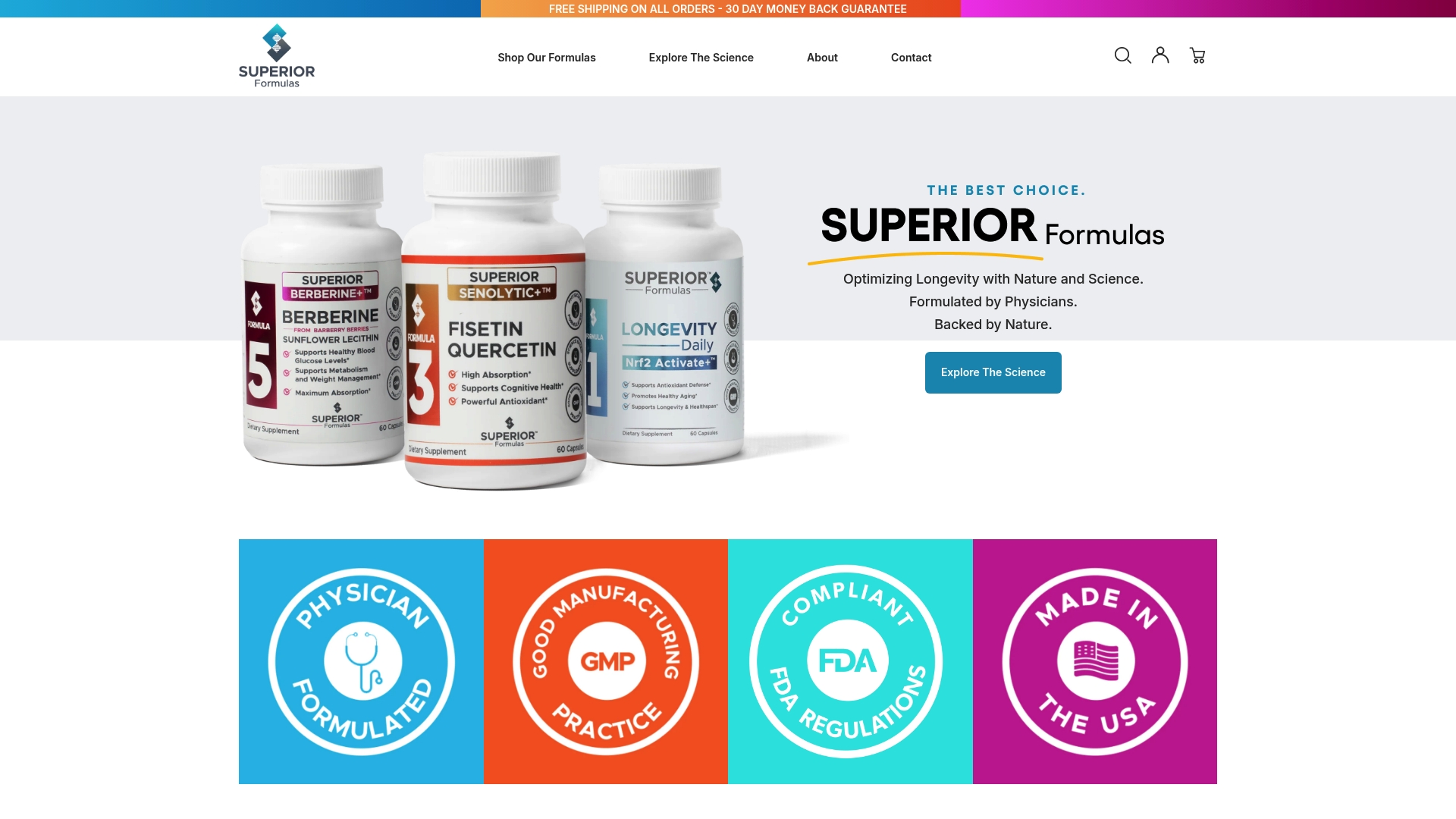
Superiorformulas develops physician-formulated supplements built around the same compounds and pathways covered in this article. Every formulation is manufactured in GMP-certified facilities, third-party tested for purity, and designed without unnecessary fillers. The product line includes targeted support for NAD+ metabolism, mitochondrial resilience, antioxidant defense, and cellular renewal, all grounded in clinical research rather than marketing trends. If you are ready to move from reading about aging support to acting on it, explore the full supplement range at Superiorformulas and find formulations matched to your specific health priorities. Science-backed, clean, and built for adults who take their longevity seriously.
FAQ
What are nutraceuticals for aging support?
Nutraceuticals for aging support are food-derived bioactive compounds that target specific biological pathways involved in aging, such as mitochondrial function, oxidative stress, and muscle preservation. They differ from standard vitamins in that they are selected for pathway-specific clinical effects rather than general nutritional sufficiency.
How do NR and NMN differ from regular nicotinamide?
NR and NMN produce sustained increases in circulating NAD+ levels over 14 days, while nicotinamide produces only a transient effect. The sustained benefit of NR and NMN is linked to gut microbial conversion to nicotinic acid, a potent NAD+ booster.
Is creatine safe for adults over 50?
Creatine monohydrate has a well-established safety profile in older adults, with clinical trials reporting only mild and transient adverse events. The standard dose of 3 to 5 grams daily, combined with resistance training, is the most evidence-backed approach for strength and lean tissue preservation.
Which nutraceuticals are best for skin aging?
Piceatannol is the most precisely studied oral compound for skin aging, with a 2026 randomized controlled trial showing significant improvements in hydration and wrinkle severity after 8 weeks. Collagen peptides and GlyNAC also support skin structure through connective tissue and oxidative stress pathways respectively.
Do I need to take all of these supplements at once?
No. The evidence base supports a personalized, targeted approach based on your specific aging concerns, health status, and lifestyle. Starting with one or two compounds at clinically relevant doses is more effective than taking many supplements at sub-therapeutic amounts.
Among the science-backed picks that fit this category is our Formula 1 — LONGEVITY Daily Nrf2 Activate+, which was designed with exactly this clinical rationale in mind. Explore the science behind the formulation to see how it applies to your own routine.
Recommended
- Longevity Nutrients: Science-Backed Choices for Cellular Health - SUPERIOR Formulas
- How Dietary Supplements Support Longevity and Cellular Health - SUPERIOR Formulas
- What Are Nutraceuticals? A Guide for Healthy Aging | SUPERIOR Formulas
- Top Evidence-Based Supplements for Longevity and Wellness - SUPERIOR Formulas


