


The supplement aisle has never been more crowded, and the longevity category is especially overwhelming. Every product promises to slow aging, boost cellular energy, or activate your body’s repair systems, yet the science behind these claims ranges from genuinely compelling to deeply misleading. If you’re over 35 and serious about healthy aging, you deserve a clear, evidence-grounded framework for evaluating what actually belongs in your regimen, and what’s simply clever marketing dressed up in scientific language.
Table of Contents
- Criteria for evaluating longevity boosting nutrients
- Top science-backed longevity nutrients
- Comparison of nutrient effectiveness and use
- Situational recommendations for longevity nutrients
- Why benchmarks matter more than buzzwords: A realistic view on longevity nutrients
- Explore science-driven longevity solutions
- Frequently asked questions
Key Takeaways
| Point | Details |
|---|---|
| Evidence-first selection | Longevity nutrients should be chosen based on validated scientific criteria, not marketing claims. |
| NAD+ precursors uncertainty | While NAD+ boosting supplements show biochemical activity, clinical results for anti-aging are inconsistent. |
| Individualized supplementation | Personal dietary needs, age, and gut health determine which nutrients may benefit true healthspan. |
| Comparisons guide choices | Simple tables clarify differences between nutrients, helping you align choices with your goals. |
| Focus on validated endpoints | Favor supplements shown to impact real-world healthspan or function instead of unproven mechanistic markers. |
Criteria for evaluating longevity boosting nutrients
Sorting through longevity claims starts with a firm foundation. Not every supplement that references NAD+, sirtuins, or telomere length is backed by clinical data strong enough to justify the cost or the health decision.
The most reliable starting point is nutritional adequacy. Before adding any targeted longevity compound, it’s worth asking whether your foundational micronutrient needs are being met. Deficiencies in vitamin D, magnesium, or B vitamins can impair cellular function in ways that no advanced nutraceutical can fully compensate for. Targeted supplementation makes the most clinical sense when it addresses an identified deficiency or a documented risk in a specific population group.
“A ‘longevity boosting nutrients’ approach should be anchored in nutritional adequacy and skepticism toward generalized claims; there is ongoing debate about how supplements optimize health outcomes.” — NIH Office of Dietary Supplements Strategic Plan (2025-2029)
Here are the core criteria to apply when you assess dietary supplements for real-world longevity value:
- Clinical trial evidence: Look for randomized controlled trials in humans, not just animal models or mechanistic lab studies.
- Validated healthspan endpoints: Outcomes like physical function, cognitive performance, or disease-free years matter more than surrogate biomarkers alone.
- Population relevance: A study conducted in adults aged 70+ with metabolic disease may not apply to a healthy 45-year-old.
- Interaction risk: Many longevity compounds, including resveratrol and high-dose vitamin K2, can interact with common medications such as blood thinners and statins.
- Dose and bioavailability: The form of a nutrient matters enormously. Magnesium glycinate, for example, is far more bioavailable than magnesium oxide, yet both appear on product labels.
- Manufacturer transparency: GMP certification, third-party testing, and clear ingredient sourcing are non-negotiable quality signals.
Pro Tip: Before adding any new longevity supplement, run it past your physician or a registered dietitian, especially if you take prescription medications. Even “natural” compounds can alter drug metabolism through cytochrome P450 enzyme pathways.
Applying these criteria consistently separates well-designed formulas from products riding the longevity wave without the research to support it.
Top science-backed longevity nutrients
With the framework established, let’s look at specific nutrients where the research is most promising and where realistic expectations still apply.
NAD+ precursors: NR and NMN
Nicotinamide riboside (NR) and nicotinamide mononucleotide (NMN) are two compounds the body uses to synthesize NAD+ (nicotinamide adenine dinucleotide), a coenzyme essential for energy metabolism, DNA repair, and sirtuin activation. NAD+ levels decline significantly with age, and restoring them has been a central focus of longevity research for over a decade.
Human clinical trials confirm that oral NR and NMN supplementation reliably raises NAD+ levels in blood and tissue. That’s meaningful target engagement. However, a recent PRISMA-guided systematic review covering studies from January 2010 through October 2025 found that while NAD+ precursors show target engagement, their effectiveness for clinically meaningful healthspan outcomes remains inconsistent and, in some cases, inconclusive. Raising a biomarker is not the same as improving how you function, feel, or age.
Still, the mechanistic rationale is strong enough that NAD+ precursors remain one of the most actively researched areas in the longevity space. For individuals with documented NAD+ decline, high metabolic demands, or specific genetic polymorphisms affecting NAD+ biosynthesis, supplementation may offer real benefit.
Nrf2 activators and antioxidant support
The Nrf2 pathway (Nuclear factor erythroid 2-related factor 2) is the body’s master regulator of antioxidant defense. When activated, Nrf2 switches on the production of endogenous antioxidant enzymes like glutathione peroxidase, heme oxygenase-1, and superoxide dismutase. This is a fundamentally different and more powerful mechanism than simply taking exogenous antioxidants like vitamin C or E.
Compounds that activate Nrf2 include sulforaphane (from broccoli sprouts), pterostilbene, curcumin, and resveratrol. These science-driven longevity supplements trigger cellular resilience rather than just neutralizing free radicals after the fact. Resveratrol, a polyphenol found in red grape skins, also activates SIRT1, a sirtuin protein linked to longevity pathways, though its bioavailability in standard supplement forms is notoriously low without specific delivery technologies.
Vitamin C and vitamin E still have a role in reducing oxidative stress, particularly for individuals with poor dietary intake. However, very high doses of isolated antioxidants have shown mixed results in long-term studies, with some research suggesting they may blunt beneficial cellular stress responses like those triggered by exercise.
Foundational longevity nutrients
Several well-studied micronutrients form the backbone of any serious longevity protocol. These are not exotic compounds. They are nutrients many adults are quietly deficient in, and their absence creates a drag on cellular health that no boutique supplement can overcome.
- Vitamin D3: Critical for immune regulation, bone integrity, and emerging research links adequate levels to reduced risk of age-related cognitive decline. A large portion of adults over 50 have insufficient serum 25-hydroxyvitamin D levels.
- Magnesium: Involved in over 300 enzymatic reactions, including ATP (adenosine triphosphate) production and DNA repair. Chronic low magnesium is linked to accelerated cellular aging.
- Vitamin K2 (MK-7 form): Works synergistically with D3 to direct calcium into bone tissue and away from arterial walls. Particularly relevant for cardiovascular longevity.
- Zinc: Supports immune function, DNA synthesis, and is a cofactor for over 100 enzymes. Zinc insufficiency is common in older adults and vegetarians.
For a broader look at how these nutrients contribute to longevity and cellular health, the research on foundational micronutrients is well-established and consistently supported across large-scale population studies.
Omega-3 fatty acids for cellular protection
Omega-3s (EPA and DHA) deserve mention as an often-overlooked longevity nutrient. Beyond their well-known cardiovascular benefits, omega-3s reduce systemic inflammation, support neuronal membrane integrity, and may help preserve telomere length, a structural indicator of cellular aging. For adults not regularly consuming fatty fish, supplementation with a triglyceride-form omega-3 product provides meaningful benefit.
Pro Tip: Omega-3 supplements vary widely in quality. Look for products that specify EPA and DHA amounts separately, use the triglyceride form for superior absorption, and carry a third-party oxidation test result. Rancid fish oil is counterproductive to any longevity goal.
Comparison of nutrient effectiveness and use
To clarify these nutrient options, here’s a summary comparison to guide informed choices. Note that “biological engagement” and “clinical effectiveness” are tracked separately, because the gap between them is where most longevity supplement claims break down. A PRISMA-guided systematic review emphasizes that even when supplements engage biological markers relevant to aging, clinical effectiveness can remain heterogeneous or null, and benchmarks should be validated healthspan measures.
| Nutrient | Biological mechanism | Clinical evidence strength | Key limitation | Best use case |
|---|---|---|---|---|
| NR / NMN | Raises NAD+ levels; sirtuin activation | Moderate (biomarker data strong; healthspan data mixed) | Inconsistent clinical outcomes | Adults with documented NAD+ decline or high metabolic stress |
| Nrf2 activators (e.g., sulforaphane, pterostilbene) | Upregulate endogenous antioxidant enzymes | Moderate, growing | Bioavailability varies by compound and form | Oxidative stress, inflammation management |
| Resveratrol | SIRT1 activation; anti-inflammatory | Moderate (preclinical strong; human data variable) | Low oral bioavailability without enhanced delivery | Cardiovascular and metabolic support |
| Vitamin D3 | Immune regulation; gene expression | Strong (deficiency correction well-evidenced) | Requires K2 co-supplementation for safety | Adults with confirmed insufficiency |
| Magnesium (glycinate/malate) | Enzymatic cofactor; ATP production | Strong for deficiency correction | Form determines absorption rate | Most adults over 40, especially those under high stress |
| Vitamin K2 (MK-7) | Calcium regulation; arterial health | Moderate to strong | Drug interactions with anticoagulants | Cardiovascular longevity, bone health |
| Omega-3 (EPA/DHA) | Anti-inflammatory; membrane integrity | Strong, especially cardiovascular | Quality and oxidation status vary widely | Adults with low dietary fish intake |
| Zinc | DNA synthesis; immune enzyme cofactor | Strong for deficiency | Excess zinc can impair copper absorption | Older adults, vegetarians, vegans |
Understanding where each nutrient sits on this spectrum helps you build a stack based on research-backed longevity supplements rather than label promises. For a deeper look at how to construct a thoughtful protocol, our premium supplements guide walks through quality benchmarks in greater detail.
Situational recommendations for longevity nutrients
Comparisons help, but individual situations call for more nuanced recommendations. The right nutrient strategy at 38 is not the same as at 58 or 72.
By age group
Ages 35 to 50: This is the window where preventive action has the greatest long-term leverage. Foundational priorities include magnesium, vitamin D3 with K2, and omega-3s. NAD+ precursors may be worth considering if energy and metabolic function are concerns, though baseline bloodwork to confirm actual NAD+ status is ideal first.
Ages 50 to 65: The case for NAD+ precursors strengthens here, given that NAD+ levels decline significantly through midlife. Vitamin B12 absorption also declines after 50, making supplementation or methylcobalamin forms more relevant. Antioxidant support through Nrf2-activating compounds becomes increasingly important as cellular defense capacity naturally diminishes.
Ages 65 and above: Zinc and vitamin D deficiency are more common in this group and carry compounding risks for immune function and bone density. Protein adequacy also becomes a longevity variable that supplements alone cannot address. Targeted support from a physician-formulated longevity supplement is particularly valuable for this group.
For vegetarians and vegans
Plant-based diets tend to be lower in vitamin B12, zinc, DHA, vitamin K2, and creatine. Each of these has longevity relevance. Algae-based DHA is the most bioequivalent substitute for fish-derived omega-3s and should be a non-negotiable in plant-based protocols.
For individuals on chronic medications
- If you take warfarin or other anticoagulants, vitamin K2 supplementation requires medical supervision.
- Statins can reduce CoQ10 (coenzyme Q10) synthesis; supplementing CoQ10 may support mitochondrial function in this context.
- Metformin, commonly used for blood sugar management, can reduce vitamin B12 absorption over time.
- Proton pump inhibitors used for acid reflux reduce absorption of magnesium, B12, and zinc.
One important nuance for NAD+ precursor users: gut microbial conversion plays a meaningful role in how effectively NR and NMN raise systemic NAD+ levels. This means individuals with dysbiosis or compromised gut microbiomes may see blunted responses to otherwise standard doses. It’s another reason why personalizing your supplement approach based on your full health picture matters more than following a one-size-fits-all stack.
Pro Tip: A comprehensive blood panel including 25-hydroxyvitamin D, serum magnesium, zinc, B12, and a complete metabolic panel gives you the data to supplement with intention rather than guesswork. Knowledge of your baseline turns supplementation into a precision strategy.
Why benchmarks matter more than buzzwords: A realistic view on longevity nutrients
Here’s something most longevity content won’t tell you plainly: the majority of “breakthrough” supplement claims are built on mechanistic data, not clinical outcomes. A compound that raises a biomarker in a six-week study is not the same as one that demonstrably improves how long or how well you live.
We’ve seen this pattern clearly with NAD+ precursors. The biological case is genuinely exciting. NAD+ is real, its decline with age is real, and the sirtuin pathways it supports are real mechanisms in aging biology. But as clinical effectiveness data now shows, engaging a biological marker does not reliably translate to measurable improvements in healthspan outcomes across diverse populations. That’s not a reason to dismiss the research. It’s a reason to hold it to a higher standard.
The practical wisdom here is to focus on your own benchmarks. How is your energy level trending? How is your sleep quality? What do your metabolic labs show year over year? These are real signals. A supplement that raises your NAD+ levels on a test but doesn’t improve any measurable aspect of your daily function or long-term health trajectory isn’t delivering on its promise.
Lifestyle factors also carry more longevity evidence than almost any single supplement. Consistent resistance training, quality sleep, a whole-food dietary pattern, stress management, and strong social connections each have stronger and more consistent clinical backing for healthy aging than any pill on the market. Supplements work best as targeted additions to a strong foundation, not as replacements for it.
This is why our approach at Superior Formulas starts with the evidence and ends with the individual. Learning more about what really works in preventive health helps you build a protocol that’s both grounded and genuinely personal.
Explore science-driven longevity solutions
If you’re ready to move from information to action, the next step is finding formulas that meet the standards this article describes: clinically studied ingredients, transparent dosing, and GMP-certified manufacturing.
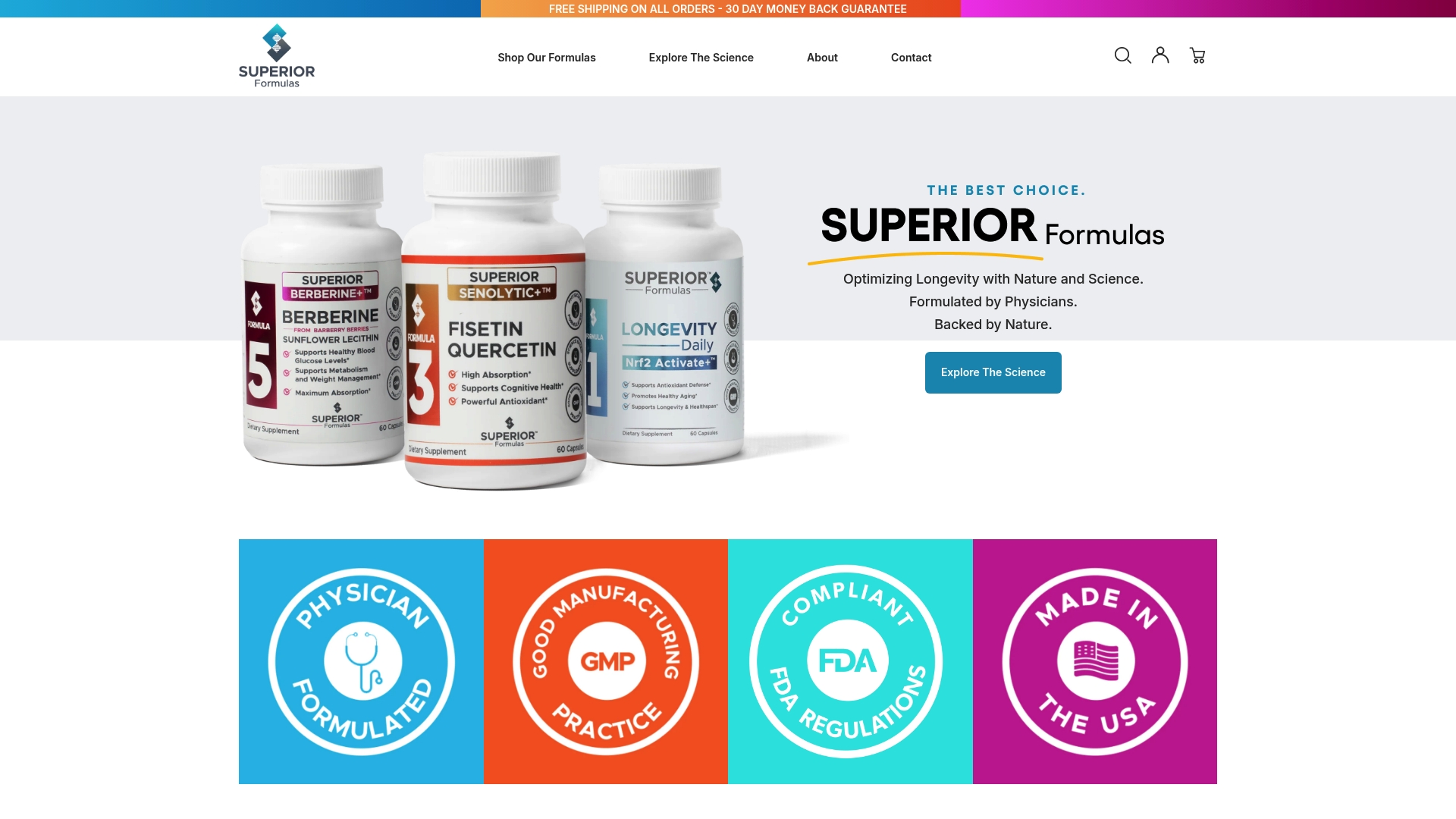
At Superior Formulas, every product is physician-formulated and built on evidence, not trend cycles. Our longevity Nrf2 formula supports the body’s master antioxidant defense pathway using rigorously selected phytonutrients. For comprehensive daily micronutrient support, our multi-nutrient formula provides foundational coverage designed for adults serious about long-term cellular health. Science should inform every decision you make about your wellness, and we build each formula with exactly that commitment.
Frequently asked questions
Are NAD+ precursor supplements safe for long-term use?
Human studies confirm that NR and NMN are generally well-tolerated in shorter-term trials, but long-term safety for anti-aging applications is not yet definitively established, so ongoing monitoring with your physician is advisable.
What’s the difference between clinical endpoints and biological markers for longevity?
Biological markers measure whether a supplement is mechanistically engaging a pathway, while clinical endpoints measure actual healthspan outcomes like physical function or disease reduction. Validated healthspan measures are the benchmarks that matter most for real-world decision-making.
Do all adults over 35 need longevity boosting supplements?
No. Supplementation is most appropriate when tied to a specific deficiency or risk factor rather than applied universally. A targeted approach based on bloodwork and health history is far more effective than supplementing broadly.
Can gut health affect the effectiveness of NAD+ boosting nutrients?
Yes. Research shows that gut microbial conversion contributes meaningfully to how well NR and NMN raise systemic NAD+ levels, meaning individuals with disrupted microbiomes may experience a reduced response to standard doses.
Recommended
- How Dietary Supplements Support Longevity and Cellular Health - SUPERIOR Formulas
- Why choose science-driven supplements for longevity gains - SUPERIOR Formulas
- How to identify research-backed supplements for longevity - SUPERIOR Formulas
- What Are Premium Supplements? A Science-Backed Longevity Guide - SUPERIOR Formulas


