


Chromium picolinate produces measurable but modest benefits for blood-sugar control in people with impaired glycemic regulation or insulin resistance, and its effects on weight and other metabolic markers are real but small enough that they rarely drive meaningful clinical outcomes on their own.
- Most likely to benefit: Adults with documented poor glycemic control, insulin resistance, or possible low dietary chromium intake. Some PCOS subgroups show responses in limited trials.
- Realistic effect size: Small. Meta-analyses report mean fasting glucose reductions and modest A1c changes, but the magnitude is often clinically modest and highly variable across individuals.
- Safety first: Chromium picolinate is generally well tolerated at trial doses, but it interacts with several medications and carries rare but serious risks at high doses.
Before starting a trial, discuss your current fasting glucose and A1c with your clinician. Those two numbers tell you whether you’re in the population most likely to respond.
Key Takeaways
Chromium picolinate produces its most consistent benefits in adults with impaired glycemic control, at doses of 200–400 mcg/day, over a minimum 8–12 week monitored trial.
| Point | Details |
|---|---|
| Who benefits most | Adults with poor glycemic control or insulin resistance see the most consistent fasting glucose reductions. |
| Realistic effect size | Meta-analyses report slight mean weight loss; fasting glucose reductions are more consistent than A1c changes. |
| Trial-tested dose range | 200–1,000 mcg/day used in RCTs; 400 mcg/day identified as a threshold for fasting glucose reduction in type 2 diabetes. |
| Safety and interactions | Separate dosing from levothyroxine and iron; avoid high doses with kidney or liver disease; rare serious events reported at high or prolonged doses. |
| Superiorformulas | Physician-formulated, GMP-certified, third-party tested metabolic support products designed as evidence-based adjuncts to diet and clinical care. |
Table of Contents
- What is chromium picolinate and how does it work?
- What do clinical trials show about chromium picolinate benefits for blood sugar?
- Does chromium picolinate support weight loss or body composition?
- What about PCOS, metabolic syndrome, and blood lipids?
- Safety, side effects, and drug interactions you need to know
- What doses do clinical trials actually use?
- How much chromium do you get from food?
- Who is most likely to respond to chromium supplementation?
- How to decide whether to try chromium picolinate
- An honest clinical perspective on chromium as a metabolic adjunct
- Superiorformulas supports your metabolic health with clinician-formulated precision
- Sources
What is chromium picolinate and how does it work?
Chromium is a trace mineral your body uses in microgram quantities. The form sold in most supplements, chromium picolinate, pairs trivalent chromium (Cr³⁺) with picolinic acid, a naturally occurring compound derived from tryptophan metabolism. The picolinate chelate was developed specifically to improve absorption: chromium picolinate absorbs at roughly 1% compared to about 0.4% for chromium chloride, though both figures are low in absolute terms, so the practical difference between forms is modest.
The proposed mechanism centers on insulin signaling. Trivalent chromium is thought to potentiate insulin’s action at the cellular level, supporting carbohydrate, lipid, and protein metabolism. One working model involves a chromium-binding oligopeptide called chromodulin, which may amplify the insulin receptor’s tyrosine kinase activity. That said, the exact causal pathway remains a working theory rather than a fully established mechanism. What the clinical trials measure is the downstream result: changes in fasting glucose, A1c, and insulin sensitivity.
Common supplement forms you’ll encounter include:
- Chromium picolinate (most studied; picolinic acid chelate)
- Chromium polynicotinate (bound to niacin; sometimes marketed as “GTF chromium”)
- Chromium chloride (inorganic salt; lower absorption)
- Chromium nicotinate (similar to polynicotinate)
- Chromium-enriched yeast (food-matrix form; variable chromium content)
Most RCTs have used chromium picolinate, which is why the evidence base is strongest for that form. Chromium polynicotinate has a smaller trial pool, and direct head-to-head comparisons between forms are limited.
What do clinical trials show about chromium picolinate benefits for blood sugar?
The short answer: chromium supplementation consistently lowers fasting blood glucose in people with type 2 diabetes across multiple trials, but its effect on HbA1c is less consistent, and the magnitude of benefit varies considerably depending on baseline glycemic status.
A landmark 1997 randomized trial remains one of the most cited data points. Participants taking 1,000 mcg/day of chromium picolinate for four months reached a mean fasting serum glucose was lower in the 1,000 mcg/day chromium group compared to placebo, with HbA1c showing a similar trend. The NIH Office of Dietary Supplements cites this trial as illustrative but notes that many subsequent RCTs produced smaller or mixed results.
A dose-response meta-analysis published in JACC: Advances pooled data across randomized clinical trials and found that chromium supplementation improved several cardiometabolic markers overall, with a dose around mid-range of trial dosages appearing appropriate for reducing fasting blood glucose specifically in participants with type 2 diabetes. Importantly, the dose-response relationship appears non-linear: higher doses do not proportionally increase benefit and may raise the risk of adverse effects.

A quality-assessed DARE review reached a more cautious conclusion: chromium lowered fasting blood sugar versus placebo in people with type 2 diabetes, but did not produce a consistent, statistically significant effect on HbA1c, lipids, or BMI across included RCTs.
What the evidence actually shows:
- Fasting blood glucose reductions are the most consistent finding across meta-analyses.
- HbA1c effects are present in some trials but not reliably replicated; the NIH/ODS notes that clinical significance remains unclear.
- Heterogeneity across trials is substantial, driven by differences in baseline glycemic status, chromium dose, trial duration, and population.
- The American Diabetes Association does not currently recommend chromium supplementation as a standard adjunct to diabetes management, citing insufficient consistent evidence.
Statistic to anchor expectations: A randomized clinical trial examining cardiometabolic biomarkers in people with type 2 diabetes found variable responses and limited generalizability, reinforcing that individual response depends heavily on baseline metabolic status.
| Outcome | Direction of Effect | Consistency Across Trials | Notes |
|---|---|---|---|
| Fasting blood glucose | Reduction | Moderate | Most consistent in T2D with poor baseline control |
| HbA1c | Small reduction | Low to moderate | Inconsistent across RCTs; clinical significance unclear |
| Fasting insulin | Reduction in some trials | Low | Heterogeneous results |
| Blood lipids | Mixed | Low | No consistent clinically meaningful pattern |
Does chromium picolinate support weight loss or body composition?
Statistically, yes. Clinically, the effect is small enough that you should not choose a chromium supplement primarily for weight loss.
A 2019 meta-analysis of 21 trials in overweight or obese adults found that chromium supplementation produced a slight mean weight loss, a small BMI reduction, and a minor decrease in body fat percentage. Those numbers are statistically distinguishable from placebo, but they are unlikely to translate into meaningful health outcomes on their own. The Linus Pauling Institute at Oregon State University notes that controlled studies using accurate body-composition measurement often find little if any benefit, and that U.S. regulatory bodies restrict weight-loss claims for chromium supplements.
Where chromium shows slightly more interesting signals is appetite and cravings. Small trials in women with binge-eating tendencies and in overweight adults have reported reductions in carbohydrate cravings and appetite scores. These findings are preliminary and come from limited sample sizes, but they align with the proposed insulin-sensitizing mechanism. If chromium helps stabilize postprandial glucose excursions, reduced hunger between meals is a plausible downstream effect.
The practical takeaway: chromium picolinate is not a weight-loss supplement in any meaningful sense. If glycemic control improves with supplementation, modest secondary effects on appetite and body weight may follow, but that is a secondary benefit contingent on the primary metabolic effect.
What about PCOS, metabolic syndrome, and blood lipids?
PCOS
This is where some of the more encouraging signals appear, though the evidence base is still limited. Meta-analyses pooling seven or so trials using 200–1,000 mcg/day for 8–24 weeks have reported some reductions in BMI, fasting insulin, and free testosterone in women with PCOS that appear small in magnitude. The PMC clinical trial data reflects this pattern: some pooled analyses show benefit, but effects on glucose and reproductive hormones are inconsistent. Small sample sizes and methodological variability across trials mean these results cannot yet support a strong clinical recommendation.
Metabolic syndrome
Evidence here is thin. The few trials examining chromium in metabolic syndrome populations have not demonstrated clear benefit across the cluster of endpoints that define the condition (waist circumference, triglycerides, HDL, blood pressure, fasting glucose). The JACC dose-response meta-analysis found improvements in some cardiometabolic markers at the population level, but metabolic syndrome as a distinct indication remains understudied.
Blood lipids
Results are mixed. Some individual trials report small improvements in total cholesterol or triglycerides, but no consistent, clinically meaningful pattern emerges across the literature. If lipid management is your primary goal, chromium supplementation is not a supported strategy.
Safety, side effects, and drug interactions you need to know
Chromium picolinate is generally well tolerated at doses used in clinical trials (up to 1,000 mcg/day for several months), but several safety considerations deserve attention before you start.
Common side effects:
- GI upset, nausea, or loose stools, particularly when taken on an empty stomach
- Headache, especially during the first week of use
- Sleep disturbances reported in some users at higher doses
Rare but serious events:
- Isolated case reports of kidney failure and liver injury associated with high-dose or prolonged chromium picolinate use. The Linus Pauling Institute documents these cases and notes that long-term safety at doses above those studied in trials is not well established.
- Anyone with pre-existing kidney or liver disease should avoid supplemental chromium without direct clinician supervision.
Drug and nutrient interactions:
- Levothyroxine: Chromium picolinate can reduce serum levothyroxine levels. Separate dosing by at least four hours and inform your prescriber.
- Iron: Chromium may interfere with iron absorption via ferritin binding. If you take iron supplements or have iron-deficiency anemia, discuss timing and monitoring with your clinician.
- Diabetes medications (insulin, sulfonylureas, metformin): Chromium’s glucose-lowering effect may be additive. Monitor blood glucose more closely when starting supplementation and discuss dose adjustments with your prescriber.
- Antacids and proton pump inhibitors: May alter chromium absorption.
Populations who should avoid or use with caution:
- Pregnant or breastfeeding individuals (insufficient safety data)
- People with chronic kidney disease or liver disease
- Anyone on multiple medications affecting glucose or thyroid function
Pro Tip: Take chromium picolinate with a meal to reduce GI upset and improve tolerability. If you take levothyroxine in the morning, take chromium with lunch or dinner instead. Consistent daily timing also makes it easier to track your response over an 8–12 week trial.
What doses do clinical trials actually use?
Most of the evidence comes from trials using middle to higher doses within a certain range and durations spanning several weeks. That range matters because shorter trials are less likely to capture A1c changes (which reflect a 3-month average), while longer trials provide more reliable metabolic signal.
| Dose Range | Typical Trial Duration | Primary Outcomes Affected |
|---|---|---|
| 200 mcg/day | 8 weeks | Modest fasting glucose reduction in some trials |
| 400 mcg/day | 12–24 weeks | Fasting blood glucose (T2D); threshold identified in JACC meta-analysis |
| 1,000 mcg/day | 24 weeks | Largest glucose and A1c reductions in landmark 1997 trial |
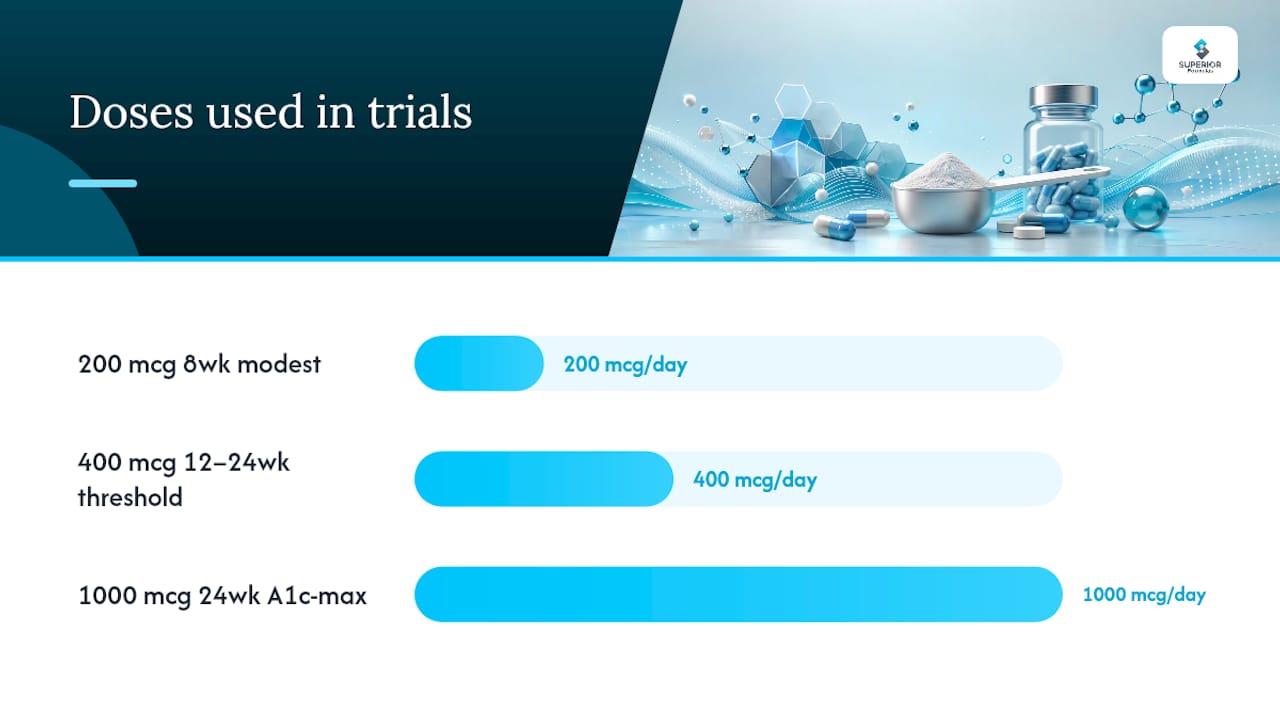
The dose-response relationship is not linear. The JACC meta-analysis identified approximately 400 mcg/day as a reasonable threshold for fasting blood glucose reduction in type 2 diabetes, and going higher does not reliably produce proportionally greater benefit.
For practical purposes, most clinicians and researchers work within the 200–400 mcg/day range for general metabolic support, reserving higher doses for supervised trials in people with significant glycemic impairment. Exceeding 1,000 mcg/day without clinical supervision is not supported by the evidence and introduces unnecessary risk.
How much chromium do you get from food?
Dietary chromium is present in microgram quantities across a range of common foods. Outright deficiency is uncommon in people eating a varied, adequate diet, though intake can be lower than optimal in highly processed-food diets.
Foods that contribute meaningful chromium:
- Whole grains (wheat germ, oat bran, whole wheat bread)
- Broccoli (one of the more concentrated vegetable sources)
- Meat and poultry (beef, turkey)
- Potatoes (particularly with skin)
- Brewer’s yeast (historically used as a chromium source in research)
- Green beans, grape juice, and some spices (smaller contributions)
Typical dietary intake in the U.S. falls in the range of 20–35 mcg/day for most adults, well below the doses used in clinical trials. That gap is one reason supplementation can produce measurable effects in people with suboptimal baseline status. Chromium deficiency severe enough to cause overt metabolic dysfunction is rare in well-nourished populations, but marginal status combined with insulin resistance may be enough to make supplementation relevant for some individuals.
Who is most likely to respond to chromium supplementation?
Not everyone will see a meaningful response. The evidence points to a fairly specific responder profile.
Likely responders:
- Adults with documented poor glycemic control or insulin resistance (elevated fasting glucose, A1c in the prediabetes or early diabetes range)
- People with low dietary chromium intake (highly processed diets, limited whole-grain and vegetable consumption)
- Women with PCOS and concurrent insulin resistance, based on limited but suggestive trial data
- Individuals with metabolic health concerns who are already working on diet and exercise and want a supported adjunct
Who probably won’t see meaningful benefit:
- Metabolically healthy adults with normal fasting glucose and A1c
- Anyone expecting chromium to drive significant weight loss independently
- People hoping to replace evidence-based diabetes management (medication, diet, exercise) with a supplement
Red flags requiring clinician involvement before starting:
- Chronic kidney or liver disease
- Current use of levothyroxine, insulin, sulfonylureas, or iron supplements
- Pregnancy or breastfeeding
- History of chromium sensitivity or allergy
Understanding what metabolic health actually means helps you place chromium in the right context before deciding whether it fits your situation.
How to decide whether to try chromium picolinate
A structured approach prevents wasted time and unnecessary risk. Here is a practical decision and monitoring framework:
- Get baseline labs before you start. At minimum: fasting glucose, HbA1c, and a basic metabolic panel (to assess kidney and liver function). These numbers tell you whether you’re in the responder profile and give you a comparison point after your trial.
- Review your medication list with your prescriber. Flag levothyroxine, insulin, sulfonylureas, metformin, and iron supplements. Discuss timing adjustments and whether closer glucose monitoring is warranted.
- Confirm no contraindications. Kidney disease, liver disease, and pregnancy are reasons to pause or avoid supplementation entirely.
- Choose a dose in the trial-tested range. Start at 200–400 mcg/day with a meal. There is no evidence-based reason to begin at 1,000 mcg/day without clinical guidance.
- Commit to an 8–12 week trial minimum. Fasting glucose changes may appear within 8 weeks; A1c requires at least 12 weeks to reflect a meaningful change. Shorter trials produce uninterpretable results.
- Track what matters. Log fasting glucose readings (if you monitor at home), note any changes in appetite or cravings, and record any side effects. Recheck A1c at 12 weeks if your clinician agrees.
- Evaluate and decide. If fasting glucose has not moved after 12 weeks and you have no other reason to continue, stopping is reasonable. If you see a meaningful response, discuss whether ongoing supplementation is appropriate with your clinician.
Pro Tip: When selecting a chromium supplement, prioritize products manufactured in GMP-certified facilities with third-party testing for purity and potency. Single-ingredient products without proprietary blends let you know exactly what you’re taking and make it easier to attribute any response to chromium specifically. Review the supplement quality checklist before purchasing.
For a broader framework on evaluating supplement quality, Superiorformulas has published practical guidance that applies directly to trace-mineral supplementation decisions.
An honest clinical perspective on chromium as a metabolic adjunct
Chromium picolinate occupies a specific and limited niche in metabolic support. The evidence supports its use as a modest adjunct for people with impaired glycemic control, not as a primary therapy and not as a weight-loss tool. What the trials consistently show is that the people most likely to respond are those who already have something to correct: elevated fasting glucose, insulin resistance, or marginal chromium status from a poor diet. For a metabolically healthy adult with normal labs, the expected benefit is close to zero.
What I find underappreciated in most discussions of chromium is the dose-response nuance. The instinct to assume more is better does not apply here. The JACC meta-analysis data suggests an optimal therapeutic window around 200–400 mcg/day for most outcomes, and the isolated cases of kidney and liver injury are almost exclusively associated with high doses or prolonged unsupervised use. That is a meaningful safety signal, not a theoretical one.
Chromium fits best as one component of a broader metabolic program that includes dietary quality, physical activity, and, where indicated, evidence-based pharmacotherapy. Formulation quality matters too: a chromium supplement that has not been third-party tested for heavy-metal contamination introduces a different kind of risk, particularly for a mineral where the therapeutic window is narrow. That is why physician-formulated, GMP-manufactured products with verified purity are worth the extra scrutiny before you commit to a 12-week trial.
Superiorformulas supports your metabolic health with clinician-formulated precision
For adults who have done the research and want a supplement partner that matches their standards, Superiorformulas offers physician-formulated metabolic health products developed with the same evidence-first approach this article applies to chromium.

Every Superiorformulas product is manufactured in a GMP-certified facility and undergoes third-party testing for purity and potency, so you know exactly what you’re putting in your body. The formulations are built around clinically studied ingredients, free from unnecessary fillers, and designed to complement, not replace, the diet, exercise, and clinical oversight that metabolic health actually requires. Chromium works best as part of a broader strategy, and that is exactly how Superiorformulas approaches metabolic health support after 35.
Ready to see what physician-formulated metabolic support looks like? Visit Superiorformulas to review current formulations and clinician resources.
Sources
These are the primary sources used to build the evidence base in this article:
- Chromium Supplementation to Reduce Cardiometabolic Risk Factors: A Novel Dose-Response Meta-Analysis of Randomized Clinical Trials | JACC: Advances
- Chromium - Health Professional Fact Sheet
- Effects of Chromium Picolinate Supplementation on Cardiometabolic Biomarkers in Patients with Type 2 Diabetes Mellitus: a Randomized Clinical Trial
- Effect of chromium on glucose and lipid profiles in patients with type 2 diabetes; a meta-analysis review of randomized trials - Database of Abstracts of Reviews of Effects (DARE): Quality-assessed Reviews - NCBI Bookshelf
- Chromium | Linus Pauling Institute | Oregon State University
This article is general information, not a substitute for advice from a qualified doctor. Consult a qualified healthcare professional about your own circumstances before acting on anything here.


