


Healthy inflammation is defined as a rapid, protective immune response that activates immune cells to fight pathogens, clear damaged tissue, and initiate repair after injury or infection. Clinically, this process is called acute inflammation, and it is the body’s first line of defense. The five classic signs, redness, heat, swelling, pain, and loss of function, are not symptoms of something going wrong. They are signals of immune activation and repair. Understanding what is healthy inflammation separates productive healing from the chronic, low-grade version that drives disease. The two processes share a name but serve entirely different purposes.
What is healthy inflammation doing in your body?
Healthy inflammation is a tightly coordinated biological event, not a random reaction. When tissue is injured or a pathogen enters the body, the immune system releases chemical signals called cytokines and prostaglandins. These molecules increase blood flow to the affected area, which explains the redness and heat. They also make blood vessels more permeable, allowing white blood cells to flood the site and begin neutralizing the threat.
The process unfolds in two distinct phases. The first is the pro-inflammatory phase, where immune cells attack the threat and begin clearing debris. The second is the resolution phase, where the immune system actively switches off the alarm. This second phase is where most people’s understanding stops short. Resolution is not passive. It requires macrophages to perform efferocytosis, clearing dead cells from the site. Failure in this clearance process is what drives sustained, low-grade tissue damage.

Pro Tip: Think of the resolution phase as the cleanup crew after a fire. The firefighters (pro-inflammatory cells) stop the blaze, but if the cleanup crew never arrives, the damage compounds. Supporting resolution is just as important as supporting the initial immune response.
The key biological steps in a healthy inflammation response are:
- Cytokine release signals immune cells to the injury site
- Increased blood flow delivers oxygen and nutrients for repair
- White blood cells neutralize pathogens and clear cellular debris
- Macrophages perform efferocytosis to remove dead cells
- Anti-inflammatory signals terminate the immune response
- Tissue repair and regeneration begin
Each step depends on the one before it. A disruption anywhere in this sequence can prevent proper resolution and push the body toward chronic inflammation.
How do you tell healthy inflammation from harmful inflammation?
The defining difference between healthy and harmful inflammation is timing. Acute inflammation resolves within hours to days once the threat is cleared. Chronic inflammation persists for weeks, months, or years, often without obvious symptoms, because the immune system’s “off switch” has failed.
Acute inflammation is loud and localized. You sprain an ankle, and it swells, turns red, and hurts. That is your immune system working correctly. Chronic inflammation is quiet and systemic. It produces no dramatic symptoms in early stages, yet it silently damages blood vessels, joints, and organs over time. Conditions linked to chronic inflammation include cardiovascular disease, type 2 diabetes, rheumatoid arthritis, and certain cancers.
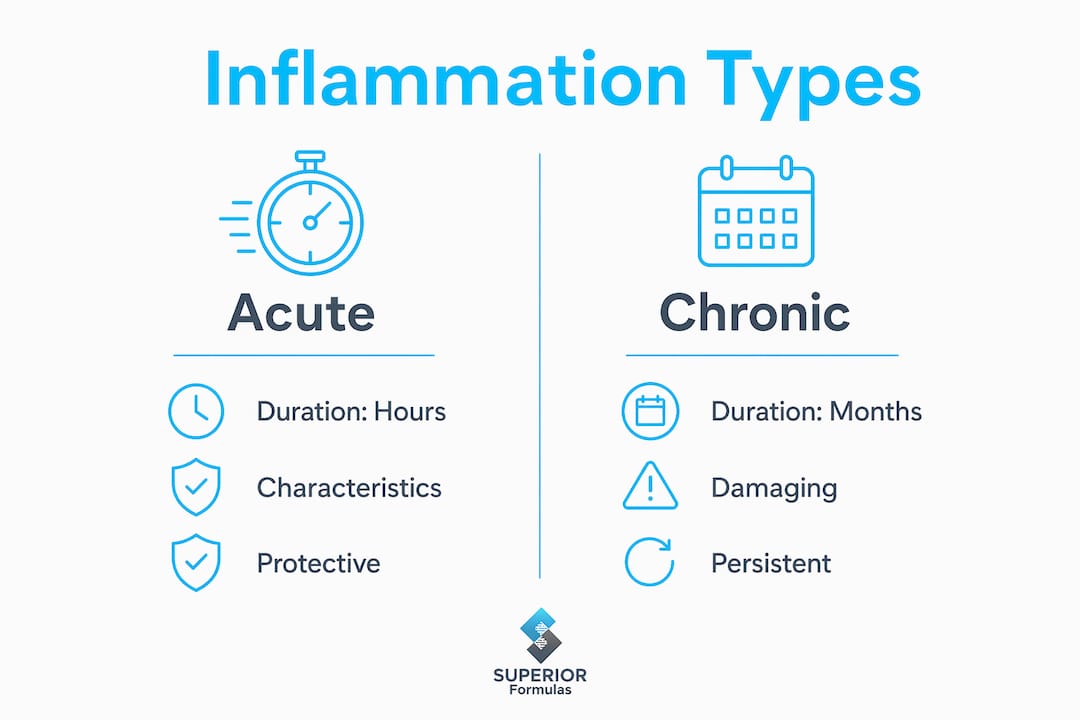
| Feature | Acute (healthy) inflammation | Chronic (harmful) inflammation |
|---|---|---|
| Duration | Hours to days | Weeks, months, or years |
| Cause | Injury, infection, or pathogen | Unresolved acute inflammation, lifestyle factors |
| Symptoms | Redness, heat, swelling, pain | Fatigue, brain fog, joint pain, low-grade fever |
| Immune activity | Targeted and resolving | Persistent and dysregulated |
| Outcome | Healing and tissue repair | Tissue damage and disease risk |
The critical insight is that chronic inflammation is not a separate disease. It is what happens when the healthy inflammation response fails to turn off. Recognizing this distinction gives you a clear target: support resolution, not suppression.
What lifestyle and diet habits support healthy inflammation regulation?
Lifestyle is the most powerful lever for maintaining a well-regulated inflammation response. Clinical guidelines recommend 150 minutes of moderate exercise or 75 minutes of vigorous exercise weekly, alongside 7–9 hours of sleep per night. Both habits directly influence how well the immune system resolves inflammatory signals. Maintaining a healthy body weight, avoiding smoking, limiting alcohol, and managing chronic stress complete the picture.
Sleep deserves special attention because it does more than rest the body. Specific lifestyle habits stimulate biological molecules like oxytocin that deactivate inflammatory genes at the molecular level. Social connection, adequate rest, and stress reduction are not soft wellness advice. They are biochemically active inputs that regulate immune function.
Diet is equally direct in its effects. No single food resolves or causes inflammation on its own. Eating patterns matter far more than individual ingredients. The Mediterranean diet and the MIND diet both lower chronic inflammation risk by emphasizing whole foods rich in omega-3 fatty acids, dietary fiber, and polyphenols. These nutrients reduce oxidative stress and modulate immune activity at the cellular level. You can find detailed guidance on anti-inflammatory eating patterns that align with these principles.
Refined carbohydrates, processed meats, and added sugars work in the opposite direction. They promote oxidative stress and feed pro-inflammatory pathways. Cutting these foods is not about restriction for its own sake. It is about removing inputs that keep the immune system in a low-grade activated state.
Gut health connects directly to systemic inflammation. Gut dysbiosis increases intestinal permeability, allowing bacterial fragments to enter the bloodstream and trigger immune activation that resembles a low-grade infection. Fermented foods, prebiotic fiber, and diverse plant intake all support a microbiome that keeps this permeability in check.
A practical daily framework for inflammation regulation:
- Exercise at least 30 minutes most days, mixing aerobic and resistance training
- Prioritize 7–9 hours of sleep and maintain a consistent sleep schedule
- Follow a Mediterranean or MIND diet pattern as your default eating framework
- Eat fatty fish, walnuts, flaxseed, and leafy greens for omega-3 and polyphenol intake
- Limit ultra-processed foods, refined sugars, and processed meats
- Support gut health with fermented foods like yogurt, kefir, and sauerkraut
- Manage stress through consistent practices such as breathwork, walking, or social connection
Pro Tip: Most people focus entirely on what they eat and ignore sleep quality. Research shows that even one night of poor sleep elevates inflammatory markers. Sleep is not recovery from your health habits. It is one of them.
What are the most common misconceptions about inflammation?
The biggest misconception about inflammation is that it is inherently bad and should be suppressed whenever possible. This view leads people to reach for anti-inflammatory medications at the first sign of swelling or fever, which can actually interfere with the body’s healing process. The goal is proper regulation, not total suppression.
Several specific misunderstandings are worth correcting directly:
- Fever means something is wrong. Fever is a sign of a functional immune system producing antibodies and fighting infection. It is healthy systemic inflammation at work.
- Exercise inflammation is harmful. Short-term inflammation spikes after exercise are beneficial adaptations that support muscle growth and cardiovascular health. Suppressing them with anti-inflammatory drugs immediately post-workout can blunt these gains.
- Anti-inflammatory supplements should be taken constantly. Chronic suppression of inflammatory signals can impair wound healing, immune surveillance, and tissue repair.
- Inflammation always has visible symptoms. Chronic inflammation is often symptomless for years, which is why lifestyle habits matter even when you feel fine.
- Stopping inflammation is the health goal. The real goal is supporting the body’s ability to complete the inflammatory cycle and resolve it cleanly.
Healthy aging nutrients for adults 35 and older often work by supporting resolution pathways rather than blocking inflammation outright. Understanding this distinction changes how you approach supplementation and lifestyle choices. You can explore nutrients that support resolution to see how this applies in practice.
Key Takeaways
Healthy inflammation is a timed, self-resolving immune process, and the difference between health and disease lies in whether the body successfully turns it off.
| Point | Details |
|---|---|
| Acute inflammation is protective | Redness, heat, swelling, and pain signal active immune defense and tissue repair. |
| Resolution is the critical phase | Macrophage-mediated clearance of dead cells prevents the shift to chronic inflammation. |
| Chronic inflammation is a failure of resolution | When the immune “off switch” fails, sustained immune activity damages tissues over time. |
| Diet and sleep regulate inflammation directly | Mediterranean diet patterns and 7–9 hours of sleep support the body’s natural resolution process. |
| Suppression is not the goal | Supporting proper regulation and timely resolution defines a healthy inflammatory response. |
Why I stopped being afraid of inflammation
Most people I talk to about inflammation want to eliminate it. They treat it like an enemy. I spent years thinking the same way, until clinical research made the picture much clearer.
The turning point was understanding the resolution phase. The immune system does not just fight threats. It has a built-in shutdown sequence. When that sequence works, inflammation is one of the most elegant processes in human biology. When it fails, the same process becomes destructive. The difference is not the inflammation itself. It is the regulation.
What changed my practice most was recognizing that lifestyle inputs, sleep, movement, food quality, and stress, are not just “good habits.” They are molecular inputs that directly influence whether the immune system resolves or persists. Oxytocin from social connection. Omega-3 metabolites that signal resolution. Gut bacteria that keep the immune system calibrated. These are not abstract wellness concepts. They are specific biological mechanisms.
My honest advice: stop trying to suppress inflammation and start asking whether your body can resolve it efficiently. That question leads to far better decisions about diet, sleep, supplementation, and exercise than the blanket goal of “reducing inflammation” ever did.
— cristopher
Superiorformulas and science-backed inflammation support
Superiorformulas was founded by a physician-scientist with one goal: create supplements that reflect how the body actually works, not how marketing says it does.

That means formulations built around resolution pathways, Nrf2 activation, polyphenols, and clinically studied phytonutrients that support the immune system’s ability to complete its cycle. Every product is manufactured in GMP-certified facilities and tested by third parties for purity and consistency. If you want to support your body’s natural inflammation regulation with evidence-based nutrition, the Superiorformulas wellness range is built for exactly that. You can also read the nutrition for longevity guide to see how these principles apply across healthy aging.
FAQ
What is healthy inflammation in simple terms?
Healthy inflammation, clinically called acute inflammation, is the immune system’s rapid response to injury or infection. It activates immune cells, increases blood flow, and initiates tissue repair before resolving on its own within hours to days.
Is inflammation ever healthy?
Inflammation is not only healthy but necessary. Without it, wounds would not heal, infections would spread unchecked, and the body could not repair damaged tissue. The key is that healthy inflammation resolves quickly once the threat is gone.
What causes chronic inflammation?
Chronic inflammation results from the immune system’s failure to turn off after a threat is resolved. Poor sleep, a high-processed-food diet, gut dysbiosis, chronic stress, and physical inactivity all impair the resolution process and sustain low-grade immune activation.
How does exercise affect inflammation?
Exercise triggers short-term inflammation spikes that are beneficial adaptations. These spikes support muscle growth and cardiovascular health. Suppressing them immediately after exercise with anti-inflammatory medications can reduce the training benefit.
What foods help regulate the inflammation response?
Eating patterns like the Mediterranean and MIND diets support healthy inflammation regulation. Foods rich in omega-3 fatty acids, dietary fiber, and polyphenols, including fatty fish, leafy greens, berries, and olive oil, are the most studied for this purpose.


