


 overwhelm the body’s antioxidant defenses, causing damage to cells, proteins, and DNA. This imbalance sits at the root of accelerated aging, cardiovascular ...&media=http://cdn//csuxjmfbwmkxiegfpljm.supabase.co/storage/v1/object/public/blog-images/organization-27528/1782809638822_Electron-microscope-view-of-mitochondria-and-antioxidants-on-lab-desk.jpeg)


Oxidative stress is defined as the condition where reactive oxygen species (ROS) overwhelm the body’s antioxidant defenses, causing damage to cells, proteins, and DNA. This imbalance sits at the root of accelerated aging, cardiovascular disease, neurodegeneration, and dozens of other chronic conditions. About 20% of oxygen used in metabolism can produce free radicals that antioxidants must neutralize. When that neutralization fails, the consequences reach every tissue in your body. Understanding the mechanisms, causes, and management of oxidative stress is one of the most practical steps you can take for long-term cellular health.
What is oxidative stress and how does it work?
Oxidative stress is the scientific term for a redox imbalance inside your cells. “Redox” refers to the chemical exchange of electrons between molecules. ROS are molecules with unpaired electrons. They are chemically unstable and steal electrons from nearby structures, including cell membranes, proteins, and DNA strands.
Your body produces ROS constantly as a byproduct of normal metabolism, particularly inside mitochondria. Antioxidant enzymes like superoxide dismutase and catalase neutralize most of these molecules before they cause harm. Oxidative stress occurs when ROS production outpaces that enzymatic defense. The result is cumulative molecular damage that compounds over time.
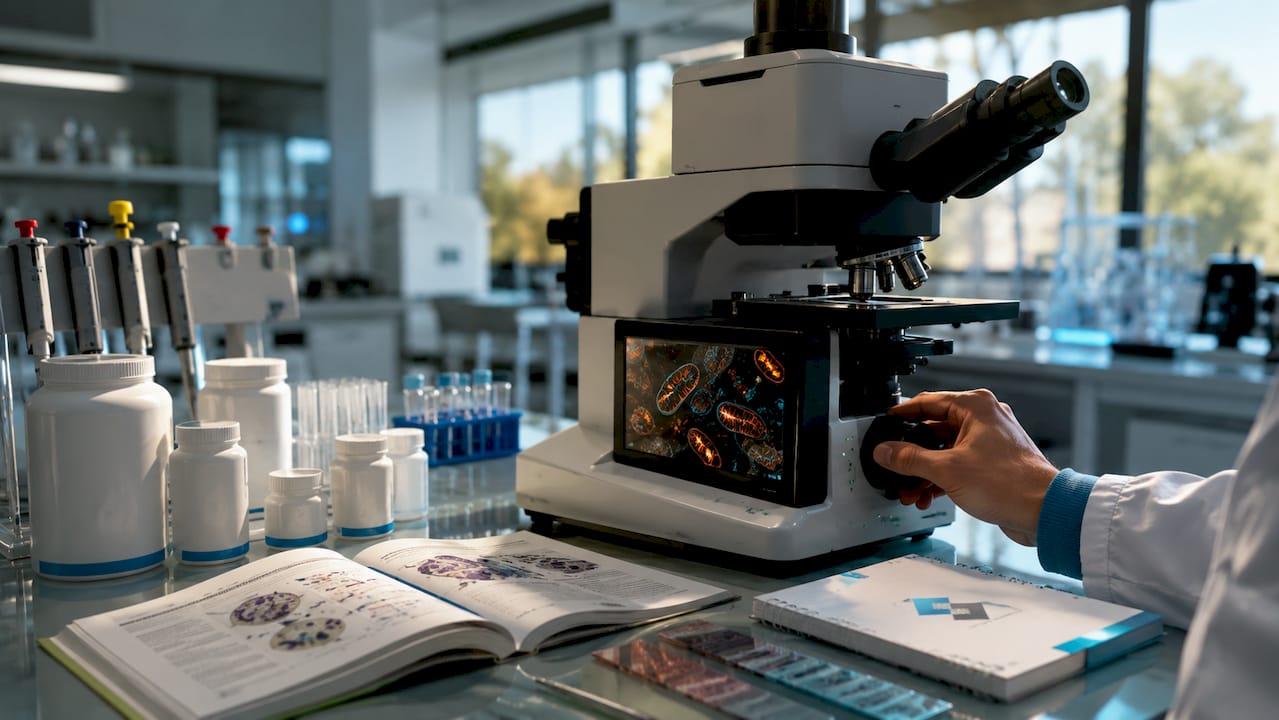
The concept is sometimes described loosely as “free radical damage,” which is accurate but incomplete. Not all ROS are free radicals, and not all free radicals behave the same way. The hydroxyl radical, for example, is extremely reactive but lives for only a few billionths of a second, making it nearly impossible for the body to intercept before it attacks nearby molecules. That speed and reactivity explain why chronic ROS overproduction is so damaging even when individual molecules are short-lived.
What causes oxidative stress in the body?
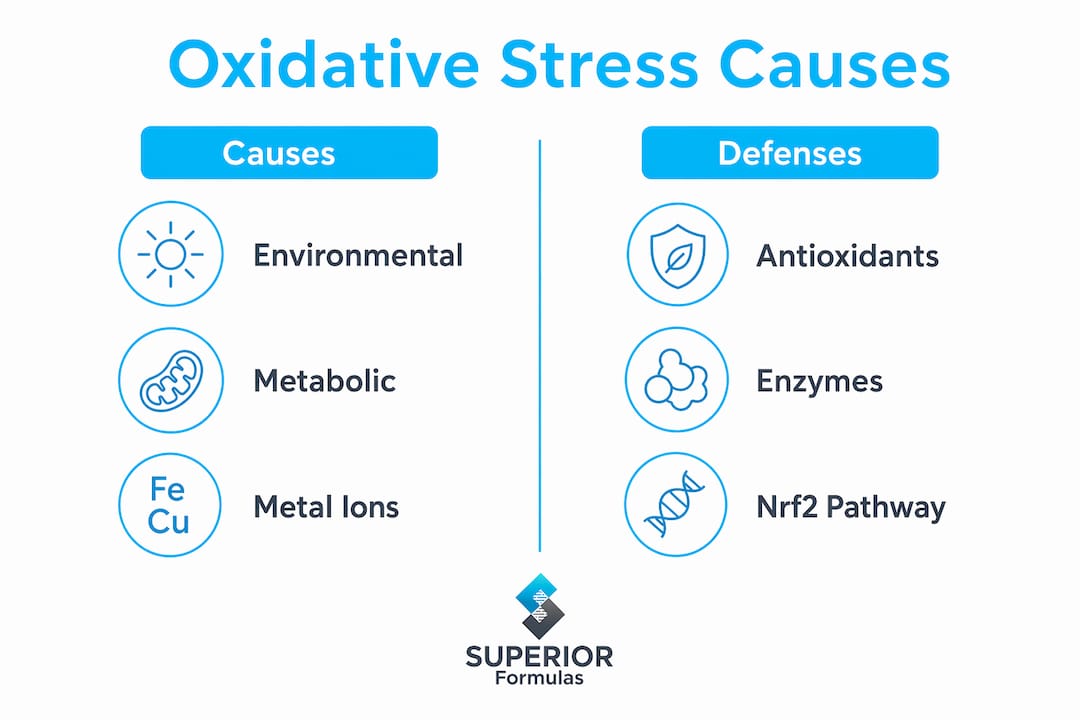
Oxidative stress arises from both internal biological processes and external environmental exposures. Understanding both categories helps you identify where your personal risk is highest.
Endogenous (internal) sources:
- Mitochondrial electron leakage during energy production
- Immune cell activation during infection or injury, which deliberately generates ROS to destroy pathogens
- Inflammatory signaling cascades that sustain ROS production beyond the initial immune response
- Enzymatic reactions involving xanthine oxidase and cytochrome P450 enzymes
Exogenous (external) sources:
- Cigarette smoke, which delivers a concentrated dose of oxidants directly into lung tissue
- Air pollution, including particulate matter and ozone
- UV radiation from sunlight, which generates ROS in skin cells
- Heavy metals such as lead, mercury, and cadmium
- Alcohol metabolism, which produces acetaldehyde and depletes glutathione
One mechanism that amplifies oxidative damage significantly is the Fenton reaction. Free iron and copper catalyze the formation of hydroxyl radicals through this reaction, converting relatively mild ROS into the most damaging species known. This is why excess dietary iron or copper, even from supplements, can worsen oxidative stress rather than support health.
Pro Tip: If you take iron supplements, get your ferritin levels tested first. Excess stored iron accelerates ROS formation through the Fenton reaction and raises oxidative burden even in otherwise healthy people.
How does oxidative stress affect your body and health?
Oxidative stress damages the body at the molecular level before symptoms ever appear. The three primary targets are lipids, proteins, and DNA.
Lipid peroxidation attacks cell membranes, making them rigid and leaky. Protein oxidation alters enzyme function and structural proteins. DNA oxidation creates strand breaks and base modifications that, if unrepaired, accumulate into mutations. Each of these processes contributes to tissue aging and disease progression.
“Inflammation perpetuates oxidative stress through a self-reinforcing cycle. Oxidative damage triggers inflammatory signaling, which generates more ROS, which causes more damage. Breaking this cycle is central to reducing long-term cellular harm.”
The diseases linked to chronic oxidative stress span nearly every organ system. The table below summarizes the most well-documented connections.
| Disease or Condition | Primary Oxidative Mechanism |
|---|---|
| Cardiovascular disease | LDL oxidation, endothelial dysfunction |
| Alzheimer’s disease | Amyloid-beta modification by ROS, plaque accumulation |
| Type 2 diabetes | Mitochondrial dysfunction, insulin signaling disruption |
| Parkinson’s disease | Dopaminergic neuron damage from ROS |
| Cancer | DNA strand breaks, oncogene activation |
| Accelerated skin aging | Collagen degradation, UV-induced lipid peroxidation |
The Alzheimer’s connection deserves specific attention. Oxidative stress modifies amyloid-beta peptides in a way that accelerates their aggregation into plaques. This is not a downstream effect of the disease. Research now positions oxidative damage as an early driver of neurodegeneration, which means the window for intervention opens decades before cognitive symptoms appear.
Inflammation and oxidative stress reinforce each other through a feedback loop. Chronic low-grade inflammation, common in people with poor diet, excess body fat, or sedentary habits, keeps ROS production elevated. That sustained elevation accelerates tissue aging and raises the risk of every condition listed above.
Are reactive oxygen species always harmful?
ROS are not purely destructive. At physiological levels, they serve as essential signaling molecules. This is one of the most misunderstood aspects of oxidative biology, and it has direct implications for how you approach antioxidant support.
ROS act as signaling molecules in cell communication, immune defense, and metabolic adaptation. Specific examples include:
- Hydrogen peroxide signals insulin receptor activation after a meal
- ROS pulses trigger muscle adaptation after exercise
- Immune cells use ROS deliberately to kill bacteria and viruses
- Low-level ROS regulate cell growth, differentiation, and programmed cell death
Pro Tip: Taking high-dose antioxidant supplements immediately after exercise can blunt the ROS signal that drives muscle adaptation. Timing and dosage matter more than simply maximizing antioxidant intake.
The body’s primary defense against excess ROS is not dietary antioxidants. It is the Nrf2 pathway, a master regulatory system that controls over 200 protective genes governing antioxidant response, detoxification, and cellular repair. Nrf2 activates in response to mild oxidative stress, essentially using a low ROS signal to upregulate the body’s own defenses. This is the body’s inner switch for cellular resilience. Understanding the antioxidant pathway and how it functions explains why supporting endogenous defenses is more effective than flooding the system with external antioxidants.
Total elimination of ROS is both impossible and harmful. The goal is redox balance, not redox suppression. That distinction changes everything about how you approach oxidative stress management.
How can you reduce oxidative stress naturally?
Managing oxidative stress requires a combination of lifestyle habits that reduce ROS production and support the body’s own antioxidant systems. No single supplement replaces this foundation.
-
Exercise regularly at moderate intensity. Moderate aerobic exercise generates brief ROS pulses that activate Nrf2 and upregulate antioxidant enzymes. This is the most reliable way to strengthen endogenous defenses. High-intensity exercise without adequate recovery, however, can tip the balance toward net oxidative damage.
-
Eliminate or reduce tobacco and alcohol. Cigarette smoke is one of the highest-density sources of exogenous oxidants. Even secondhand exposure raises systemic oxidative markers. Alcohol depletes glutathione, the body’s most abundant intracellular antioxidant, with each metabolic cycle.
-
Eat a diet rich in polyphenols and phytonutrients. Berries, dark leafy greens, cruciferous vegetables, green tea, and extra-virgin olive oil all contain compounds that activate Nrf2 rather than simply neutralizing ROS directly. Sulforaphane from broccoli and resveratrol from grapes are among the most studied Nrf2 activators in food.
-
Manage body weight and metabolic health. Excess adipose tissue, particularly visceral fat, is metabolically active and produces inflammatory cytokines that sustain ROS generation. Reducing visceral fat lowers the baseline oxidative burden significantly.
-
Minimize exposure to environmental toxins. Air filtration at home, avoiding plastic food containers that leach heavy metals, and limiting processed food additives all reduce exogenous oxidant load. These steps are often underestimated compared to supplement strategies.
-
Support endogenous antioxidant defenses, not just dietary intake. Dietary antioxidants are supplemental to enzymatic defenses, not replacements for them. Prioritizing Nrf2 activation through diet, exercise, and targeted phytonutrients produces a more durable and proportionate antioxidant response than high-dose vitamin C or E supplementation alone.
Pro Tip: Cruciferous vegetables like broccoli, Brussels sprouts, and kale contain glucosinolates that convert to sulforaphane during digestion. Sulforaphane is one of the most potent natural Nrf2 activators identified in clinical research.
For a practical framework on applying these strategies, the cellular antioxidant benefits resource from Superiorformulas covers the evidence behind diet, exercise, and toxin avoidance in detail. You can also review antioxidant supplement options from third-party reviewers to understand what the current evidence supports.
Key Takeaways
Oxidative stress is a measurable cellular imbalance that drives aging and chronic disease, and it responds directly to lifestyle, diet, and targeted support of the Nrf2 antioxidant pathway.
| Point | Details |
|---|---|
| Core definition | Oxidative stress is the imbalance between ROS production and antioxidant defenses causing cellular damage. |
| Primary causes | Mitochondrial activity, inflammation, smoking, UV radiation, and excess transition metals all drive ROS overproduction. |
| Disease connections | Cardiovascular disease, Alzheimer’s, diabetes, and cancer all involve oxidative stress as a contributing mechanism. |
| ROS dual role | Low-level ROS are necessary for immune defense, insulin signaling, and muscle adaptation. Total suppression is harmful. |
| Best management strategy | Activate endogenous defenses through Nrf2 via exercise, polyphenol-rich diet, and toxin reduction before relying on supplements. |
Why I think most people are approaching this backward
Most people who learn about oxidative stress immediately reach for antioxidant supplements. I understand the instinct. The logic seems sound: more antioxidants neutralize more free radicals. But that framing misses the biology entirely.
The body does not want a flood of external antioxidants. It wants a well-calibrated internal response. The Nrf2 pathway exists precisely because the body needs a proportionate, gene-level defense system, not a blunt chemical override. When you take megadoses of isolated antioxidants, you can actually suppress the ROS signals that trigger Nrf2 activation. You end up with weaker endogenous defenses over time, not stronger ones.
What I have found far more effective is focusing on the inputs that make the body’s own system work better. Consistent moderate exercise, a diet built around whole plant foods, and serious attention to toxin reduction produce durable results. Supplements built around Nrf2 activators like sulforaphane, polyphenols, and adaptogens support that system rather than bypassing it. The evidence-based steps for healthy aging point consistently in this direction.
The uncomfortable truth is that oxidative stress management is mostly a lifestyle problem, not a supplement deficiency. Addressing it at the root level takes longer and requires more consistency than taking a pill. But the cellular payoff, measured in reduced disease risk and slower biological aging, is real and cumulative.
— cristopher
Superiorformulas and the science of cellular antioxidant support
Superiorformulas was founded by a physician-scientist with a specific goal: translate the clinical research on oxidative stress and cellular aging into formulations that actually work at the biological level.
Every Superiorformulas product is built around activating the body’s endogenous antioxidant pathways, particularly Nrf2, rather than simply delivering isolated antioxidants. The formulations combine polyphenols, adaptogens, and phytonutrients selected for their clinical evidence, manufactured in GMP-certified facilities with third-party purity testing. If you want to understand the science behind how these compounds support cellular resilience, the Superiorformulas science page walks through the research in detail. It is the clearest starting point for anyone serious about applying oxidative stress science to their own longevity strategy.
FAQ
What is oxidative stress in simple terms?
Oxidative stress is what happens when your body produces more harmful free radicals than its antioxidant defenses can neutralize. The result is damage to cells, proteins, and DNA that accumulates over time.
What are the most common signs of oxidative stress?
Oxidative stress does not produce obvious symptoms in its early stages. Over time, it contributes to fatigue, accelerated skin aging, increased inflammation, and elevated risk for chronic diseases including cardiovascular disease and neurodegeneration.
Does oxidative stress cause aging?
Oxidative stress is one of the primary biological drivers of cellular aging. Cumulative ROS damage to mitochondria, DNA, and structural proteins degrades tissue function progressively, which is why managing oxidative balance is central to longevity research.
Can you have too many antioxidants?
Yes. Over-reliance on supplemental antioxidants without supporting the body’s own enzymatic defenses can be ineffective or counterproductive, particularly when high doses suppress the ROS signals needed for Nrf2 activation and muscle adaptation.
What foods reduce oxidative stress most effectively?
Berries, cruciferous vegetables, green tea, extra-virgin olive oil, and dark leafy greens contain polyphenols and phytonutrients that activate the Nrf2 pathway. These foods support endogenous antioxidant production rather than simply neutralizing individual free radicals.
Recommended
- Benefits of Cellular Antioxidants for Longevity | SUPERIOR Formulas
- Your antioxidant support checklist: What works for cellular health - SUPERIOR Formulas
- Antioxidant Support: Evidence-Based Steps for Healthy Aging - SUPERIOR Formulas
- What Is the Antioxidant Pathway and Why It Matters | SUPERIOR Formulas


