


Nutrition for longevity is defined as the consistent adoption of dietary patterns that protect cellular health, reduce chronic inflammation, and preserve physical and cognitive function across decades. This is not about any single superfood or short-term cleanse. The Alternative Healthy Eating Index, developed by Harvard T.H. Chan School of Public Health, and the Harvard Healthy Eating Plate are two of the most validated frameworks for translating this science into daily meals. If you are 35 or older, the food choices you make now compound over time, shaping how well you function at 65, 75, and beyond.
What does an evidence-based longevity diet look like?
The foundation of healthy eating for longevity is a plate built around whole, minimally processed foods. Harvard Medical School advises filling half your plate with colorful vegetables and fruits (excluding potatoes), one quarter with whole grains like brown rice or quinoa, and one quarter with healthy proteins such as fish, legumes, and poultry. This composition is not arbitrary. Each section targets a specific biological need: fiber from vegetables feeds the gut microbiome, whole grains stabilize blood sugar, and lean proteins preserve muscle mass.
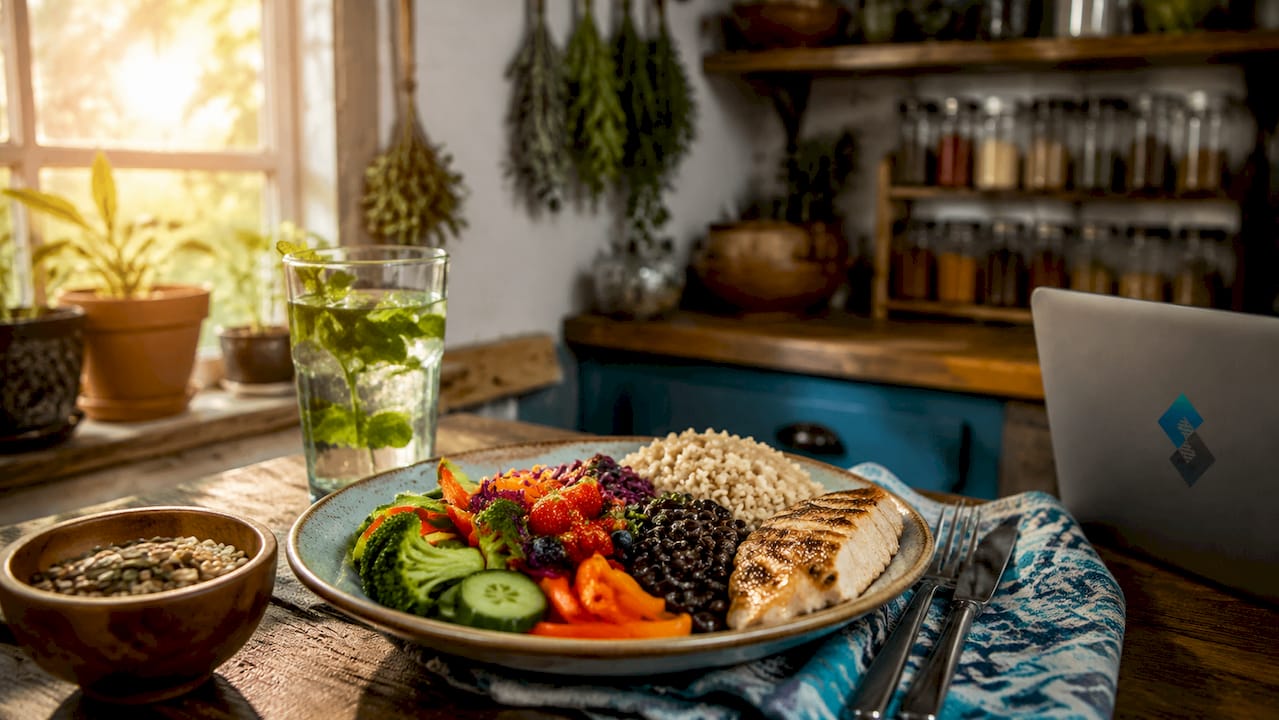
Healthy fats are equally central to longevity nutrition strategies. Olive oil, avocados, walnuts, and fatty fish like salmon supply unsaturated fatty acids that lower cardiovascular risk and support brain cell integrity. Processed foods, added sugars, and trans fats work in the opposite direction. They accelerate cellular aging and raise systemic inflammation markers, regardless of how many vegetables you also eat.
The most protective foods to prioritize include:
- Legumes (lentils, black beans, chickpeas): high in fiber, plant protein, and polyphenols
- Fatty fish (salmon, sardines, mackerel): rich in omega-3 fatty acids linked to reduced cognitive decline
- Cruciferous vegetables (broccoli, kale, Brussels sprouts): contain sulforaphane, a potent Nrf2 pathway activator
- Whole grains (oats, barley, farro): deliver beta-glucan fiber that feeds beneficial gut bacteria
- Fermented dairy (yogurt, kefir): provide probiotics that support microbiome balance
Pro Tip: Rotate your legume choices weekly. Each variety carries a distinct polyphenol profile, which broadens the diversity of beneficial compounds your gut bacteria receive.
How do nutrition strategies reduce aging-related inflammation?
Inflammaging is the term researchers use to describe the low-grade, chronic systemic inflammation that accumulates with age and drives conditions like cardiovascular disease, type 2 diabetes, and cognitive decline. Diet is one of the most direct levers for controlling it. Reducing refined grains and ultra-processed foods while increasing plant diversity lowers inflammatory markers including C-reactive protein (CRP) and tumor necrosis factor-alpha (TNF-α). Lower CRP and TNF-α levels correlate with slower biological aging and reduced risk of age-related disease.
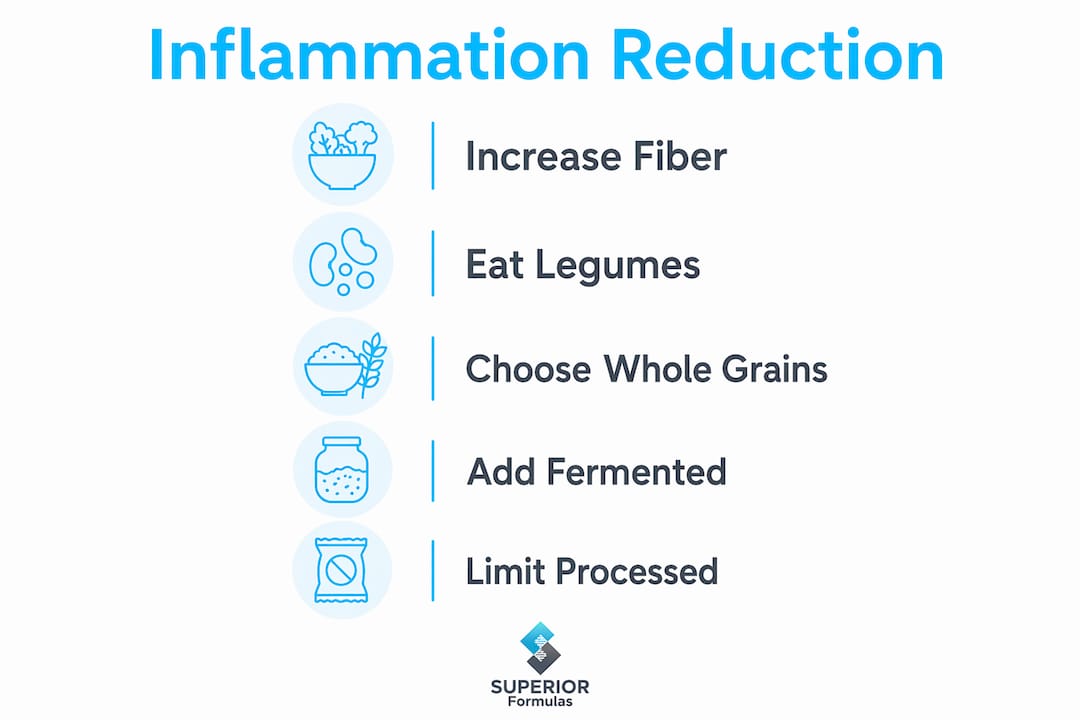
Gut microbiome health sits at the center of this process. A diverse, fiber-rich diet feeds beneficial bacterial strains that produce short-chain fatty acids, which in turn regulate immune responses and reduce intestinal permeability. Fermented foods twice a week, such as yogurt, kefir, kimchi, or sauerkraut, measurably improve microbiome balance and reduce systemic inflammation.
| Dietary choice | Effect on inflammaging |
|---|---|
| Increase fiber diversity (vegetables, legumes, whole grains) | Feeds beneficial gut bacteria; lowers CRP |
| Add fermented foods (yogurt, kefir, kimchi) | Improves microbiome resilience; reduces intestinal permeability |
| Reduce ultra-processed foods | Lowers TNF-α and oxidative stress markers |
| Limit refined grains and added sugars | Stabilizes blood glucose; reduces inflammatory signaling |
| Increase omega-3 intake (fatty fish, walnuts) | Suppresses pro-inflammatory cytokine production |
Pro Tip: When reading food labels, treat any ingredient list longer than five items as a signal to look for a whole-food alternative. Ingredient count is a fast proxy for processing level.
What are the best foods and meal patterns for long life?
Consistently eating from any of five validated dietary patterns rich in fruits, vegetables, whole grains, and healthy fats reduces all-cause mortality by 18–24%. That range represents years of healthy life added through food choices alone. The five patterns with the strongest evidence are the Mediterranean diet, the DASH diet, the healthful plant-based diet, the Planetary Health Diet, and the Alternative Healthy Eating Index pattern.
| Diet pattern | Core emphasis | Practical strength |
|---|---|---|
| Mediterranean | Olive oil, fish, legumes, vegetables | High palatability; strong cardiovascular evidence |
| DASH | Low sodium, high potassium, lean proteins | Clinically proven for blood pressure control |
| Healthful plant-based | Whole plant foods; minimal animal products | Strongest for reducing type 2 diabetes risk |
| Planetary Health Diet | Sustainability-focused; limits red meat | Balances personal and environmental health |
| Alternative Healthy Eating Index | Broad plant diversity; limits processed foods | Linked to 1.86–2.24 times greater odds of healthy aging to 75 |
No single pattern wins across every outcome. The most important factor is which one you can sustain for decades, not which one produces the fastest short-term result.
Meal timing and portion structure also matter. Eating the largest meal earlier in the day aligns caloric intake with circadian metabolic rhythms, improving insulin sensitivity. Skipping breakfast consistently, by contrast, is associated with higher inflammatory load and worse lipid profiles in adults over 40.
Key meal-structuring habits that support longevity:
- Eat at consistent times daily to support circadian rhythm alignment
- Front-load calories toward breakfast and lunch rather than dinner
- Include a protein source at every meal to protect muscle mass after 40
- Limit alcohol to no more than one drink per day; evidence for any protective effect is weaker than previously believed
- Protein source matters: plant proteins, fish, and poultry outperform red and processed meats for healthy aging outcomes
How do you transition to and maintain a longevity-focused diet?
Sustainable adherence over decades matters more than any short-term dietary intervention. Diet fatigue commonly undermines longevity efforts, and gradual changes that crowd out processed foods show better long-term adherence than strict elimination approaches. The practical implication: add before you subtract. Introduce one new vegetable, legume, or whole grain each week rather than overhauling your entire pantry at once.
Meal planning is the single most effective structural tool for maintaining these habits. Spending 30 minutes on Sunday to prep a grain base, roast a batch of vegetables, and portion out legumes removes the daily decision fatigue that drives people back to processed convenience foods. Apps like Cronometer or Eat This Much help track nutrient diversity without requiring obsessive calorie counting.
- Audit your current plate. Identify the three most frequently eaten processed foods and find one whole-food substitute for each.
- Build a weekly template. Assign protein sources to each dinner (fish twice, legumes twice, poultry once) and rotate vegetables by color.
- Shop the perimeter first. Produce, proteins, and dairy line the outer aisles of most grocery stores. Fill the cart there before entering the center aisles.
- Adapt to your culture. The best longevity diet is flexible enough to incorporate cultural food traditions. Miso, dal, injera, and sofrito all fit within longevity nutrition principles.
- Eat with others when possible. Communal eating triggers physiological and psychological benefits that support metabolic health. How you eat is as important as what you eat.
Pro Tip: Batch-cook a large pot of mixed beans every Sunday. Beans are the most cost-effective longevity food available, and having them ready removes the biggest barrier to eating them regularly.
For readers looking to deepen their clinical understanding of these changes, the 2026 clinical longevity guide from Superiorformulas offers practitioner-level detail on sustainable nutrition transitions.
Key takeaways
Consistent adherence to plant-forward dietary patterns that reduce inflammaging, support gut microbiome diversity, and prioritize whole proteins is the most evidence-backed strategy for extending healthy lifespan after 35.
| Point | Details |
|---|---|
| Build the longevity plate correctly | Fill half with vegetables and fruits, one quarter with whole grains, one quarter with healthy proteins. |
| Target inflammaging through food | Reduce ultra-processed foods and refined grains; add fermented foods twice weekly to lower CRP and TNF-α. |
| Choose any of five validated patterns | Mediterranean, DASH, plant-based, Planetary Health, and AHEI all reduce all-cause mortality by 18–24%. |
| Prioritize protein source, not just quantity | Plant proteins, fish, and poultry support healthy aging better than red or processed meats. |
| Sustain through gradual change | Crowding out processed foods incrementally and eating socially improves long-term dietary adherence. |
What I’ve learned after years of watching people eat for longevity
Most people approach longevity nutrition as a problem of knowledge. They read the studies, buy the right foods, and still revert to old habits within three months. The real obstacle is not information. It is the gap between knowing what to eat and building an environment where eating well is the path of least resistance.
The research on communal eating changed how I think about this entirely. The idea that how you eat, not just what you eat, contributes to longevity shifts the frame from individual discipline to social design. People who eat with family or friends regularly tend to eat more slowly, choose better foods, and report higher satisfaction. That is not a soft finding. It has measurable metabolic consequences.
I am also skeptical of the superfood obsession that dominates wellness media. Blueberries will not save you if the rest of your diet is built on convenience foods. The Nature Medicine data on the Alternative Healthy Eating Index is clear: it is the overall pattern, sustained over 30 years, that produces the 1.86–2.24 times greater odds of healthy aging. No single food produces that effect.
The most underrated diet tip for aging well is this: pick the healthiest pattern you can genuinely enjoy, and eat it with people you care about. That combination outperforms any supplement stack or elimination protocol I have seen.
— cristopher
Superiorformulas and your next step toward healthy aging
Nutrition is the foundation, but targeted supplementation fills the gaps that even well-structured diets leave open. Superiorformulas develops physician-formulated supplements designed specifically to support the cellular pathways that diet activates, including Nrf2 activation, antioxidant defense, and microbiome resilience.

If you are building a longevity nutrition plan and want to understand which nutrients matter most at the cellular level, the longevity nutrients guide from Superiorformulas covers the science behind polyphenols, phytonutrients, and adaptogens that complement a whole-food diet. For a broader view of how nutrition supports healthy aging specifically after 35, visit Superiorformulas.com to explore the full range of evidence-based formulations.
FAQ
What is nutrition for longevity?
Nutrition for longevity is the consistent practice of eating dietary patterns that reduce chronic inflammation, support gut microbiome health, and preserve physical and cognitive function over decades. It prioritizes whole foods, fiber diversity, healthy fats, and plant-forward proteins over any single superfood.
Which diet is best for a long life?
No single diet wins universally, but the Mediterranean, DASH, healthful plant-based, and Alternative Healthy Eating Index patterns all reduce all-cause mortality by 18–24%. The best choice is the one you can sustain for decades while meeting your cultural and personal preferences.
How does diet reduce inflammation as you age?
Reducing ultra-processed foods and refined grains while increasing fiber diversity and fermented foods lowers CRP and TNF-α, the two primary markers of chronic systemic inflammation linked to age-related disease.
When should I start eating for longevity?
The evidence from a 30-year study of 105,000 participants shows that dietary patterns adopted in midlife, around age 35–50, produce the strongest gains in healthy aging outcomes by age 75. Starting at 35 gives you the full benefit window.
Do I need supplements if I eat a longevity diet?
A well-structured longevity diet covers most nutritional needs, but targeted supplements can address gaps in nutrients like vitamin D, omega-3s, and specific polyphenols that are difficult to obtain consistently through food alone. Physician-formulated options from brands like Superiorformulas are designed to complement, not replace, a whole-food dietary foundation.


