


A step-by-step longevity guide is a structured, evidence-based plan for extending both lifespan and healthspan by building proven habits in sleep, exercise, nutrition, and recovery. Longevity science makes one thing clear: the choices you make daily compound powerfully over decades. Research shows that adhering to five key lifestyle factors adds 12–14 years to life expectancy. That number is not about genetics or luck. It reflects what happens when you apply a consistent, stepwise health longevity approach to your daily routine.
What are the foundational lifestyle factors for longevity?
The five lifestyle factors that drive longevity are sleep, physical activity, diet quality, alcohol moderation, and not smoking. These are not suggestions. They are the most impactful levers you can pull to extend healthy years. Each one works independently, and all five together create a compounding effect that no supplement or shortcut can replicate.
Here is what each factor requires in practice:
- Sleep: Target 7–9 hours of consistent, quality sleep each night. Sleep is when cellular repair, hormone regulation, and memory consolidation happen. Cutting it short accelerates biological aging.
- Physical activity: Combine aerobic training with strength work. Movement is the single most studied longevity intervention available.
- Diet quality: Prioritize whole foods, adequate protein, and fiber-rich plant sources. Limit ultra-processed foods and added sugars.
- Alcohol: Moderate consumption or full avoidance reduces cancer risk, liver stress, and metabolic disruption.
- Not smoking: Tobacco use shortens life expectancy more than almost any other modifiable behavior.
Stress management and social engagement belong in this foundation too. Chronic stress elevates cortisol, which damages cardiovascular tissue and suppresses immune function over time. Strong social ties, by contrast, correlate with lower rates of cognitive decline and depression. For a deeper look at how these factors interact clinically, the longevity tips for practitioners guide from Superiorformulas covers the evidence in detail.
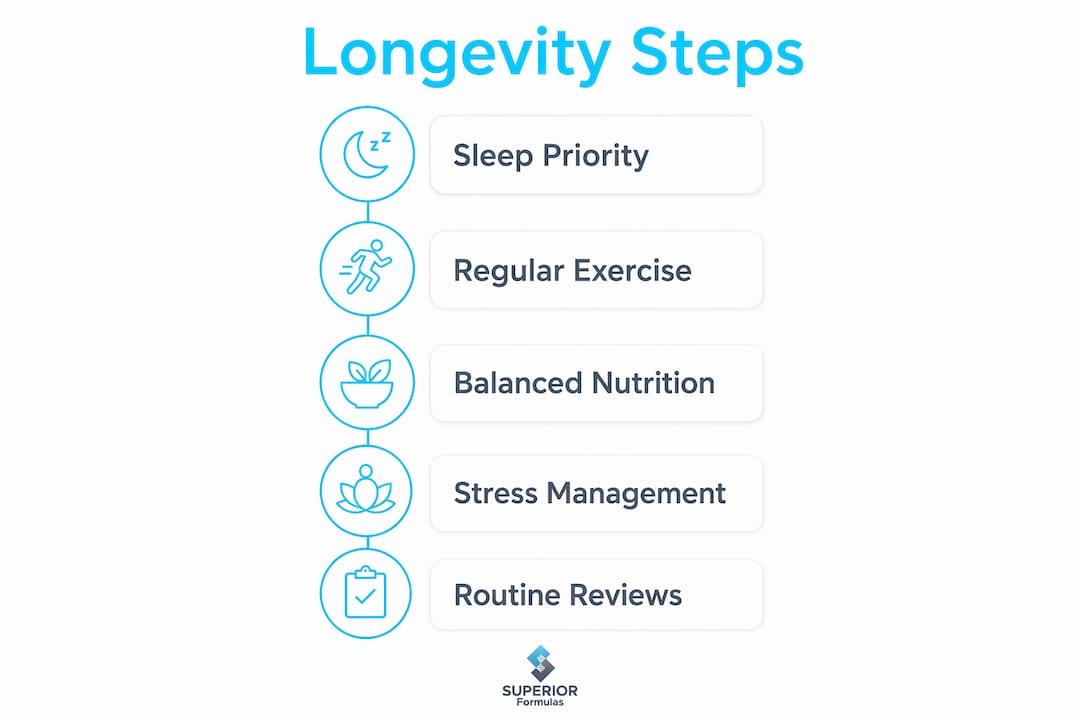
Pro Tip: Start with sleep before anything else. The order of operations for longevity is sleep first, exercise second, nutrition third. Supplements and advanced interventions come after the foundation is solid.
How do you build an effective longevity exercise routine?
Exercise is the most impactful single longevity intervention available. No supplement or biohack comes close to aerobic and strength training for reducing mortality risk. The goal is not to train like an athlete. The goal is to train consistently, with the right mix of intensity and volume.
Follow this stepwise exercise plan:
- Zone 2 cardio (150–300 minutes per week): Zone 2 means working at a pace where you can hold a conversation but feel challenged. Brisk walking, cycling, swimming, and light jogging all qualify. This intensity builds mitochondrial density, improves fat oxidation, and directly supports cardiovascular health.
- VO2 max intervals (1–2 sessions per week): Short bursts of high-intensity effort, such as 4-minute hard intervals with recovery periods, train your cardiovascular ceiling. People in the top quartile of VO2 max have a 4–5 times lower mortality risk than those in the bottom quartile. That gap is larger than almost any drug effect studied.
- Strength training (3–4 sessions per week): Resistance work preserves muscle mass and bone density during aging, both of which decline sharply without stimulus. Compound movements like squats, deadlifts, rows, and presses give the most return per session.
- Daily movement (7,000–10,000 steps): Structured workouts matter, but so does baseline activity throughout the day. Sitting for long stretches raises cardiovascular and metabolic risk even in people who exercise regularly.
Habit formation is the hidden variable in exercise adherence. Schedule workouts like appointments. Lay out your gym clothes the night before. Remove the friction between intention and action. Consistency over months beats intensity over weeks every time.
Pro Tip: If you are new to Zone 2 training, use the “talk test.” If you cannot speak in full sentences, slow down. If you can sing, speed up. That narrow band is where the mitochondrial adaptation happens.

What nutritional strategies support a longevity-focused lifestyle?
Nutrition for longevity centers on three priorities: adequate protein, fiber-rich whole foods, and limiting metabolic disruptors like ultra-processed foods and added sugars. Most adults undereat protein and overeat refined carbohydrates. Fixing that imbalance alone produces measurable improvements in body composition, energy, and metabolic health.
The key nutritional targets for a long life guide are:
- Protein: Consume 1.6–2.2 grams per kilogram of body weight per day to support muscle protein synthesis. For a 75 kg adult, that is 120–165 grams daily. Spread intake across meals to maximize absorption. For practical guidance on hitting these targets, this protein intake resource covers meal-level strategies.
- Fiber: Aim for 30+ grams daily from vegetables, legumes, whole grains, and fruit. Fiber feeds gut microbiome diversity, reduces systemic inflammation, and lowers cardiovascular risk.
- Healthy fats: Olive oil, avocado, and nuts provide monounsaturated and polyunsaturated fats that support brain health and reduce LDL oxidation.
- Hydration: Chronic mild dehydration impairs cognitive function and kidney filtration. Aim for consistent water intake throughout the day, not just when thirsty.
- Limit ultra-processed foods: These products displace nutrient-dense calories and drive inflammation, insulin resistance, and gut dysbiosis.
| Nutritional priority | Daily target | Primary benefit |
|---|---|---|
| Protein | 1.6–2.2 g/kg body weight | Muscle preservation, metabolic health |
| Fiber | 30+ grams | Gut health, inflammation reduction |
| Healthy fats | 2–4 tablespoons olive oil equivalent | Cardiovascular and brain support |
| Hydration | Consistent throughout the day | Kidney function, cognitive clarity |
Incremental swaps work better than complete dietary overhauls. Replace one processed snack with nuts or Greek yogurt. Add a serving of legumes to dinner three nights a week. Small changes, repeated consistently, reshape your nutritional baseline without triggering the resistance that comes with drastic restriction. The Superiorformulas nutrition for longevity guide offers a deeper breakdown of these strategies.
How do you build habits that make your longevity plan stick?
Habit automation is the difference between a longevity plan that works on paper and one that works in real life. Designing your environment so that healthy choices require less effort than unhealthy ones removes the daily need for willpower. Willpower is a finite resource. Environment is not.
Practical automation strategies include:
- Prep the night before: Set out gym clothes, portion proteins for the next day, and place your water bottle where you will see it first thing in the morning.
- Remove friction from good habits: Keep fruit and nuts visible on the counter. Store processed snacks out of sight or out of the house entirely.
- Add friction to bad habits: If you want to reduce screen time before bed, charge your phone in another room. The extra steps matter more than you think.
- Anchor new habits to existing ones: Attach a new behavior to something you already do reliably. Take a 10-minute walk after lunch every day, not “when you feel like it.”
The review cycle is equally important. A longevity protocol works best as a living system, updated every 90 days based on biomarker data and honest self-assessment. Schedule a quarterly check-in where you review blood markers, energy levels, sleep quality, and functional measures like grip strength or resting heart rate. Comparing health metrics quarterly reveals trends that daily tracking misses entirely.
Avoid the biohacking trap. The most common mistake is reaching for exotic supplements or expensive devices before sleep, exercise, and nutrition are consistent. Those interventions have marginal effects on a weak foundation. Build the base first, then layer in targeted support.
Pro Tip: Set a recurring calendar reminder every 90 days labeled “Longevity Review.” Use it to check one blood panel result, one fitness metric, and one dietary habit. Three data points per quarter is enough to course-correct before small drifts become big problems.
Key Takeaways
A structured longevity plan built on sleep, exercise, nutrition, and habit automation is the most evidence-backed path to adding healthy years to your life.
| Point | Details |
|---|---|
| Five lifestyle factors drive longevity | Sleep, activity, diet, alcohol moderation, and not smoking add 12–14 years to life expectancy. |
| Exercise is the top intervention | Zone 2 cardio, VO2 max intervals, and strength training 3–4 times per week reduce mortality risk significantly. |
| Protein intake matters at every age | Target 1.6–2.2 g/kg/day to preserve muscle mass and support metabolic health. |
| Environment beats willpower | Automating healthy choices through environment design improves adherence far more than motivation alone. |
| Review every 90 days | Quarterly assessments of biomarkers and functional metrics keep your plan aligned with your actual health status. |
What I have learned from building a real longevity routine
The gap between knowing what to do and actually doing it is where most people get stuck. I have watched people spend significant money on peptides and advanced testing while sleeping six hours a night and skipping strength training. The research is unambiguous: foundational habits come first. Sleep, exercise, and nutrition are not the boring prerequisites before the interesting stuff. They are the interesting stuff.
Habit automation changed my own adherence more than any motivational strategy. Once gym sessions were scheduled and gym clothes were already out, the decision was already made. Friction reduction is not a productivity trick. It is a biological reality about how behavior forms.
The 90-day review cycle is the most underused tool in personal health. Most people either track obsessively every day or not at all. Neither works. Daily data creates noise. Quarterly data reveals signal. When you compare your resting heart rate, energy, and strength metrics every three months, you see whether the plan is working or whether it needs adjustment. That feedback loop is what separates people who age well from those who simply age.
Incremental, consistent steps compound over years in ways that feel invisible in the short term and undeniable in the long term. Start with sleep. Add exercise. Refine nutrition. Then, and only then, consider what targeted supplementation might fill the remaining gaps.
— cristopher
Science-backed supplements to support your longevity plan
Once your foundational habits are consistent, targeted supplementation can fill nutritional gaps and support pathways that diet and exercise alone may not fully address. Superiorformulas develops physician-formulated supplements built around clinically studied ingredients, including polyphenols, adaptogens, and phytonutrients that support cellular resilience and healthy aging pathways like Nrf2 activation.

Every Superiorformulas product is manufactured in GMP-certified facilities and tested by third parties for purity and consistency. The formulations are designed to complement the lifestyle foundation covered in this guide, not replace it. When you are ready to add a targeted layer to your longevity plan, explore the science behind each formulation and find what fits your health goals.
FAQ
What is a step-by-step longevity guide?
A step-by-step longevity guide is a structured, evidence-based plan that sequences lifestyle changes in order of impact, starting with sleep, then exercise, then nutrition, before adding recovery tools or supplements.
How many years can healthy habits actually add to your life?
Adhering consistently to five key lifestyle factors, including adequate sleep, regular activity, a healthy diet, alcohol moderation, and not smoking, adds 12–14 years to life expectancy.
What type of exercise is best for longevity?
Zone 2 aerobic training combined with VO2 max intervals and strength training 3–4 times per week produces the strongest longevity outcomes. People in the top quartile of VO2 max fitness have a 4–5 times lower mortality risk than those in the bottom quartile.
How much protein do you need for healthy aging?
The evidence-backed target is 1.6–2.2 grams of protein per kilogram of body weight per day. This range supports muscle protein synthesis and preserves lean mass as you age.
How often should you review your longevity plan?
Review your plan every 90 days using blood biomarkers, functional measures like grip strength or VO2 max, and subjective energy levels. Quarterly reviews reveal meaningful trends that daily tracking cannot show.


