


Understanding what to put in your body after 35 is no small task. The supplement aisle is crowded, the advice online is contradictory, and most articles recycle the same shortlist without explaining why those nutrients actually matter. The real examples of healthy aging nutrients go beyond a generic multivitamin. They support muscle preservation, cellular resilience, cognitive function, and the molecular pathways that determine how well you age at the cellular level. This article gives you a specific, science-grounded look at which nutrients earn their place in your daily routine and why.
Table of Contents
- Key takeaways
- 1. How to evaluate examples of healthy aging nutrients
- 2. Protein and amino acids for muscle preservation
- 3. Calcium, vitamin D, magnesium, and iron
- 4. Omega-3 fatty acids and antioxidants
- 5. Hydration and nutrient synergy
- My perspective on nutrient strategies for healthy aging
- Support your healthy aging goals with Superiorformulas
- FAQ
Key takeaways
| Point | Details |
|---|---|
| Protein needs rise with age | Adults 35+ need 1.0 to 1.5 g/kg/day to counter muscle loss, spread across meals. |
| Nutrient synergy multiplies benefits | Vitamin D enables calcium absorption; omega-3 combined with vitamin D produces superior anti-aging results. |
| Antioxidants activate cellular defense | Polyphenols and curcumin switch on the Nrf2 pathway, reducing inflammation at the molecular level. |
| Hydration supports muscle integrity | Adequate daily water intake directly reduces muscle protein breakdown in older adults. |
| More is not always better | Excessive vitamin D and calcium supplementation can increase fall risk and kidney stone formation. |
1. How to evaluate examples of healthy aging nutrients
Not every nutrient that trends on social media deserves a place in your regimen. Evaluating nutrients for aging requires looking at four dimensions: biological relevance to the aging process, strength of clinical evidence, synergistic potential with other nutrients, and safety at recommended intake levels.
Biological relevance means the nutrient directly addresses mechanisms that accelerate aging. Those mechanisms include oxidative stress, chronic low-grade inflammation (often called “inflammaging”), mitochondrial dysfunction, and progressive muscle loss called sarcopenia.
Evidence strength matters because some nutrients are backed by randomized controlled trials and meta-analyses, while others rely on observational data alone. Clinical evidence from peer-reviewed journals, expert guidelines, and longitudinal studies should carry the most weight in your decisions.
When assessing safety, watch for nutrients where benefits plateau at high doses. A nutrient that helps at 600 IU may not help at 4,000 IU, and in some cases it may actively harm you. Stick to evidence-based intake ranges.
- Biological role: Does the nutrient target aging mechanisms like oxidative stress, inflammation, or muscle loss?
- Evidence quality: Are there human clinical trials, not just cell studies?
- Synergy: Does this nutrient amplify the effect of others you already take?
- Bioavailability: Is the form you’re taking actually absorbed efficiently by the body?
- Safety profile: What are the risks at high doses, and are they well-characterized?
Pro Tip: When reviewing longevity nutrient research, prioritize human trials over animal or in vitro studies. The gap between “promising in a petri dish” and “effective in humans” is enormous.
2. Protein and amino acids for muscle preservation
Protein is the most underestimated nutrient in the diet for healthy aging. Starting in your mid-thirties, muscle protein synthesis begins to decline gradually. Without adequate dietary protein and physical activity, this leads to sarcopenia, the age-related loss of muscle mass and strength that quietly accelerates physical decline.

Protein needs in older adults range from 1.0 to 1.5 grams per kilogram of body weight per day, rising to 2.0 g/kg for those engaged in regular resistance training. For a 160-pound adult, that means consuming roughly 73 to 109 grams of protein daily, which most people fall short of.
The critical point most articles miss is when you eat protein, not just how much. Distributing protein across meals in portions of 25 to 30 grams each is significantly more effective than consuming most of your protein at dinner. This matters because aging muscles develop what researchers call anabolic resistance, a blunted response to protein intake that requires more frequent stimulation to maintain synthesis rates.
- Animal sources such as eggs, fish, chicken, and Greek yogurt deliver complete amino acid profiles and are highly bioavailable.
- Plant sources like lentils, chickpeas, and quinoa can be combined to provide all essential amino acids.
- Leucine specifically triggers muscle protein synthesis and is found in highest concentrations in whey, eggs, and soy.
Pro Tip: Pairing protein with exercise is non-negotiable. Excess protein without movement produces minimal muscle benefit in adults over 40. Even 20 to 30 minutes of resistance training three times a week significantly amplifies protein’s protective effects.
3. Calcium, vitamin D, magnesium, and iron
These four micronutrients function less like isolated supplements and more like a coordinated system. A gap in any one of them undermines the others.
| Nutrient | Primary benefit | Key sources | Daily target (adults 50+) |
|---|---|---|---|
| Calcium | Bone density, muscle contraction | Dairy, leafy greens, fortified foods | 1,200 mg |
| Vitamin D | Calcium absorption, muscle strength | Sunlight, fatty fish, fortified milk | 15 to 20 mcg |
| Magnesium | Muscle recovery, 300+ biochemical reactions | Nuts, seeds, dark chocolate, legumes | 320 to 420 mg |
| Iron | Oxygen delivery, energy production | Red meat, spinach, fortified cereals | 8 mg |
Calcium requirements rise to 1,200 mg per day for women over 51 and men over 71. Vitamin D at 15 to 20 mcg daily facilitates that calcium absorption while independently supporting muscle strength and immune regulation. Without adequate vitamin D, much of the calcium you consume simply is not absorbed.
Magnesium is involved in more than 300 biochemical reactions, a significant portion of which directly govern muscle function and recovery. Most adults over 50 fall short of their magnesium targets through diet alone, making it one of the more practical cases for supplementation. Iron supports oxygen delivery to working muscles and helps prevent the fatigue that often gets misattributed to “normal aging.”
- Vitamin D deficiency is widespread in adults over 50, particularly those living in northern latitudes or spending limited time outdoors.
- Calcium from food is preferred over high-dose supplements to reduce the risk of cardiovascular and kidney complications.
- Magnesium glycinate and magnesium citrate are better-absorbed forms compared to magnesium oxide.
4. Omega-3 fatty acids and antioxidants
This is where the nutrition science of aging gets genuinely fascinating. Omega-3 fatty acids, polyphenols, carotenoids, and curcumin each address aging at the cellular and molecular level in ways that calcium or protein simply cannot.
Omega-3 fatty acids
EPA and DHA from fatty fish, algae oil, or fish oil supplements reduce systemic inflammation, support muscle repair, and protect cognitive function. Omega-3 supplementation at approximately one gram daily can slow biological aging markers by roughly four months, an effect that becomes meaningfully stronger when combined with vitamin D and regular exercise. This triple combination represents one of the most well-supported anti-aging strategies in current nutritional research.
Polyphenols and the Nrf2 pathway
Polyphenols found in berries, green tea, dark chocolate, and red wine do something remarkable at the cellular level. They activate the Nrf2 pathway, which functions as the body’s master antioxidant switch, upregulating internal defense enzymes that neutralize free radicals far more efficiently than direct antioxidant supplementation alone. Beyond Nrf2 activation, polyphenols modulate gene expression related to inflammaging, reducing the chronic low-level inflammation that accelerates cellular aging.
Carotenoids
Lutein, zeaxanthin, beta-carotene, and lycopene protect cellular membranes from oxidative damage. They are particularly important for eye health, cognitive protection, and skin integrity. Foods rich in antioxidants like these include orange and yellow vegetables, dark leafy greens, and tomatoes.
Curcumin
Curcumin activates multiple anti-aging pathways, including AMPK and SIRT1, both of which are associated with mitochondrial biogenesis and cellular energy regulation. It also demonstrates neuroprotective properties that support cognitive health as you age. Bioavailability is a legitimate concern with curcumin; formulations combined with piperine or in liposomal delivery forms show significantly better absorption.
Pro Tip: When evaluating your antioxidant supplement strategy, look for multi-pathway ingredients like curcumin and quercetin that activate endogenous defense systems rather than simply adding more antioxidants to the mix.
5. Hydration and nutrient synergy
Water is not technically a nutrient in the micronutrient sense, but its role in every aging-related biochemical process makes it indispensable to any honest discussion of nutritional needs for older adults.
Adequate hydration directly reduces muscle protein breakdown in older adults. Muscle tissue is approximately 75% water, and even mild, chronic dehydration impairs muscle performance, recovery, and protein synthesis. Harvard Health recommends four to six cups of water daily as a baseline, with higher needs during physical activity or hot weather.
The nutrient synergy dimension of aging nutrition is where population-level dietary patterns like Mediterranean and DASH diets prove their value. Adopting these dietary patterns by age 40 can meaningfully extend life expectancy by reducing chronic inflammation and oxidative stress simultaneously.
Healthy aging relies not just on individual nutrients but on dietary patterns that collectively modulate molecular aging pathways for a longer healthspan. (Nutritional Strategies and Aging, MDPI 2025)
- Vitamin D enables calcium absorption, meaning you cannot optimize bone health with calcium alone.
- Combining omega-3 with vitamin D produces superior results for muscle health and cellular aging compared to either supplement taken independently.
- Pairing a high-quality diet with consistent resistance training amplifies every nutrient’s effectiveness significantly.
Quick-reference: key healthy aging nutrients at a glance
| Nutrient | Core benefit | Best sources | Considerations |
|---|---|---|---|
| Protein | Sarcopenia prevention, cellular repair | Eggs, fish, legumes, whey | 25 to 30 g per meal; pair with exercise |
| Calcium | Bone density, muscle contraction | Dairy, fortified foods, leafy greens | Prioritize food sources; avoid high-dose supplements |
| Vitamin D | Calcium absorption, muscle strength | Sunlight, fatty fish, fortified milk | Required to activate calcium’s bone benefits |
| Magnesium | Muscle recovery, enzymatic function | Nuts, seeds, legumes | Glycinate or citrate forms preferred |
| Iron | Oxygen delivery, energy | Red meat, spinach, fortified cereals | Test levels before supplementing |
| Omega-3s | Anti-inflammation, cognitive health | Fatty fish, algae oil, fish oil | ~1 g EPA/DHA daily; enhanced with vitamin D |
| Polyphenols/Curcumin | Nrf2 activation, cellular defense | Berries, turmeric, green tea | Curcumin needs piperine or liposomal delivery |
My perspective on nutrient strategies for healthy aging
I’ve watched the supplement conversation shift considerably over the past decade, and one pattern stands out clearly. The people who see the best outcomes are not the ones taking the longest list of supplements. They are the ones who understand why specific nutrients matter and build their routine around synergy rather than stacking.
What I find genuinely underreported is the risk side of over-supplementation. Excessive vitamin D and calcium at high doses can increase fall risk and kidney stone formation rather than preventing them. The research is clear on this, yet most wellness content glosses over it. More is not more. Precision matters.
My honest take is that dietary patterns matter more than any single supplement. Getting science-backed nutrients from food-first approaches, then filling genuine gaps with evidence-based supplements, produces better long-term outcomes than supplementing defensively without knowing your baseline levels.
If I were advising a 45-year-old building a protocol from scratch, I would start with protein distribution across meals, add vitamin D and magnesium if blood levels indicate deficiency, then layer in omega-3s and a polyphenol-rich diet before reaching for anything more complex. The fundamentals, done consistently, still outperform the latest longevity compound for most people.
— cristopher
Support your healthy aging goals with Superiorformulas
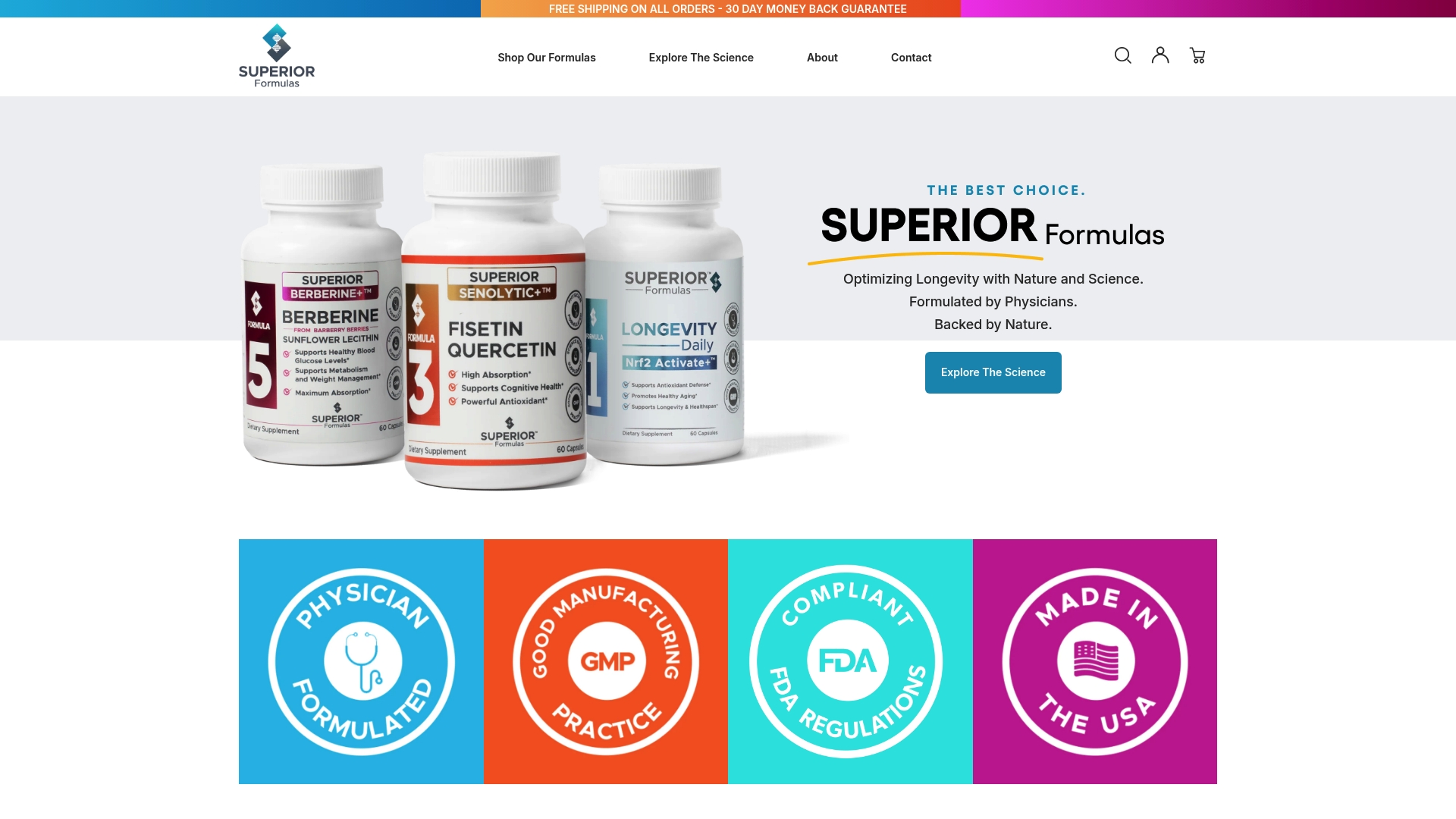
Knowing which nutrients matter is the first step. Finding them in a single, well-formulated product is where most people struggle. Superiorformulas developed Formula 9 Superior Multi+ as a physician-formulated daily supplement designed specifically for adults who want comprehensive multi-nutrient support in one product. It includes AREDS2 nutrients alongside key vitamins, minerals, and antioxidant compounds selected for their clinical backing and bioavailability.
The formulation reflects the synergy principles covered in this article. Nutrients are paired strategically so each one enhances the next. Every ingredient is sourced and tested to GMP standards, with third-party verification for purity and potency.
If you want to go deeper on the science behind the formulas, Superiorformulas offers a detailed breakdown on their science resource page, covering the clinical research behind each ingredient choice. For adults who prefer to build their nutrition around evidence rather than trends, this is the kind of transparency worth looking for.
FAQ
What are the most important nutrients for healthy aging?
Protein, vitamin D, calcium, magnesium, omega-3 fatty acids, and polyphenol-rich antioxidants form the core of any evidence-based diet for healthy aging, each targeting distinct mechanisms including muscle preservation, bone density, inflammation, and cellular defense.
How much protein do adults over 40 need daily?
Adults over 40 need 1.0 to 1.5 grams of protein per kilogram of body weight daily, with needs rising to 2.0 g/kg for those doing regular resistance training. Spreading intake across meals in 25 to 30-gram portions improves muscle protein synthesis.
Can you get all healthy aging nutrients from food alone?
Most nutrients are best obtained from whole foods, but vitamin D and magnesium are commonly deficient in adults over 50, making targeted supplementation practical after confirming deficiency through blood testing.
Are antioxidant supplements worth taking for aging?
Antioxidants like polyphenols and curcumin are worth considering because they activate the body’s own Nrf2 defense pathways rather than simply adding external antioxidants. Food sources come first, but clinically formulated supplements can fill meaningful gaps.
What is the risk of over-supplementing vitamin D and calcium?
Taking vitamin D and calcium in excessive doses can increase the risk of kidney stones and, counterintuitively, falls in older adults. Benefits plateau and can reverse at high doses, which makes food-first intake and clinical guidance the safest approach.
Recommended
- How Dietary Supplements Support Longevity and Cellular Health - SUPERIOR Formulas
- Antioxidant Support: Evidence-Based Steps for Healthy Aging - SUPERIOR Formulas
- Longevity Nutrients: Science-Backed Choices for Cellular Health - SUPERIOR Formulas
- Types of dietary supplements: A health-conscious guide - SUPERIOR Formulas


