


Nutraceuticals are food-derived products that provide health benefits beyond basic nutrition, sitting at the intersection of diet and medicine. The term itself, coined by physician Stephen DeFelice in 1989, blends “nutrition” and “pharmaceutical” to describe substances ranging from omega-3 fatty acids and probiotics to polyphenols and antioxidants. For adults over 30 focused on longevity, cellular resilience, and sustained wellness, understanding what nutraceuticals actually are, how they are regulated, and which ones carry real scientific weight is the foundation of making smarter health decisions.
What are nutraceuticals, and how are they classified?
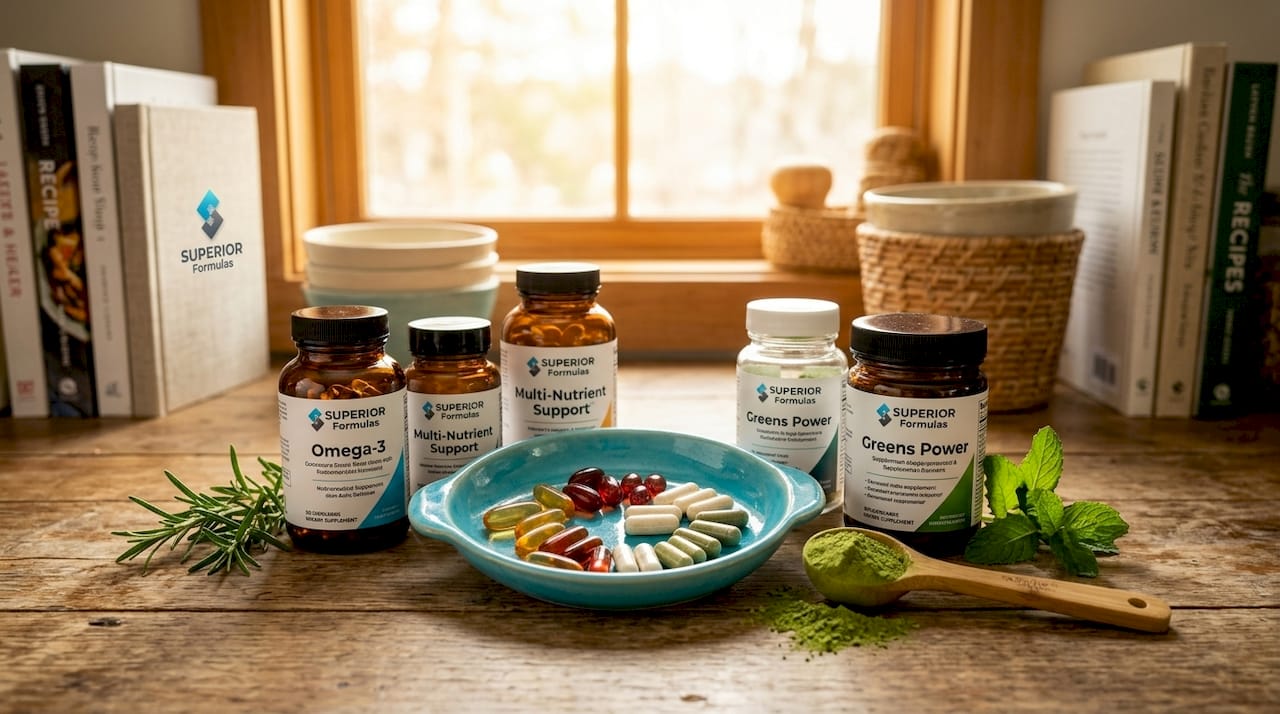
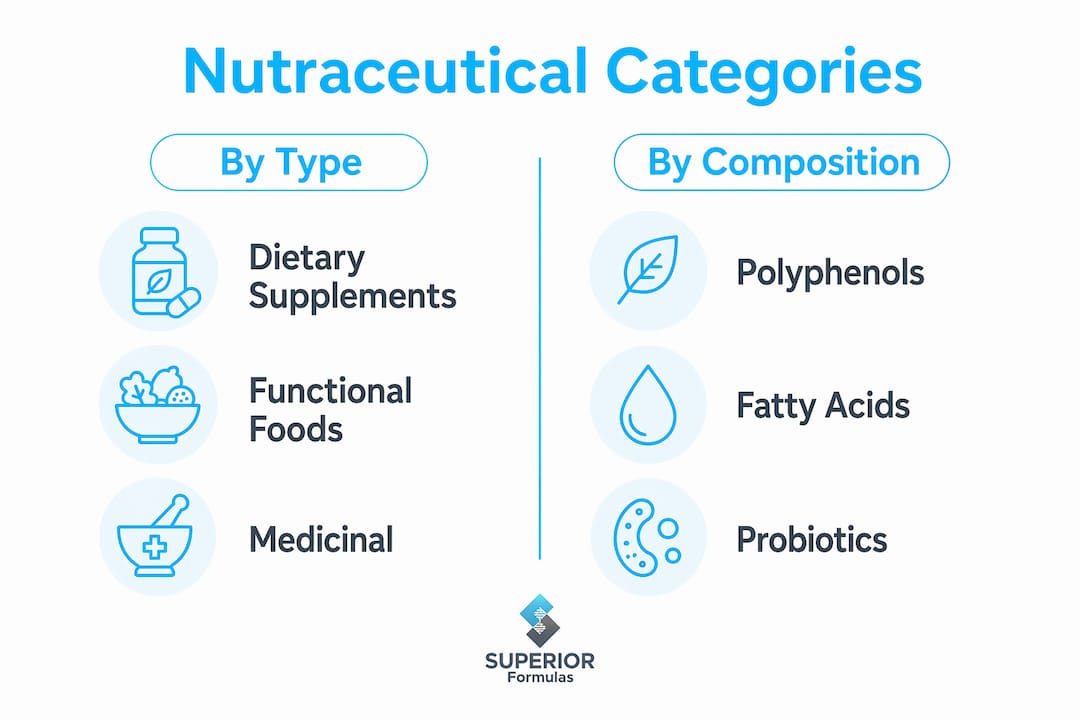
Nutraceuticals are food or food components that deliver health benefits beyond basic caloric or macronutrient value, typically delivered as capsules, tablets, drinks, or fortified foods. Common examples include omega-3 fatty acids, probiotics, curcumin, magnesium, and plant-based antioxidants like resveratrol. The classification system is not uniform globally, but four broad categories cover most products on the market.
The four main categories:
- Dietary supplements: Concentrated nutrients or botanicals in pill, powder, or liquid form. Examples include fish oil capsules, magnesium glycinate, and vitamin D3.
- Functional foods: Everyday foods enhanced with bioactive compounds. Think probiotic-fortified yogurt, omega-3-enriched eggs, or fiber-added cereals.
- Medical foods: Formulated for specific disease management under medical supervision, such as amino acid blends for metabolic disorders.
- Farmaceuticals: Bioactive compounds derived from agricultural sources, including plant-based phytonutrients like quercetin or sulforaphane from broccoli sprouts.
| Category | Definition | Common examples |
|---|---|---|
| Dietary supplements | Concentrated nutrients or botanicals | Fish oil, magnesium, vitamin D3 |
| Functional foods | Foods fortified with bioactive compounds | Probiotic yogurt, omega-3 eggs |
| Medical foods | Clinically managed disease-specific formulas | Amino acid blends, specialized nutrition |
| Farmaceuticals | Bioactives from agricultural sources | Quercetin, sulforaphane, resveratrol |
Products can also be classified by chemical composition: polyphenols, carotenoids, fatty acids, prebiotics, and probiotics each represent distinct biochemical families with different mechanisms of action. The delivery format matters too. A curcumin capsule with piperine for absorption behaves differently in the body than turmeric stirred into food.
Pro Tip: When comparing products, look beyond the category label. A “functional food” and a “dietary supplement” can contain identical active compounds. The delivery format and dose determine effectiveness, not the marketing category.
How nutraceuticals differ from dietary supplements and pharmaceuticals
The term “nutraceutical” is not a legal category in the United States. Regulatory agencies like the FDA do not recognize it as a formal classification. What the FDA does regulate are the underlying product types: dietary supplements fall under the Dietary Supplement Health and Education Act of 1994, commonly known as DSHEA, while pharmaceuticals require pre-market approval with clinical trial evidence.
Under DSHEA regulations, manufacturers are responsible for ensuring their products are safe and that any claims made are truthful. The FDA does not review or approve dietary supplements before they reach store shelves. This is the critical difference from pharmaceuticals, where the FDA requires proof of safety and efficacy before a drug can be sold. Post-market enforcement is the FDA’s primary tool for supplements.
Labels on dietary supplements making health-related statements must carry a specific disclaimer: “This statement has not been evaluated by the FDA” and must clarify that the product is not intended to diagnose, treat, cure, or prevent any disease. These are called structure/function claims, and they describe how a nutrient affects normal body structure or function rather than treating a disease.
The practical implication: a supplement label saying “supports cardiovascular health” is a structure/function claim. A pharmaceutical label saying “reduces LDL cholesterol in patients with hyperlipidemia” is a disease treatment claim backed by clinical trial data. Knowing this distinction protects you from misreading marketing language as medical endorsement.
Pro Tip: If a supplement label makes a disease treatment claim without the FDA disclaimer, that is a regulatory red flag. Report it to the FDA’s MedWatch program and treat the product with skepticism.
- Nutraceuticals: broad marketing umbrella, not a legal U.S. category
- Dietary supplements: regulated under DSHEA, no pre-market FDA approval required
- Pharmaceuticals: require FDA pre-market approval with clinical trial evidence
- Functional foods: regulated as conventional foods with specific labeling rules
What does the science say about nutraceutical health benefits?
The evidence quality for nutraceuticals varies widely by ingredient, dose, and form. Some compounds carry decades of peer-reviewed research. Others rely on preliminary cell studies or animal models that have not translated to human outcomes. Treating all nutraceuticals as equally validated is the most common mistake health-conscious adults make.
Omega-3 fatty acids, specifically EPA and DHA from marine sources, have some of the strongest evidence for cardiovascular and anti-inflammatory support. Magnesium, deficient in a large portion of the U.S. adult population, supports over 300 enzymatic reactions and has clinical backing for sleep quality and muscle function. Probiotics, particularly strains like Lactobacillus acidophilus and Bifidobacterium longum, show meaningful evidence for gut microbiome modulation. Antioxidants like vitamin C, vitamin E, and polyphenols such as resveratrol and quercetin support cellular defense against oxidative stress, though dose and bioavailability remain critical variables.
“Nutritional science increasingly maps foods and ingredients to systemic and cellular pathways, including the gut microbiome’s role, but proof of benefit varies significantly by product and formulation.” — Archynewsy, evolving nutrition science
For longevity specifically, the science points toward ingredients that activate cellular resilience pathways. Compounds like sulforaphane and quercetin engage the Nrf2 pathway, the body’s master regulator of antioxidant defense. Nicotinamide riboside (NR) and nicotinamide mononucleotide (NMN) target NAD+ metabolism, which declines with age. Senolytics, compounds that selectively clear senescent cells, represent one of the most active research frontiers in aging biology.
| Ingredient | Primary mechanism | Evidence level |
|---|---|---|
| Omega-3 (EPA/DHA) | Anti-inflammatory, cardiovascular support | Strong clinical evidence |
| Magnesium glycinate | Enzymatic function, sleep, muscle | Moderate to strong |
| Probiotics (Lactobacillus) | Gut microbiome modulation | Moderate, strain-specific |
| Quercetin | Nrf2 activation, senolytic activity | Emerging, promising |
| NMN/NR | NAD+ metabolism, cellular energy | Early-stage human trials |
The honest takeaway: specific ingredients at clinically studied doses show real promise. Broad category claims like “antioxidant formula” without named compounds and standardized doses are marketing, not science. You can explore antioxidant evidence for aging to understand which compounds have the most rigorous support.
How to choose high-quality nutraceutical products
Product quality in the nutraceutical space is genuinely uneven. Two products with identical ingredient names can differ significantly in bioactive form, standardization, and dose because regulators do not pre-approve health-effect claims. This means the burden of verification falls on you.
Follow these steps to evaluate any nutraceutical product before purchasing:
- Read the Supplement Facts panel. Check for specific compound names, not just categories. “Curcumin as 95% curcuminoids” tells you far more than “turmeric extract.”
- Verify the dose against research. Look up the clinically studied dose for the specific ingredient. Many products underdose to reduce cost.
- Check for third-party testing. Certifications from NSF International, USP, or Informed Sport confirm that what is on the label is in the bottle.
- Identify the bioactive form. Magnesium oxide is poorly absorbed compared to magnesium glycinate or malate. Form determines bioavailability.
- Look for GMP-certified manufacturing. Good Manufacturing Practice certification from the FDA means the facility meets quality control standards.
- Assess the claims carefully. Structure/function claims with required DSHEA disclaimers are standard. Disease treatment claims without disclaimers are a warning sign.
Pro Tip: Before adding any nutraceutical to your routine, check for interactions with medications you take. The Natural Medicines Database and your pharmacist are both reliable resources. Some compounds, including St. John’s Wort and high-dose vitamin K, interact with common prescriptions.
Understanding how to identify research-backed supplements before you buy saves money and protects your health. The nutraceutical market generates billions in annual revenue, and not all of it is earned through efficacy.
The role of nutraceuticals in longevity and wellness after 30
After age 30, cellular processes that support energy, repair, and immune function begin to shift. NAD+ levels decline. Mitochondrial efficiency drops. Oxidative stress accumulates faster than antioxidant defenses can neutralize it. Nutraceuticals do not reverse aging, but specific compounds can support the biological pathways that slow its downstream effects.
A 2026 consumer report on longevity found that sleep (78%), nutrition (76%), stress management (73%), and cognitive resilience (50%) are the top priorities for healthy aging among surveyed consumers. This data reflects a shift toward proactive, multi-system wellness rather than reactive disease management. Nutraceuticals fit naturally into this framework as targeted tools within a broader strategy.
The most effective approach treats nutraceuticals as complementary to, not replacements for, foundational habits:
- Diet: A whole-food diet rich in polyphenols, fiber, and omega-3s provides the baseline that supplements build on.
- Physical activity: Exercise activates many of the same cellular pathways, including Nrf2 and AMPK, that longevity-focused nutraceuticals target.
- Sleep: Magnesium, ashwagandha, and L-theanine have evidence for supporting sleep quality, which is when cellular repair peaks.
- Stress management: Adaptogens like rhodiola rosea and ashwagandha show clinical support for cortisol regulation and cognitive resilience.
- Ongoing monitoring: Bloodwork tracking key biomarkers, including vitamin D, magnesium, omega-3 index, and inflammatory markers like hs-CRP, lets you measure whether your nutraceutical choices are producing measurable results.
The role of nutrition in longevity after 35 goes deeper than any single supplement. Nutraceuticals work best when they address specific, identified gaps in your nutritional and biochemical profile. Working with a physician or registered dietitian who understands functional medicine gives you the clearest picture of where targeted supplementation adds real value. Practitioners trained in functional medicine approaches are particularly equipped to integrate nutraceuticals into a personalized wellness plan.
Key takeaways
Nutraceuticals are food-derived compounds that support health beyond basic nutrition, but their effectiveness depends entirely on ingredient identity, dose, bioactive form, and manufacturing quality.
| Point | Details |
|---|---|
| Nutraceutical definition | Food-derived products providing health benefits beyond basic nutrition, not a formal FDA category. |
| Regulatory reality | Most nutraceuticals are regulated as dietary supplements under DSHEA, with no pre-market FDA approval. |
| Evidence varies widely | Omega-3s and magnesium have strong clinical backing; many other ingredients have limited human trial data. |
| Quality is not guaranteed | Third-party testing (NSF, USP) and GMP certification are the most reliable quality indicators. |
| Best used as complements | Nutraceuticals support longevity goals most effectively alongside diet, exercise, sleep, and stress management. |
What I’ve learned after years of watching this market
The nutraceutical space rewards critical thinking more than enthusiasm. I have watched well-intentioned people spend significant money on products that were either underdosed, poorly absorbed, or making claims that no single ingredient could support at any dose. The marketing sophistication in this industry has outpaced the science for most product categories, and that gap is where consumer harm happens.
What actually works is narrower than the industry suggests. Omega-3s, magnesium, vitamin D3 with K2, and well-characterized probiotic strains have earned their place in a longevity-focused routine. Emerging compounds like NMN, quercetin, and fisetin are genuinely interesting, but the human trial data is still early. That does not mean avoiding them. It means sizing your investment and expectations to match the evidence level.
The regulatory framework under DSHEA is not going to protect you proactively. Label literacy is your primary defense. When a product lists “proprietary blend” without disclosing individual doses, that is a quality signal worth noting. When a company publishes its third-party testing certificates and uses standardized extracts with named bioactive percentages, that is a company worth trusting.
My strongest recommendation: start with bloodwork. Know your vitamin D level, your omega-3 index, your magnesium status, and your inflammatory markers before you buy anything. Targeted supplementation based on measured deficiencies produces far better outcomes than a generic wellness stack assembled from marketing copy.
— cristopher
Science-driven nutraceuticals from Superiorformulas
Superiorformulas was founded by a physician-scientist with one goal: formulations that earn their place in your routine through evidence, not marketing. Every product in the line uses clinically studied ingredients at researched doses, manufactured in GMP-certified facilities with third-party purity testing.
If you are ready to move beyond guesswork and build a supplement routine grounded in biochemistry and aging science, explore the science behind Superiorformulas’ formulations. From Nrf2-activating polyphenols to cellular renewal compounds, each formula reflects the same standard: real ingredients, real doses, real transparency. Your longevity goals deserve nothing less.
FAQ
What is the nutraceutical definition in simple terms?
A nutraceutical is any food-derived product that provides health benefits beyond basic nutrition, including dietary supplements, functional foods, and bioactive compounds like omega-3s and probiotics. The term is a marketing and scientific concept, not a formal FDA regulatory category.
How do nutraceuticals differ from pharmaceuticals?
Pharmaceuticals require FDA pre-market approval with clinical trial evidence proving safety and efficacy for specific diseases. Nutraceuticals, regulated mostly as dietary supplements under DSHEA, do not require pre-market approval and cannot legally claim to treat or cure diseases.
Are nutraceutical supplements safe to take daily?
Safety depends on the specific ingredient, dose, and your individual health profile. Well-researched compounds like omega-3s, magnesium, and vitamin D3 have strong safety records at standard doses. Always check for drug interactions and consult a healthcare provider before starting any new supplement.
What are the best nutraceutical products for longevity?
Ingredients with the strongest evidence for longevity support include omega-3 fatty acids (EPA/DHA), magnesium glycinate, vitamin D3 with K2, and probiotics with identified strains. Emerging compounds like NMN, quercetin, and sulforaphane show promise in early human trials for cellular health and aging pathways.
How do I know if a nutraceutical product is high quality?
Look for third-party testing certifications from NSF International or USP, GMP-certified manufacturing, and a Supplement Facts panel that names specific compounds with standardized doses. Products listing only “proprietary blends” without individual ingredient amounts make quality verification impossible.
For a nutraceutical formulation that reflects these standards, explore our Formula 9 — Superior Multi+ Daily (with AREDS2 nutrients), which was designed with exactly this clinical rationale in mind. Explore the science behind the formulation to see how it applies to your own routine.
Recommended
- Examples of Healthy Aging Nutrients for Adults 35+ | SUPERIOR Formulas
- How Dietary Supplements Support Longevity and Cellular Health - SUPERIOR Formulas
- Types of dietary supplements: A health-conscious guide - SUPERIOR Formulas
- Longevity Nutrients: Science-Backed Choices for Cellular Health - SUPERIOR Formulas


