


The supplement aisle has never been more crowded, and neither has your inbox. For adults 35 and older who are serious about healthy aging, sorting through marketing claims to find what actually works in human trials is genuinely difficult. The NIH Office of Dietary Supplements publishes rigorous fact sheets that cut through the noise, but most consumers never read them. This guide applies that same standard of scientific scrutiny to the leading longevity and cellular health supplements, so you can make smarter, more confident decisions about what belongs in your daily routine.
Table of Contents
- How to evaluate supplements for longevity and wellness
- Top evidence-based supplements for longevity and cellular health
- Comparing results: What works and what’s still unproven
- How to personalize your supplement stack for better health
- Why most ‘evidence-based’ supplement lists miss the mark
- Ready to take the next step? Science-backed support awaits
- Frequently asked questions
Key Takeaways
| Point | Details |
|---|---|
| Clinically proven options | Multivitamin-minerals, collagen, and select omega-3s have randomized trial or meta-analysis support for key aspects of longevity and cellular health. |
| Form and label matter | Effectiveness depends not just on the ingredient but also its chemical form, dose, and label transparency. |
| Not all supplements deliver | Some popular compounds show biomarker changes without real-world health improvements in trials. |
| Personalize your choices | Match supplements to your specific aging, wellness, and health goals using tiered evidence and outcome relevance. |
How to evaluate supplements for longevity and wellness
Before you spend money on anything, you need a reliable filter. Not all evidence is created equal, and the supplement industry knows how to dress up weak data in convincing language. Here is a practical, science-first method for evaluating whether a supplement truly earns its place.
-
Prioritize randomized controlled trials (RCTs) and meta-analyses. These are the gold standard. In vitro studies (cells in a lab dish) and animal models generate hypotheses, not conclusions. If a brand cites only mechanistic or preclinical data, the human benefit is still unproven. Look for trials that measured outcomes you actually care about, such as reduced biological age, improved cardiovascular markers, or sustained energy, not just favorable enzyme activity.
-
Check the specific form of the ingredient, not just the name. This distinction matters more than most people realize. Magnesium absorption is significantly higher for magnesium citrate, aspartate, and chloride than for magnesium oxide, yet oxide is the cheapest and most common form in mass-market products. The same principle applies to vitamins (methylfolate vs. folic acid), omega-3s (triglyceride vs. ethyl ester form), and many others.
-
Demand transparent labeling. Proprietary blends that hide individual ingredient amounts are a red flag. You cannot verify whether a formula matches the dose used in clinical research if the label lists only a blend total. Assessing supplement efficacy requires knowing exactly what you are taking.
-
Match outcomes to your goals. A supplement that shifts a biomarker is not the same as one that improves how you feel, function, or age. Ask whether the trials measured the specific endpoint that matters to you. Epigenetic clock improvements are promising, but they are a proxy. Functional outcomes like grip strength, cognitive performance, and inflammation reduction are more directly meaningful.
“Not every supplement that changes a lab value changes your health trajectory. Outcome-level evidence tied to real physiologic function is what separates a credible formula from a clever marketing story.”
Use NIH ODS fact sheets as your first-pass reference for any ingredient you are considering. They summarize safety data, known drug interactions, and absorption details in one place.
Pro Tip: Before buying, search the ingredient name plus “RCT” or “meta-analysis” in PubMed. If the only results are animal studies or industry-funded pilot trials, proceed with caution.
Top evidence-based supplements for longevity and cellular health
With a clear screening method in hand, let’s explore the top contenders that actually pass the evidence-based test for supporting healthy aging.
Multivitamin-mineral formulas
The COSMOS trial, a large two-year study in older adults, found that multivitamin-multimineral supplementation modestly slowed the rate of increase in several epigenetic aging clocks. This is meaningful but not a miracle. The effect size was modest, and epigenetic clock changes are not the same as disease prevention. Still, for adults with dietary gaps, a high-quality multivitamin-mineral remains one of the most broadly supported foundational supplements.
Omega-3 fatty acids (EPA/DHA)
Not all omega-3 products deliver the same results. Omega-3 formulation differences between fish oil, krill oil, and algal oil affect bioavailability and the EPA-to-DHA ratio. Fish oil in triglyceride form tends to be better absorbed than the ethyl ester form. Algal oil is the cleanest plant-based source and provides DHA directly. When evaluating omega-3 products, always check the actual EPA and DHA milligrams per serving, not just the total “fish oil” amount on the label.
Magnesium
About 48% of Americans do not meet their daily magnesium requirement from food alone, and the consequences for cellular energy production, muscle function, and sleep quality are real. As noted above, form matters significantly. Citrate and chloride are the better-absorbed options for general use, while threonate shows early but promising data for brain health specifically.
Collagen and polyphenol blends
A meta-analysis of RCTs found that collagen and flavanols improved photoaging outcomes, while hyaluronic acid, lycopene, and carotenoids did not show statistically significant benefits for skin aging by the same measure. This is a useful finding because it separates the ingredients with real clinical signal from those riding the trend. Collagen peptides at 2.5 to 10 grams daily have the most consistent trial data for skin elasticity and joint comfort.
Vitamin D
Vitamin D deficiency is prevalent in adults 35 and older, and supplementation has solid evidence for supporting immune function, bone density, and mood regulation. However, the enthusiasm around vitamin D as a longevity compound has outpaced the evidence. Correction of deficiency is clearly beneficial; aggressive megadosing in already-replete individuals does not show additive gains.
NMN, NR, and berberine
These compounds attract intense interest in longevity circles. Evidence for NMN, NR, and berberine shows moderate support for specific endpoints, particularly NAD+ precursors for cellular energy and berberine for metabolic health. But their direct impact on human lifespan or functional aging has not been established through long-term RCTs. They are not without scientific merit, but they also should not anchor your entire longevity strategy.
Pro Tip: Explore physician-formulated options that combine clinically studied compounds at evidence-matched doses rather than assembling a fragmented stack on your own.
For a deeper look at the strongest candidates, our supplements for longevity guide walks through mechanisms, dosing, and safety profiles in greater detail. You can also review premium, science-backed picks organized by evidence tier.
Comparing results: What works and what’s still unproven
No two supplements are created equal. Here is how the science stacks up when you compare what translates into meaningful health benefits versus what remains more speculative.
| Supplement | Evidence strength | Human outcome measured | Mechanism |
|---|---|---|---|
| Multivitamin-mineral | Moderate (COSMOS RCT) | Slowed epigenetic aging clocks | Micronutrient repletion, DNA methylation |
| Omega-3s (EPA/DHA) | Strong | Cardiovascular markers, inflammation | Anti-inflammatory signaling pathways |
| Magnesium (citrate/chloride) | Strong | Sleep, muscle function, metabolic health | Cofactor for 300+ enzymatic reactions |
| Collagen peptides | Moderate | Skin elasticity, joint comfort | Stimulates collagen synthesis |
| Polyphenols/flavanols | Moderate | Photoaging, vascular function | Nrf2 activation, antioxidant defense |
| Vitamin D (correcting deficiency) | Strong | Bone density, immune function | Hormone-like nuclear receptor activity |
| NMN/NR | Early/Moderate | NAD+ levels, cellular energy | NAD+ precursor pathway |
| Berberine | Moderate | Blood glucose, lipid levels | AMPK pathway activation |
| TA-65/Cycloastragenol | Weak (functional) | Telomere length (not functional aging) | Telomerase activation |
Key observations from this data:
- The COSMOS study confirmed modest epigenetic gains from multivitamins, but TA-65 and cycloastragenol extended telomeres without improving functional aging outcomes. Longer telomeres did not translate into measurable benefits in frailty or inflammatory markers.
- Longevity stack compounds vary widely in human-derived outcome data. Some have compelling mechanistic stories with limited clinical follow-through.
- The strongest evidence clusters around foundational supplements (omega-3s, vitamin D, magnesium) rather than cutting-edge longevity compounds, though that landscape is shifting as more trials are completed.
- Biomarker improvement and functional improvement are not the same thing. A supplement that moves a number on a lab report does not automatically improve how you feel, perform, or age.
You can compare other longevity formulas and their evidence profiles to see how stacking strategies compare across the market.
How to personalize your supplement stack for better health
Comparison aside, science alone cannot dictate the best supplement routine for you. It has to fit your unique health priorities and life stage.
-
Start with your primary health goals. Are you focused on sustained cellular energy, immune resilience, cognitive sharpness, or metabolic stability? Each goal maps to a different cluster of evidence-supported compounds. Defining your priority prevents you from building a scattered stack that costs more and delivers less.
-
Filter every supplement by outcome-level evidence. For each candidate, ask: does this have RCT data measuring the specific outcome I care about? Use this filter to eliminate supplements that only have mechanistic support. RCT-supported supplementation should be the baseline expectation, not a bonus feature.
-
Consider safety, dosing, and potential interactions. This step is often skipped, and it matters. Magnesium at high doses causes GI distress. Vitamin D requires co-factors like K2 for proper utilization. Fat-soluble vitamins accumulate differently than water-soluble ones. NIH ODS fact sheets provide form-specific safety windows and known interaction flags that you can use before your next doctor’s visit.
-
Avoid overstacking. There is a common but mistaken assumption that more supplements mean better outcomes. The body has finite absorption capacity for certain nutrients, and some compounds compete for the same transporters or metabolic pathways. A well-chosen stack of four to six evidence-supported supplements will outperform a cluttered routine of twelve poorly chosen ones.
Pro Tip: Revisit your stack every six months. Your health priorities shift, new research publishes, and products change formulations. Treating your supplement routine as a living plan keeps it aligned with your actual goals. When you’re ready to choose science-driven gains, the decision gets cleaner with a defined framework. You can also learn how to implement smarter supplementation using a step-by-step approach that prioritizes evidence and individual fit.
Why most ‘evidence-based’ supplement lists miss the mark
Here is an uncomfortable truth. Most supplement recommendation lists, even the well-intentioned ones, confuse mechanism with benefit. They cite a study showing that a compound activates a cellular pathway and then imply that activation equals improved health. It does not. Longevity is not a biomarker story. It is a functional story.
The second major failure point is form and bioavailability. Lists routinely recommend “magnesium” or “omega-3s” without specifying which form, which source, or what dose the cited research actually used. Magnesium bioavailability differs substantially by salt form, and omega-3 EPA/DHA ratios vary significantly by product type. This detail changes outcomes, and leaving it out is a disservice to anyone trying to make an informed decision.
The third gap is label transparency. Many mainstream recommendations are based on research done with pharmaceutical-grade or research-grade preparations that bear little resemblance to what ends up on the consumer shelf. Asking whether a product’s actual label matches the studied dose is not nitpicking. It is the most practical question you can ask.
Savvy consumers use NIH ODS fact sheets as a baseline check, verify RCT evidence tied to meaningful health measures, and insist on transparent labeling before committing. Our science-backed longevity guide applies these exact standards to every formula we evaluate.
The smart path forward skips the hype and demands outcome-driven proof. Let your health goals, not trending ingredients, drive every decision.
Ready to take the next step? Science-backed support awaits
If you’ve made it through the evidence and want to put it into practice, Superior Formulas was built precisely for this moment. Every formula in our lineup is developed by a physician-scientist, grounded in published clinical research, and manufactured in GMP-certified facilities with third-party testing for purity and potency.
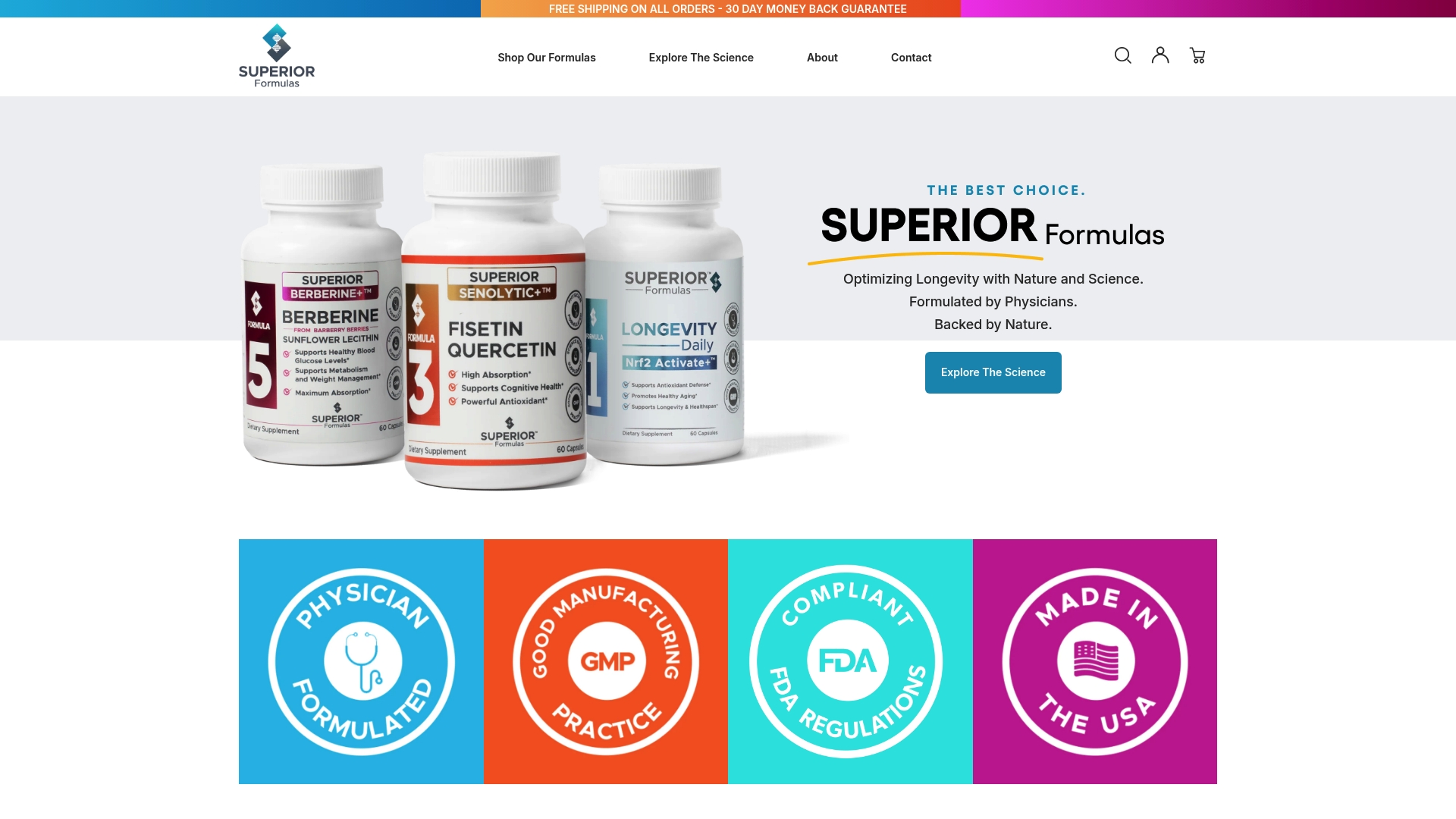
You can explore the evidence behind our formulas to see the research that informs each ingredient choice, from polyphenols and Nrf2 activators to NAD+ precursors and cellular renewal compounds. Whether you’re starting with foundational support or looking for a targeted longevity stack, the Superior Formulas home is where evidence-informed wellness meets clean, physician-guided formulation. Your biology deserves nothing less.
Frequently asked questions
What makes a supplement truly evidence-based?
An evidence-based supplement is backed by high-quality human trials or meta-analyses showing a clear benefit for specific health outcomes, not just speculative mechanisms. NIH ODS fact sheets are a reliable starting point for evaluating ingredient-level evidence before purchasing.
Which supplement has the best evidence for slowing biological aging?
The COSMOS trial showed that multivitamins modestly slowed increases in certain epigenetic aging clocks, making it one of the better-studied options, though effects were modest and should be weighed against your individual expectations and baseline nutrient status.
Are popular anti-aging supplements like TA-65/cycloastragenol effective?
These compounds may lengthen telomeres in studies, but they have not been shown to improve frailty or functional aging outcomes in clinical trials, which means real-world anti-aging benefits remain unclear despite the interesting mechanistic data.
Do all forms of magnesium or omega-3 supplements work the same?
No, form matters significantly. Magnesium citrate and chloride are better absorbed than oxide, and omega-3 products vary considerably by source (fish, krill, algal) and the ratio of EPA to DHA, all of which influence the actual health benefit you receive.
Where can I verify supplement safety or evidence?
The NIH ODS fact sheets offer ingredient-level guidance, safety ranges, and evidence summaries updated for health professionals and informed consumers, making them an excellent first reference before starting any new supplement.
Readers looking to translate this research into a daily routine often start with our Formula 1 — LONGEVITY Daily Nrf2 Activate+, which was designed with exactly this clinical rationale in mind. Explore the science behind the formulation to see how it applies to your own routine.
Recommended
- How to identify research-backed supplements for longevity - SUPERIOR Formulas
- How Dietary Supplements Support Longevity and Cellular Health - SUPERIOR Formulas
- Why choose science-driven supplements for longevity gains - SUPERIOR Formulas
- Physician-formulated supplements for longevity and cellular health - SUPERIOR Formulas


