


Most adults take at least one supplement, yet a striking number choose products based on label claims alone, without any clinical guidance. The supplement aisle is crowded with options making bold promises about energy, immunity, and aging, but the science behind those claims varies enormously. Physician-formulated supplements represent a fundamentally different category: products built on clinical precision, pathway-targeted ingredients, and rigorous quality standards. Understanding what separates these formulations from generic store-bought options is the first step toward making supplementation decisions that genuinely serve your long-term health.
Table of Contents
- What makes a supplement physician-formulated?
- How physician-formulated supplements differ from store-bought options
- Who benefits most—and when is supplementation necessary?
- What are the risks, limitations, and ethical considerations?
- Our perspective: The truth about physician-grade supplements for longevity
- Explore evidence-based physician-formulated supplements
- Frequently asked questions
Key Takeaways
| Point | Details |
|---|---|
| Targeted clinical approach | Physician-formulated supplements are designed with precision to address specific health needs and improve bioavailability. |
| Not one-size-fits-all | Evidence supports supplement use primarily for confirmed deficiencies or special health circumstances, not for everyone. |
| Oversight and safety matter | Medical guidance and regular assessment are essential for safe and effective supplement use. |
| Quality and regulation gaps | These supplements offer higher standards than many store-bought options, but all are subject to limited FDA oversight. |
What makes a supplement physician-formulated?
The term “physician-formulated” carries real weight when applied correctly. It means a licensed clinician, typically with advanced training in nutrition, biochemistry, or integrative medicine, has been directly involved in selecting ingredients, determining dosages, and identifying the biological pathways the product is meant to support. This is not a marketing badge. It reflects a fundamentally different design process.
According to clinical standards, physician-formulated supplements are designed with clinical precision, using high-purity ingredients, optimal bioavailability, and precise dosing tailored to patient needs, targeting specific pathways like mitochondrial function, detoxification, and inflammation for longevity and cellular health. That distinction matters enormously for adults over 35, whose cellular repair mechanisms, mitochondrial efficiency, and antioxidant defenses are already under age-related pressure.
Consider the contrast between a typical mass-market multivitamin and a physician-designed cellular health supplement. The multivitamin may contain 23 nutrients at doses calibrated for the average adult, using forms of vitamins and minerals that are inexpensive to manufacture but not always well absorbed. A physician-formulated cellular health supplement, by contrast, might include methylated B vitamins for individuals with MTHFR gene variants, activated forms of vitamin D3 with K2 for synergistic bone and cardiovascular support, and polyphenols like resveratrol or quercetin chosen specifically for their Nrf2 pathway activation. Every ingredient earns its place through clinical rationale, not cost-cutting.
Key characteristics that define a genuinely physician-formulated supplement include:
- Clinical involvement: A licensed physician or physician-scientist has directly shaped the formulation, not just endorsed it after the fact.
- Pathway targeting: Ingredients are selected to act on specific biological mechanisms relevant to longevity, such as mitochondrial biogenesis, cellular senescence, or oxidative stress reduction.
- Bioavailability optimization: Active, absorbable forms of nutrients are used, for example, magnesium glycinate over magnesium oxide, or methylcobalamin over cyanocobalamin.
- Evidence-based dosing: Doses reflect clinical research, not minimum daily requirements designed to prevent deficiency in the general population.
- Transparent labeling: Full disclosure of ingredient amounts, sourcing, and manufacturing standards.
You can explore the supplement science behind this approach to better understand how clinical expertise shapes formulation decisions at every level.
Pro Tip: When evaluating any supplement claiming physician involvement, look for specific evidence of clinical participation, published research affiliations, or detailed explanations of the biological rationale behind each ingredient. Vague endorsements are not the same as genuine physician formulation.
How physician-formulated supplements differ from store-bought options
Once we understand what makes a supplement physician-formulated, it’s vital to examine how these products actually compare to store-bought alternatives. The differences extend well beyond marketing language and touch on quality control, ingredient sourcing, potency, and the clinical oversight that guides their use.
Physician-grade supplements differ from consumer supplements by undergoing stricter quality control, third-party testing, fewer fillers, and higher potency, and they are often recommended based on lab results and monitored over time. That monitoring component is particularly significant. A physician-grade recommendation is not a one-time transaction; it is part of an ongoing clinical relationship where the supplement’s effects are tracked and adjusted.
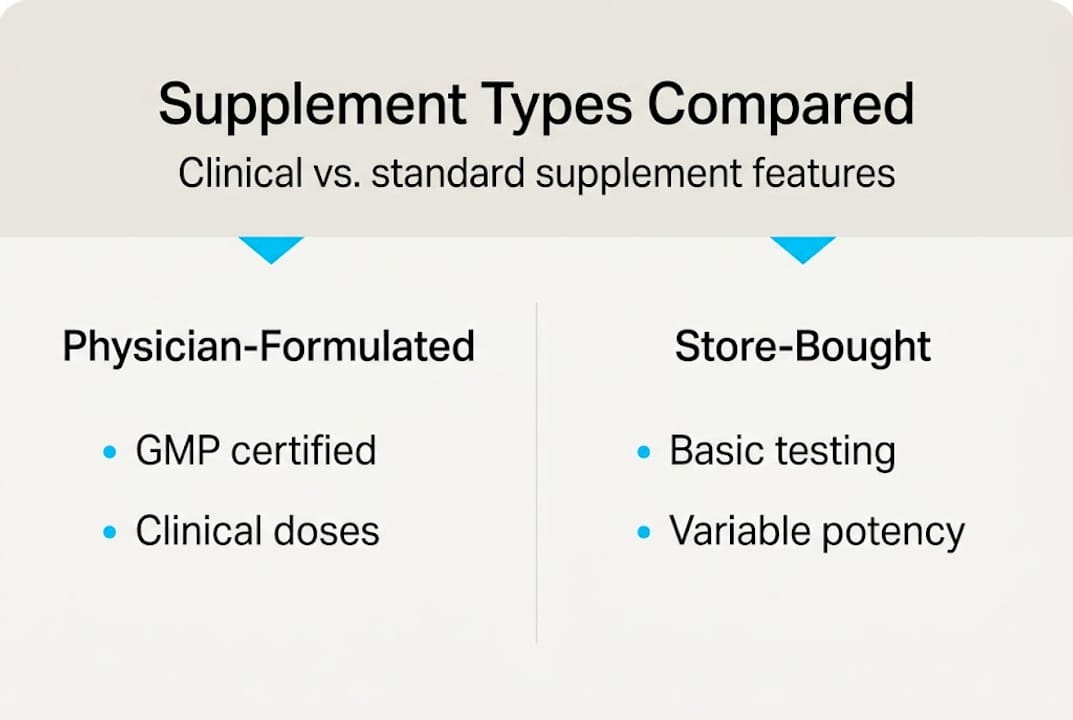
| Feature | Physician-formulated | Standard store-bought |
|---|---|---|
| Quality control | GMP-certified, third-party tested | Variable; often self-reported |
| Ingredient forms | Bioavailable, activated forms | Often synthetic or low-absorption forms |
| Potency | Clinically dosed | Minimum daily requirement based |
| Fillers and additives | Minimal or none | Common (binders, artificial colors) |
| Oversight | Physician-monitored | Self-directed |
| Labeling transparency | Full ingredient disclosure | Often proprietary blends |
The implications for cellular health are real. When a supplement contains magnesium stearate, artificial dyes, or titanium dioxide as filler ingredients, those additives contribute nothing to your health and may interfere with absorption. Higher potency also matters: many store-bought vitamin D supplements provide 400 IU, while clinical research increasingly supports 2,000 to 5,000 IU for adults with confirmed insufficiency, a dose range far more common in physician-grade formulations.
Key reasons why fewer additives and higher potency matter specifically for cellular health:
- Cellular uptake efficiency: Bioavailable nutrient forms reach target tissues more reliably, supporting mitochondrial energy production and DNA repair.
- Reduced inflammatory burden: Unnecessary fillers and synthetic additives can trigger low-grade inflammatory responses that counteract the supplement’s intended benefits.
- Consistent therapeutic effect: Precise dosing ensures the supplement delivers a predictable physiological response, which is critical when targeting pathways like Nrf2 activation or NAD+ production.
“The quality gap between physician-grade and retail supplements is not trivial. Contamination studies have found measurable levels of heavy metals, undisclosed ingredients, and subtherapeutic doses in a significant proportion of commercially available supplements.”
Exploring a physician-formulated multi that integrates AREDS2 nutrients with clinical-grade micronutrients illustrates how this standard of formulation translates into a real product designed for adults prioritizing long-term health.
Who benefits most—and when is supplementation necessary?
Now that the differences are clear, you need practical guidance on whether physician-grade supplementation is right for you. The honest answer is that not everyone needs supplements, and the evidence strongly supports a targeted, lab-guided approach rather than blanket supplementation.
Physicians emphasize evidence-based use for deficiencies such as vitamin D, B12, iron, and fiber, warning against routine use without need. Large randomized controlled trials show no broad benefits for preventing cancer, cardiovascular disease, or mortality in otherwise healthy individuals. That finding should recalibrate expectations. Supplements are not a shortcut to longevity. They are precision tools for addressing specific gaps.
Adults over 35 who are most likely to benefit from physician-formulated supplementation include those with:
- Confirmed nutrient deficiencies: Vitamin D insufficiency affects a large portion of the adult population, particularly those with limited sun exposure or darker skin tones. B12 deficiency is common in adults over 50 due to declining intrinsic factor production.
- Chronic health conditions: Individuals managing type 2 diabetes, inflammatory bowel disease, or autoimmune conditions often have impaired nutrient absorption or increased metabolic demands.
- Post-surgical or post-illness recovery: Bariatric surgery patients, for example, require lifelong supplementation with specific nutrients including iron, calcium, and fat-soluble vitamins.
- Medication-induced depletions: Statins deplete CoQ10. Metformin depletes B12. Proton pump inhibitors reduce magnesium and B12 absorption. Physician-guided supplementation can address these drug-nutrient interactions directly.
- Documented aging-related cellular decline: Adults with early markers of mitochondrial dysfunction, oxidative stress, or elevated inflammatory markers may benefit from targeted longevity-focused formulations.
A targeted longevity formula designed around these clinical realities can address specific aging pathways rather than offering a generic nutritional safety net.
For individuals who do not fall into these categories, the evidence for supplementation is considerably weaker. Self-prescribing high-dose antioxidants, for example, without clinical indication can actually interfere with the body’s natural adaptive stress responses, a concept known as hormesis.
Pro Tip: Before starting any new supplement regimen, ask your physician for a comprehensive metabolic panel and nutrient status assessment. Retesting every 6 to 12 months allows you to track whether the supplement is achieving its intended effect and adjust accordingly.
What are the risks, limitations, and ethical considerations?
Even for physician-formulated supplements, certain risks and complexities require deeper scrutiny. The regulatory environment surrounding dietary supplements in the United States creates a landscape where quality and safety are not guaranteed by law alone.
The FDA does not pre-approve supplements for safety or efficacy. Structure and function claims are permitted but must be truthful and not misleading. Randomized controlled trials are not legally required before a supplement reaches the market, though they are strongly recommended for substantiation. Risks include contaminants, ingredient interactions, and inadequate efficacy, particularly in individuals with chronic conditions. This regulatory gap is precisely why physician oversight matters so much.
| Risk category | Description | Who is most affected |
|---|---|---|
| Contamination | Heavy metals, undisclosed drugs, microbes | All users, especially immunocompromised |
| Drug-nutrient interactions | Altered drug metabolism or efficacy | Adults on prescription medications |
| Overconsumption toxicity | Fat-soluble vitamins (A, D, E, K) accumulate | Self-prescribers using high-dose products |
| Lack of efficacy | No clinical benefit for healthy individuals | General population without deficiencies |
| Financial burden | High out-of-pocket cost without insurance | Fixed-income adults, underserved populations |
Some risks are particularly sobering. Research on supplement use in chronic conditions highlights edge cases, including increased prostate cancer risk associated with high-dose vitamin E and selenium supplementation, and evidence that antioxidant supplements can interfere with the oxidative mechanisms that make chemotherapy effective. These are not theoretical concerns. They represent documented clinical outcomes from large-scale trials.
Additional risks worth understanding:
- Proprietary blends in retail products: When manufacturers list a “blend” without specifying individual ingredient amounts, you cannot verify whether any single ingredient is present at a therapeutically meaningful dose.
- Label accuracy failures: Third-party testing organizations have repeatedly found that supplement labels do not always match actual content, with some products containing significantly less of the active ingredient than claimed.
- Ethical access issues: Physician-grade supplements typically cost more than retail alternatives and are rarely covered by insurance, creating real equity concerns about who can access higher-quality formulations.
Physician oversight becomes non-negotiable when you are managing a chronic condition, taking prescription medications, undergoing cancer treatment, or considering high-dose supplementation of fat-soluble nutrients. In these contexts, the risks of unsupervised supplementation substantially outweigh any potential benefit.
Our perspective: The truth about physician-grade supplements for longevity
There is a tempting narrative in the supplement industry that better ingredients automatically translate to better outcomes. We understand the appeal. When you are serious about longevity and cellular health, you want the best tools available. But the evidence tells a more nuanced story.
Contrasting views on physician-grade supplements reveal that proponents highlight clinical tailoring and expert formulation, while skeptics stress the lack of mandatory randomized controlled trials, the failure of large trials to show broad benefits, and the potential for harm. Both perspectives contain important truths.
Our position is this: physician-formulated supplements are genuinely superior tools when matched to genuine clinical needs. They are not magic bullets, and no responsible clinician would present them as such. The adults who benefit most are those who approach supplementation with the same rigor they would apply to any medical decision: starting with lab data, working with a qualified clinician, setting realistic expectations, and reassessing regularly.
The real science behind longevity supplements supports targeted, evidence-guided use. Diet quality, sleep, stress management, and physical activity remain the foundation. Supplements built on clinical precision are a meaningful layer on top of that foundation, not a replacement for it. Cutting through marketing hype requires asking one simple question: what does the clinical evidence actually show for someone with my specific health profile?
Explore evidence-based physician-formulated supplements
For those ready to move beyond guesswork and explore clinically crafted options, Superior Formulas offers a range of physician-designed formulations built on the principles outlined in this article.
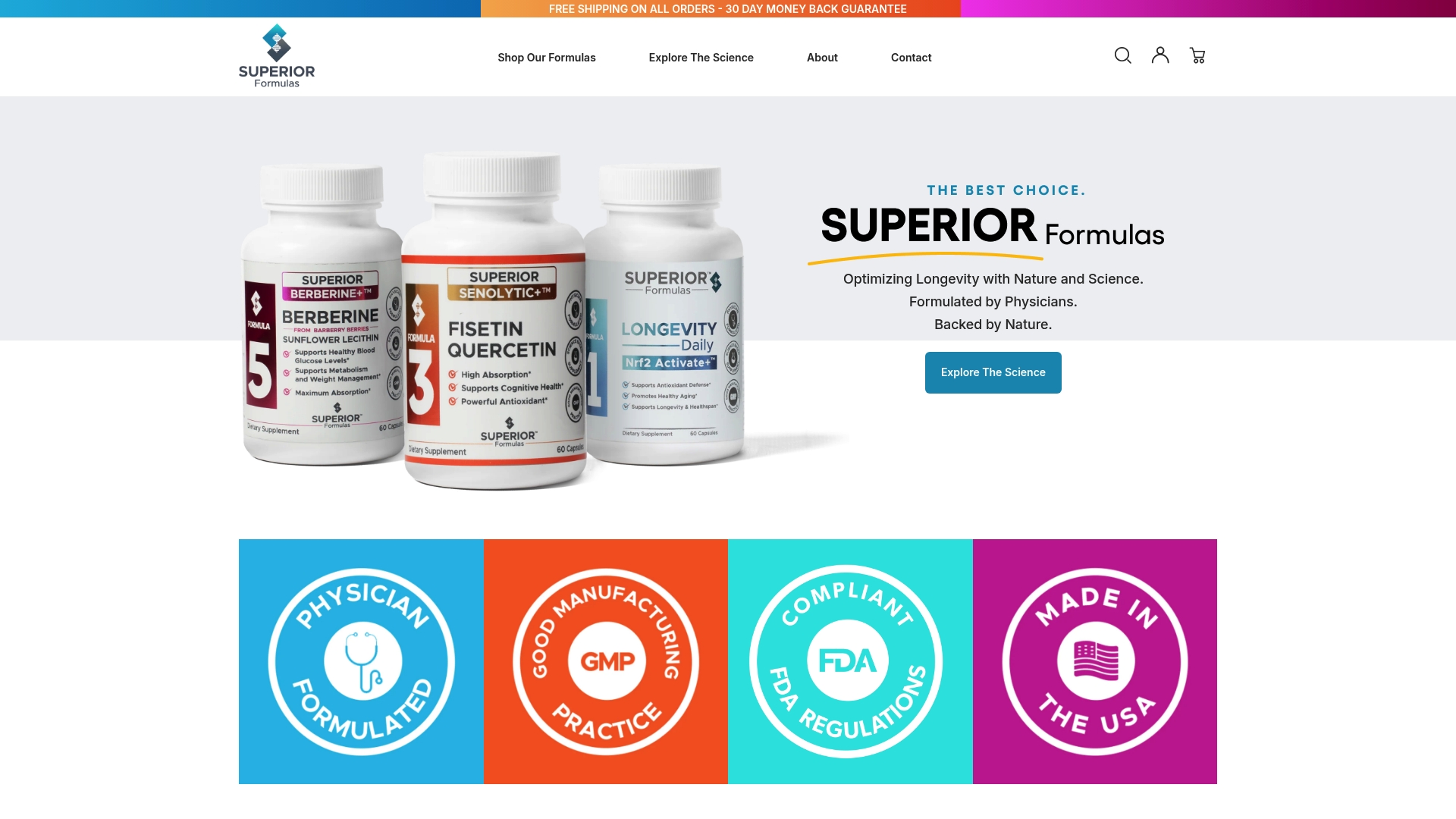
Our physician-designed daily supplement integrates AREDS2 nutrients with a comprehensive micronutrient profile, formulated specifically for adults prioritizing cellular resilience and long-term visual and systemic health. Every product we develop is grounded in the science behind Superior Formulas, where you can review the clinical rationale, ingredient research, and formulation philosophy that guide our work. We believe informed decisions lead to better health outcomes, and we are committed to giving you the information you need to make them.
Frequently asked questions
Are physician-formulated supplements safer than regular supplements?
They often use higher-quality ingredients and undergo stricter third-party testing, but all supplements carry risks if misused or taken without a clinical indication.
Can physician-formulated supplements replace a healthy diet?
No. Evidence-based guidance consistently shows supplements are intended to address confirmed deficiencies, not substitute for the broad nutritional benefits of whole foods.
What should I look for in a physician-grade supplement label?
Prioritize products with full ingredient disclosure, clinically relevant dosing, third-party testing certification, and clear evidence of physician involvement in the formulation process.
Are these supplements covered by insurance?
Most physician-formulated supplements are not covered by insurance, and out-of-pocket costs can be significantly higher than retail alternatives, making clinical necessity an important factor in the decision.
How do I know if I really need a supplement?
Start with your physician and request lab testing to identify specific deficiencies. Routine supplementation without confirmed need offers limited benefit and carries real risks.


