


Not all supplements are created equal, and the gap between hype and hard science is wider than most people realize. While the supplement industry generates over $50 billion annually in the United States alone, a surprising fraction of those products rest on little more than marketing copy and anecdotal reports. The real turning point came when MVM reduced pace of aging in a 2026 Nature Medicine study, showing that a science-driven multivitamin meaningfully slowed epigenetic aging in adults. That finding matters because it shifts the conversation from opinion to measurable biology, and it makes choosing the right supplement more important than ever for adults 35 and older.
Table of Contents
- What does ‘science-driven’ really mean?
- Evidence: How supplements impact aging and health markers
- Critical nuances and common pitfalls
- How to choose wisely: A science-first approach
- Our take on science-driven supplementation for longevity
- Explore science-backed supplement options with Superior Formulas
- Frequently asked questions
Key Takeaways
| Point | Details |
|---|---|
| Evidence matters most | Supplements with human clinical data and transparent testing deliver more reliable results for health-conscious adults. |
| Effects are modest | Even the best science-driven supplements provide incremental, not miraculous, benefits. |
| Quality beats hype | Third-party tested, GMP-certified supplements help you avoid contamination and misleading claims. |
| Lifestyle first | Foundational habits like nutrition, exercise, and sleep have a greater impact on longevity than supplement routines alone. |
What does ‘science-driven’ really mean?
With the stage set on why evidence matters, let’s look closer at what science-driven truly entails and how to spot it in a crowded marketplace.
The term gets used loosely, so it deserves a precise definition. A science-driven supplement is one where every key ingredient has been tested in human clinical trials, at the exact dose used in the product, with results published in peer-reviewed journals. That’s a high bar. It also means the formula is manufactured in a GMP-certified facility, subjected to third-party testing for purity and potency, and labeled transparently so you know exactly what you’re getting and why.
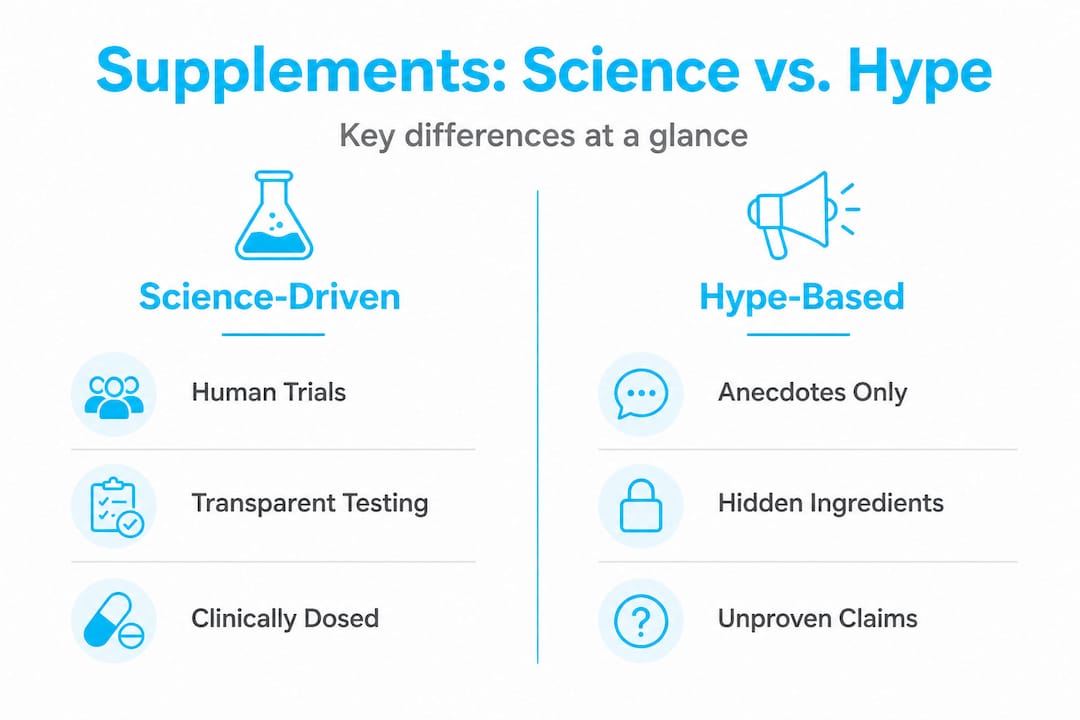
Here’s how science-driven supplements stack up against hype-based alternatives:
| Feature | Science-driven supplements | Hype-based supplements |
|---|---|---|
| Clinical evidence | Human RCTs at studied doses | Animal studies or no studies |
| Dosing | Matches clinically tested amounts | Often underdosed or overdosed |
| Transparency | Full label disclosure | Proprietary blends, hidden doses |
| Quality control | GMP-certified, third-party tested | Unverified manufacturing |
| Ingredient sourcing | Traceable, documented | Unclear origin |
| Regulatory status | Compliant, conservative claims | Overstated or illegal claims |
This table reveals a critical point. The supplement industry in the U.S. operates under a post-market regulatory model, meaning the FDA does not pre-approve supplements before they reach store shelves. That puts the responsibility squarely on manufacturers and, ultimately, on you as a consumer to do the vetting.
What should you look for beyond GMP certification? Start with science-backed supplements that cite specific studies, not vague references to “research.” Look for the specific trial, the dose used, and the population studied. If a product says it “supports cellular health” but can’t point to a human trial backing that claim at its formulated dose, it belongs in the hype category.
“The strongest signal of a science-driven supplement is not the number of ingredients on the label. It’s the quality and specificity of the evidence behind each one.”
Adults focused on preventive health supplements should treat every label like a clinical protocol. Verify before you buy.
Evidence: How supplements impact aging and health markers
After understanding what counts as genuine science-driven supplementation, the logical next step is examining the measurable real-world impact for adults like you.
The 2026 Nature Medicine study mentioned earlier deserves more attention because the numbers are specific. Participants taking a science-driven multivitamin showed a reduction in PCGrimAge pace of 0.113 years per year, with statistical significance at p=0.017. PCGrimAge is a validated epigenetic clock that measures the biological rate of aging at the DNA methylation level. A reduction of 0.113 years per year means the body’s biological machinery was aging measurably slower over the course of the trial.
To put that in perspective:
- Biological age vs. chronological age: Chronological age is simply how many years you’ve lived. Biological age reflects how fast your cells and organs are actually aging, and it can be faster or slower than your calendar age.
- Epigenetic clocks as a measurement tool: PCGrimAge is one of the most clinically validated epigenetic clocks available. A statistically significant slowing of this clock in a human RCT is genuinely meaningful data, not theoretical speculation.
- Cardiovascular and metabolic markers: Some trials have also shown improvements in inflammatory biomarkers, oxidative stress indicators, and cardiovascular risk factors in adults taking well-formulated physician-formulated supplements designed with clinical precision.
- Effect sizes are real but modest: This is important to state plainly. The benefits are statistically significant, but they are not dramatic transformations. Science-driven supplements produce gradual, cumulative effects that compound over months and years, not overnight changes.
Key data points from recent trials:
| Outcome measured | Supplement type | Effect observed |
|---|---|---|
| PCGrimAge epigenetic clock | Multivitamin/mineral | Slowed by 0.113 years/year |
| Oxidative stress markers | Polyphenol-based formulas | Measurable reduction |
| Inflammatory cytokines | Omega-3 and antioxidant blends | Modest but consistent reduction |
| Cardiovascular biomarkers | Comprehensive longevity formulas | Improved in several trials |
The picture that emerges is one of consistent, modest improvement in people who implement supplementation as part of a broader health strategy. The evidence doesn’t promise miracles. It promises measurable movement in the right direction when you use the right products at the right doses over sufficient time.
Critical nuances and common pitfalls
Reviewing the scientific benefits leads naturally into important nuances that influence what results you might actually see, and the traps that could cost you time, money, and potentially your health.
The first nuance is individual variation. Effects may be strongest in people who are genuinely deficient in a nutrient or who show signs of accelerated biological aging. If your diet already supplies adequate magnesium, zinc, and B vitamins, adding more through supplements may produce minimal measurable benefit. On the other hand, if you’re running a chronic vitamin D deficit or have suboptimal omega-3 status, targeted supplementation can produce more substantial changes in your health markers.
The second pitfall is proprietary blends. These are formulas that list multiple ingredients under a combined weight without disclosing individual doses. A proprietary blend hides whether any single ingredient reaches a clinically meaningful dose. You might see a label listing ashwagandha, rhodiola, and resveratrol in a “Longevity Blend” totaling 500mg, but if ashwagandha was studied at 600mg in the trials you’re referencing, the product may deliver far less than what the science actually tested.
Key warnings to keep in mind:
- Exaggerated claims: If a supplement promises to “reverse aging” or “eliminate inflammation,” that language has no regulatory basis and almost certainly no clinical support.
- Contamination risks: Third-party testing is not optional. Without it, products may contain heavy metals, undisclosed stimulants, or quantities that don’t match label claims. Checking supplement fillers and contaminants is a legitimate part of due diligence.
- Interaction risks: Some supplements interact with medications, particularly blood thinners, thyroid drugs, and immunosuppressants. This is another reason medical consultation matters.
- Cost-value mismatch: Expensive doesn’t always mean effective. Some of the most heavily marketed supplements have the thinnest evidence bases.
Pro Tip: Before adding any new supplement, run a basic panel that includes 25-OH vitamin D, ferritin, B12, omega-3 index, and a CMP. Knowing your actual status makes targeted supplementation far more rational and effective than guessing.
The third and perhaps most important nuance is the role of foundational lifestyle factors. Diet, exercise, and sleep have a substantially larger effect on longevity and biological aging than any supplement currently on the market. Supplements are most accurately understood as gap-fillers, not foundations. A poor diet with great supplements will still produce poor long-term outcomes. The science is consistent on this point.
How to choose wisely: A science-first approach
Once aware of the risks and limits, the final piece is a practical, science-based roadmap to ensure your supplements truly deliver what you expect.
Choosing wisely doesn’t require a PhD in biochemistry. It requires asking the right questions systematically, and refusing to move forward until you have satisfying answers.
Here is a structured approach:
- Verify human RCT data. Search PubMed for the specific ingredient at the specific dose in the product. If the only studies available are animal models or in vitro cell studies, the human evidence is missing.
- Confirm GMP certification and third-party testing. Look for NSF International, USP, or Informed Sport certifications as independent verifiers of product quality. GMP manufacturing reduces contamination risk substantially.
- Check that doses match clinical studies. A product listing 50mg of CoQ10 when the trial supporting it used 300mg is not delivering the studied effect. Dose precision matters.
- Evaluate label transparency. Every ingredient should be listed individually with its exact milligram amount. No proprietary blends for core active ingredients.
- Test yourself first. As noted earlier, knowing your nutrient status before you start supplementing allows you to prioritize intelligently rather than spending money on what your body already has enough of.
- Consult a physician or registered dietitian. This is especially true if you take prescription medications or have a chronic condition. A brief consultation can prevent significant problems and help you implement supplementation more effectively.
Longevity strategies consistently prioritize transparency and quality verification as the baseline requirements for any supplement worth considering. The science-first approach isn’t about being overly cautious. It’s about being smart enough to ensure the money and effort you invest in your health actually produces results.
Pro Tip: When evaluating a new supplement brand, look up whether the company publishes certificates of analysis (COAs) for each batch. A reputable, transparent company makes these available on request or directly on their website. If they don’t, that’s a meaningful signal.
Our take on science-driven supplementation for longevity
Looking back across years of working at the intersection of clinical medicine and nutritional biochemistry, one pattern stands out clearly. Most people who come to us frustrated with supplements have one thing in common: they chased trends rather than evidence.
The longevity supplement space moves fast, and every year brings a new “breakthrough” compound that generates enormous excitement before the human data catches up. NAD+ precursors, senolytics, and exotic plant compounds all have real scientific interest behind them, but the gap between early-stage research and proven clinical benefit in humans is frequently much larger than the marketing suggests. Buying on excitement rather than evidence is the most common and most costly mistake in this space.
The benchmarks from clinical research are clear: effects are real but modest, they require long-term commitment to accumulate meaningfully, and they are entirely undermined when the foundational habits aren’t in place. A supplement that slows your epigenetic clock by 0.113 years per year becomes irrelevant if you’re sleeping five hours a night and eating an inflammatory diet.
What actually works, based on the evidence and our clinical experience? Consistent use of a well-formulated, science-backed multivitamin/mineral that fills genuine dietary gaps. Targeted antioxidant and Nrf2-activating compounds for cellular resilience. Omega-3 fatty acids at clinically meaningful doses. And an unwavering commitment to long-term health strategies rooted in lifestyle first, supplementation second.
The real competitive edge isn’t the most exotic compound on the market. It’s the discipline to use proven essentials consistently, verify your choices against human clinical data, and treat supplements as a precision tool rather than a shortcut.
Explore science-backed supplement options with Superior Formulas
If the evidence has shifted your perspective on what science-driven supplementation should look like, you’re already thinking differently from most supplement consumers.
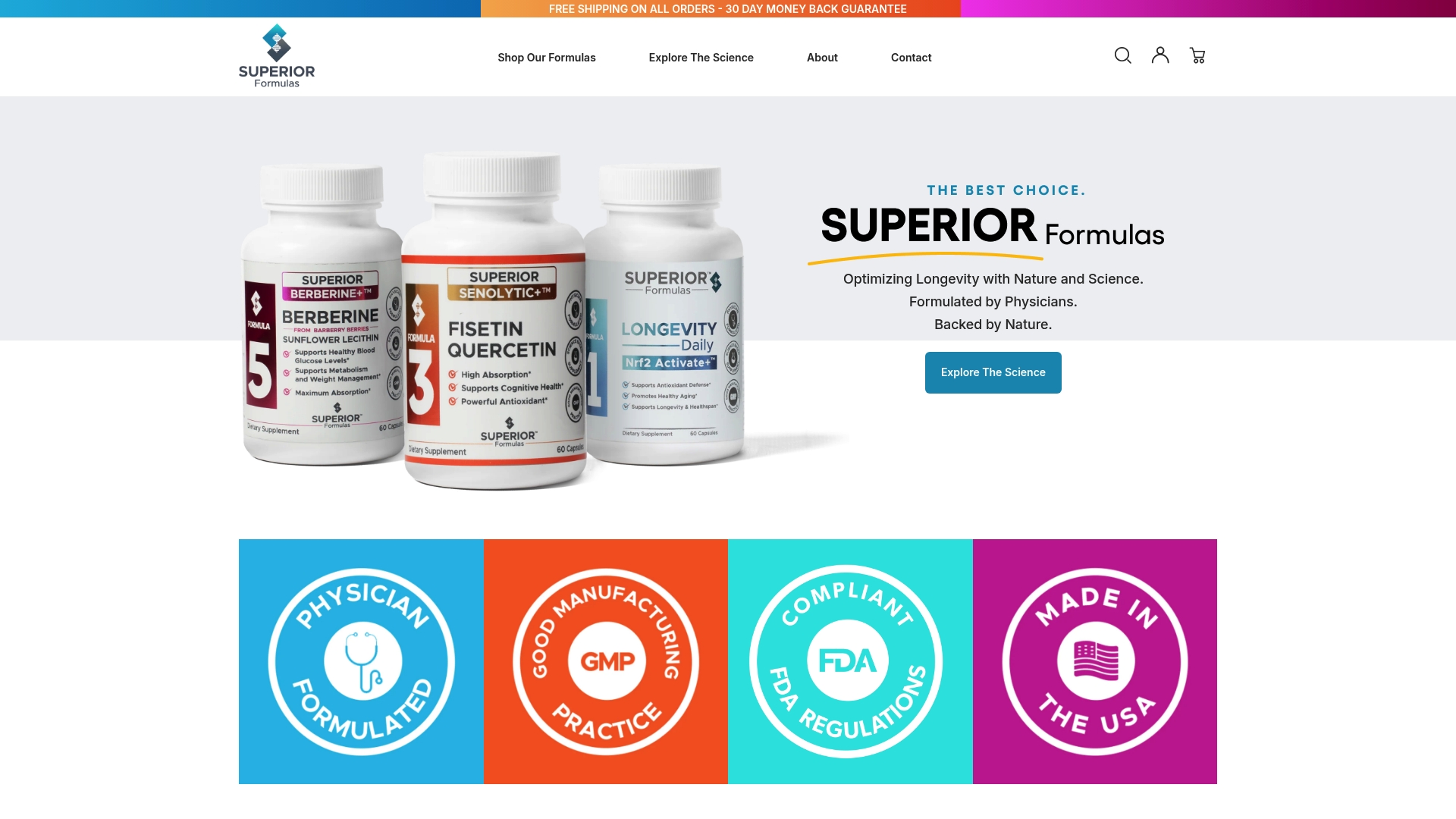
Superior Formulas was built by a physician-scientist specifically to close the gap between clinical research and what’s actually available on the market. Every formula starts with human clinical data, uses ingredients at studied doses, and is manufactured in GMP-certified facilities with third-party testing. If you want to start with a foundational product, explore the science-based daily multivitamin that aligns with the kind of evidence reviewed in this article. For cellular resilience and Nrf2 pathway activation, the longevity Nrf2 supplement is built on the same rigorous standard. To go deeper into the research behind every formula, visit the Explore the Science page and see exactly why each ingredient was chosen.
Frequently asked questions
What makes a supplement ‘science-driven’?
Science-driven supplements use ingredients validated by human clinical trials at the exact doses studied, with third-party quality verification and full label transparency. The clinical trial data must be available in peer-reviewed literature, not just cited vaguely in marketing materials.
Do supplements really slow aging or just fill nutritional gaps?
Both mechanisms are real. Recent trials show that some multivitamins can slow epigenetic aging measurably, especially in people with accelerated biological aging, while also correcting nutritional gaps that directly affect cellular function. Effects are modest and accumulate over time with consistent use.
Are there risks to taking supplements without medical advice?
Yes. Risks include nutrient overdose, product contamination, and missing critical lifestyle factors that have a larger effect on your health than most supplements. Always test for deficiencies and review your supplement choices with a qualified physician before starting.
Why do some experts recommend focusing on lifestyle over supplements?
Because diet, exercise, and sleep produce quantifiably larger effects on longevity and biological aging than any supplement currently supported by clinical evidence. Supplements are most effective when they fill specific, tested gaps in an otherwise strong lifestyle foundation.


