


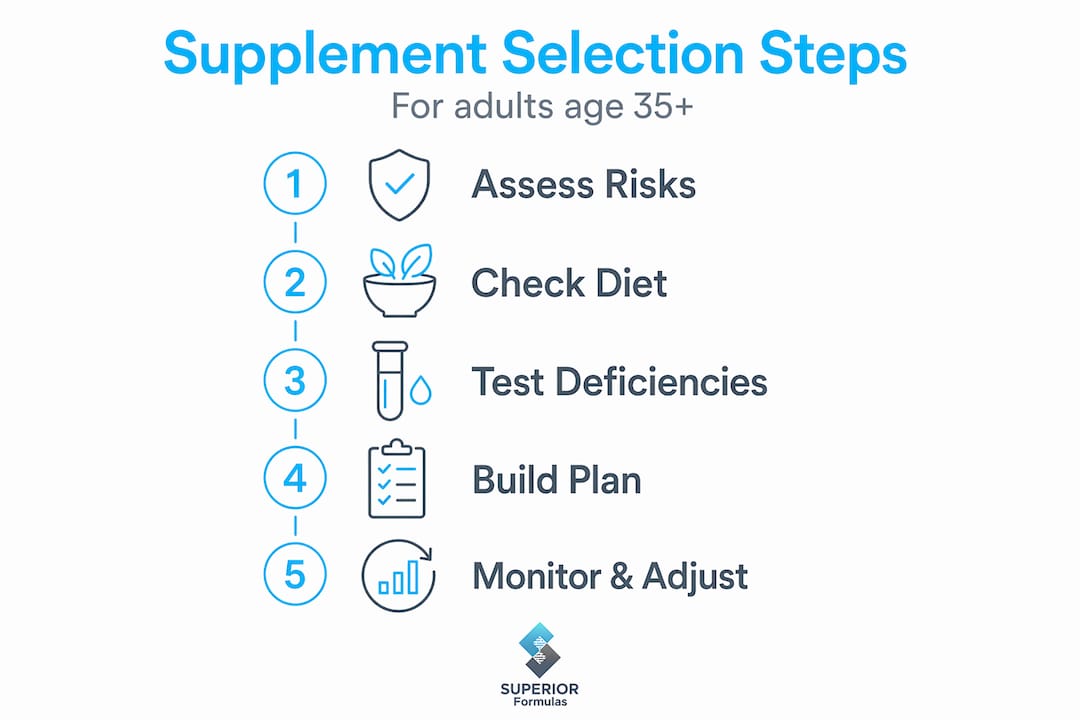
The supplement aisle has never been more overwhelming. Thousands of products, conflicting claims, and no regulatory filter standing between you and a poorly formulated bottle make step by step supplement selection genuinely difficult for anyone trying to age well. Adults over 35 face a specific challenge: your nutrient needs are shifting, your risk factors are accumulating, and the stakes for getting it right are higher. This guide walks you through five evidence-based steps to build a personalized supplement plan that matches your biology, your diet, and your longevity goals.
Table of Contents
- Key takeaways
- Step 1: Assess your personal risk factors first
- Step 2: Run a food-first nutrient gap check
- Step 3: Use targeted testing to confirm deficiencies
- Step 4: Build a safe, simple supplement plan
- Step 5: Monitor results and adjust over time
- My take on supplement selection after years of research
- Superiorformulas Formula 9: built for this exact approach
- FAQ
Key takeaways
| Point | Details |
|---|---|
| Start with a risk screen | Assess your diet, age, medications, and health conditions before choosing any supplement. |
| Food comes before supplements | Identify diet gaps first; many mild deficiencies resolve through targeted dietary changes in two to three weeks. |
| Use lab tests selectively | Order targeted blood tests only when results will actually change what you take or how you dose it. |
| Build one supplement at a time | Introduce supplements one at a time over four to twelve week windows to isolate effects and catch reactions early. |
| Verify quality through certification | Look for third-party certifications like USP or NSF since the FDA does not pre-approve dietary supplements. |
Step 1: Assess your personal risk factors first
The foundation of any sound supplement selection process is knowing why you might need a supplement before you buy one. A practical five-step assessment begins with a risk screen covering diet pattern, age, medications, and current symptoms. Without this screen, you are guessing.
For adults 35 and older, certain risk patterns appear more consistently than others. Consider which of these apply to you:
- Limited sun exposure: Vitamin D synthesis drops significantly if you live above the 37th parallel, work indoors, or wear sunscreen consistently. This is one of the most common correctable insufficiencies in this age group.
- Use of acid-suppressing medications: Proton pump inhibitors and H2 blockers reduce stomach acid, which is required to absorb vitamin B12 and magnesium from food.
- Plant-heavy or vegan diets: Iron, B12, zinc, omega-3 fatty acids, and calcium are all harder to obtain in adequate amounts from fully plant-based diets.
- Post-menopausal status: Calcium and vitamin D requirements rise, and iron needs typically fall after menopause.
- Digestive conditions: Crohn’s disease, celiac disease, or any condition that impairs intestinal absorption directly affects which nutrients you absorb and how well.
- Regular alcohol consumption: Alcohol depletes B vitamins, magnesium, and zinc at a measurable rate over time.
Pro Tip: Make a short list of your current prescription medications and check each one against a drug-nutrient interaction reference before you select any supplement. Some interactions, like metformin and B12 depletion, are well-documented and clinically significant.
The goal of this step is not to diagnose a deficiency. It is to generate a short list of probable gaps worth investigating further. Knowing your risk profile shapes every decision that follows.
Step 2: Run a food-first nutrient gap check
Before adding a single capsule, look at what you are eating. A food-first approach prevents unnecessary supplementation by addressing gaps through diet first, and many mild shortfalls resolve through dietary changes over two to three weeks.
Ask yourself four direct questions about your weekly diet:
- Do you eat fatty fish like salmon, sardines, or mackerel at least twice a week? If not, omega-3 intake is likely below optimal levels.
- Do you consume five or more servings of vegetables and fruit daily, including at least one or two dark leafy greens? If not, magnesium, folate, and vitamin K are probable gaps.
- Are you eating adequate protein from diverse sources? Adults over 35 need more dietary protein than commonly assumed to preserve muscle mass, typically 1.2 to 1.6 grams per kilogram of body weight daily.
- Are you regularly consuming dairy, fortified plant milks, or calcium-rich foods like sardines and tofu? If not, calcium intake likely falls short.
Pro Tip: Track your food intake for three to five days using a free app. Most people are surprised to discover that “eating pretty well” still leaves consistent gaps in magnesium, vitamin D, and omega-3s.
If dietary gaps appear correctable, try adjusting your eating patterns for two to three weeks before reaching for supplements. You may find that adding a daily handful of pumpkin seeds addresses a magnesium shortfall, or that switching to wild salmon twice a week meaningfully improves your omega-3 status. This discipline separates thoughtful supplementation from reflexive pill-taking.
Step 3: Use targeted testing to confirm deficiencies
Testing is useful, but only when done with precision. Untargeted broad panels often create confusion rather than clarity. The core principle is this: order a test only when the result will actually change what you take or how you dose it.
For adults 35 and older focused on longevity and cellular health, the most clinically relevant targeted tests are:
- 25-hydroxyvitamin D: The definitive marker for vitamin D status. Optimal levels for longevity research tend to cluster between 40 and 60 ng/mL.
- Serum B12 and methylmalonic acid: B12 serum alone can be misleading. Adding methylmalonic acid confirms whether B12 is functionally sufficient at the cellular level.
- Complete blood count with iron studies: Identifies iron deficiency anemia or iron overload, both of which require opposite interventions.
- Fasting glucose and hemoglobin A1c: Metabolic status shapes which targeted supplements for longevity and cellular health are appropriate.
- Thyroid-stimulating hormone (TSH): Thyroid dysfunction affects energy, cognition, and nutrient metabolism in ways that overlap with deficiency symptoms.
Once you have test results, research the specific form of each supplement you are considering, not just the nutrient itself. Magnesium glycinate absorbs differently from magnesium oxide. Methylcobalamin behaves differently from cyanocobalamin. The bioavailability gap between forms can be substantial, and clinical evidence in supplement selection matters at every level of this decision.
| Supplement form | Relative bioavailability | Best use case |
|---|---|---|
| Magnesium glycinate | High | Sleep, muscle tension, anxiety |
| Magnesium oxide | Low | Generally not preferred |
| Methylcobalamin (B12) | High | Neurological support, methylation |
| Cyanocobalamin (B12) | Moderate | Budget option; less ideal for MTHFR variants |
| Vitamin D3 (cholecalciferol) | High | Deficiency correction and maintenance |
| Vitamin D2 (ergocalciferol) | Lower than D3 | Less preferred for long-term use |
Symptom-to-nutrient mapping also belongs at this stage. Persistent fatigue, brain fog, muscle cramps, and hair thinning each map to specific nutrient patterns. Cross-referencing your symptoms with your risk screen and test results narrows the field to supplements that are genuinely worth your investment.
Step 4: Build a safe, simple supplement plan
The most common mistake in supplement planning is starting too many at once. Introducing multiple new supplements simultaneously makes it impossible to identify which one is working and which one is causing a side effect. Start with one or two supplements directly tied to confirmed or highly probable gaps.
Timing matters more than most people realize. Supplement absorption varies significantly based on when and how you take each one:
- Fat-soluble vitamins A, D, E, and K should be taken with a fat-containing meal.
- Magnesium is most effective and tolerated best in the evening.
- Calcium and iron should be spaced at least two hours apart since they compete for the same absorption pathway.
- B vitamins are generally taken in the morning because they support energy metabolism.
Safety checks are non-negotiable before adding anything new. Review upper tolerable intake levels for nutrients with narrow safety margins, particularly vitamin A, iron, and niacin. These are not nutrients where more is better. For any supplement you are seriously considering, cross-check it against your medications.
Pro Tip: Focus on quality supplement standards before focusing on brand recognition. A product with a USP or NSF certification on the label has cleared an independent verification standard that most products on the shelf never meet.

The FDA does not pre-approve dietary supplements, which means third-party certification is your most reliable proxy for quality and label accuracy. Beyond looking for a certification seal, verify the specific type of certification rather than generic “tested” claims. Each certifying body has different standards, and some are more rigorous than others.
Expert protocols for longevity differentiate between core maintenance nutrients that address widespread insufficiencies and adjunct targeted compounds. Build the foundation first. Vitamin D, magnesium, and omega-3s address widespread gaps in most adults over 35. Only after that baseline is stable does it make sense to layer in targeted longevity compounds like CoQ10, NAD+ precursors, or polyphenol-based antioxidants.
Step 5: Monitor results and adjust over time
A supplement plan that never gets reassessed is not a plan. It is a habit. The best indicator of supplement effectiveness comes from combining baseline biomarker data with a single-protocol trial period of four to twelve weeks, not from subjective impressions alone.
Track these markers during your reassessment window:
- Targeted biomarkers: Retest the specific lab values that prompted supplementation. A vitamin D level that started at 22 ng/mL should be rechecked at twelve weeks.
- Functional symptoms: Track sleep quality, energy, muscle function, and cognitive clarity with brief weekly notes. Patterns become visible faster than you expect.
- Tolerance and side effects: GI upset, skin changes, or unusual symptoms should prompt a pause, not a dose increase.
- Medication interactions: If any new prescriptions are added during your supplement trial, review potential interactions before continuing.
Change one variable at a time. This is not overcautious. It is how you build a supplement routine that is actually traceable and adjustable rather than a stack of unknowns. If you add CoQ10 and a B-complex simultaneously and feel more energetic two weeks later, you will have no way of knowing which one is responsible or whether either one is worth continuing long-term.
Long-term maintenance means scheduling a formal reassessment every six to twelve months. Nutrient needs shift with age, health changes, and seasonal patterns. What worked at 38 may need recalibration at 45.
My take on supplement selection after years of research
I have seen the same pattern repeat itself dozens of times. Someone in their mid-forties, genuinely motivated to take their health seriously, walks into a supplement store and walks out with eight products they saw on a wellness podcast. Six months later, they have no idea what is helping, what is doing nothing, and what is costing them money they did not need to spend.
The discipline of a stepwise supplement guide is not a limitation. It is what separates people who actually see results from people who are just taking pills. In my experience, the adults who get the most out of supplementation are the ones who treat it like a clinical protocol, starting with evidence, building slowly, and verifying outcomes.
I also want to say plainly: quality is not a marketing concept. I have reviewed enough products to know that the gap between a well-formulated supplement and a bargain bottle with the same name on the label is real and clinically meaningful. Science-driven supplement development that starts with clinically studied ingredients, correct bioavailable forms, and honest dosing is not a luxury. For anyone prioritizing longevity and cellular health, it is the baseline.
The most underrated part of this whole process is the reassessment. Most people stop paying attention once they start a supplement. That is when the real work begins.
— cristopher
Superiorformulas Formula 9: built for this exact approach
If your step by step supplement selection process leads you to conclude that a physician-formulated daily multi is your logical starting point, Superiorformulas has built one worth examining closely.
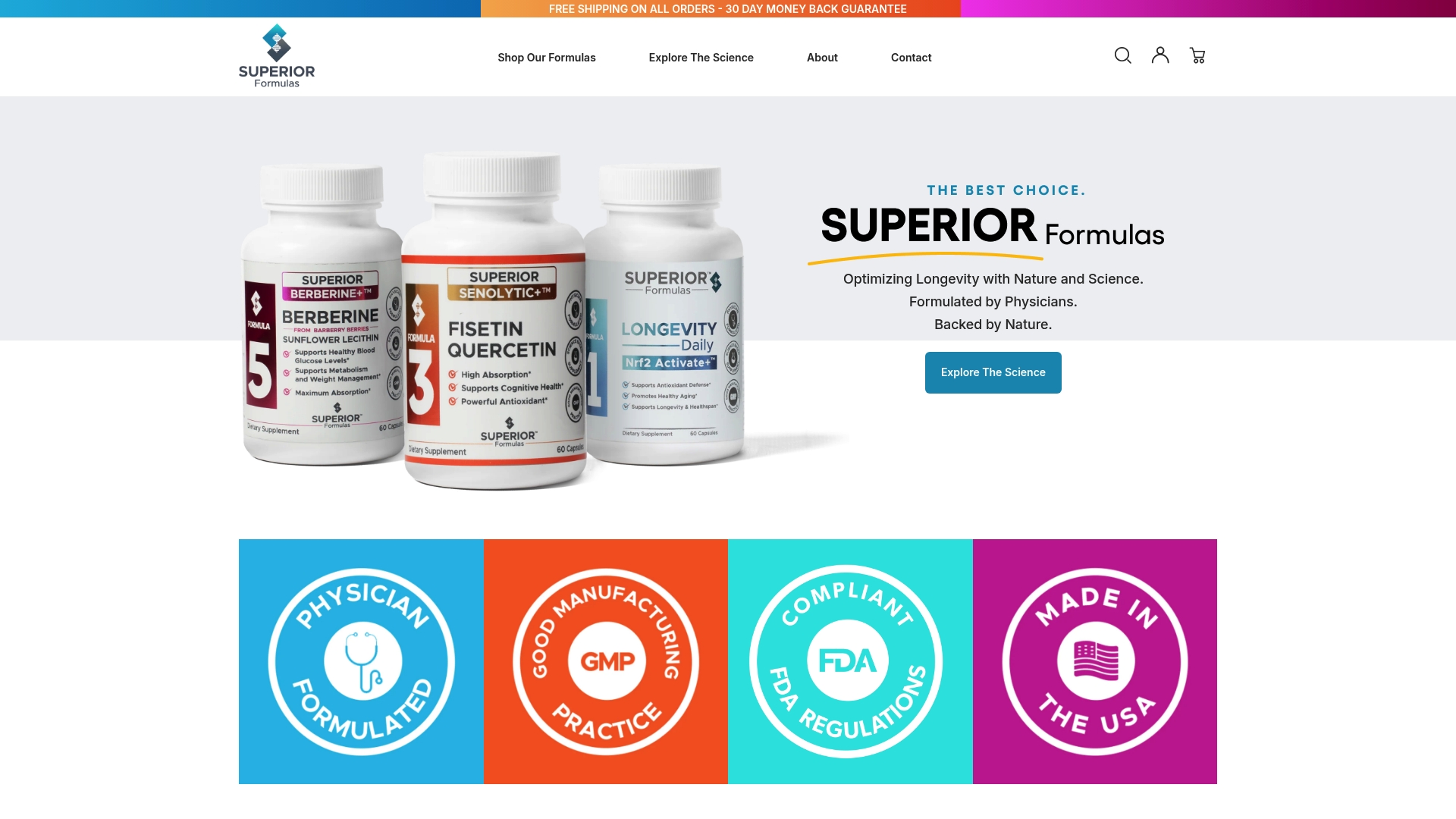
Formula 9 Superior Multi+ is a comprehensive daily formulation developed by a physician-scientist, combining clinically studied nutrients for longevity, antioxidant support, and cellular resilience, including the complete AREDS2 nutrient profile. It is manufactured in a GMP-certified facility and formulated without unnecessary fillers, directly addressing the quality standards this guide recommends. For adults 35 and older building a personalized supplement plan grounded in evidence, Formula 9 is designed to function as the foundational layer your stack is built on.
FAQ
What is the first step in supplement selection?
The first step is assessing your personal risk factors, including diet patterns, age, medications, and health conditions, to identify likely nutrient gaps before purchasing anything.
How long should I trial a new supplement before deciding if it works?
Allow four to twelve weeks before evaluating outcomes, and introduce only one supplement at a time so you can accurately attribute any changes to a specific product.
Do I need blood tests before taking supplements?
Targeted blood tests are useful when results will change your decision. Key tests for adults 35 and older include vitamin D, B12 with methylmalonic acid, and iron studies.
How do I know if a supplement is high quality?
Look for independent third-party certifications such as USP or NSF on the label. These certifications verify that what is on the label matches what is in the bottle.
Can I take all my supplements at the same time?
Timing matters for absorption and safety. Fat-soluble vitamins require a meal with fat, magnesium works best in the evening, and calcium and iron should be separated by at least two hours.
Recommended
- How Dietary Supplements Support Longevity and Cellular Health - SUPERIOR Formulas
- Types of dietary supplements: A health-conscious guide - SUPERIOR Formulas
- Implement science-driven supplementation for better health - SUPERIOR Formulas
- Antioxidant Support: Evidence-Based Steps for Healthy Aging - SUPERIOR Formulas


