


The most reliable way to increase your polyphenol intake is straightforward: eat a wide variety of colorful, whole plant foods every day. Studies link consuming 500–1,500 milligrams of polyphenols daily with reduced chronic disease risk, and that range is achievable through diet alone. Here is where to start:
- Prioritize variety. Fruits, vegetables, nuts, herbs, and spices each deliver distinct polyphenol classes. Rotating your choices maximizes the synergistic effects different compounds have on cellular health and longevity.
- Eat the skin and seeds. Polyphenols concentrate in the outer layers of fruits and vegetables. Leaving the peel on apples, grapes, and cucumbers makes a measurable difference.
- Choose in-season, local produce. Freshness directly affects polyphenol density. When local options are limited, high-quality frozen produce is a sound alternative.
- Add bold flavors. Herbs, spices, dark chocolate, and green tea are among the most concentrated polyphenol sources available and integrate easily into everyday meals.
- Skip the shortcut. Whole foods provide a complete matrix of complementary nutrients that isolated supplements cannot replicate. Supplements are a secondary option, not a foundation.
Table of Contents
- Which foods are highest in polyphenols, and how do you eat more of them?
- How seasonality, storage, and cooking shape the polyphenols you actually absorb
- Why whole foods outperform supplements for polyphenol intake
- How taste can guide you toward polyphenol-rich foods
- Superiorformulas supports your polyphenol goals with clinical precision
- Key Takeaways
Which foods are highest in polyphenols, and how do you eat more of them?
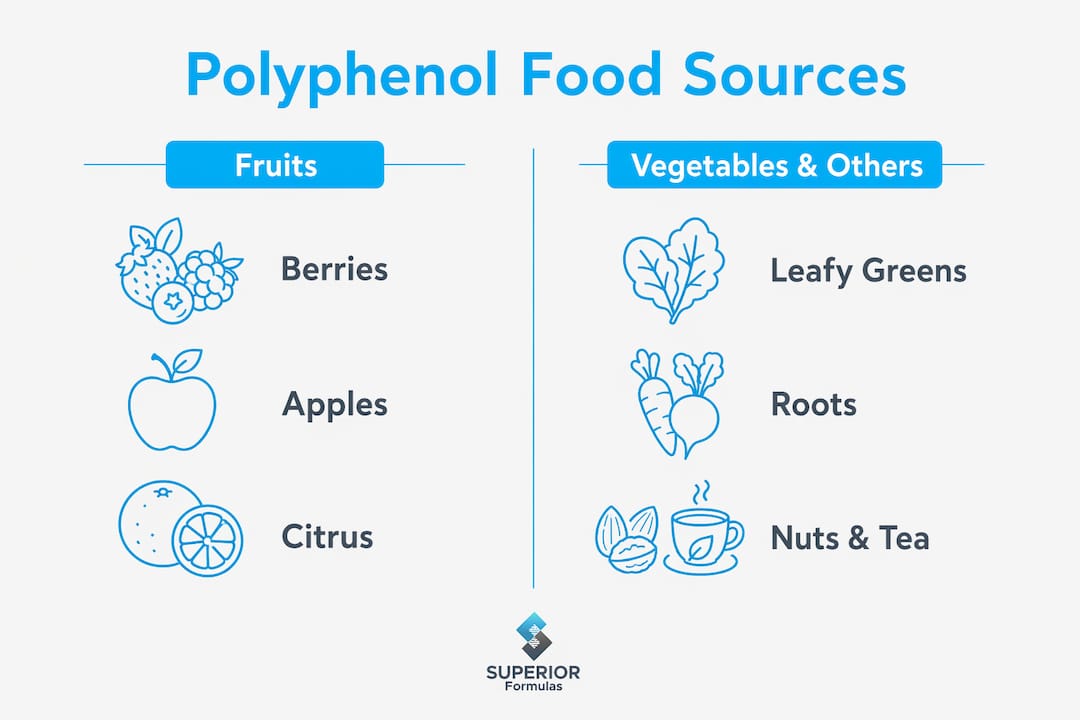
Berries are the most practical high-volume source. Wild blueberries deliver a high amount of polyphenols per cup, compared to a lesser amount in cultivated varieties. Chokeberries and elderberries rank even higher, with chokeberries providing a very high polyphenol content per half-cup serving. Add a handful to oatmeal, blend them into a smoothie, or eat them plain as a snack.
Herbs and spices deserve special attention. Cloves are among the richest sources of polyphenols per 100 grams, and while you will never eat that quantity, even a pinch added to coffee, oatmeal, or roasted vegetables contributes meaningfully. Peppermint, star anise, oregano, rosemary, and thyme all rank among the most polyphenol-dense ingredients per gram. Think of your spice cabinet as a daily polyphenol tool.
A few more foods worth building into your routine:
- Dark leafy greens. A cup of fresh spinach delivers a moderate amount of polyphenols, and kale, arugula, and Swiss chard add variety across the flavonoid spectrum.
- Artichokes and red onions. A small artichoke and a small red onion provide meaningful amounts of polyphenols. Both are easy to roast or sauté.
- Nuts. Walnuts, hazelnuts, and chestnuts are among the top nut sources in the Phenol-Explorer database, and a small daily handful fits any eating pattern.
- Beverages. Green tea, black tea, and coffee all contribute polyphenols. These are not trivial sources; for many adults, beverages account for a significant portion of daily polyphenol intake.
- Cocoa and dark chocolate. Cocoa powder and high-percentage dark chocolate are among the richest per-serving sources available in any grocery store.
Variety across these categories matters more than maximizing any single food. Different polyphenol classes, including flavonoids, phenolic acids, and stilbenes, act through distinct biological pathways. Eating across the full spectrum gives your body more to work with.
How seasonality, storage, and cooking shape the polyphenols you actually absorb
Polyphenol content in any given food is not fixed. Growing conditions, harvest timing, and soil quality all influence polyphenol levels, which means a tomato picked at peak ripeness from a local farm and a tomato shipped across the country after weeks in cold storage are nutritionally different products. Buying in-season from local sources, or choosing quality frozen produce, is one of the most practical ways to maximize what you actually get.
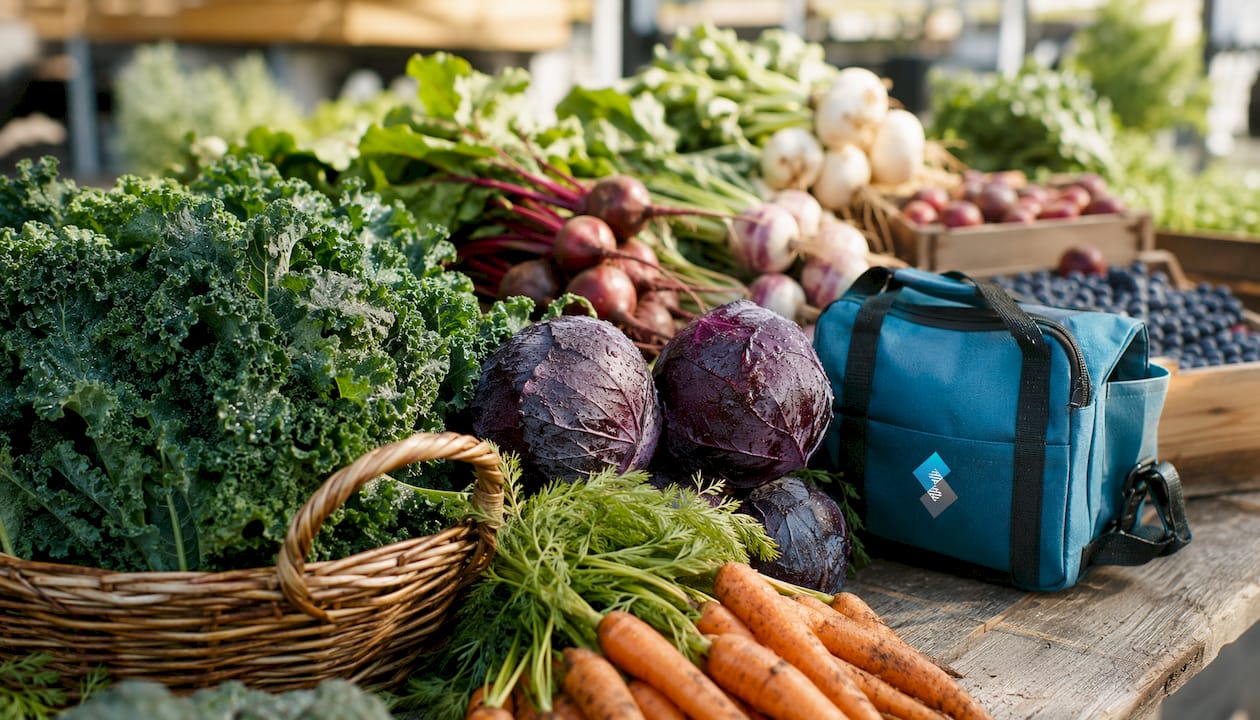
Storage matters after purchase too. Polyphenols degrade with time, heat, and light exposure. Refrigerating produce promptly, keeping herbs in cool, dark conditions, and using fresh ingredients within a few days of purchase all help preserve their content.
Cooking method is where many people unknowingly lose polyphenols. Boiling vegetables leaches phenolic compounds into the cooking water; if you discard that liquid, those nutrients are gone. Steaming is the better default for most vegetables. When you do boil, use the liquid in soups, stews, or sauces to retain what was lost to the water.
- Steam over boil for broccoli, spinach, and green beans.
- Roast at moderate temperatures rather than high heat, which can degrade heat-sensitive polyphenols.
- Use cooking liquids in soups and stews to recover leached compounds.
- Eat raw when practical. Salads, sliced fruit, and raw nuts preserve polyphenols that cooking would otherwise reduce.
Pro Tip: Select produce by color intensity and freshness at the market. Deeper color in berries, greens, and root vegetables generally signals higher polyphenol concentration. Wilted or pale produce has already begun to lose its nutritional edge.
Why whole foods outperform supplements for polyphenol intake
The scientific consensus here is clear, and it is worth stating plainly. Health experts advise against relying on isolated polyphenol supplements because whole foods deliver polyphenols as part of a complete nutritional matrix. Fiber, vitamins, minerals, and other phytonutrients interact with polyphenols in ways that isolated extracts cannot replicate.
Polyphenols also have inherently low bioavailability. Nano- and liposomal delivery systems are being studied as ways to improve absorption, but these technologies are still emerging and not yet standard. More practically, polyphenol supplements can interfere with iron absorption and may produce other unintended effects, particularly at high concentrated doses.
This does not mean targeted supplementation has no place. For adults with specific health goals around longevity and cellular resilience, a clinically formulated supplement built on phytonutrients and antioxidants can complement a strong dietary foundation. The key word is complement. Food comes first. If you are curious about where supplementation fits into a polyphenol-focused approach, the role of polyphenols in health and longevity is worth reading before you make any decisions.
How taste can guide you toward polyphenol-rich foods
Bitter and astringent flavors are reliable sensory signals of polyphenol density. This is not coincidence. Plants produce polyphenols partly as a defense mechanism, and those compounds carry a characteristic sharpness or dryness on the palate. Learning to read these cues makes food selection more intuitive.
- Bitter greens like kale, arugula, radicchio, and dandelion greens are more polyphenol-rich than mild iceberg or romaine lettuce.
- Astringent fruits such as unripe persimmons, pomegranates, and cranberries signal high tannin content, a major polyphenol class.
- Dark chocolate with 70% or higher cocoa content has a pronounced bitterness that reflects its flavonoid load.
- Green and black tea carry tannins responsible for their characteristic dry finish.
- Fresh herbs like rosemary, thyme, and sage taste sharp and resinous precisely because of their polyphenol content.
Rather than masking these flavors, work with them. Pair bitter greens with a lemon vinaigrette to balance the bite. Add dark chocolate to trail mix. Brew green tea and let it steep fully. The goal is to build a palate that recognizes these flavors as markers of nutritional value, not obstacles to enjoyment.
Superiorformulas supports your polyphenol goals with clinical precision
For adults who want to go beyond diet alone, Superiorformulas offers physician-formulated supplements built around clinically studied polyphenols, phytonutrients, and longevity compounds. Every formulation is developed by a physician-scientist, manufactured in GMP-certified facilities, and verified through third-party testing for purity and consistency. There are no unnecessary fillers, and every ingredient earns its place through scientific evidence.

Where most supplements deliver isolated extracts at arbitrary doses, Superiorformulas targets specific cellular pathways, including Nrf2 activation and antioxidant resilience, using compounds selected for their bioavailability and synergy. This is the clinical approach applied to everyday wellness. Visit Superiorformulas to explore the full product line and find the formulation that fits your health goals.
Key Takeaways
Increasing polyphenol intake requires dietary variety, smart sourcing, and preparation methods that preserve what whole plant foods naturally contain.
| Point | Details |
|---|---|
| Daily intake target | Consuming 500–1,500 mg of polyphenols daily is linked to reduced chronic disease risk. |
| Prioritize wild and seasonal produce | Wild blueberries deliver 600–1,000 mg per cup; in-season local produce consistently has higher polyphenol content. |
| Preserve polyphenols in cooking | Steam instead of boiling, or use cooking liquids in soups and stews to retain leached compounds. |
| Taste signals polyphenol density | Bitter and astringent flavors in greens, herbs, and dark chocolate indicate higher polyphenol concentration. |
| Superiorformulas | Physician-formulated, GMP-certified supplements targeting cellular resilience and longevity pathways to complement a polyphenol-rich diet. |


