


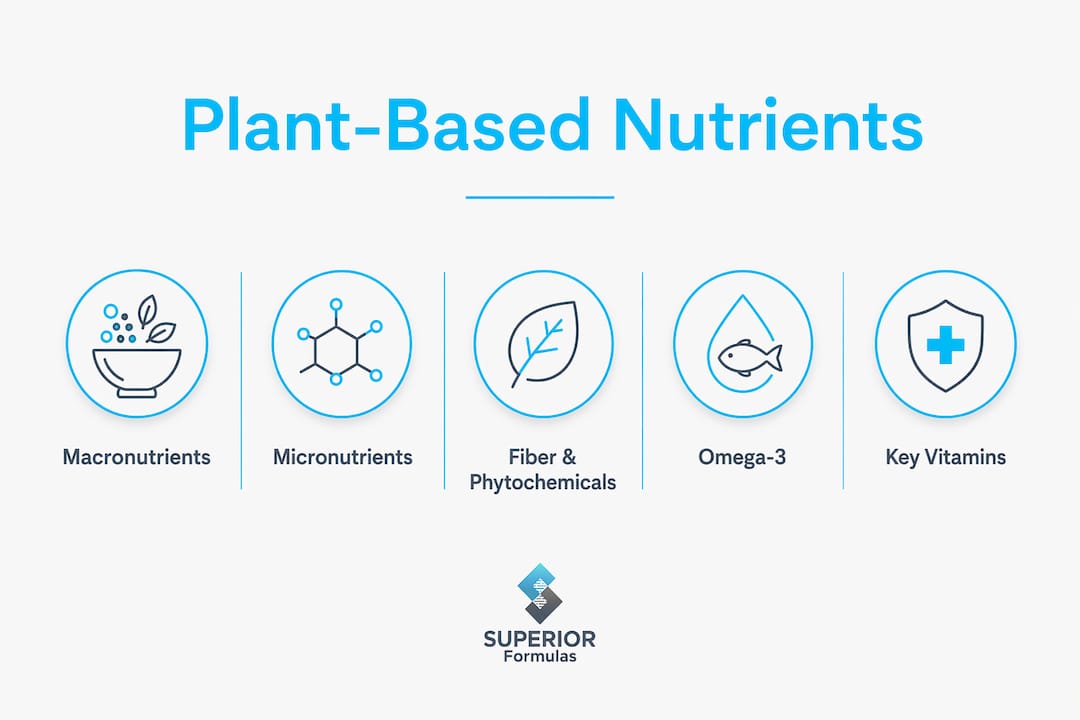
Plant-based nutrients are the full spectrum of macronutrients, fiber, vitamins, minerals, antioxidants, and phytochemicals your body obtains from whole or minimally processed plant foods. Harvard Health describes these diets as nutrient-dense across most micronutrient categories, with one consistent exception: vitamin B12 is essentially absent from unfortified plant foods. Three things matter most when you’re eating primarily from plants:
- Core strengths: Plant foods deliver fiber, thousands of phytochemicals, and the majority of essential vitamins and minerals, including potassium, magnesium, vitamin C, vitamin K, and provitamin A carotenoids.
- Common gaps: Vitamin B12, vitamin D, preformed EPA/DHA omega-3s, and iodine are reliably low or absent on plant-only patterns; iron and zinc are present but absorbed less efficiently than from animal sources.
- The practical action: A whole-foods-first approach covers most needs. Fortified foods and targeted supplements close the documented gaps, and periodic lab checks confirm adequacy rather than leaving it to guesswork.
A well-planned plant-based diet can fully meet nutrient needs at every life stage. The key word is planned.
Table of Contents
- What plant-based nutrients actually include: the full nutrient map
- Nutrients plant-based eaters must watch closely
- How food preparation changes what your body actually absorbs
- Practical meal strategies to cover your plant-based nutrient needs
- What the evidence says about plant-based patterns and health
- When should you test your labs?
- Evidence-backed supplement guidance for documented gaps
- Key Takeaways
- The case for individualized, evidence-first plant nutrition
- Clinician-formulated supplements for plant-based nutrient gaps
- Authoritative sources and further reading
What plant-based nutrients actually include: the full nutrient map
Plants supply every macronutrient category, though not always in the ratios or forms most people expect.
Protein
Plant-based proteins come from legumes (beans, lentils, chickpeas), soy foods (tofu, tempeh, edamame), whole grains (quinoa, farro), and nuts and seeds. Most individual plant proteins are low in one or more essential amino acids, but eating a variety across the day covers all nine. Formal “protein combining” at every meal is outdated; variety over the course of a day is sufficient, as clinical guidance confirms. A half-cup of cooked lentils provides a good amount of protein along with substantial iron and folate, making legumes one of the most nutrient-efficient foods in a plant-forward diet.
Healthy fats and omega-3s
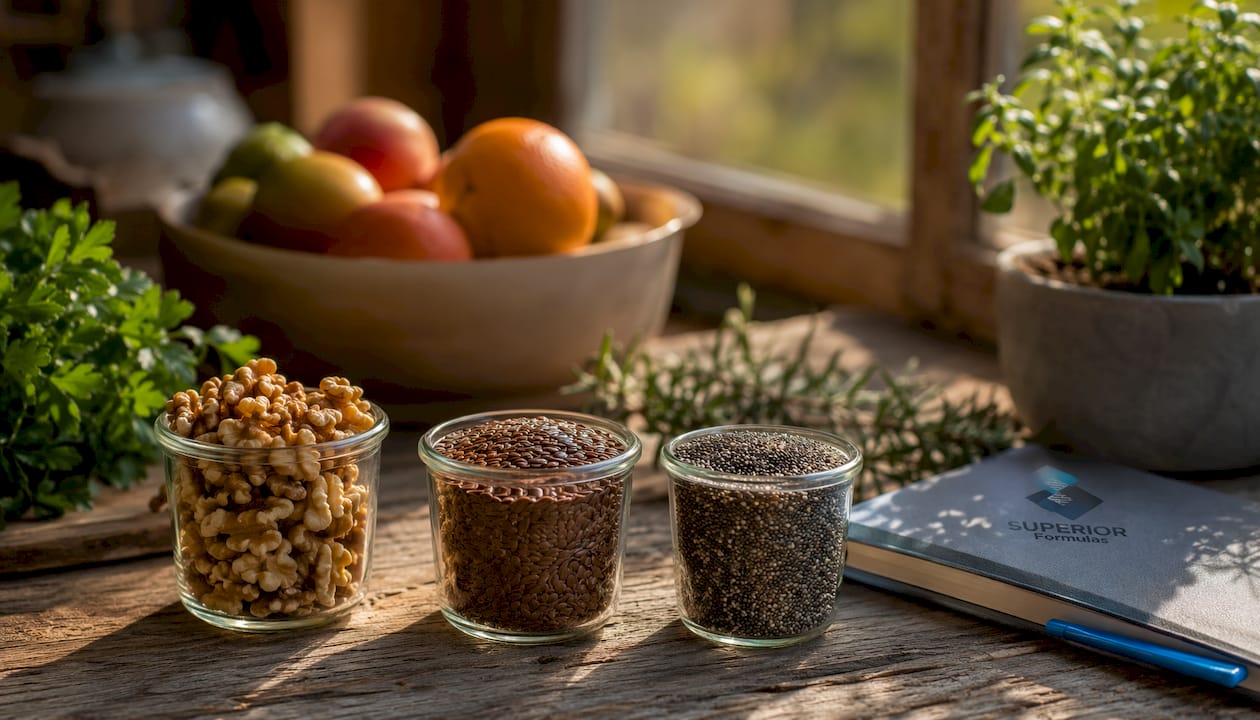
Walnuts, flaxseeds, chia seeds, and hemp seeds supply alpha-linolenic acid (ALA), the plant form of omega-3. The body converts ALA to EPA and DHA, but conversion rates are low. This is why EPA and DHA deserve their own attention, covered in the gaps section below.
Fiber, antioxidants, and phytochemicals
Fiber is where plant foods have no competition. Whole grains, legumes, fruits, and vegetables collectively deliver both soluble and insoluble fiber that supports gut microbiome diversity, glycemic regulation, and cardiovascular health. Beyond fiber, plants contain thousands of phytonutrients and antioxidants including polyphenols, carotenoids, glucosinolates, and flavonoids. These compounds activate cellular defense pathways, including Nrf2, and are associated with reduced oxidative stress and inflammation. Ultra-processed plant-based products, by contrast, strip out most of this complexity while adding sodium, refined starches, and seed oils.
Key vitamins and minerals from plant foods
| Nutrient | Strong plant sources | Serving-size note |
|---|---|---|
| Provitamin A (beta-carotene) | Sweet potato, carrots, kale, butternut squash | 1 medium sweet potato covers more than a full day’s need |
| Vitamin C | Bell peppers, broccoli, citrus, strawberries | Half a cup of red bell pepper provides more than 100% DV |
| Vitamin E | Sunflower seeds, almonds, wheat germ oil | 1 oz sunflower seeds provide a good amount of magnesium |
| Vitamin K | Kale, spinach, collard greens, broccoli | One cup cooked kale exceeds the daily adequate intake |
| B vitamins (except B12) | Whole grains, legumes, leafy greens, nutritional yeast | Folate especially high in lentils and black-eyed peas |
| Potassium | Potatoes, white beans, avocado, banana | One medium potato with skin provides about 900 mg |
| Magnesium | Pumpkin seeds, black beans, dark chocolate, spinach | 1 oz pumpkin seeds delivers roughly 150 mg |
| Iron (non-heme) | Lentils, tofu, fortified cereals, tempeh | Absorption enhanced significantly by vitamin C pairing |
| Calcium | Calcium-set tofu, kale, bok choy, fortified plant milk | Calcium-set tofu provides a significant amount of calcium per half-cup |
Nutrients plant-based eaters must watch closely
Knowing which nutrients require active attention is the difference between a plant-based diet that thrives and one that quietly depletes. Harvard Health’s nutrient checklist identifies calcium, vitamin D, vitamin B12, iodine, zinc, and iron as the primary nutrients requiring attention when dairy, eggs, and fish are reduced or removed.
| Nutrient | Plant availability | Common deficiency driver | Practical fix |
|---|---|---|---|
| Vitamin B12 | Absent in unfortified plant foods | No reliable plant source | Daily B12-fortified foods or supplement |
| Vitamin D | Minimal (mushrooms exposed to UV) | Limited dietary sources; sun exposure variable | D3 supplement (or D2); fortified plant milk |
| EPA/DHA | Absent as preformed; ALA only | Low ALA-to-EPA/DHA conversion | Algal oil supplement |
| Iodine | Highly variable; seaweed inconsistent | Dairy/fish removed; iodized salt not always used | Iodized salt or supplement with caution |
| Calcium | Present but bioavailability varies | Oxalate-rich greens (spinach) reduce absorption | Low-oxalate greens, calcium-set tofu, fortified milk |
| Iron (non-heme) | Present in legumes, seeds, greens | Lower bioavailability than heme iron | Pair with vitamin C; avoid tea at meals |
| Zinc | Present in legumes, nuts, seeds | Phytates reduce absorption | Soaking/sprouting; varied intake |
| Selenium | Soil-dependent in plant foods | Deficient soils reduce plant content | Brazil nuts (1–2/day) or supplement |
Research using the Total Nutrient Index (TNI) shows that supplements substantially shift adequacy in vegans, sometimes doubling micronutrient exposure compared to food-only calculations. This means assessments that ignore supplement use routinely underestimate real-world nutrient status.
Who is at higher risk?
Check yourself against this list. Risk accumulates with each item that applies:
- Fully vegan with no fortified foods and no supplements
- Pregnant, breastfeeding, or planning pregnancy
- Older adult (65+), particularly for B12 and D
- Restrictive calorie intake (under 1,600 kcal/day)
- History of digestive conditions affecting absorption (Crohn’s, celiac)
- Rarely eating iodized salt or sea vegetables
Pro Tip: When tracking your nutrient intake, include every fortified food and supplement in your log. Tools that omit these sources will undercount your actual micronutrient exposure, sometimes by a wide margin, and may prompt unnecessary concern or supplementation.
How food preparation changes what your body actually absorbs
Anti-nutrients are real, but they are manageable. Phytates in whole grains, legumes, and nuts bind to iron, zinc, and calcium, reducing how much reaches your bloodstream. Oxalates in spinach, beet greens, and Swiss chard do the same for calcium. Research in Frontiers in Nutrition confirms that simple kitchen techniques measurably reduce these compounds and raise mineral absorption.
The practical upshot: don’t avoid high-phytate foods. Prepare them smarter.
Absorption tactics that actually move the needle
- Soak dried legumes for 8–12 hours before cooking and discard the soaking water; this reduces phytate content and shortens cooking time.
- Sprout lentils or mung beans over 2–3 days; sprouting activates phytase enzymes that break down phytates internally.
- Ferment grains (sourdough bread, tempeh, miso) to substantially lower phytate levels compared to unfermented equivalents.
- Pair plant iron with vitamin C at the same meal: a squeeze of lemon on lentil soup, bell peppers in a bean stir-fry, or tomatoes with fortified cereal can increase non-heme iron absorption meaningfully.
- Avoid tea, coffee, and calcium supplements within an hour of iron-rich meals; tannins and excess calcium compete with iron at absorption sites.
- Choose low-oxalate greens for calcium: kale and bok choy deliver far more bioavailable calcium than spinach, despite spinach’s impressive calcium numbers on paper. Calcium-set tofu is another reliable option.
- Cook oxalate-rich vegetables rather than eating them raw; boiling spinach and discarding the water reduces oxalate content.
Practical meal strategies to cover your plant-based nutrient needs
Covering all key nutrients on a plant-based diet is straightforward once you understand which foods carry the most weight. The goal is not perfection at every meal but consistent variety across the day.
Sample day: balanced whole-food vegan pattern
Breakfast: Oatmeal topped with ground flaxseed (ALA), pumpkin seeds (zinc, magnesium), and fresh strawberries (vitamin C). Alongside: one cup of B12-fortified plant milk (B12, calcium, vitamin D).
Lunch: Large salad with cooked lentils (protein, iron, folate), raw red bell pepper (vitamin C to boost iron absorption), avocado (healthy fats, potassium), and a tahini dressing (calcium, zinc).
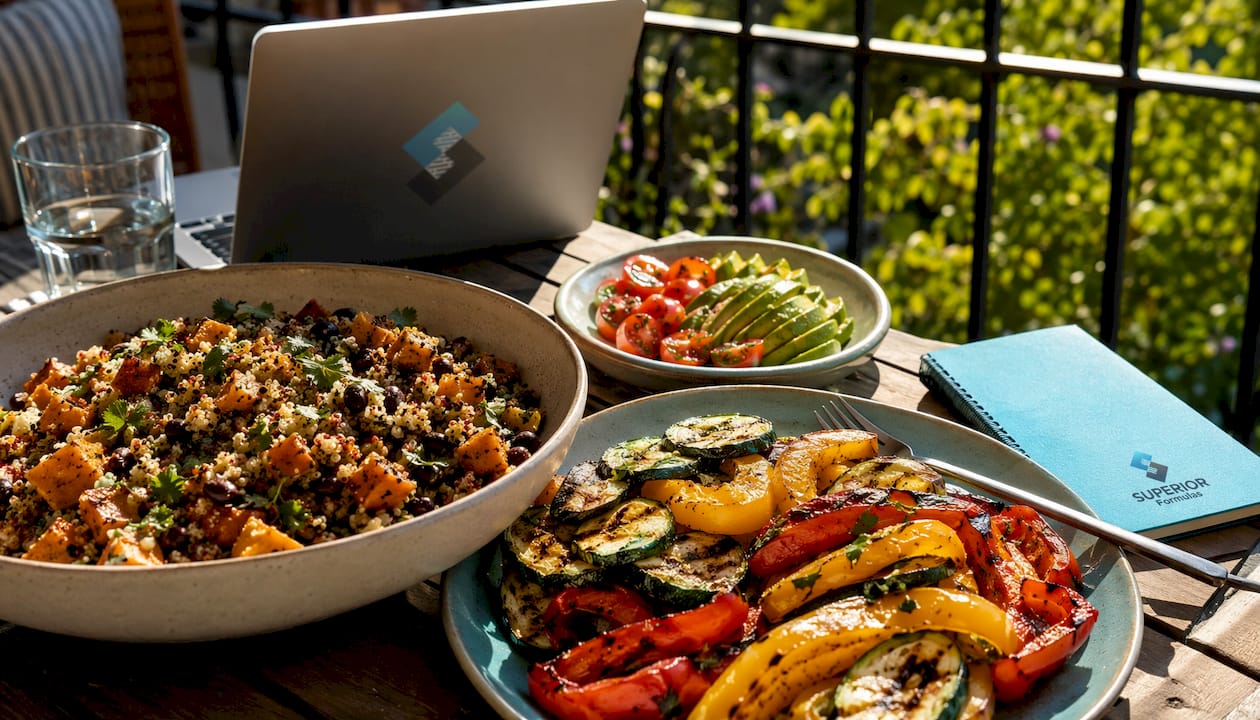
Dinner: Stir-fry with calcium-set tofu (protein, calcium), bok choy (calcium, vitamin K), broccoli (vitamin C, K), and brown rice (whole grain, magnesium). Seasoned with iodized salt.
Snack: A small handful of walnuts (ALA) and two Brazil nuts (selenium).
This single day covers protein from varied sources, non-heme iron paired with vitamin C at two meals, calcium from fortified milk and calcium-set tofu, ALA from flaxseed and walnuts, and selenium from Brazil nuts. B12 comes from fortified plant milk; iodine from iodized salt.
Key serving sizes and nutrient highlights
| Food | Serving | Key nutrients supplied |
|---|---|---|
| Cooked lentils | ½ cup | Protein (9 g), iron, folate, fiber |
| Calcium-set tofu | ½ cup | Protein (10 g), calcium (200 mg) |
| Fortified plant milk | 1 cup | B12, calcium, vitamin D |
| Kale (cooked) | 1 cup | Calcium, vitamin K, vitamin C |
| Ground flaxseed | 2 tbsp | ALA omega-3, fiber, lignans |
| Pumpkin seeds | 1 oz | Zinc, magnesium, iron |
| Brazil nuts | 1–2 nuts | Selenium (meets daily need) |
| Nutritional yeast (B12-fortified) | 2 tbsp | B12, protein, B vitamins |
Fortified foods are not a compromise; they are a clinical tool. NHS guidance on vegan diets explicitly recommends B12-fortified foods and supplements when animal products are removed. Scan labels for B12-fortified plant milks, B12-fortified nutritional yeast, and iron- or calcium-fortified cereals. When swapping dairy milk, choose a calcium-set plant milk that lists calcium carbonate or tricalcium phosphate as an added ingredient, not just “calcium.”
For adults focused on longevity nutrients, polyphenol-rich foods like blueberries, black beans, and green tea layer additional cellular-health benefits on top of the core nutrient framework.
What the evidence says about plant-based patterns and health
The strongest evidence for plant-based eating comes from cohort studies and meta-analyses examining whole-food, minimally processed patterns. These consistently link higher plant food intake to lower rates of cardiovascular disease, type 2 diabetes, and all-cause mortality. The mechanism is not a single nutrient but the combined effect of fiber, phytochemicals, lower saturated fat, and higher antioxidant density working together.
The caveat is direct: ultra-processed plant-based foods do not carry these benefits. A diet built on plant-based burgers, vegan cookies, and refined grain products can be calorie-dense, nutrient-poor, and associated with similar cardiometabolic risk as processed animal foods. The label “plant-based” describes an ingredient origin, not a health outcome. What determines the outcome is the degree of processing and the density of whole-food components.
A PMC review of vegan diet research adds an important methodological note: nutrient adequacy assessments that exclude supplements and fortified foods systematically underestimate real-world micronutrient status in plant-based eaters. The Total Nutrient Index (TNI) and Food Nutrient Index (FNI) are tools designed to correct for this, accounting for supplement contributions when judging whether a diet meets clinical thresholds. For anyone evaluating their own adequacy, the same principle applies: count everything you consume, not just whole foods.
The phytochemical and antioxidant evidence is also maturing. Polyphenols, carotenoids, and glucosinolates from whole plant foods show consistent associations with reduced oxidative stress and inflammation in both observational and mechanistic research.
When should you test your labs?
Dietary changes are not always visible in how you feel, at least not immediately. Lab testing gives you objective data where self-assessment cannot.
- Before a major diet change: A baseline panel (B12, ferritin, 25(OH)D, CBC, basic metabolic panel) gives you a starting point. This is optional but clinically useful, especially if you are transitioning from an omnivorous diet.
- At 3–6 months after transition: Recheck B12 (or methylmalonic acid if B12 is borderline), ferritin, and 25(OH)D. This is when early deficits become detectable and correctable before symptoms appear.
- Annually for long-term vegans: Serum B12, ferritin, 25(OH)D, and TSH (if iodine intake is uncertain) are the core annual panel. Add an omega-3 index or RBC EPA/DHA if you are not supplementing with algal oil.
- During pregnancy: Accelerate the timeline. B12, ferritin, and 25(OH)D should be checked at the first prenatal visit and monitored throughout. Iodine status is also clinically relevant in pregnancy.
- When symptoms appear: Fatigue, brain fog, tingling extremities, hair loss, or frequent illness are not diagnostic on their own, but they are signals to test rather than wait for the annual cycle.
Seek personalized clinical guidance when you are pregnant, managing a chronic disease, planning bariatric surgery, or when labs fall outside reference ranges. General information is a starting point; your clinician interprets your specific values in context. For adults 35 and older, monitoring key aging-related nutrients adds another layer of proactive health management.
Evidence-backed supplement guidance for documented gaps
Supplements are not a substitute for a well-constructed diet, but for specific, documented gaps on plant-based patterns, they are clinically appropriate and sometimes necessary.
Vitamin B12 is the clearest case. No reliable unfortified plant food provides it. For strict vegans, supplementation or consistent fortified-food intake is not optional; it is essential. Both methylcobalamin and cyanocobalamin forms are effective, though some clinicians prefer methylcobalamin as the active form. Dosing varies by frequency: daily low-dose supplements (25–100 mcg) or less frequent higher-dose options (1,000 mcg two to three times weekly) both achieve adequate serum levels.
Vitamin D supplementation is warranted for most plant-based eaters in northern latitudes or with limited sun exposure. D3 (cholecalciferol) from lichen-based sources is vegan and generally considered more effective at raising serum 25(OH)D than D2 (ergocalciferol), though both are used clinically. A typical maintenance dose is 1,000–2,000 IU daily, adjusted based on 25(OH)D lab results.
EPA/DHA from algal oil is the plant-derived alternative to fish oil. Algae are the original source of marine omega-3s; fish accumulate them by eating algae. Algal oil supplements provide preformed EPA and DHA without the conversion bottleneck of ALA. Typical doses range from 250–500 mg combined EPA/DHA daily.
Iodine requires caution. Seaweed is inconsistent as a source because iodine content varies widely by species and origin. A supplement providing 150 mcg/day (the adult RDA) is more reliable than seaweed, but avoid high-dose iodine without clinical guidance.
Iron and zinc supplements are appropriate when ferritin or serum zinc falls below clinical thresholds, not as a precaution. Food-first strategies (soaking, sprouting, vitamin C pairing) should be exhausted before supplementing iron, as excess iron carries its own risks.
Pro Tip: When evaluating any supplement, check for third-party testing seals (NSF International, USP, or Informed Sport), confirm the active form on the label (e.g., methylcobalamin, not just “B12”), and verify the dose per serving matches clinical guidance for your population. GMP-certified manufacturing is a baseline quality signal, not a differentiator.
The TNI research reinforces a practical point: supplements change the adequacy picture substantially for plant-based eaters. Tracking them alongside food intake gives a far more accurate picture of where you actually stand.
Key Takeaways
A whole-foods-first plant-based diet covers most nutrient needs, but vitamin B12, vitamin D, EPA/DHA, and iodine require fortified foods or targeted supplements to reliably close the gaps.
| Point | Details |
|---|---|
| Whole foods first | Legumes, soy foods, whole grains, nuts, seeds, and colorful vegetables supply the majority of essential nutrients. |
| Close the B12/D/EPA-DHA/iodine gaps | These four nutrients are absent or unreliable in unfortified plant foods; fortified foods or supplements are clinically necessary. |
| Improve mineral absorption | Soak and sprout legumes, pair plant iron with vitamin C, and choose low-oxalate greens like kale and bok choy for calcium. |
| Test, don’t guess | Check serum B12, ferritin, and 25(OH)D at baseline and again at 3–6 months after a diet transition; annually for long-term vegans. |
| Superiorformulas for documented gaps | Superiorformulas offers physician-formulated, third-party-tested supplements designed to fill specific nutrient gaps identified through lab-based assessment. |
The case for individualized, evidence-first plant nutrition
The most common mistake people make when transitioning to plant-based eating is not the diet itself. It is assuming that eating well automatically means eating adequately. The evidence is clear that whole-food, plant-based patterns carry genuine cardiovascular and metabolic benefits, but those benefits depend on nutrient completeness, and completeness requires intentional planning.
What the research also shows is that the gap between a nutrient-sufficient plant-based diet and a deficient one is often not food scarcity but the failure to replace specific animal-derived micronutrients with fortified foods or targeted supplements. That is a solvable problem, and it is solved with information, not restriction.
Testing matters more than most people realize. A serum B12 in the low-normal range looks fine until you check methylmalonic acid and find it elevated, indicating functional deficiency. A 25(OH)D of 22 ng/mL is technically “insufficient” by most clinical standards, yet many people with that level feel normal. The lab is the signal; symptoms are often late.
The practical guidance here is grounded in peer-reviewed evidence and clinical thresholds, not dietary ideology. Whether you are fully vegan, plant-forward, or simply reducing animal products, the same principles apply: build from whole foods, account for your supplements, and verify with labs. Consult your clinician for personalized interpretation of your results.
Clinician-formulated supplements for plant-based nutrient gaps
When your labs show a documented deficit, or when your diet and fortified foods consistently fall short of clinical targets, a targeted supplement from a trusted source makes a meaningful difference.
Superiorformulas was founded by a physician-scientist with exactly this gap in mind: the space between a well-intentioned plant-based diet and one that is biochemically complete. Every formulation is developed using clinically studied ingredients, manufactured in GMP-certified facilities, and verified through third-party testing for purity and potency. There are no unnecessary fillers, and the dosing reflects clinical guidance rather than marketing convenience.
For plant-based eaters specifically, Superiorformulas offers formulations targeting antioxidant support, cellular resilience, and the longevity pathways that whole-plant phytonutrients activate, including Nrf2. These are not replacements for food. They are precision tools for filling gaps that food and fortified products cannot reliably close.
Review the full product line and find the formulation that fits your lab results and dietary pattern at Superiorformulas. Bring your lab results; let the science guide the decision.
Authoritative sources and further reading
-
Plant-Based Eating, Harvard Health — Clinical overview of nutrient strengths and gaps in plant-based diets, with evidence on whole-food vs. ultra-processed plant patterns.
-
Meeting Nutrient Needs on a Plant-Based Diet, Harvard Health — Practical nutrient-by-nutrient checklist covering calcium, B12, vitamin D, iodine, zinc, and iron with Daily Value context.
-
The Vegan Diet, NHS — Public-health guidance on fortified foods, supplement recommendations, and daily fruit and vegetable targets for vegan eaters.
-
The Impact of a Vegan Diet on Many Aspects of Health, PMC/NIH — Systematic review of cardiometabolic outcomes and methodological notes on supplement inclusion in adequacy assessments.
-
Anti-Nutrients and Food Preparation, Frontiers in Nutrition — Mechanistic and trial evidence on phytate and oxalate reduction through soaking, sprouting, and fermentation.
-
Total Nutrient Index Study, Nutrition Journal — TNI and FNI methodology showing how supplement inclusion substantially changes micronutrient adequacy estimates in plant-based eaters.


