


After 30, your body’s ability to neutralize cellular damage starts to decline. Oxidative stress accumulates faster, glutathione production drops, and the gap between free radical output and your natural defenses widens with every passing year. Knowing how to boost antioxidant levels isn’t just useful wellness advice at this stage. It’s one of the most practical things you can do for long-term energy, immune resilience, and healthy aging. This article breaks down exactly what works, why it works, and how to start today using food, lifestyle, and your body’s own built-in defense systems.
Table of Contents
- Key Takeaways
- What antioxidants actually are and why they matter after 30
- Building an antioxidant-rich diet: what to eat and how to prepare it
- Practical steps to boost antioxidant levels and activate your defenses
- Common pitfalls and myths about raising antioxidant levels
- What to expect when you enhance antioxidant defenses consistently
- My perspective on what actually moves the needle
- How Superiorformulas supports your antioxidant strategy
- FAQ
Key Takeaways
| Point | Details |
|---|---|
| Diet is your foundation | Eating 5–9 servings of colorful fruits and vegetables daily covers most antioxidant needs effectively. |
| Activate your own defenses | Natural compounds like sulforaphane and curcumin trigger the Nrf2 pathway to produce antioxidant enzymes internally. |
| Whole foods beat isolated supplements | Vitamins, polyphenols, and minerals in whole foods work together in ways supplements cannot replicate alone. |
| Exercise strengthens antioxidant capacity | Regular moderate physical activity stimulates Nrf2 and upregulates antioxidant enzymes at the cellular level. |
| High-dose supplements carry real risks | Randomized trials link certain high-dose antioxidant supplements to increased mortality risk in specific populations. |
What antioxidants actually are and why they matter after 30
Most people understand antioxidants as “good things in blueberries.” That framing undersells the biology considerably.
Your body runs two parallel antioxidant systems. The first is dietary: vitamins C and E, polyphenols, carotenoids, and flavonoids you get from food. These directly neutralize free radicals on contact. The second system is endogenous, meaning your body manufactures it. Glutathione is your body’s primary internal antioxidant, capable of regenerating vitamins C and E after they’ve done their job. The problem is that glutathione production begins declining after age 25. By the time you’re in your 30s and 40s, that decline is meaningful.
This is where the Nrf2 pathway becomes critical. Nrf2 is essentially the master switch for your body’s antioxidant gene expression. When activated, it triggers the production of powerful protective enzymes including HO-1, NQO1, and glutathione-related enzymes that provide stronger cellular protection than dietary antioxidants working alone. You’re not just supplementing your defense system. You’re switching it on.
Key antioxidant types your body relies on include:
- Vitamin C: Water-soluble, not stored in the body, requires daily replenishment
- Vitamin E: Fat-soluble, protects cell membranes from oxidative damage
- Polyphenols: Plant compounds like resveratrol and quercetin that modulate inflammation pathways
- Carotenoids: Beta-carotene, lycopene, and lutein, found in orange, red, and yellow produce
- Trace minerals: Selenium, zinc, copper, and manganese are cofactors for antioxidant enzymes like SOD and glutathione peroxidase
Pro Tip: The synergy between antioxidants matters as much as the quantity. Vitamin C regenerates vitamin E. Selenium supports glutathione peroxidase. Eating varied whole foods builds that network naturally, as whole-food nutrient combinations are consistently more effective than isolated nutrients.
Building an antioxidant-rich diet: what to eat and how to prepare it
You cannot out-supplement a poor diet. The antioxidant-rich diet that actually supports cellular health is built on consistent, diverse plant intake, not on a single superfood eaten occasionally.
The evidence-based target is 5 to 9 servings of colorful fruits and vegetables daily. Color variety is not just aesthetic. Different pigments signal different phytonutrient families, each addressing different oxidative pathways. Orange and yellow produce delivers carotenoids. Dark leafy greens supply lutein and folate. Red and purple foods are rich in anthocyanins and resveratrol.

Here’s how the top antioxidant food groups compare for practical daily use:
| Food Category | Key Antioxidants | Best Preparation |
|---|---|---|
| Berries (blueberries, strawberries, raspberries) | Anthocyanins, vitamin C, quercetin | Raw, fresh or frozen |
| Cruciferous vegetables (broccoli, kale, Brussels sprouts) | Sulforaphane, vitamin C, glucosinolates | Lightly steamed or raw |
| Turmeric | Curcumin | With black pepper and fat for absorption |
| Green tea | EGCG (epigallocatechin gallate) | Brewed 2 to 3 minutes, not boiling water |
| Dark chocolate (70%+) | Flavanols, polyphenols | Minimally processed, low sugar |
| Nuts and seeds (walnuts, flaxseed) | Vitamin E, lignans, selenium | Raw or lightly toasted |
Food preparation has a measurable impact on what you actually absorb. Boiling causes significant loss of water-soluble antioxidants like vitamin C, while steaming and microwaving preserve far more. Eat produce soon after cutting. Vitamin C degrades rapidly with air and light exposure, so slicing a bell pepper and leaving it in the fridge for two days is not the same as eating it fresh.
Trace minerals are the quiet workers in this system. Selenium (found in Brazil nuts, tuna, and eggs) is a required cofactor for glutathione peroxidase. Zinc supports superoxide dismutase. Without these minerals at adequate levels, your antioxidant enzymes simply cannot function efficiently, no matter how many berries you eat.
Pro Tip: One Brazil nut per day provides the full recommended daily intake of selenium. It’s one of the most calorie-efficient ways to support your glutathione enzyme system without supplementation.
Practical steps to boost antioxidant levels and activate your defenses
This is where the strategy gets specific. Knowing what antioxidants are and which foods contain them is useful. Knowing exactly how to weave them into your life consistently is what produces results.
-
Build every meal around plant diversity. Aim for at least three different colored vegetables or fruits per meal. The goal is variety across the week, not perfection at each sitting. A plate with mixed greens, cherry tomatoes, and roasted sweet potato covers three distinct antioxidant families simultaneously.
-
Target Nrf2-activating foods daily. Sulforaphane from cruciferous vegetables, curcumin from turmeric, and resveratrol from grapes and red wine are proven natural Nrf2 activators that signal your body to ramp up internal antioxidant enzyme production. This is a more sophisticated approach to how to boost antioxidants naturally than simply eating vitamin C-rich foods.
-
Use antioxidant-rich spices liberally. Turmeric, ginger, cinnamon, oregano, and cloves are among the highest antioxidant-density foods by weight. A half-teaspoon of cinnamon in your oatmeal or turmeric in scrambled eggs adds meaningful phytonutrient load with zero extra effort.
-
Exercise moderately and consistently. Regular moderate exercise upregulates antioxidant enzymes through controlled Nrf2 activation. The mild oxidative stress from a 30-minute brisk walk or resistance training session actually trains your antioxidant system to respond better. Overtraining without recovery, however, tips the balance the wrong way.
-
Cut processed and high-glycemic foods. Refined sugar and ultra-processed foods generate oxidative stress directly. You cannot raise antioxidants effectively while simultaneously adding oxidative load from poor dietary choices. Reduction here has a compounding effect on your cellular environment.
-
Prioritize sleep and stress reduction. Chronic psychological stress drives cortisol-related oxidative damage. Sleep below seven hours consistently impairs cellular repair mechanisms. These are not optional lifestyle considerations. They are core to any plan for antioxidant support for healthy aging.
Pro Tip: Combine broccoli sprouts with your morning meal several times per week. Sprouts contain up to 100 times more sulforaphane than mature broccoli florets, making them the most concentrated whole-food Nrf2 activator available.
Common pitfalls and myths about raising antioxidant levels
The supplement aisle makes boosting antioxidants look simple. Buy a high-dose capsule, take it daily, done. The actual science tells a very different story.
- High-dose supplements are not a safe shortcut. Beta-carotene and vitamin E supplements increased mortality risk in smokers in randomized trials. The antioxidant-to-prooxidant switch that occurs at pharmacological doses is real and documented.
- Antioxidants don’t work well in isolation. The idea that you can take a single compound and expect broad protection misses how the system works. Individual responses vary significantly based on gut microbiota, genetics, and baseline metabolic status. Dietary variety accommodates that variability; a uniform supplement cannot.
- Results take weeks, not days. Antioxidant enzyme upregulation through Nrf2 activation builds progressively. Expecting to feel different after three days of eating more spinach sets you up for early abandonment.
- Consistency beats intensity. A daily moderate antioxidant intake beats an occasional antioxidant binge. Vitamin C, for example, reaches the bloodstream within 30 to 60 minutes but is not stored, meaning gaps in intake leave you without coverage.
- Cooking method is not a minor detail. Boiling broccoli until it’s soft destroys the enzyme myrosinase required to convert glucosinolates into sulforaphane. You can eat broccoli every day and get minimal Nrf2 activation if you’re overcooking it.
“Diversity is the most underrated antioxidant strategy. Rotating your produce means you’re consistently hitting different phytonutrient families and filling the gaps that any single-food habit leaves behind.”
For objective guidance on where supplements might actually help versus where they add risk, the evidence on antioxidant supplementation is worth reviewing before you spend money on high-dose formulas.
What to expect when you enhance antioxidant defenses consistently
Set realistic expectations and you’ll stay the course. Expect overnight transformation and you’ll quit by week two.
Here’s what the research and clinical experience support as realistic outcomes over 4 to 12 weeks of consistent antioxidant-focused habits:
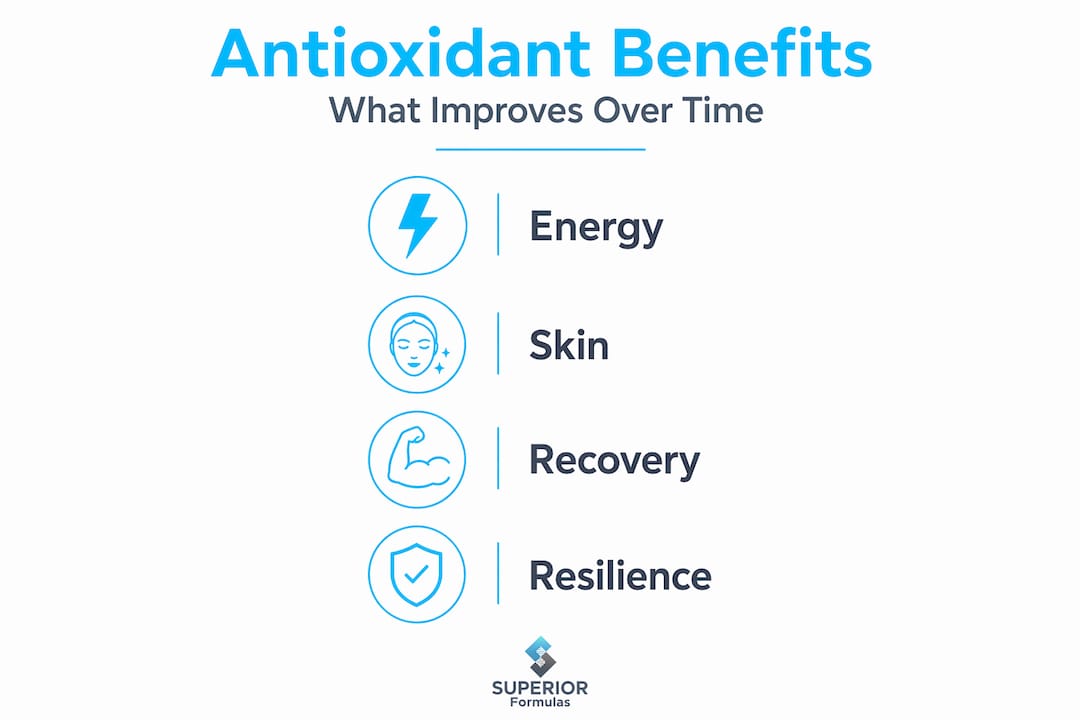
| Outcome Area | What to Expect | Timeline |
|---|---|---|
| Energy levels | Reduced cellular fatigue, more stable daily energy | 4 to 6 weeks |
| Skin health | Improved texture, reduced oxidative skin aging markers | 6 to 12 weeks |
| Exercise recovery | Faster muscle recovery, reduced post-exercise soreness | 3 to 4 weeks |
| Immune resilience | Fewer and shorter mild illness episodes | 6 to 10 weeks |
| Inflammation markers | Reduction in CRP and other inflammatory markers (lab-verified) | 8 to 12 weeks |
You won’t feel Nrf2 activating. You will notice your recovery improving after workouts, your skin looking less dull, and your energy being more consistent across the day. These are the practical markers that confirm the system is working.
If you want objective data, ask your physician about markers like high-sensitivity CRP, plasma glutathione levels, or the 8-OHdG oxidative stress marker. These aren’t routine tests, but they give you a quantifiable picture of oxidative burden that dietary and lifestyle changes can measurably shift over time.
My perspective on what actually moves the needle
I’ve spent considerable time working through questions about antioxidants, and the one pattern I keep coming back to is this: most people are looking for the single best antioxidant, and that’s precisely the wrong question.
In my experience, the adults who see the clearest improvements in energy, recovery, and overall resilience are the ones who stopped chasing a single supplement and started building a system. Rotating produce weekly. Adding sulforaphane through broccoli sprouts. Using turmeric consistently. Walking daily. These habits don’t generate the same excitement as a high-potency capsule, but they build something more durable.
What shifted my own thinking entirely was learning about Nrf2. The idea that certain foods don’t just donate antioxidants but actually turn on your body’s antioxidant gene expression feels like a fundamentally different conversation. You’re not patching holes. You’re reinforcing the structure. That distinction changes which strategies you prioritize.
The most common misconception I encounter is that supplementing is the same as eating well. It isn’t. Whole-food synergy is not marketing language. It reflects how these systems evolved. The longevity nutrients research consistently shows that phytonutrient combinations outperform isolated compounds, and that reality should anchor your approach from day one.
Patience matters here too. Give yourself 8 to 12 weeks before you evaluate results. Your cells need time to respond to new inputs. Most people quit before that window closes.
— cristopher
How Superiorformulas supports your antioxidant strategy
If you’ve built a solid dietary foundation and want targeted support for your Nrf2 pathway, Superiorformulas developed Formula 1 LONGEVITY Daily Nrf2 Activate+ specifically for this purpose. Formulated by a physician-scientist, it combines clinically studied natural compounds including sulforaphane precursors, curcumin, and resveratrol to activate your body’s endogenous antioxidant enzyme production at the cellular level.
This formula is designed as a complement to a strong dietary and lifestyle foundation, not a replacement for it. Superiorformulas manufactures in GMP-certified facilities with third-party testing for purity and consistency, so what’s on the label is what’s in the capsule. For adults over 30 who want to close the gap between diet alone and optimal cellular defense, it’s a research-backed next step. Learn more about how targeted formulations fit into a broader approach through the guide to supplements for longevity.
FAQ
What foods are highest in antioxidants?
Berries, cruciferous vegetables, dark leafy greens, green tea, dark chocolate, turmeric, and nuts consistently rank among the highest antioxidant-density foods. Rotating across these categories daily covers the widest range of protective phytonutrients.
Can you take too many antioxidant supplements?
Yes. High-dose beta-carotene and vitamin E supplements have shown increased mortality risk in certain populations, including smokers, in randomized controlled trials. Whole-food sources do not carry the same risk because phytonutrient concentrations in food fall within physiologically safe ranges.
How does exercise help boost antioxidant levels?
Moderate exercise produces a controlled amount of reactive oxygen species that activate the Nrf2 pathway, prompting your cells to produce more antioxidant enzymes. This adaptive response is one reason consistent physical activity is linked to better cellular resilience and metabolic health over time.
What is the Nrf2 pathway and why does it matter?
Nrf2 is a transcription factor that regulates the expression of antioxidant and cytoprotective genes inside your cells. Activating it through natural compounds like sulforaphane and curcumin produces a broader and more potent antioxidant response than dietary antioxidants can achieve on their own.
How long does it take to see results from an antioxidant-rich diet?
Most measurable improvements in energy, recovery, and inflammatory markers appear within 4 to 12 weeks of consistent dietary changes. Enzymatic responses driven by Nrf2 activation build gradually, which is why sustained daily habits outperform short-term antioxidant loading.
Recommended
- Antioxidant Support: Evidence-Based Steps for Healthy Aging - SUPERIOR Formulas
- Your antioxidant support checklist: What works for cellular health - SUPERIOR Formulas
- Should you supplement with antioxidants? Science-backed insights - SUPERIOR Formulas
- Enhance Cellular Defense: Effective Supplement Strategies - SUPERIOR Formulas


