


Evaluating antioxidant needs is defined as the process of measuring oxidative damage biomarkers alongside antioxidant defense markers to determine whether your cellular defenses are keeping pace with oxidative stress. This process, formally called oxidative stress status assessment, goes well beyond guessing based on diet alone. A complete picture requires both lab-based biomarker testing and a structured dietary antioxidant intake review. For adults over 30, where oxidative stress accumulates with age and lifestyle factors compound the load, knowing how to evaluate antioxidant needs accurately is one of the most direct steps toward protecting cellular health and longevity.
How to evaluate antioxidant needs: biomarkers and clinical tests
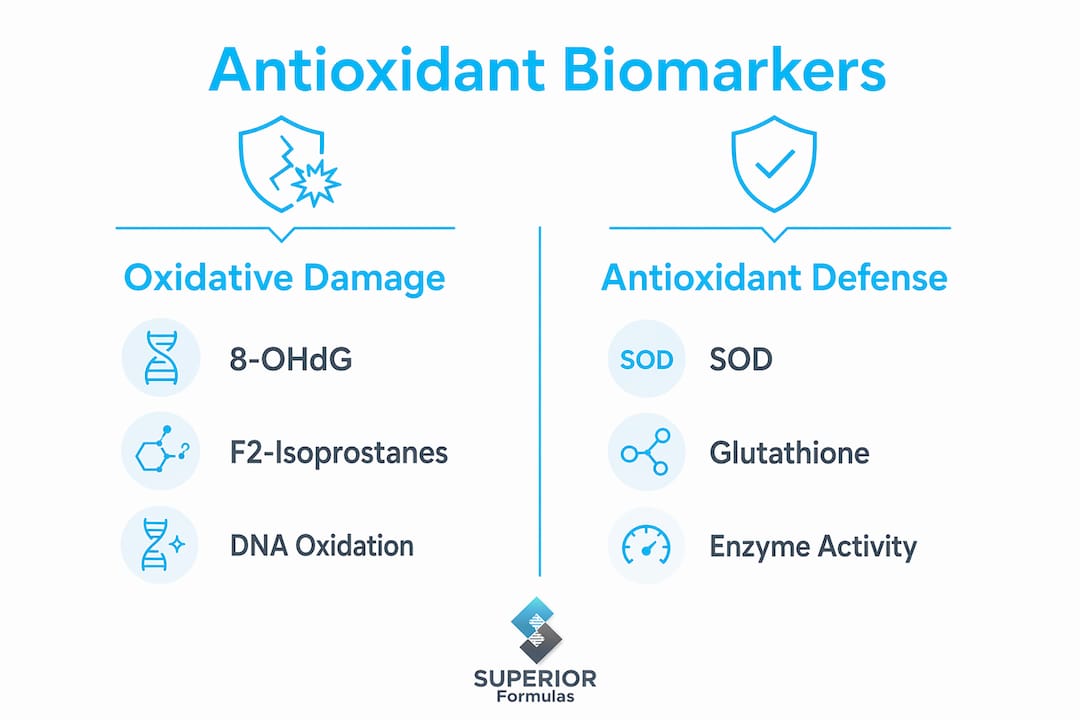
The most clinically reliable method for assessing antioxidant levels combines markers of oxidative damage with markers of antioxidant defense capacity. A 2025 review in Cells recommends using surrogate biomarkers including 8-hydroxydeoxyguanosine (8-OHdG) for DNA oxidation, F2-isoprostanes for lipid peroxidation, and protein carbonyls for protein oxidation, alongside antioxidant enzyme activity or total antioxidant capacity (TAC). This multimarker strategy reflects the systemic and dynamic nature of oxidative stress, which no single test can capture accurately.
Key oxidative damage markers
- 8-OHdG: A validated DNA oxidation marker measurable in urine via HPLC-MS/MS. Urinary 8-OHdG falls within a range of 1 to 20 ng/mL in most healthy adults, with measurement error under 25%. Urine is preferred over plasma because it yields higher analyte concentrations and requires no invasive sampling.
- F2-isoprostanes: Produced when free radicals attack cell membrane lipids. Quest Diagnostics’ Antioxidant & Oxidant Stress Test measures the urinary F2-isoprostane/creatinine ratio, where higher ratios signal elevated oxidative stress risk.
- Protein carbonyls: Reflect oxidative modification of proteins, useful when combined with the above markers for a fuller oxidative damage profile.
Key antioxidant defense markers
- Superoxide dismutase (SOD) and catalase activity: Enzymatic antioxidants that neutralize reactive oxygen species at the cellular level.
- Glutathione (GSH): The body’s primary intracellular antioxidant, measurable in red blood cells or plasma.
- Total antioxidant capacity (TAC): A composite measure of non-enzymatic antioxidant defenses, though its interpretation requires caution (addressed in the misconceptions section below).
Creatinine normalization is a technical detail that matters significantly. Because urine concentration varies with hydration, creatinine normalization corrects for dilution and makes oxidative stress readings comparable across samples and time points. Labs that skip this step produce data that is difficult to interpret meaningfully.
Pro Tip: When ordering oxidative stress panels, ask your physician specifically for creatinine-normalized urinary biomarkers. A raw F2-isoprostane reading without creatinine adjustment can be misleading depending on your hydration status that morning.
How to assess your dietary antioxidant intake

Dietary antioxidant requirements cannot be met by supplements alone. Mayo Clinic recommends a diet rich in fruits, vegetables, nuts, and whole grains as the primary strategy for long-term antioxidant support, noting that supplements carry less scientific backing for healthy adults. The reasoning is straightforward: whole foods deliver antioxidants within a matrix of fiber, cofactors, and phytonutrients that enhance absorption and biological activity in ways isolated supplements cannot replicate.
A practical dietary antioxidant assessment follows these steps:
- Record a 7-day food log. Use apps like Cronometer or Nutritionix to capture daily intake of vitamins C and E, carotenoids, flavonoids, and polyphenols. A 24-hour dietary recall with a registered dietitian is an alternative for a structured snapshot.
- Evaluate color diversity. Each color group in fruits and vegetables corresponds to distinct antioxidant families. Red tomatoes supply lycopene, orange sweet potatoes provide beta-carotene, and dark leafy greens deliver lutein and zeaxanthin. Eating across the color spectrum covers the broadest antioxidant range.
- Account for cooking methods. Boiling reduces water-soluble antioxidants like vitamin C significantly. Steaming or light sautéing preserves more. Tomatoes are an exception: cooking increases lycopene bioavailability because heat breaks down cell walls.
- Assess food pairings. Fat-soluble antioxidants including vitamins E, A, and carotenoids require dietary fat for absorption. Pairing a spinach salad with olive oil or avocado meaningfully increases carotenoid uptake compared to a fat-free dressing.
- Identify consistent gaps. If your log shows fewer than five servings of fruits and vegetables daily, or limited variety across color groups, your dietary antioxidant requirements are likely unmet before any lab test is even ordered.
Pro Tip: Polyphenol-rich foods like blueberries, dark chocolate (70% cacao or higher), green tea, and extra-virgin olive oil deliver some of the highest antioxidant concentrations per gram. Building these into daily habits is more effective than relying on a single high-dose supplement.
Step-by-step framework for a complete antioxidant needs assessment
Combining biomarker testing with dietary evaluation gives you the most accurate picture of your antioxidant status. Here is a structured six-step framework:
- Consult a healthcare provider. Discuss your oxidative stress concerns, relevant symptoms (fatigue, poor recovery, family history of age-related disease), and any medications that may affect antioxidant metabolism.
- Order a validated biomarker panel. Request tests measuring 8-OHdG, F2-isoprostanes, SOD activity, and glutathione. A multimarker approach that combines lipid peroxidation, DNA oxidation, and enzyme activity resolves conflicting results and reflects adaptive cellular responses more accurately than any single test.
- Complete a structured dietary intake review. Use a 7-day food log or a 24-hour recall with a dietitian. Cross-reference your intake against established dietary antioxidant benchmarks for vitamins C, E, and key polyphenols.
- Interpret results in clinical context. A single elevated 8-OHdG reading does not confirm chronic oxidative stress. Factors including recent intense exercise, illness, or even sample timing can temporarily shift biomarker values. Your physician should interpret results against your baseline health status.
- Adjust diet or consider targeted supplementation. If dietary gaps are confirmed and biomarkers indicate elevated oxidative damage, a targeted supplement protocol may be warranted. Research on vitamin E and C supplementation shows biomarker responses vary significantly by baseline health status and dose, which is why supplementation decisions should follow assessment rather than precede it.
- Schedule follow-up testing. Repeat biomarker panels every three to six months when making dietary or supplementation changes. Consistent methodology matters: tracking 8-OHdG longitudinally requires the same lab, same assay, and same sample matrix each time to produce comparable data.
| Assessment step | What it tells you |
|---|---|
| Urinary 8-OHdG panel | Degree of DNA oxidation and cellular oxidative load |
| F2-isoprostane/creatinine ratio | Lipid peroxidation status, normalized for hydration |
| SOD and glutathione activity | Strength of your enzymatic antioxidant defenses |
| 7-day food log analysis | Gaps in dietary antioxidant coverage by nutrient class |
| Follow-up testing at 3 to 6 months | Whether dietary or supplement changes are producing measurable results |
Common misconceptions and pitfalls when evaluating antioxidant capacity
Several widely held assumptions about antioxidant evaluation lead to poor decisions and wasted resources.
- More antioxidants do not always mean better health. A Stanford study randomized 88 healthy adults and found no significant anti-inflammatory effects from antioxidant supplements or increased antioxidant-rich foods over eight weeks in individuals with low baseline inflammation. This finding matters: supplementation produces measurable benefits primarily when oxidative stress is elevated, not as a blanket preventive strategy.
- TAC assays have real limitations. Total antioxidant capacity results are heavily influenced by assay conditions and kinetic factors. A high TAC reading does not confirm adequate antioxidant defense, and a low reading does not confirm deficiency. TAC should support a multimarker interpretation, not drive supplementation decisions on its own.
- Hydration and sample timing affect readings. Biomarker values shift with hydration status, time of day, recent exercise, and even recent meals. Collecting urine samples under standardized conditions, typically first morning void, reduces this variability.
- Oxidative stress is not purely harmful. Reactive oxygen species serve signaling roles in immune function and cellular adaptation. The goal of antioxidant evaluation is balance, not elimination of all oxidative activity.
“Antioxidant capacity assay results must be interpreted with caution, as they may reflect assay kinetics rather than true antioxidant deficiency or sufficiency.” — Antioxidants, 2025
Avoiding these pitfalls requires working with a clinician who understands oxidative stress physiology, not just ordering a single panel and drawing conclusions from it in isolation.
Key takeaways
Accurate antioxidant needs assessment requires combining oxidative damage biomarkers, antioxidant defense markers, and structured dietary intake analysis rather than relying on any single test or supplement.
| Point | Details |
|---|---|
| Use a multimarker approach | Combine 8-OHdG, F2-isoprostanes, SOD, and glutathione for a reliable oxidative stress snapshot. |
| Normalize urinary biomarkers | Always use creatinine-normalized results to correct for hydration variability in urine tests. |
| Prioritize dietary assessment first | A 7-day food log identifying color diversity and nutrient gaps is the foundation of any evaluation. |
| Interpret results in context | Single biomarker readings are influenced by exercise, illness, and timing; use trends, not snapshots. |
| Supplement after assessment | Targeted supplementation is most effective when guided by confirmed biomarker and dietary gaps. |
Why I think most people are evaluating antioxidants backwards
After years of working at the intersection of clinical nutrition and longevity science, the pattern I see most often is this: people buy antioxidant supplements first, then wonder whether they needed them. That is the wrong sequence entirely.
The value of a multimarker strategy is not just scientific rigor. It is practical clarity. When you know your urinary 8-OHdG is elevated and your glutathione activity is low, you have a specific, actionable target. When you know your diet is consistently low in polyphenols and carotenoids, you have a dietary gap worth addressing before reaching for a capsule. Without that baseline, you are guessing.
What I have also learned is that no single antioxidant protocol fits everyone. A 45-year-old endurance athlete generates far more oxidative stress than a sedentary adult of the same age, and their antioxidant needs reflect that difference. The research on antioxidant support for healthy aging consistently points toward personalization over generalization.
The most overlooked step in this entire process is follow-up. Ordering a panel once tells you where you are today. Ordering it again after three months of dietary changes or targeted supplementation tells you whether anything actually worked. That longitudinal view is where real insight lives. If you are serious about cellular longevity, treat your antioxidant evaluation as an ongoing practice, not a one-time check.
— cristopher
How Superiorformulas supports your antioxidant evaluation
Once you have completed a biomarker panel and dietary review, the next step is choosing supplements that are matched to your specific gaps rather than generic formulations. Superiorformulas develops physician-formulated antioxidant products built around clinically studied compounds including polyphenols, Nrf2 activators, and phytonutrients selected for their evidence base in cellular resilience and healthy aging. Every formulation is manufactured in GMP-certified facilities and third-party tested for purity. If you want to understand the science behind each ingredient before you commit, explore the research behind Superiorformulas’ approach to antioxidant health. For a deeper look at whether supplementation is right for your situation, the Superiorformulas blog covers supplement vs. food antioxidants with the same clinical rigor.
FAQ
What is the best way to measure antioxidant levels?
The most reliable method combines urinary biomarkers of oxidative damage, specifically 8-OHdG and F2-isoprostanes normalized to creatinine, with antioxidant enzyme activity measures like SOD and glutathione. A single test is insufficient; a multimarker panel provides a clinically meaningful picture.
How do I know if I need more antioxidants?
Elevated oxidative damage biomarkers combined with confirmed dietary gaps in vitamins C, E, carotenoids, or polyphenols indicate a genuine need for increased antioxidant intake. In healthy adults with low baseline inflammation, supplementation has not shown consistent benefit without confirmed deficiency.
Are antioxidant supplements better than food sources?
Mayo Clinic and current research consistently favor whole food sources over isolated supplements for meeting dietary antioxidant requirements, because food delivers antioxidants within a bioavailability-enhancing matrix of fiber and cofactors. Supplements are most appropriate when specific biomarker-confirmed deficits cannot be corrected through diet alone.
How often should I retest my antioxidant biomarkers?
Retesting every three to six months is appropriate when actively making dietary or supplementation changes. Consistent use of the same lab and assay method is critical, since variability across testing platforms makes longitudinal comparisons unreliable.
Does cooking affect antioxidant content in food?
Yes. Boiling significantly reduces water-soluble antioxidants like vitamin C, while steaming and light sautéing preserve more. Lycopene in tomatoes is a notable exception, as heat processing increases its bioavailability by breaking down cell wall structures.
For adults who have identified a genuine antioxidant support need, our Formula 1 — LONGEVITY Daily Nrf2 Activate+ was designed with exactly this clinical rationale in mind. Explore the science behind the formulation to see how it applies to your own routine.
Recommended
- Your antioxidant support checklist: What works for cellular health - SUPERIOR Formulas
- Why Antioxidant Supplements Matter for Longevity | SUPERIOR Formulas
- Antioxidant Support: Evidence-Based Steps for Healthy Aging - SUPERIOR Formulas
- Longevity Nutrients: Science-Backed Choices for Cellular Health - SUPERIOR Formulas


