


Yes, for most people, vitamin C with bioflavonoids is a well-grounded supplement choice for immune and antioxidant support. The pairing makes biological sense: ascorbic acid is one of the body’s primary reducing agents, and citrus bioflavonoids like hesperidin and rutin complement it through their own antioxidant and anti-inflammatory activity. Superiorformulas Vitamin C + Bioflavonoids is our recommended pick, formulated by a physician-scientist and manufactured in a GMP-certified facility with third-party testing and transparent ingredient labeling.
TL;DR: A physician-formulated product with clearly stated vitamin C and bioflavonoid amounts, GMP certification, and a third-party certificate of analysis is the standard to buy against. Superiorformulas meets all of it.
Table of Contents
- What does “vitamin C with bioflavonoids” actually mean?
- What does the research actually say about the benefits?
- Who should check with a clinician before taking this supplement?
- How to choose the right product and dose
- Why Superiorformulas Vitamin C + Bioflavonoids is our recommended pick
- Food sources and non-supplement alternatives
- Key Takeaways
- The case for getting the formulation right
- Superiorformulas Vitamin C + Bioflavonoids: where to get it
- Authoritative sources and further reading
What does “vitamin C with bioflavonoids” actually mean?
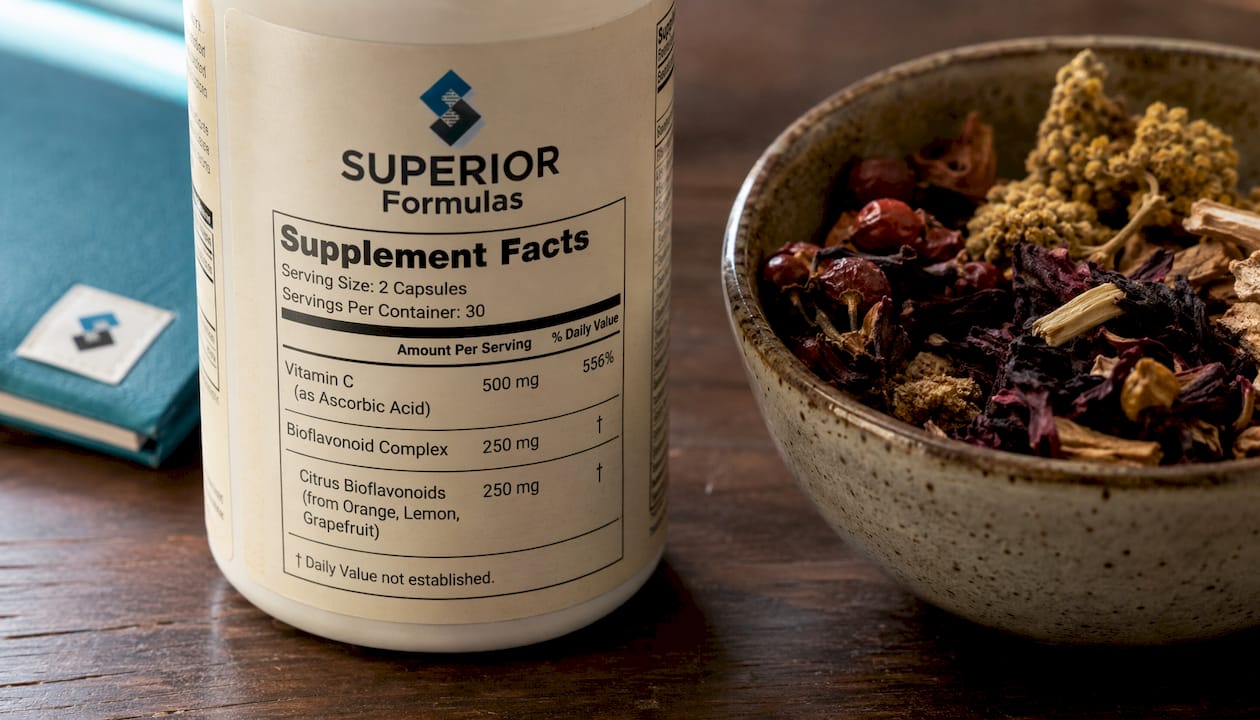
The term describes a supplement category that combines ascorbic acid (or a buffered form) with one or more flavonoid compounds, most often sourced from citrus peel. On a label, you will typically see vitamin C listed in milligrams alongside a bioflavonoid complex. The NIH Office of Dietary Supplements notes that ascorbic acid with bioflavonoids is one of several recognized supplement forms, alongside sodium ascorbate, calcium ascorbate, and Ester-C.
Common supplement forms:
- Capsule or tablet (most common; straightforward dosing)
- Chewable tablet (convenient but often lower dose; watch added sugars)
- Buffered/Ester-C (calcium ascorbate base; gentler on the stomach at higher doses)
- Liposomal (altered pharmacokinetics; higher cost, variable quality by brand)
- Powder (flexible dosing; mixes into water or juice)
Bioflavonoid ingredients you will see on labels:
- Hesperidin (from citrus peel; the most common citrus bioflavonoid in supplements)
- Rutin (from buckwheat or citrus; a flavonol with vascular research interest)
- Naringenin / Naringin (from grapefruit; a flavanone)
- Quercetin (from onion, apple, and tea; a flavonol)
- Rose hips extract (a natural vitamin C source with flavonoid co-factors)
- Acerola cherry extract (high natural ascorbic acid content with accompanying phytonutrients)
A label that specifies which bioflavonoids are included and lists their amounts in milligrams is far more informative than one that simply says “bioflavonoid complex” with no further detail. That distinction matters when you are comparing products.
What does the research actually say about the benefits?
The antioxidant role of vitamin C is among the most well-established in nutritional biochemistry. Ascorbate donates electrons to neutralize reactive oxygen species and helps regenerate vitamin E after it has been oxidized, effectively extending the antioxidant network. This mechanism is why vitamin C is central to any antioxidant support strategy for cellular health.
Collagen synthesis is another area with solid mechanistic support. Vitamin C is a required cofactor for the enzymes that stabilize collagen’s triple-helix structure, making it directly relevant to skin integrity, wound healing, and vascular wall maintenance.
Statistic callout: Regular vitamin C supplementation is associated with a modest reduction in cold duration for people who take it consistently, but does not prevent colds in the general population. Starting supplementation after symptoms appear produces no meaningful benefit.
The picture for bioflavonoids is more nuanced. In laboratory settings, flavonoids are effective free-radical scavengers. In the human body, however, plasma flavonoid concentrations after typical oral doses are 100 to 1,000 times lower than concentrations of endogenous antioxidants like ascorbate, uric acid, and glutathione. Their direct antioxidant contribution in vivo is likely modest. Where flavonoids show more consistent promise is in cardiovascular and metabolic pathways, particularly when consumed as part of a diverse dietary pattern.
| Claimed benefit | Evidence strength | Key caveat |
|---|---|---|
| Antioxidant protection (vitamin C) | Strong mechanistic + clinical | Absorption saturates above ~200–400 mg per dose |
| Collagen / skin / vascular support | Strong mechanistic | Deficiency correction drives most of the effect |
| Cold duration (modest reduction) | Moderate clinical | Only for regular users; not for acute treatment |
| Bioflavonoid-enhanced bioavailability | Weak in humans | Animal models mixed; human data limited |
| Cardiovascular / metabolic (dietary flavonoids) | Moderate epidemiological | Strongest with dietary variety, not single isolates |
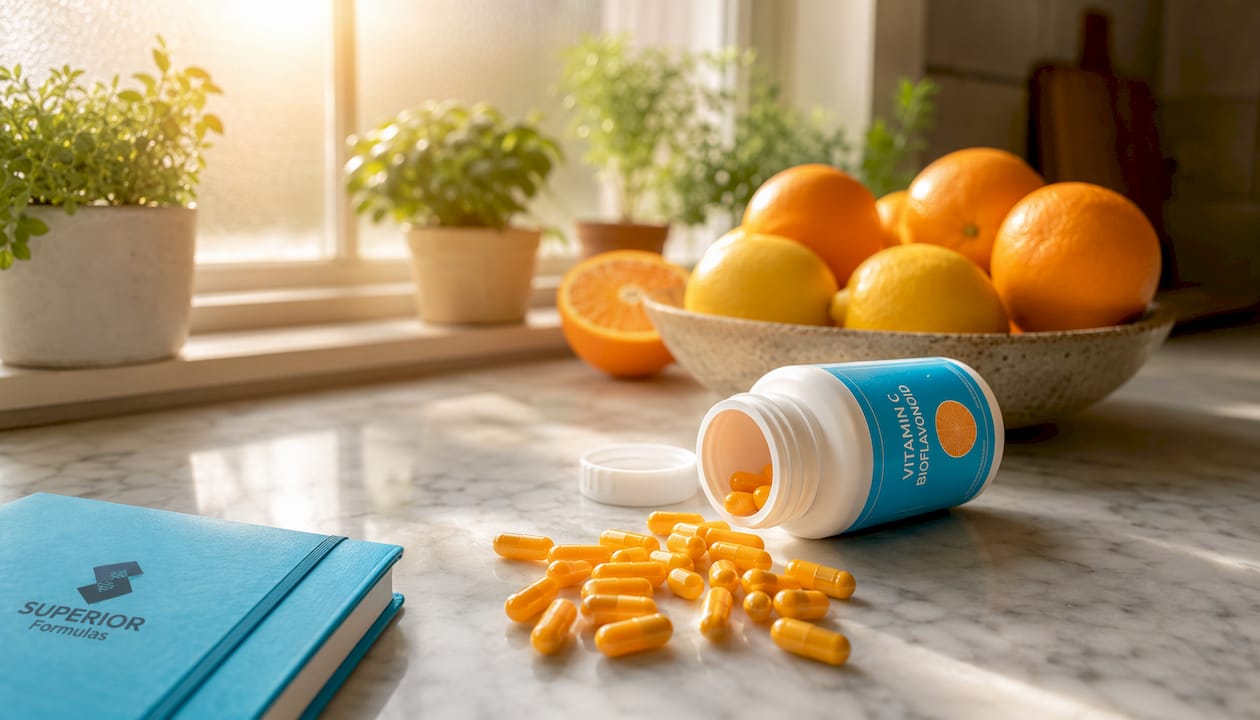
The LPI notes that human evidence on whether added flavonoids increase vitamin C bioavailability is mixed, and the NIH Health Professional Fact Sheet concludes that simple ascorbic acid remains the preferred supplemental form on a cost-effectiveness basis. That does not make bioflavonoids useless. It means their value likely lies in their own biological activity, not in amplifying ascorbate absorption.
Who should check with a clinician before taking this supplement?
Most adults tolerate vitamin C supplementation at recommended doses without issue. Certain conditions and medications, however, warrant a conversation with a clinician before you start.
Check with your doctor or pharmacist if you have:
- A history of kidney stones (particularly calcium oxalate stones; high-dose vitamin C increases urinary oxalate)
- Hemochromatosis or iron overload (vitamin C enhances non-heme iron absorption, which can worsen iron accumulation)
- Active chemotherapy (high-dose antioxidants may interfere with oxidative mechanisms used by some cancer treatments)
- Warfarin or other anticoagulants (very high doses of vitamin C have been reported to affect INR in some individuals)
- Pregnancy or breastfeeding (standard dietary amounts are safe; high-dose supplementation should be confirmed with an OB or midwife)
- GI sensitivity (doses above 1,000 mg/day commonly cause diarrhea or cramping; buffered forms reduce this risk)
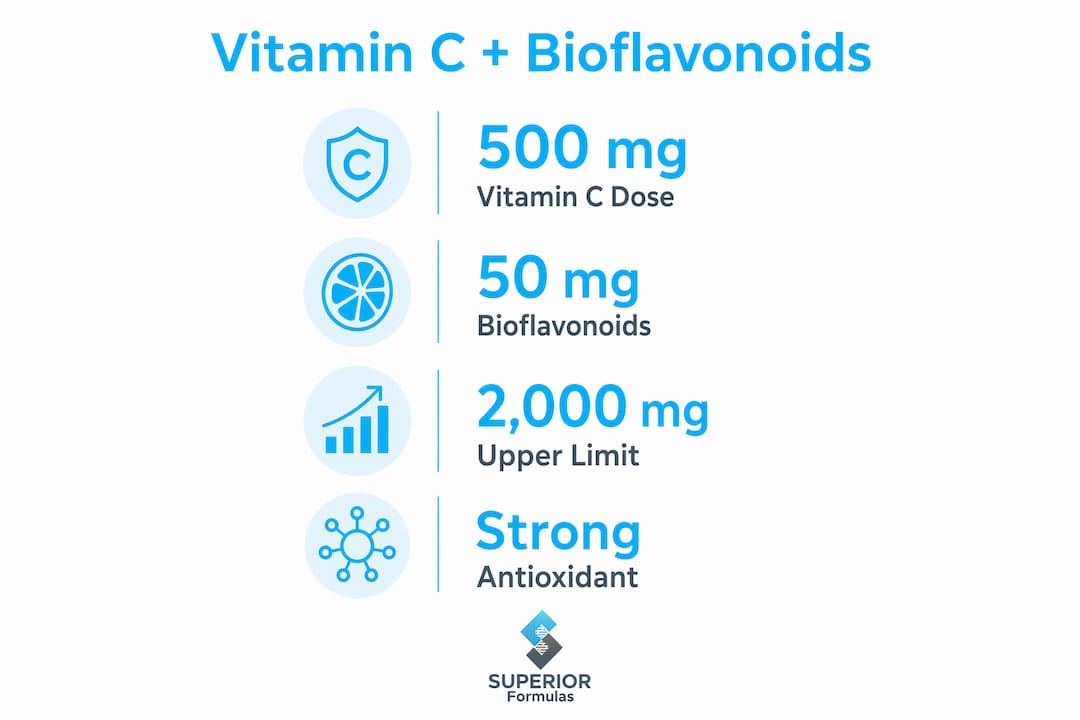
Regarding label dose versus medical guidance: the Tolerable Upper Intake Level for vitamin C in adults is 2,000 mg/day, set by the National Academies. Most commercial supplements fall well below this, but stacking multiple products containing vitamin C can push totals higher than intended.
Pro Tip: Before starting any new supplement, run a quick check with your pharmacist using the specific product label. Pharmacists can flag interactions in under five minutes and it costs nothing.
How to choose the right product and dose
Oral absorption of vitamin C is efficient at lower doses but becomes saturable above roughly 200–400 mg per serving. For most healthy adults, 200–500 mg/day covers antioxidant and immune support needs; doses used in chronic oxidative stress contexts typically stay in that same range. Splitting a higher daily total into two doses improves absorption efficiency compared to a single large dose.
Statistic callout: StatPearls clinical guidance notes that 100–300 mg is sufficient to correct deficiency, while 200–500 mg/day is considered for ongoing oxidative stress support. Single oral doses above 1,000 mg produce diminishing plasma returns.
Label math you should do before buying:
- Find the vitamin C amount per serving (in mg) and the bioflavonoid amount (in mg, with named compounds).
- Divide the total price by the number of servings to get your cost per serving.
- You will usually find quality vitamin C with bioflavonoids supplements costing between $0.15 and $0.50 per serving, depending on dose and form.
Buyer checklist — prioritize in this order:
- Vitamin C dose per serving (200–500 mg for daily maintenance; confirm it matches your goal)
- Named bioflavonoids with mg amounts (hesperidin, rutin, or quercetin listed individually, not just “bioflavonoid complex”)
- GMP-certified manufacturing (confirms production standards)
- Third-party testing / certificate of analysis (independent verification of purity and potency)
- Allergen-free formulation (no unnecessary fillers, binders, or common allergens)
- Price per serving (calculate it; a higher bottle price is not always a higher per-serving cost)
Pro Tip: A label that lists “bioflavonoids” without specifying the compound or the milligram amount tells you almost nothing about what you are actually getting. Specificity on the label is a proxy for quality in the formulation.
For a deeper look at supplement selection for adults 35+, Superiorformulas has a step-by-step guide that walks through this checklist in the context of a broader cellular health strategy.
Why Superiorformulas Vitamin C + Bioflavonoids is our recommended pick
Superiorformulas Vitamin C + Bioflavonoids earns the recommendation because it combines physician-formulated dosing with the transparency and manufacturing standards that separate credible supplements from generic options.
Trust signals present in this formulation:
- GMP-certified manufacturing (production meets current Good Manufacturing Practice standards)
- Third-party testing with certificate of analysis (independent verification of what is on the label)
- Physician-formulated (designed by a physician-scientist with a background in clinical nutrition and biochemistry)
- Transparent mg amounts for both vitamin C and named bioflavonoid compounds
- Clean formulation (free from unnecessary fillers and common allergens)
Statistic callout: Manufacturer trust signals that consistently matter to supplement shoppers include GMP certification, third-party COA availability, physician formulation credentials, and transparent ingredient labeling with specific mg amounts for each active compound.
The physician-formulated credential here is not marketing language. Superiorformulas was founded by a physician-scientist whose formulation decisions are grounded in clinical biochemistry and aging research, including pathways like Nrf2 activation and cellular resilience. That background shows up in the specificity of the label.
For realistic expectations: you will not notice a dramatic change in the first week. Consistent daily use over four to eight weeks is the timeframe most clinicians associate with measurable antioxidant status improvements. Cold duration reduction, where evidence exists, is a benefit of regular long-term use, not acute dosing.
Food sources and non-supplement alternatives
Supplements are convenient, but whole foods deliver flavonoid variety that no single-compound supplement can replicate. The USDA Flavonoid Database catalogs values for 506 food items across 26 predominant dietary flavonoids, spanning subclasses from flavonols and flavanones to anthocyanidins.
Statistic callout: A large prospective study found that higher dietary flavonoid diversity was associated with roughly 20% lower diabetes risk, with researchers noting that different flavonoids act on different biological pathways — which is why variety matters more than volume.
High-flavonoid foods worth prioritizing:
- Citrus fruits (hesperidin, naringenin; also a direct vitamin C source)
- Berries (anthocyanins; blueberries, blackberries, strawberries)
- Green and black tea (flavan-3-ols, including epicatechin)
- Apples and onions (quercetin)
- Dark chocolate / cocoa (flavanols)
- Bell peppers and kiwi (among the highest vitamin C concentrations per gram of any food)
Food-first strategies work well for people with varied, produce-rich diets. Supplementation adds practical value when diet is restricted, absorption is compromised (common with age and certain GI conditions), or a measured daily dose is needed for a specific health goal. Combining a diet rich in bioflavonoid-rich foods with a targeted supplement gives you both the breadth of dietary flavonoid diversity and the consistency of a known daily dose.
Key Takeaways
Vitamin C with bioflavonoids is a well-supported supplement for antioxidant and immune health when you choose a physician-formulated product with GMP certification, named bioflavonoid compounds, and a third-party certificate of analysis.
| Point | Details |
|---|---|
| Absorption has a ceiling | Oral vitamin C absorption saturates above ~200–400 mg per dose; split higher daily totals for better efficiency. |
| Bioflavonoid specificity matters | Look for named compounds (hesperidin, rutin, quercetin) with mg amounts, not a generic “bioflavonoid complex.” |
| Safety check before high doses | Those with kidney stone history, iron overload, or anticoagulant use should confirm dosing with a clinician. |
| Realistic timeline | Consistent daily use over four to eight weeks is the timeframe associated with measurable antioxidant support benefits. |
| Superiorformulas recommendation | Superiorformulas Vitamin C + Bioflavonoids is physician-formulated, GMP-certified, and third-party tested with transparent labeling. |
The case for getting the formulation right
There is a version of this conversation that goes: “Vitamin C is vitamin C — just buy the cheapest bottle.” That logic is understandable, and for basic deficiency correction, it is not entirely wrong. But it misses something that matters if you are buying this supplement for antioxidant support and cellular resilience over the long term.
The bioflavonoid side of the label is where most products cut corners. A label that says “bioflavonoid complex, 50 mg” tells you almost nothing. Which flavonoids? Hesperidin and rutin behave differently in the body than quercetin or naringenin. Their absorption rates differ. Their downstream effects on vascular tone, inflammation, and antioxidant pathways differ. A physician formulating this product with cellular health in mind will specify the compounds and the amounts, because that is what the science requires.
The other thing worth saying plainly: the evidence for vitamin C’s antioxidant and collagen-support roles is solid. The evidence that bioflavonoids dramatically enhance vitamin C absorption in humans is not. That does not make the combination less valuable. It means the bioflavonoids are earning their place through their own biological activity, not as absorption enhancers. A well-formulated product accounts for that distinction. A generic one does not.
Superiorformulas Vitamin C + Bioflavonoids: where to get it
Superiorformulas Vitamin C + Bioflavonoids is available directly through the Superiorformulas online store, giving you direct access to the physician-formulated product with GMP-certified manufacturing and third-party testing. Buying direct means you get the current formulation, full label transparency, and access to the certificate of analysis.
This is a supplement designed for people who want more than a commodity vitamin C tablet. The formulation reflects clinical priorities: a meaningful dose, named bioflavonoid compounds with stated amounts, and a clean ingredient profile free from unnecessary fillers. Visit Superiorformulas to review the full label and place your order.
This article is for general informational purposes only and does not constitute medical advice. Confirm dosing and any potential interactions with your physician or pharmacist before starting supplementation.
Authoritative sources and further reading
The claims in this article draw from primary and institutional sources selected for scientific authority and editorial independence. These are the core references worth bookmarking if you want to go deeper.
- Linus Pauling Institute, Oregon State University — the most comprehensive publicly available review of vitamin C biochemistry, bioavailability, and clinical evidence, including the mixed data on bioflavonoid-enhanced absorption.
- NIH Office of Dietary Supplements — both the consumer and health professional fact sheets on vitamin C provide dosing guidance, safety thresholds, and form comparisons grounded in clinical trial data.
- MedlinePlus (National Library of Medicine) — clear clinical consensus on vitamin C and the common cold, including the distinction between prevention and modest duration reduction.
- StatPearls / NCBI Bookshelf — clinical pharmacology of ascorbic acid, including absorption saturation data and dosing ranges for deficiency correction versus oxidative stress support.
- USDA Flavonoid Content Database (Release 3.2) — the authoritative reference for flavonoid content across 506 foods and 26 flavonoid compounds.
- Harvard Health Publishing — accessible summary of the prospective research on dietary flavonoid diversity and long-term disease risk.
- PMC / Frontiers in Nutrition — peer-reviewed review of flavonoid-rich foods as nutraceutical candidates, including safety considerations at high supplemental doses.
Recommended
- Your antioxidant support checklist: What works for cellular health - SUPERIOR Formulas
- Enhance Cellular Defense: Effective Supplement Strategies - SUPERIOR Formulas
- Nutraceuticals for Aging Support: Top Science-Backed Picks
- Should you supplement with antioxidants? Science-backed insights - SUPERIOR Formulas


