


A supplement quality checklist is a structured evaluation tool that confirms a product’s ingredient identity, potency, purity, and manufacturing standards before you buy it. For anyone focused on longevity and cellular health, the stakes are high. The supplement industry is largely self-regulated, which means a product can sit on a pharmacy shelf without ever being independently verified. Knowing exactly what to look for, from FDA cGMP compliance to USP Verified certification, separates supplements that genuinely support healthy aging from those that simply claim to.
1. What does a supplement quality checklist cover?
A complete supplement quality checklist addresses eight core criteria: ingredient identity, potency, purity, label transparency, manufacturing compliance, third-party certification, contaminant screening, and filler content. These criteria align directly with the quality assurance framework used by physicians and clinical researchers when evaluating dietary supplements. Each criterion targets a specific failure point in the supplement supply chain.
The checklist approach matters because no single marker tells the full story. A product can carry a clean label but still fail potency testing. Another can be manufactured in a GMP facility but contain undisclosed fillers. Working through each criterion systematically removes guesswork from the selection process.

2. Verify ingredient identity with validated testing methods
Ingredient identity testing uses analytical methods such as HPLC, DNA barcoding, and spectrophotometry to confirm that each incoming ingredient lot is what the label claims. Ingredient substitution is a documented problem in the botanical supplement market, where cheaper plant materials are sometimes swapped for labeled ingredients. Without validated identity testing, you cannot confirm that what is printed on the label is what is inside the capsule.
Ask manufacturers directly whether they test each incoming ingredient lot or rely solely on supplier certificates of analysis. A supplier certificate alone is not sufficient verification. Manufacturers who conduct in-house identity testing or commission independent lab testing demonstrate a higher standard of quality control.
3. Confirm potency matches the labeled amount
Potency refers to the concentration of active ingredients per serving. A supplement can contain the correct ingredient but at a fraction of the labeled dose, which renders it clinically ineffective. FDA cGMP rules under 21 CFR Part 111 require manufacturers to verify that finished products meet potency specifications before release. That requirement exists because potency drift during manufacturing is a real and measurable problem.
Third-party testing by organizations like USP or NSF independently confirms that potency matches label claims. If a manufacturer cannot provide a certificate of analysis showing potency results, treat that as a red flag.
4. Assess purity and screen for contaminants
Purity testing confirms that a supplement contains no harmful contaminants, including heavy metals such as lead, arsenic, and cadmium, as well as microbial organisms like E. coli and Salmonella. Heavy metals and microbial contamination screening is especially critical for herbal and botanical products, where agricultural sourcing conditions vary widely. Many quality retailers require these tests even though the FDA does not explicitly mandate them for every product category.
Botanicals sourced from regions with variable agricultural regulations carry a higher contamination risk. Batch-level contaminant screening, rather than periodic or random testing, provides the strongest safety assurance. Look for manufacturers who publish batch-specific certificates of analysis.
5. Read the Supplement Facts label carefully
The Supplement Facts panel is your first window into a product’s quality. Supplement Facts labels must include serving size, servings per container, amount per serving, and percent Daily Value where applicable. Any product that omits these elements does not meet basic labeling requirements.
Ingredient order matters. Ingredients are listed by weight in descending order, so the first ingredient listed is present in the highest amount. If a key active ingredient appears near the bottom of a long list, its dose is likely too small to be clinically meaningful. Check that the amounts listed match the doses used in published clinical research for your specific health goal.
Pro Tip: Search the ingredient name plus the dose on PubMed to confirm whether the labeled amount matches what clinical studies actually used. A dose that is 10 times lower than the studied amount will not produce the same result.
6. Avoid proprietary blends
Proprietary blends list a group of ingredients under a single name with only the total blend weight disclosed. Proprietary blends hide individual doses, making it impossible to verify whether any single ingredient is present at a therapeutically relevant amount. This is one of the most common ways that manufacturers obscure underdosing.
For consumers focused on cellular longevity, this matters acutely. Compounds like resveratrol, NMN, and quercetin have dose-dependent effects studied in clinical research. If the blend total is 500 mg and it contains 12 ingredients, the math alone tells you most are present in trace amounts. Reject any product that hides individual ingredient doses behind a proprietary blend label.
7. Confirm GMP compliance and manufacturing transparency
Good Manufacturing Practice compliance, governed by 21 CFR Part 111, sets the legal minimum for supplement manufacturing in the United States. GMP-certified facilities follow documented procedures for testing, sanitation, equipment calibration, and batch record-keeping. Compliance does not guarantee a great product, but its absence is a definitive disqualifier.
Look for manufacturers who disclose their facility certification status and welcome third-party audits. Transparency about where and how a product is made is a meaningful quality signal. Brands that publish their manufacturing standards openly, as Superiorformulas does, give you verifiable evidence rather than marketing claims.
8. Look for third-party certifications
Third-party certifications are the strongest independent quality signals available to consumers. USP, NSF, and Informed Sport are the three most recognized programs, and they differ in scope and target audience. USP Verified covers label accuracy, ingredient identity, and manufacturing consistency for general consumers. NSF Certified for Sport adds screening for substances banned in athletic competition. Informed Sport provides batch-level testing specifically for athletes.
Third-party certifications confirm that a supplement contains what it claims and is manufactured safely. They do not certify that the product will produce a specific clinical outcome for your individual health goals.
The USP Verified program independently tests products and awards its mark only to those that pass. This is distinct from a manufacturer simply claiming their product meets USP standards, a common source of consumer confusion. The mark itself, not a general reference to USP, is what carries verification weight.
9. Distinguish USP Verified from general USP claims
The USP Verified mark is specific to the independent verification program and is not the same as a manufacturer stating that a product “meets USP standards.” Any company can print a USP standards reference on a label without submitting to the actual verification program. Only products that have completed USP’s independent testing and audit process are authorized to display the USP Verified mark.
This distinction is one of the most misunderstood points in supplement label reading. When choosing quality supplements for longevity support, verify the exact certification mark rather than accepting vague standards language.
10. Scrutinize labels for quality and red flags
Labels with typos, poor formatting, or low-resolution printing can indicate counterfeit or low-quality products. Visual inspection is a fast, zero-cost screening step that filters out obvious problems before you spend money. Legitimate manufacturers invest in professional labeling because their regulatory compliance depends on it.
Watch for these specific red flags:
- Vague ingredient names such as “herbal extract” without specifying the plant species or standardized extract percentage
- Missing allergen declarations, which are required for major allergens under FDA labeling rules
- No lot number or expiration date, both of which are required for traceability
- Inconsistent font sizes or formatting that suggests a label was not professionally produced
- Absence of a manufacturer address or contact information
Pro Tip: Cross-reference the manufacturer’s address on the label with their FDA facility registration. The FDA’s dietary supplement facility database is publicly searchable and takes under two minutes to check.
11. Evaluate filler and excipient content
Excessive fillers, binders, and non-active excipients can dilute active ingredients, trigger sensitivities in some individuals, and signal that a manufacturer is prioritizing cost over quality. Not all excipients are problematic. Some, like vegetable cellulose in capsules, serve a legitimate functional purpose. The concern is with products that list five or more non-active ingredients without any explanation of their purpose.
Label transparency about fillers is a direct indicator of a brand’s overall commitment to quality. Brands that disclose why each excipient is included demonstrate a higher standard of consumer respect. For cellular health formulations in particular, clean ingredient profiles reduce the risk of interference with sensitive biological pathways like Nrf2 activation.
12. How to compare supplements using a practical checklist summary
Use this comparison table when evaluating two or more products side by side.
| Criterion | What to look for | Red flag |
|---|---|---|
| Ingredient identity | Validated testing methods documented | No testing disclosure |
| Potency | Certificate of analysis with potency results | No CoA available |
| Purity | Heavy metal and microbial test results | No contaminant testing |
| Label transparency | Full ingredient amounts, no proprietary blends | Proprietary blend listed |
| GMP compliance | FDA-registered facility, third-party audited | No facility information |
| Third-party certification | USP Verified, NSF Certified, or Informed Sport mark | Vague “meets standards” language |
| Filler content | Minimal excipients with stated purpose | Five or more unlabeled fillers |
For general longevity support, prioritize GMP compliance, potency verification, and contaminant screening. For cellular health goals involving specific pathways like Nrf2 or mitochondrial function, add ingredient identity verification and clinical dose confirmation to your top criteria. Choosing quality supplements for healthy aging requires matching your evaluation criteria to your specific health objectives.
Key takeaways
A rigorous supplement quality checklist requires verified ingredient identity, confirmed potency, contaminant screening, label transparency, GMP compliance, and recognized third-party certification to support longevity and cellular health goals.
| Point | Details |
|---|---|
| Ingredient identity is foundational | Validated methods like HPLC confirm each ingredient lot matches the label claim. |
| Proprietary blends obscure dosing | Individual ingredient amounts must be disclosed to confirm clinical relevance. |
| Third-party marks differ in scope | USP Verified, NSF Certified, and Informed Sport each serve different verification needs. |
| Label inspection is a free first screen | Typos, missing lot numbers, and vague ingredient names signal low-quality products. |
| Certifications confirm safety, not efficacy | Third-party verification checks label accuracy and purity, not clinical outcomes for your goals. |
What I have learned from years of reviewing supplement quality
The most common mistake I see among health-conscious consumers is treating a third-party certification as a guarantee of effectiveness. It is not. Certifications confirm that a product contains what it claims and was made safely. Whether those ingredients will produce the cellular health outcomes you are after depends entirely on the clinical evidence behind each compound and the dose used.
The second mistake is trusting marketing language over verifiable documentation. Phrases like “pharmaceutical grade,” “clinically proven,” and “doctor formulated” carry no regulatory definition. They are marketing terms. What carries weight is a published certificate of analysis, an FDA facility registration number, and a recognized certification mark from USP, NSF, or Informed Sport.
I have also found that brand reputation acts as a meaningful secondary signal. Brands that publish their manufacturing standards, disclose their testing protocols, and respond directly to consumer questions about ingredient sourcing are demonstrably more trustworthy than those that do not. That transparency does not replace independent verification, but it tells you something real about how a company operates.
My honest recommendation: use the checklist in this article as your baseline, then consult your physician or a registered dietitian before adding any new supplement to a longevity protocol. The checklist filters out low-quality products. Your healthcare provider helps you determine whether a high-quality product is right for your specific biology.
— cristopher
How Superiorformulas supports your supplement quality goals
Superiorformulas was founded by a physician-scientist with one purpose: to produce supplements that meet the same standard of evidence and transparency that clinical medicine demands. Every formulation is manufactured in a GMP-certified facility, tested for ingredient identity and potency, and built around clinically studied doses of compounds like polyphenols, adaptogens, and Nrf2-activating phytonutrients.
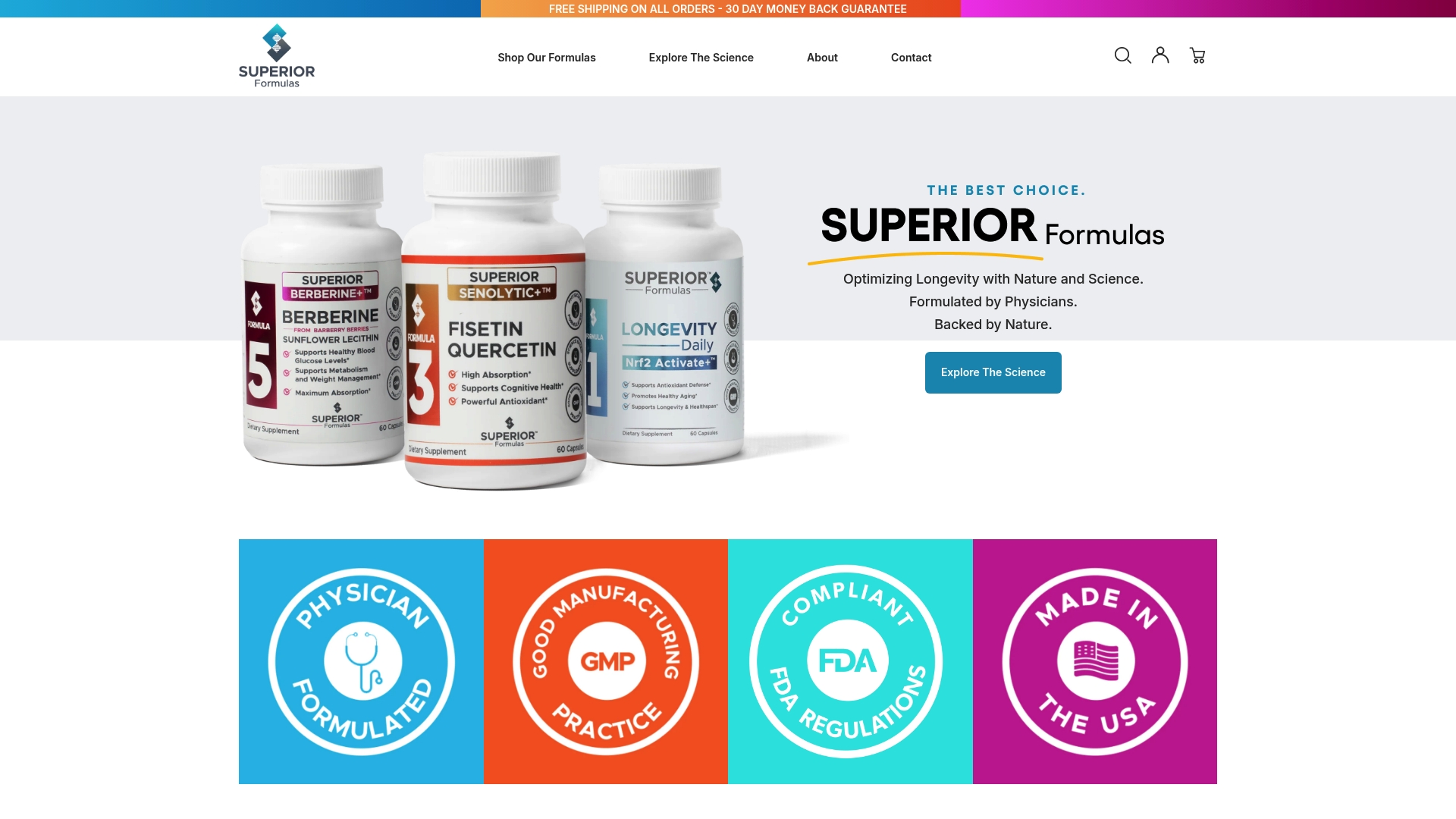
If you have worked through this supplement quality guide and want a brand that already meets every criterion on the checklist, Superiorformulas is built for exactly that. From contaminant screening to clean excipient profiles, the standards described in this article are the standards applied to every product. Visit the Superiorformulas homepage to explore physician-formulated supplements designed for longevity and cellular resilience.
FAQ
What is a supplement quality checklist?
A supplement quality checklist is a structured set of criteria used to verify a supplement’s ingredient identity, potency, purity, label accuracy, and manufacturing compliance before purchase. It draws on FDA cGMP standards and third-party certification programs like USP Verified and NSF Certified.
Does a USP Verified mark mean a supplement is effective?
No. Third-party certifications confirm label accuracy and manufacturing safety but do not certify clinical effectiveness or personalized health benefit. Efficacy depends on the scientific evidence behind each ingredient and the dose used.
What is the difference between USP Verified and a USP standards claim?
The USP Verified mark is awarded only after a product completes USP’s independent testing and audit program. A manufacturer claiming their product “meets USP standards” has not necessarily submitted to that program. Only the actual mark confirms independent verification.
Why should I avoid proprietary blends?
Proprietary blends disclose only the total blend weight, not individual ingredient amounts. This makes it impossible to confirm whether any single ingredient is present at a dose supported by clinical research, which is a critical factor when choosing supplements for longevity and cellular health.
How do I check if a supplement manufacturer is GMP compliant?
Search the FDA’s dietary supplement facility database using the manufacturer’s name or address. GMP-compliant facilities are registered with the FDA, and many also carry third-party audit certifications from organizations like NSF or the Natural Products Association.


