


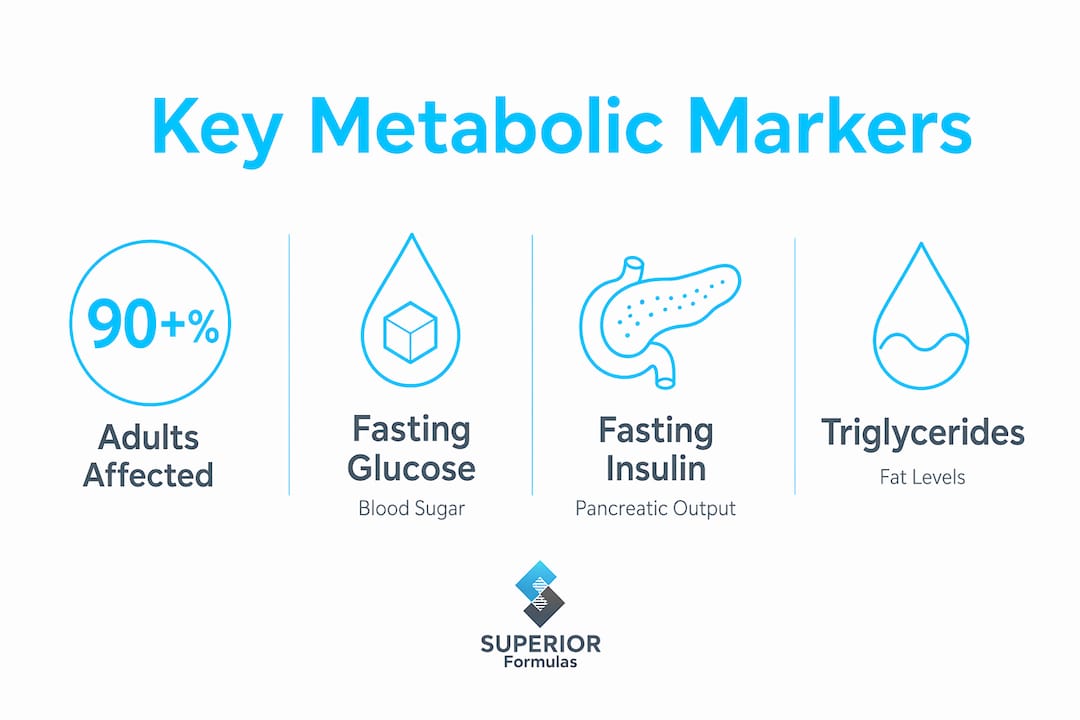
Metabolic health is defined as your body’s ability to efficiently convert food into energy while keeping blood sugar, cholesterol, blood pressure, and waist circumference within healthy ranges. The case for why support metabolic health matters has never been stronger: over 90% of Americans show signs of metabolic dysfunction, and 1 in 3 adults meets the criteria for metabolic syndrome, a cluster of risk factors that doubles the likelihood of heart disease and stroke. These numbers mean most adults are already on a trajectory toward preventable chronic disease, often without knowing it. Supporting metabolic function is not a wellness trend. It is the foundation of long-term health, cognitive sharpness, and disease resistance.
Why support metabolic health for longevity and overall wellness?
Metabolic health determines how well your cells produce and use energy. Every organ, including your brain, heart, and muscles, depends on mitochondria converting nutrients into usable fuel. When that process breaks down, the effects ripple outward into hormone imbalance, chronic inflammation, and accelerated aging.

The connection to longevity is direct. Poor metabolic function raises the risk of type 2 diabetes, cardiovascular disease, non-alcoholic fatty liver disease, and certain cancers. These are not isolated conditions. They share a common root in cellular metabolic efficiency, which declines gradually and silently in most adults after their mid-30s.
Hormone regulation is another critical link. Insulin, cortisol, leptin, and thyroid hormones all interact within your metabolic network. When blood sugar swings become frequent, cortisol rises to compensate, which then suppresses thyroid output and disrupts sleep. The cascade is real and measurable.
Key ways metabolic health supports longevity include:
- Stable blood sugar: Reduces glycation, a process that damages proteins and accelerates tissue aging.
- Healthy triglyceride and HDL levels: Protect arterial walls and reduce cardiovascular risk.
- Optimal blood pressure: Lowers strain on the heart and kidneys over decades.
- Balanced insulin sensitivity: Preserves brain function and reduces Alzheimer’s risk.
- Controlled inflammation: Slows cellular aging and supports immune resilience.
Pro Tip: A short 10-minute walk after your largest meal is one of the most effective ways to blunt post-meal glucose spikes. Research shows post-meal physical activity can rival medications in improving insulin sensitivity.
What are the biggest misconceptions about metabolic health?
The most common misconception is that metabolic health equals body weight. A person can be lean and still have insulin resistance, elevated triglycerides, or high blood pressure. Metabolic health reflects cellular efficiency, not the number on a scale. This distinction matters enormously for adults over 35 who may feel healthy but carry hidden metabolic risk.
A second misconception is that standard blood tests catch problems early. Fasting glucose is the most common metabolic marker tested, but it is also one of the last to rise. Insulin resistance develops years before glucose becomes abnormal. By the time a fasting glucose test flags a problem, the underlying dysfunction has often been present for a decade.
Three more myths worth addressing directly:
- “Symptoms will warn me.” Metabolic dysfunction is largely asymptomatic in early stages. Fatigue, brain fog, and weight gain are easy to attribute to stress or aging rather than metabolic decline.
- “Cleanses and detoxes reset metabolism.” No short-term cleanse reverses years of metabolic stress. Sustainable habits do.
- “Hormonal changes only affect women.” Men experience significant metabolic shifts after 35 as testosterone declines, affecting muscle mass, insulin sensitivity, and fat distribution.
Many adults are unaware of their metabolic syndrome status, according to research from Johns Hopkins Medicine. That unawareness is itself a risk factor, because early diagnosis consistently motivates the lifestyle changes that reverse the condition.
What lifestyle strategies effectively improve metabolic health?
Consistent, moderate habits outperform extreme interventions every time. Adults over 35 who build sustainable daily practices see better long-term metabolic outcomes than those who cycle through aggressive diets or intense exercise programs. The goal is a lifestyle that your body and schedule can maintain for years, not weeks.
Here are the most evidence-backed strategies, ranked by impact:
-
Eat protein and fiber first. The order of food intake matters. Consuming protein and fiber before refined carbohydrates blunts glucose spikes significantly. This single habit, applied consistently, reduces post-meal insulin demand and improves long-term glycemic control. See the longevity habits guide for practical meal-structuring tips.
-
Build muscle through resistance training. Skeletal muscle is the body’s largest glucose sink. Resistance training two to three times per week increases the number of glucose transporters in muscle cells, improving insulin sensitivity independent of weight loss.
-
Prioritize sleep quality. Sleep restriction raises insulin resistance through elevated cortisol and growth hormone disruption. Even a few nights of poor sleep measurably reduces metabolic function. Protecting 7–9 hours of quality sleep is a metabolic intervention, not a luxury. Practical guidance on sleep and metabolic health shows how lifestyle habits directly shape rest quality.
-
Manage stress with intention. Chronic psychological stress keeps cortisol elevated, which drives visceral fat accumulation and insulin resistance. Practices like breathwork, time in nature, and structured recovery periods are not optional add-ons. They are metabolic tools.
-
Cut sugary drinks and ultra-processed foods. Liquid sugar bypasses satiety signals and spikes insulin rapidly. Ultra-processed foods disrupt gut microbiome diversity, which directly affects metabolic signaling. Replacing these with whole foods is the single fastest dietary change with measurable metabolic benefit.
Pro Tip: Eating vegetables and protein before bread or rice at a meal is called “food sequencing.” Research confirms it reduces post-meal glucose by a meaningful margin without requiring calorie restriction.
Which metabolic markers should adults monitor?
Fasting glucose alone tells an incomplete story. Adults over 35 benefit from tracking a broader panel of markers that reveal metabolic function before disease develops.
| Marker | What it measures | Why it matters |
|---|---|---|
| Fasting insulin | Pancreatic output at rest | Detects insulin resistance years before glucose rises |
| HOMA-IR | Insulin resistance index | Combines fasting glucose and insulin for a fuller picture |
| Triglyceride-to-HDL ratio | Cardiovascular and insulin risk | A ratio above 2.0 signals significant metabolic risk |
| Waist circumference | Visceral fat accumulation | Men over 40 inches and women over 35 inches indicate elevated risk |
| Blood pressure | Cardiovascular strain | Consistently above 130/80 mmHg is a metabolic red flag |
Fasting insulin and HOMA-IR are the most underutilized markers in routine care. Most standard panels skip them entirely, leaving early insulin resistance invisible. Requesting these tests from your healthcare provider is one of the highest-value steps you can take.
Tracking simple behaviors alongside lab markers creates a feedback loop. Reviewing markers every 30 days allows you to see which habits are working and adjust before problems compound. This approach transforms metabolic health from a vague goal into a measurable practice.
Pro Tip: Ask your doctor to include fasting insulin on your next blood panel. Most labs run it for under $30, and it provides far more early warning than fasting glucose alone.
How does a phased 90-day plan build lasting metabolic change?
Sustainable metabolic improvement does not happen through willpower alone. It requires a structured approach that builds habits in layers, allowing each change to become automatic before adding the next. A structured 90-day metabolic plan consistently improves insulin sensitivity and cardiometabolic risk markers across research populations.
A phased approach works because it reduces the cognitive load of change. Starting with one or two anchor habits, such as a post-meal walk and a protein-first breakfast, creates early wins that build momentum. Adding sleep optimization in week four and stress management in week eight prevents the overwhelm that derails most health efforts.
Key principles for a sustainable 90-day metabolic plan:
- Weeks 1–4 (Foundation): Establish consistent meal timing, add a daily 10-minute post-meal walk, and set a fixed sleep schedule.
- Weeks 5–8 (Build): Introduce resistance training twice per week, reduce ultra-processed foods, and begin tracking key markers.
- Weeks 9–12 (Adjust): Review lab results and energy levels, refine habits based on personal response, and plan for maintenance.
Partnering with a healthcare provider during this process adds accountability and clinical interpretation. Sharing your 30-day marker reviews with a physician or registered dietitian turns personal data into guided action. The cellular health checklist from Superiorformulas offers a practical framework for tracking progress across this timeline.
Life will interrupt any plan. Building a maintenance mindset from the start, one that treats setbacks as data rather than failures, is what separates people who sustain metabolic gains from those who cycle back to baseline.
Key Takeaways
Supporting metabolic health is the most direct investment adults over 35 can make in disease prevention, cognitive longevity, and sustained physical vitality.
| Point | Details |
|---|---|
| Metabolic dysfunction is widespread | Over 90% of Americans show markers of metabolic dysfunction, making proactive support critical. |
| Weight is not the whole picture | Metabolic health reflects cellular efficiency, not body weight; lean adults can carry hidden risk. |
| Early markers matter most | Fasting insulin and HOMA-IR detect insulin resistance years before standard glucose tests flag a problem. |
| Consistent habits outperform extremes | Post-meal walks, protein-first meals, and quality sleep produce more durable metabolic gains than crash diets. |
| Phased plans sustain change | A structured 90-day approach builds habits in layers, reducing overwhelm and improving long-term adherence. |
Metabolic health is a long game, and that is the point
I have worked with enough adults in their late 30s and 40s to recognize a pattern: the people who make the most lasting metabolic progress are rarely the ones who overhaul everything at once. They are the ones who pick two or three habits, do them consistently for 90 days, and then look at their numbers. The results speak clearly enough to motivate the next step.
What I find most frustrating in mainstream health conversations is the obsession with weight as the proxy for metabolic health. I have seen people with a normal BMI carry fasting insulin levels that put them at serious long-term risk. And I have seen people who are technically overweight with excellent triglyceride-to-HDL ratios and stable blood sugar. The scale is a poor metabolic instrument.
The other thing I want to push back on is the idea that metabolic support is something you do when you are sick. The adults who thrive metabolically into their 60s and 70s started paying attention in their 30s and 40s, before symptoms appeared. They treated their metabolic markers the way a pilot treats instrument readings: not as emergencies, but as ongoing data that guides small, continuous corrections.
Patience is not passive. Checking your fasting insulin, walking after dinner, and sleeping 7–9 hours are active choices with compounding returns. The science on this is not ambiguous. The only question is whether you start now or wait for a diagnosis to motivate you.
— cristopher
Superiorformulas and your metabolic health goals
Adults over 35 who take metabolic health seriously deserve supplements that match that commitment. Superiorformulas develops physician-formulated products designed to support cellular energy production, antioxidant defense, and the biological pathways that underpin long-term metabolic function.

Every Superiorformulas formulation is manufactured in GMP-certified facilities and undergoes third-party testing for purity and consistency. The product line targets the cellular mechanisms, including Nrf2 activation and mitochondrial support, that lifestyle strategies alone may not fully address. For adults building a serious metabolic health practice, these supplements complement the nutrition, movement, and sleep habits covered throughout this article. Explore the full range of metabolic support supplements at Superiorformulas and find formulations backed by clinical science.
FAQ
What does metabolic health actually mean?
Metabolic health means your body efficiently converts food into energy while keeping blood sugar, triglycerides, HDL cholesterol, blood pressure, and waist circumference within healthy ranges. All five markers must be in range without medication for full metabolic health.
Why does metabolic health decline after age 35?
Muscle mass decreases, hormone levels shift, and cellular energy production becomes less efficient after the mid-30s. These changes reduce insulin sensitivity and increase the risk of metabolic syndrome if lifestyle habits do not compensate.
What is the fastest way to improve metabolic health?
A 10-minute walk after meals, eating protein and fiber before carbohydrates, and protecting 7–9 hours of sleep produce measurable improvements in insulin sensitivity within weeks. Consistency matters more than intensity.
Can you have poor metabolic health without being overweight?
Yes. Metabolic dysfunction is common in people with a normal body weight. Fasting insulin, triglyceride-to-HDL ratio, and blood pressure reveal metabolic risk that body weight alone does not capture.
How often should adults check their metabolic markers?
Reviewing fasting insulin, HOMA-IR, triglycerides, HDL, and blood pressure every 90 days provides enough data to track trends and adjust habits. More frequent checks, such as monthly, are useful during an active lifestyle change period.


