


Most people assume “detox” means drinking a green juice for a week and letting supplements flush toxins from their cells. That picture is not just oversimplified. It misses the actual biology entirely. What is cellular detoxification, really? It is a precise, continuous process built into every cell in your body, operating through molecular machinery that works around the clock. Understanding how this process functions gives you a far more powerful foundation for making health decisions than any cleanse ever could.
Table of Contents
- Key takeaways
- The biology of cellular detoxification
- Cellular vs. systemic detox: what is actually different
- Lifestyle strategies that support natural cellular detox
- How to evaluate supplements for cellular health support
- My perspective on what cellular detox really means for you
- Support your cells with science-backed formulas
- FAQ
Key takeaways
| Point | Details |
|---|---|
| Autophagy drives cellular detox | Your cells remove damaged components through autophagy, a tightly regulated lysosomal process. |
| Systemic and cellular detox differ | Liver, kidneys, and gut handle systemic detox; intracellular cleanup is a separate biological function. |
| Commercial cleanses lack clinical proof | No strong clinical evidence supports the idea that detox products flush toxins on demand. |
| Lifestyle choices support cell health | Whole-food diets, intermittent fasting, and minimizing harmful exposures support your body’s natural detox systems. |
| Supplement quality matters | Clinically studied ingredients with verified mechanisms are the benchmark for any supplement claiming cellular support. |
The biology of cellular detoxification
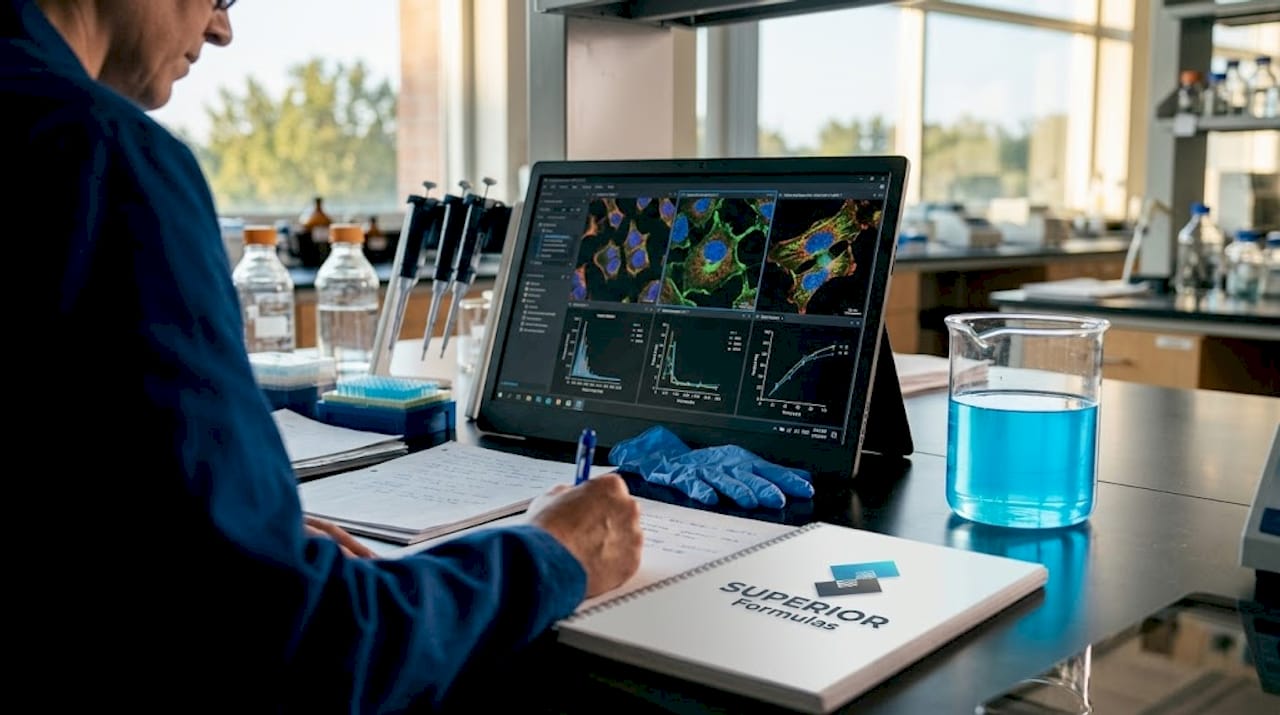
At the cellular level, detoxification is not a cleansing ritual. It is a survival mechanism. The term refers primarily to autophagy, a regulated process in which cells enclose damaged or dysfunctional components inside structures called autophagosomes. These fuse with lysosomes, organelles packed with acid hydrolases that break down the enclosed material into reusable raw materials. The cell recycles what it can and discards what it cannot.
The four types of autophagy
Scientists have identified multiple autophagy subtypes, each serving distinct functions:
- Macroautophagy: The most studied form. Autophagosomes engulf large portions of the cytoplasm, including damaged organelles and protein aggregates, before fusing with lysosomes for degradation.
- Microautophagy: Lysosomes directly engulf small cytoplasmic components through membrane invagination, without forming a separate transport vesicle.
- Chaperone-mediated autophagy (CMA): Specific proteins tagged with a biochemical signal are escorted by chaperone proteins directly into the lysosome through a membrane receptor.
- Crinophagy: A specialized subtype that degrades excess secretory granules within glandular cells.
Lysosomes do far more than digest cellular waste. They contribute to membrane repair, intracellular signaling, and the breakdown of cytoplasmic material delivered through autophagic vacuoles. Their internal acidity, maintained by proton pumps, is what keeps those hydrolases active.
What happens when autophagy fails
| Condition | Connection to autophagy dysfunction |
|---|---|
| Neurodegenerative disease | Accumulation of misfolded protein aggregates when autophagic clearance slows |
| Accelerated aging | Cellular debris buildup reduces mitochondrial efficiency and increases oxidative stress |
| Metabolic dysfunction | Impaired recycling of damaged lipid droplets and organelles disrupts energy metabolism |
| Increased infection risk | Autophagy normally degrades intracellular pathogens; impaired function raises vulnerability |
Autophagy is activated during cellular stress, including amino acid starvation and viral infection. That stress response is not incidental. It is the trigger that tells the cell to turn inward, clean house, and reallocate resources. This is exactly why fasting has attracted scientific attention as a potential way to stimulate this pathway.
Cellular vs. systemic detox: what is actually different
Here is where most wellness content makes a critical error. Two distinct meanings blend inside the word “detox,” and confusing them leads people to waste money and, sometimes, take real health risks.
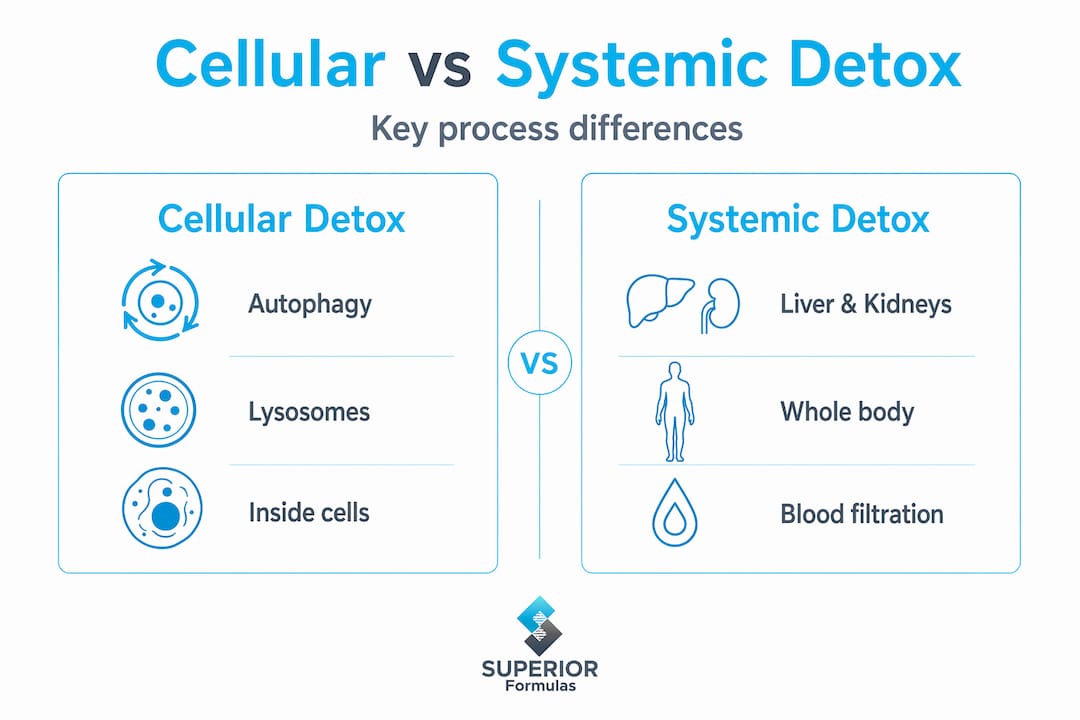
Systemic detoxification is the work your organs do every moment. Your liver processes metabolic byproducts and environmental chemicals through enzymatic pathways. Your kidneys filter blood and excrete water-soluble waste. Your gut motility clears undigested material and microbial metabolites. Your lungs exhale volatile compounds. These are not processes you can meaningfully accelerate with a packaged cleanse.
“Detox is continuous biological function, not switched on by cleanses. Most people should not seek special detox.” — The Conversation, liver specialist
Cellular detoxification, by contrast, refers to what happens inside individual cells. Autophagy works through tightly regulated lysosomal pathways, not through external flushing agents. No juice, supplement, or sweat session triggers autophagy in the way that genuine cellular stress does at the molecular level.
The risks of chasing the wrong idea are real. Cancer centers and hepatologists consistently warn that detox products lack FDA regulation and clinical testing. Some products interact with medications. Others cause electrolyte imbalances. The marketing is sophisticated, but the underlying biology simply does not support the claims.
What signs of cellular toxicity do look like, by the way, are subtler than detox brands suggest. Persistent fatigue, accelerated skin aging, reduced cognitive clarity, and metabolic sluggishness can all reflect downstream consequences of cellular dysfunction. But none of these are solved by a ten-day cleanse.
Lifestyle strategies that support natural cellular detox
Supporting your body’s cellular and systemic detox systems is not complicated, but it does require consistency. There is no shortcut that outperforms daily habits over years. Here is what the evidence actually supports:
-
Prioritize whole-food, nutrient-dense eating. Vegetables, whole grains, fruits, and beans reduce the metabolic load on detox organs while supplying phytonutrients that activate cellular defense pathways. Cruciferous vegetables, in particular, support Nrf2 pathway activation, which governs antioxidant gene expression.
-
Minimize ultra-processed food consumption. Refined sugars, seed oils, and artificial additives increase oxidative stress and inflammatory burden at the cellular level. Reducing them is not a detox. It is just stopping a source of cellular damage.
-
Explore intermittent fasting under medical guidance. Caloric restriction and time-restricted eating are among the most studied ways to trigger autophagy through amino acid depletion. Even a 16-hour overnight fast can initiate early autophagy signals in metabolically healthy adults.
-
Reduce exposure to environmental toxins. This means filtering tap water, choosing organic produce for high-pesticide crops, limiting alcohol, and reducing plastics in food storage. These choices reduce the total toxin burden your liver and cells must manage.
-
Support antioxidant defenses with studied compounds. Polyphenols like resveratrol and quercetin, along with glutathione precursors such as N-acetylcysteine (NAC), have clinical evidence supporting their role in cellular defense. These are not toxin flushers. They support the enzymes and pathways your cells already use.
Pro Tip: If you are new to intermittent fasting, start with a 12-hour overnight window and build gradually. Pushing too fast creates stress your body may not be ready to handle, which defeats the purpose.
For a structured look at which antioxidants have the strongest evidence base, the antioxidant support checklist from Superiorformulas is a practical starting point.
How to evaluate supplements for cellular health support
The supplement market is crowded with products making detox claims that no lysosome on earth could justify. Evaluating what actually helps requires a different set of questions than most shoppers think to ask.
Start with mechanism, not marketing. A supplement worth considering should have a plausible cellular defense mechanism backed by peer-reviewed research. “Supports detoxification” as a claim is legally permitted without clinical proof. “Activates Nrf2 pathway to upregulate antioxidant enzymes” is a verifiable biological statement.
Look for these markers of real quality:
- Third-party testing: Independent verification of ingredient identity, purity, and potency. GMP-certified manufacturing is the baseline, not a differentiator.
- Clinically relevant dosing: Many supplements contain studied ingredients at a fraction of the dose used in research. Check whether the dose matches what the science actually tested.
- Transparent labeling: No proprietary blends that hide individual ingredient amounts. No unnecessary fillers, artificial colors, or flow agents that add nothing to efficacy.
- Physician or scientist formulation: Products developed by clinicians who understand pharmacokinetics and bioavailability are categorically different from those assembled by marketing teams.
Pro Tip: When evaluating any supplement for cellular health, search the key ingredient plus “clinical trial” or “randomized controlled trial” in PubMed. If the evidence base is thin, the product is speculative regardless of how its label reads.
The longevity nutrients guide at Superiorformulas breaks down specific ingredients with demonstrated relevance to cellular health and aging, including those with evidence for supporting autophagy-adjacent pathways.
Common sense still applies. No supplement replaces sleep, movement, and a diet built on real food. The best supplements are additions to a solid foundation, not substitutes for one.
My perspective on what cellular detox really means for you
I have spent years reviewing the clinical literature on cellular health, and one pattern stands out clearly: the gap between what the detox industry promises and what the science actually shows is enormous. And that gap costs people money, trust, and occasionally their health.
What I have learned from tracking this research is that the body’s cleaning systems are genuinely remarkable. Autophagy is real. Lysosomal degradation is real. The liver’s xenobiotic metabolism is real. None of these need to be “activated” by a product. They need to be supported, protected, and not overwhelmed by poor lifestyle choices.
The wellness culture around detox gets one thing right accidentally. The habits it often recommends, eating more vegetables, drinking more water, cutting alcohol and processed foods, do support cellular health. They just do so through mechanisms that have nothing to do with “flushing toxins.” When you understand that distinction, you stop chasing the next cleanse and start building the habits that actually move the needle on longevity.
What most people miss is that cellular health support is cumulative. One good week does not repair years of oxidative burden. But consistent, evidence-based steps for healthy aging practiced over months and years create measurable differences in how your cells function. That is the real cellular detox story. Slow, steady, biological, and profoundly worth your attention.
— cristopher
Support your cells with science-backed formulas
If this article has reshaped how you think about cellular health, the next step is finding products that match that understanding. Superiorformulas builds every formulation around clinical evidence, physician expertise, and third-party-verified quality standards. No detox theater. No proprietary blends designed to obscure what you are actually taking.
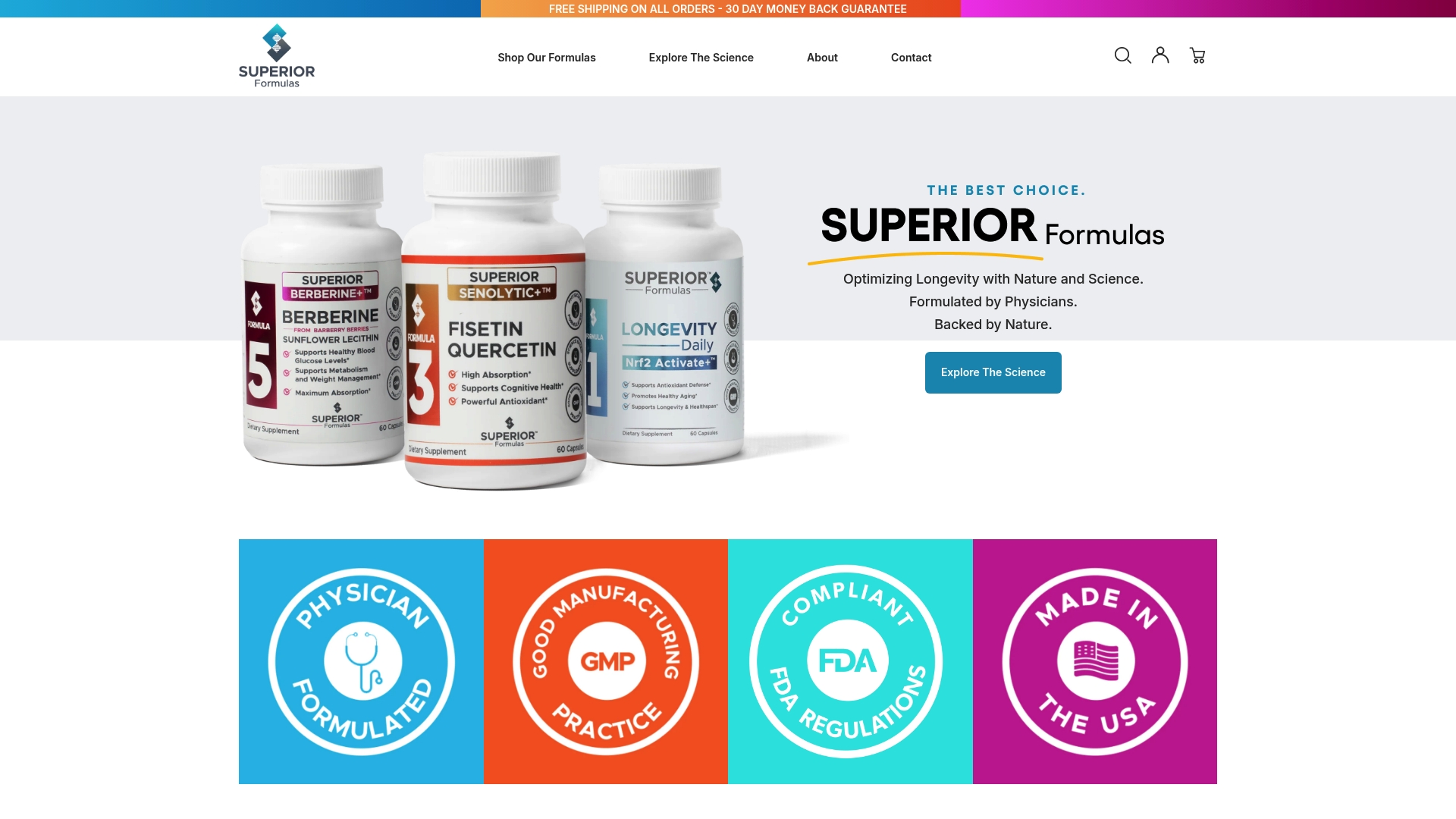
Formula 9, Superior Multi+ Daily is a standout option for adults focused on cellular and metabolic health. It combines AREDS2 nutrients with a physician-formulated micronutrient base designed to support the biological systems your cells rely on every day. Whether you are just starting to take cellular health seriously or refining an existing regimen, this is a product built to the standard the science demands.
FAQ
What is cellular detoxification, exactly?
Cellular detoxification refers to the biological process by which cells remove and recycle damaged components, primarily through autophagy and lysosomal degradation. It is a continuous, regulated process, not something triggered by supplements or cleanses.
How does autophagy support detoxing at the cellular level?
Autophagy encloses dysfunctional proteins and organelles inside autophagosomes, which fuse with lysosomes to break down and recycle the material. This process is activated by cellular stress signals such as nutrient deprivation, not by external detox products.
Do commercial detox cleanses actually work?
No strong clinical evidence supports the claim that commercial detox products remove toxins on demand. The body detoxifies continuously through liver, kidneys, lungs, and gut, and these organs do not require scheduled cleanses to function.
What are the signs of cellular toxicity?
Persistent fatigue, accelerated aging of the skin, cognitive sluggishness, and metabolic inefficiency may reflect downstream effects of cellular dysfunction. These signs respond better to consistent lifestyle changes than to short-term detox programs.
What cell detoxification methods are actually evidence-based?
The most evidence-supported methods include whole-food nutrition rich in phytonutrients, intermittent fasting to stimulate autophagy, reducing exposure to environmental toxins, and using clinically studied antioxidant compounds. These work by supporting the body’s natural cleaning processes, not by bypassing them.
Recommended
- Enhance Cellular Defense: Effective Supplement Strategies - SUPERIOR Formulas
- Your antioxidant support checklist: What works for cellular health - SUPERIOR Formulas
- How Dietary Supplements Support Longevity and Cellular Health - SUPERIOR Formulas
- Physician-formulated supplements for longevity and cellular health - SUPERIOR Formulas


