


Phyto greens are concentrated, plant-based blends combining phytonutrients from grasses, leafy greens, microalgae, fruit concentrates, herbs, digestive enzymes, and often prebiotics or probiotics into a single daily supplement. The short answer on which to choose: favor a physician-formulated, GMP-certified formula with third-party testing and built-in gut support, because bioavailability determines whether those plant compounds actually reach your cells. Superiorformulas is the physician-formulated, third-party-tested option recommended throughout this guide.
Table of Contents
- What do phyto greens actually contain?
- What does the science say about phyto greens benefits?
- Powder vs. capsules: which form works best for you?
- How to evaluate a phyto greens supplement before you buy
- Who should avoid phyto greens, and what interactions matter?
- How long before you notice effects, and what does it cost?
- Superiorformulas physician-formulated phyto greens: what sets it apart
- Key Takeaways
- The case for clinical rigor in a crowded category
- Superiorformulas Phyto Greens: where to get it
- Useful sources
What do phyto greens actually contain?
The ingredient list on a phyto greens label is typically far broader than a standard multivitamin, and that breadth is the point. A multivitamin delivers precise doses of isolated micronutrients — vitamin C at 90 mg, zinc at 11 mg. A greens blend delivers hundreds of phytonutrients — polyphenols, carotenoids, glucosinolates, chlorophyll — that work through biological pathways a multivitamin does not address.
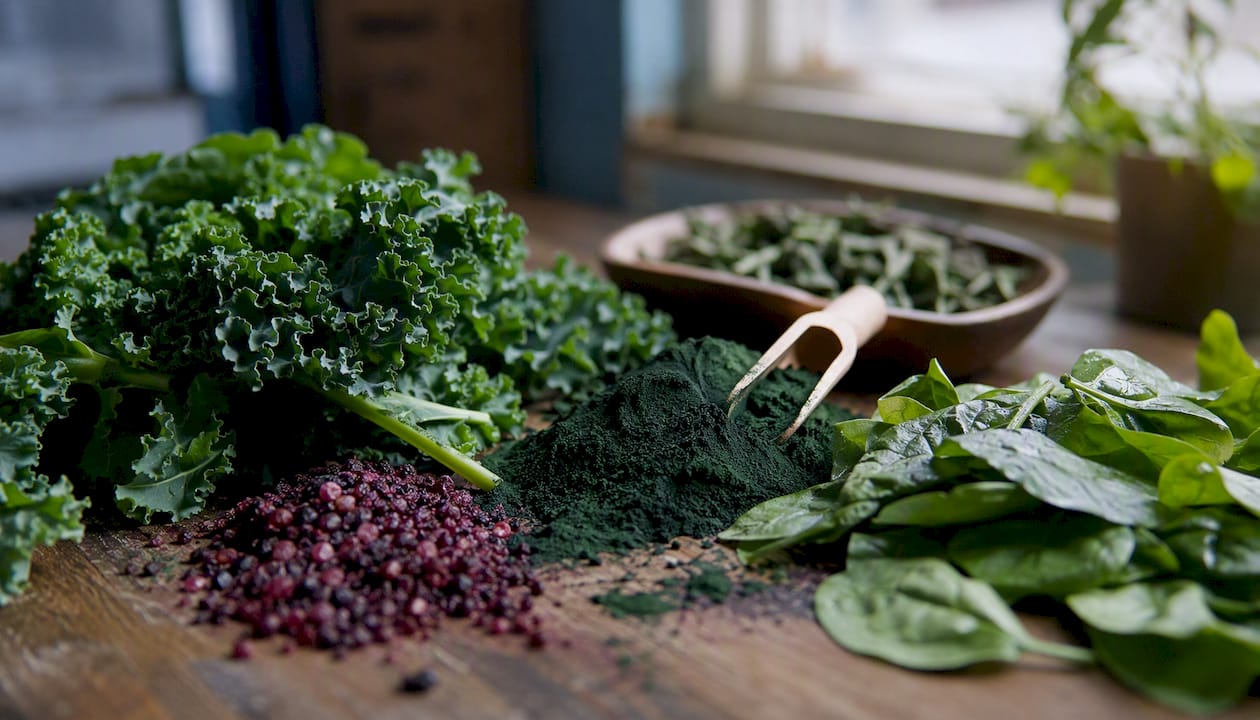
Most quality formulas draw from these ingredient categories, including cereal grasses like wheatgrass and barley grass, microalgae such as spirulina and chlorella, leafy greens like kale and spinach, fruit and berry concentrates rich in polyphenols, digestive enzymes to aid nutrient absorption, prebiotic fibers and probiotics to support gut microbiota, and adaptogens or herbs targeting energy and stress resilience.
Standardized extracts vs. whole-food powders is a distinction worth understanding before you buy. A whole-food powder is simply dried and milled plant material — it retains the full matrix of cofactors but delivers variable concentrations of active compounds. A standardized extract guarantees a minimum percentage of a specific active (e.g., “10% EGCG from green tea extract”), which means more predictable potency per serving. The NIH Dietary Supplement Label Database entry for a Phyto Greens capsule formulation illustrates how these distinctions appear on an actual Supplement Facts panel — look for “extract” with a ratio (e.g., 4:1) or a percentage standardization next to the ingredient name.
What does the science say about phyto greens benefits?
Phytonutrients are not passive bystanders in your diet. The Cleveland Clinic describes them as active substances that modulate biological pathways, including anti-inflammatory cascades, cardiovascular function, and cognitive support — not merely “extra” vitamins layered on top of a healthy diet.
“Phytonutrients have antioxidant and anti-inflammatory properties that may help protect against cancer, heart disease, and other conditions. They also support immune function and intercellular communication.” — Cleveland Clinic
Here is where the evidence stands for the most commonly cited benefits:
Antioxidant activity is the most consistently supported claim. Polyphenols, carotenoids, and chlorophyll compounds neutralize free radicals and, in some formulations, activate the Nrf2 pathway, the body’s internal switch for upregulating its own antioxidant enzymes. This mechanism is well-documented at the cellular level and is one reason physician-formulated products select ingredients for Nrf2 relevance rather than simply for marketing appeal. You can read more about how this pathway connects to cellular antioxidant support for longevity.
Anti-inflammatory effects are supported by mechanistic research on specific polyphenols (curcumin, quercetin, EGCG), though most human trials use isolated compounds at doses higher than a typical greens serving delivers. The effect in a blended formula is real but modest.
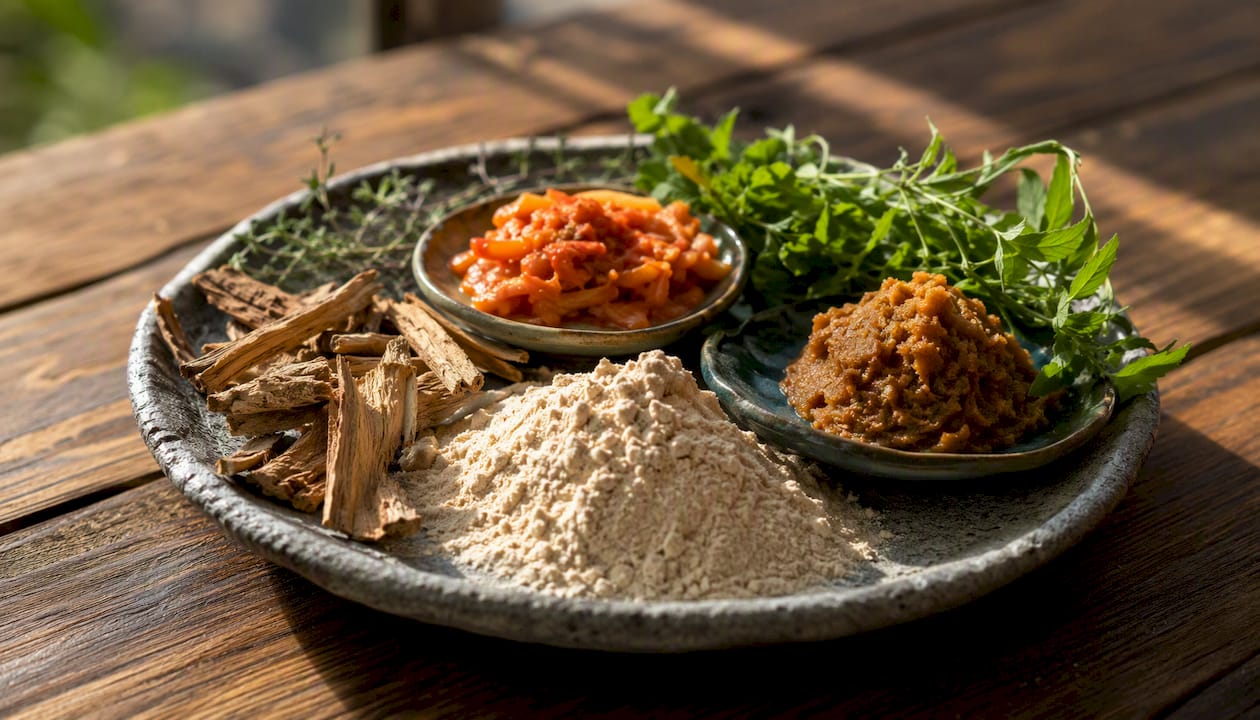
Gut-microbiome support is where the science gets genuinely interesting. A comprehensive Frontiers in Nutrition review found that gut microbiota play a central role in converting many phytonutrients into their bioactive metabolites. Without a healthy, diverse microbiome, a significant portion of the phytonutrients in a greens powder may pass through largely unabsorbed. This is the clinical rationale for including prebiotics, probiotics, or fermented ingredients in a quality formula.
Cardiovascular and cognitive support are plausible based on the mechanisms above, but direct evidence from greens-blend trials specifically is limited. Most supporting data comes from dietary studies on polyphenol-rich diets rather than from supplement RCTs.
Pro Tip: When your greens blend contains carotenoids (look for spirulina, kale, or carrot concentrate on the label), mix your powder with a small amount of healthy fat — a tablespoon of almond butter or a splash of full-fat coconut milk in your smoothie. Carotenoids are fat-soluble, and absorption increases meaningfully when consumed alongside dietary fat.
Powder vs. capsules: which form works best for you?
Both forms deliver the same core ingredients, but the practical differences are significant enough to affect whether you actually use the product consistently.
| Feature | Powder | Capsules |
|---|---|---|
| Serving size | Typically 1 scoop (5–10 g) | Usually 3–6 capsules |
| Ingredient concentration | Higher per serving; more flexibility | Fixed per capsule; easier to dose precisely |
| Absorption control | Mix with fat or specific liquids to optimize | Less control; depends on capsule dissolution |
| Flavor | Earthy/grassy; masking required for some | Tasteless; easier for sensitive palates |
| Convenience | Requires mixing; not travel-friendly | Portable; no prep needed |
| Dose flexibility | Easy to start with half a scoop | Harder to reduce dose below one capsule |
| Cost per serving | Often lower per gram of actives | Slightly higher due to encapsulation cost |
For powders, the texture and flavor are the most common barriers to consistency. Mixing tips that actually work: blend with cold water or unsweetened almond milk rather than warm liquids (heat can degrade some enzymes and probiotics), add a frozen banana or berries to mask the grassy flavor, and always add the powder after your liquid to reduce clumping. Some formulas that include prebiotic fibers and adaptogens, similar to organic prebiotic greens blends on the market, are specifically designed to mix cleanly and taste neutral.
Timing relative to medications matters. Take your greens supplement at least two hours apart from thyroid medications, blood thinners, or any prescription drug that has known food-drug interactions. The iodine content in seaweed-containing formulas can interfere with thyroid function tests; if you take levothyroxine, discuss timing with your prescribing physician.
How to evaluate a phyto greens supplement before you buy
Not all greens powders are created equal, and the gap between a well-formulated product and a marketing-heavy one can be wide. Use this checklist before committing to a purchase.
- Check the Supplement Facts for a full ingredient list with individual doses. Proprietary blends that list a total weight without per-ingredient amounts make it impossible to know whether any single ingredient is present at a meaningful dose. Spirulina, for example, is typically studied at 1,000–3,000 mg per day; a blend listing “500 mg greens complex” containing spirulina, chlorella, and five other ingredients delivers almost nothing of each.
- Confirm gut-support ingredients. Look for prebiotic fiber (inulin, FOS, or acacia), digestive enzymes (amylase, protease, lipase), or a named probiotic strain with a CFU count. These are not optional extras — they directly affect how much of the formula you actually absorb.
- Look for bioavailability technology. Fermented ingredients, enzyme-activated extracts, or stated extract ratios (e.g., 10:1) signal that the formulator thought about absorption, not just ingredient inclusion.
- Verify third-party testing and GMP manufacturing. A Certificate of Analysis (COA) from an independent lab confirms the product contains what the label states and is free from heavy metals, pesticides, and microbial contaminants. GMP certification means the facility meets FDA manufacturing standards. The NIH Office of Dietary Supplements recommends looking for third-party verification marks as a baseline quality signal.
- Review the allergen and additive profile. Grass-based ingredients contain gluten proteins; if you have celiac disease or non-celiac gluten sensitivity, confirm the product is certified gluten-free. Check for artificial sweeteners, added sugars, and unnecessary fillers.
- Calculate price per serving, not price per container. Divide the total price by the number of servings. A $60 container with 30 servings costs $2.00 per serving; a $45 container with 15 servings costs $3.00. Capsule formats often run slightly higher per serving than powders due to encapsulation costs.
Red flags: an opaque proprietary blend with no per-ingredient dosing, no COA available on request, missing dosing instructions, or a label heavy with added sugars and artificial flavors.
Who should avoid phyto greens, and what interactions matter?
Most healthy adults tolerate phyto greens well, but several populations need to proceed carefully.
Blood thinners (warfarin/Coumadin): Greens blends high in vitamin K — from kale, spinach, wheatgrass, or broccoli concentrate — can reduce warfarin’s effectiveness. If you are anticoagulated, consistent daily intake is safer than sporadic use, but discuss any new greens supplement with your prescribing physician before starting.
Thyroid medications: Formulas containing kelp, dulse, or other seaweeds add iodine, which can affect thyroid hormone levels and interfere with levothyroxine absorption. Separate dosing by at least four hours, and flag the iodine content to your endocrinologist.
Pregnancy and breastfeeding: High-dose vitamin A from algae or concentrated greens, along with herbal adaptogens, has not been adequately studied in pregnant populations. The conservative guidance from the NIH ODS is to consult your OB-GYN before adding any new supplement during pregnancy or lactation.
Autoimmune conditions: Spirulina and chlorella have immune-modulating properties. For people on immunosuppressive therapy, this is a clinician conversation, not a self-managed decision.
Allergies: Grass pollens and cereal grasses can trigger reactions in people with grass allergies. Algae sensitivities, while less common, do occur.
Pro Tip: Start with half the recommended serving for the first week. Most GI side effects from greens supplements — bloating, loose stools, or nausea — are dose-related and resolve when the gut microbiome adjusts. Taking the supplement with food further reduces GI sensitivity.
This article provides general information, not medical advice. Confirm current supplement guidance with your physician or a registered dietitian, particularly if you take prescription medications or have a diagnosed health condition.
How long before you notice effects, and what does it cost?
Setting realistic expectations matters as much as choosing the right product.
| Timeframe | What you may notice | What to track |
|---|---|---|
| — | GI changes (improved regularity or initial bloating) | Digestion, stool consistency |
| Weeks 2–4 | Improved energy, reduced afternoon fatigue | Energy levels, sleep quality |
| two to six weeks | Skin clarity, reduced inflammatory symptoms | Skin, joint comfort |
| 3+ months | Measurable changes in antioxidant biomarkers, lipid panels | Lab values (request from your physician) |
The most immediate effects are digestive, driven by prebiotic fibers and enzymes. Antioxidant and energy effects tend to become noticeable in the two-to-six-week window, consistent with the time required for phytonutrient metabolites to accumulate and for the gut microbiome to shift. Measurable clinical changes in biomarkers typically require three months or more of consistent use.
On cost: quality greens powders in the U.S. market generally range in price per serving for a 30-serving container. Capsule formats tend to be somewhat more expensive. Certified-organic products, those with third-party Certificates of Analysis, and physician-formulated blends usually cost more, reflecting higher sourcing and formulation standards.
Superiorformulas physician-formulated phyto greens: what sets it apart
Superiorformulas was founded by a physician-scientist with a specific mandate: apply clinical-grade ingredient selection to a category that is often driven by marketing rather than mechanism. The phyto greens formulation reflects that approach at every level.
Key formulation highlights:
- Phytonutrient breadth with mechanistic intent: Ingredients are selected for their documented activity on longevity-relevant pathways, including Nrf2 activation and polyphenol-driven antioxidant support, not simply for label appeal. This connects directly to the science of longevity pathways that physician-formulators prioritize.
- Gut-support integration: — The formula includes prebiotic and digestive enzyme support, addressing the bioavailability gap identified in the Frontiers in Nutrition review — the finding that gut microbiota must convert many phytonutrients into absorbable metabolites before they can act.
For adults 35 and older focused on healthy aging and cellular health, this formulation addresses the two most common failure points in greens supplements: inadequate bioavailability support and opaque ingredient dosing.
Key Takeaways
Physician-formulated phyto greens with third-party testing, transparent ingredient dosing, and built-in gut support deliver meaningfully more than a generic greens powder at a comparable price per serving.
| Point | Details |
|---|---|
| What phyto greens are | Concentrated plant blends combining grasses, algae, leafy greens, fruit extracts, enzymes, and gut-support ingredients. |
| Bioavailability is the critical variable | Gut microbiota convert many phytonutrients into absorbable metabolites; formulas with prebiotics or fermented ingredients improve actual uptake. |
| Buying criteria that matter | Prioritize transparent per-ingredient dosing, GMP certification, a third-party COA, and a clean allergen profile over price alone. |
| Realistic timeline | Digestive changes appear within days; antioxidant and energy effects typically emerge over 2–6 weeks; lab-level changes require 3+ months. |
| Superiorformulas recommendation | Physician-formulated, GMP-certified, and third-party tested, with transparent Supplement Facts and Nrf2-relevant ingredient selection for longevity support. |
The case for clinical rigor in a crowded category
The greens supplement market is full of products that look identical on the outside — similar ingredient lists, similar price points, similar claims about energy and detox. What separates a clinically useful formula from a well-packaged one is almost never visible at first glance.
The bioavailability problem is the clearest example. Most buyers assume that if an ingredient is on the label, it is being absorbed. The Frontiers in Nutrition research tells a more complicated story: without a healthy gut microbiome and, ideally, formulation strategies that support microbial conversion, a large share of the polyphenols and phytonutrients in a greens powder may never reach systemic circulation in a bioactive form. A formula that includes prebiotic fiber and digestive enzymes is not just adding features — it is addressing a real metabolic bottleneck.
The physician-formulated standard matters for a related reason. Most greens products are assembled by marketing teams working backward from a trend list. A physician-formulated product starts from mechanism: which pathways matter for cellular resilience and longevity, which compounds activate those pathways at achievable doses, and which delivery strategies improve the odds that those compounds actually work. That is a fundamentally different design process, and it shows up in the ingredient selection, the dosing transparency, and the willingness to submit to third-party testing.
For adults who are serious about longevity and cellular health, the right question is not “does this greens powder have spirulina?” It is “does this formula give those ingredients a real chance of working?” Pairing your supplement strategy with a broader nutraceutical longevity protocol is worth considering as well.
Superiorformulas Phyto Greens: where to get it
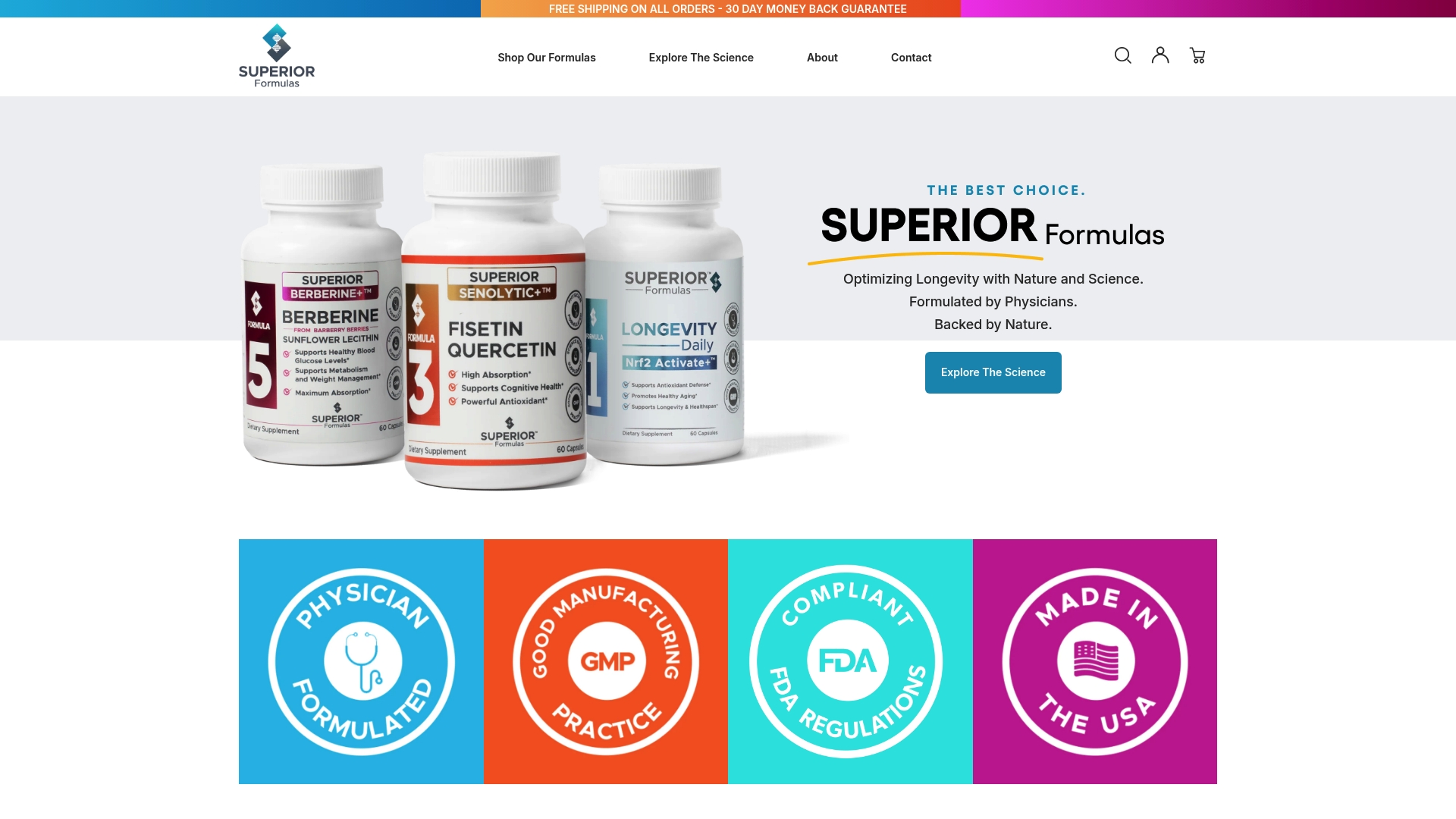
Superiorformulas Phyto Greens is available directly through the Superiorformulas online store, with U.S. shipping on every order. The formulation comes with full Supplement Facts disclosure, a GMP-certified manufacturing guarantee, and third-party testing documentation. If you want to go deeper on the clinical rationale behind the ingredient selection, the formulation science page walks through the mechanisms and sourcing standards in detail.
For questions about dosing, compatibility with your current supplement stack, or returns, the Superiorformulas customer support team is available through the website. The brand’s satisfaction commitment means you are not taking a risk on a product you cannot verify. Order directly at superiorformulas.com and start with the recommended half-serving protocol in week one to let your gut microbiome adjust.
Useful sources
The following sources back the key claims in this guide. Each is linked for readers who want to verify the evidence or read further.
- Phytonutrients and their health effects — Cleveland Clinic
- Phytonutrients: Sources, bioavailability, interaction with gut microbiota, and their impacts on human health — Frontiers in Nutrition
- Phytonutrients: Definition, benefits, and more — Medical News Today
- Office of Dietary Supplements (ODS) — NIH
- Phyto Greens Capsules - Dietary Supplement Label Database


