


Among all Nrf2 activation supplements studied in humans and translational models, sulforaphane-based preparations have the strongest pharmacodynamic signal. Broccoli sprout extracts and stabilized sulforaphane formulations have been evaluated in over a score of clinical studies showing measurable induction of Nrf2 target genes in human tissues. A second tier of compounds, including curcumin, resveratrol, EGCG, quercetin, and silymarin, activate Nrf2 reliably in cell and animal models but face significant bioavailability barriers in humans, making formulation the deciding variable. A third tier, covering many polyphenols and plant extracts, shows Nrf2 activity in vitro but lacks meaningful human exposure data.
Evidence tiers at a glance:
- Sulforaphane / broccoli sprout preparations — Human clinical pharmacodynamic (PD) data; strongest translational signal
- Curcumin (bioavailability-optimized forms) — Moderate; some human trials, formulation-dependent
- Resveratrol — Moderate; human trials exist, but systemic exposure is variable
- EGCG (green tea extract) — Moderate; human data on oxidative biomarkers, Nrf2 pathway induction mostly preclinical
- Quercetin — Moderate; animal and in vitro data strong, human Nrf2-specific data limited
- Silymarin (milk thistle) — Moderate; preclinical Nrf2 data, some human hepatoprotective trials
- DIM (diindolylmethane) — Preclinical; in vitro and animal data, limited human Nrf2-specific evidence
- Melatonin — Preclinical; indirect Nrf2 influence in models, limited human PD data
Bottom line: Supplements are not drugs. Their effectiveness depends on formulation, dose, and individual biology. If you have an active health condition or take prescription medications, discuss Nrf2-targeting supplements with your clinician before starting.
Key Takeaways
Sulforaphane-based preparations hold the strongest human pharmacodynamic evidence among all natural Nrf2 activation supplements, and formulation quality is the single factor most likely to determine whether any Nrf2 activator works in practice.
| Point | Details |
|---|---|
| Sulforaphane leads on evidence | Broccoli sprout preparations have human clinical PD data showing Nrf2 target gene induction; no other natural compound matches this signal. |
| Formulation determines real-world effect | Glucoraphanin requires active myrosinase for conversion; curcumin needs a bioavailability technology; EGCG needs standardized concentration. |
| Safety requires clinician review | Curcumin, EGCG, resveratrol, and quercetin interact with anticoagulants, CYP enzymes, and chemotherapy agents; review your medication list. |
| Diet and lifestyle first | Broccoli sprouts, green tea, and moderate exercise provide transient Nrf2 activation with the lowest risk profile. |
| Superiorformulas for quality assurance | Superiorformulas offers physician-formulated, GMP-manufactured, third-party-tested Nrf2-pathway supplements with transparent standardization and clinical citations. |
Table of Contents
- How the Keap1–Nrf2 pathway actually works
- Nrf2 activation supplements: mechanisms, evidence, and dosing
- Which Nrf2 activator is actually most potent in practice?
- Safety, side effects, and who should be cautious
- How to choose a quality Nrf2-activating supplement in the U.S.
- How to activate Nrf2 naturally through diet and lifestyle
- Prescription vs. supplement Nrf2 activation: what the FDA approval means
- What to look for in a trustworthy Nrf2 supplement manufacturer
- The evidence gap most supplement buyers miss
- Superiorformulas and physician-formulated Nrf2 pathway support
- Sources
How the Keap1–Nrf2 pathway actually works
Nrf2 (Nuclear factor erythroid 2-related factor 2) is the body’s master regulator of antioxidant and detoxification gene expression. Under normal, low-stress conditions, a protein called Keap1 keeps Nrf2 anchored in the cytoplasm and targets it for rapid degradation. When a cell encounters oxidative stress or an electrophilic compound, Keap1’s sensor cysteines are modified, Nrf2 escapes degradation, and it translocates into the nucleus. There, it binds antioxidant response elements (AREs) and switches on a battery of protective genes.
The key mechanistic steps:
- Keap1 sensing: Reactive cysteines on Keap1 (C151, C273, C288) detect electrophiles or oxidants
- Nrf2 stabilization: Keap1 can no longer efficiently ubiquitinate Nrf2, so it accumulates
- Nuclear translocation: Nrf2 partners with small Maf proteins and enters the nucleus
- ARE-driven transcription: Target genes including HO-1, NQO1, GCL, and GST are upregulated, raising glutathione synthesis and phase II detoxification capacity
Beyond the Keap1 axis, sulforaphane also activates TFEB, a transcription factor governing autophagy and lysosomal biogenesis, suggesting that the cellular benefits of certain Nrf2 activators extend beyond antioxidant gene induction alone. You can read more about how these antioxidant response elements function in Superiorformulas’s overview of the antioxidant pathway.
Why formulation matters: A compound that activates Nrf2 in a cell culture dish must still survive digestion, reach systemic circulation at meaningful concentrations, and enter target tissues. Electrophilicity, lipid solubility, and gut stability all determine whether the pathway actually gets switched on in your cells.
Nrf2 activation supplements: mechanisms, evidence, and dosing
The compounds below are ranked by the strength of available human or translational evidence. For each, the mechanism, evidence grade, common supplement forms, typical study doses, and key safety flags are summarized.
1. Sulforaphane and broccoli sprout preparations
Sulforaphane (SFN) is an isothiocyanate derived from the glucosinolate glucoraphanin, which is abundant in broccoli sprouts. It directly alkylates Keap1 sensor cysteines, freeing Nrf2 and triggering ARE-driven gene expression. In microglia models and primary microglia from adult and aged mice, SFN increased Nrf2 DNA-binding activity and upregulated Nrf2 target genes while reducing LPS-induced IL-1β, IL-6, and iNOS, pointing to translational potential for neuroinflammation. Broccoli sprout preparations have been evaluated in clinical PD studies showing measurable induction of NQO1 and HO-1 in human peripheral blood mononuclear cells (PBMCs) and tissues.
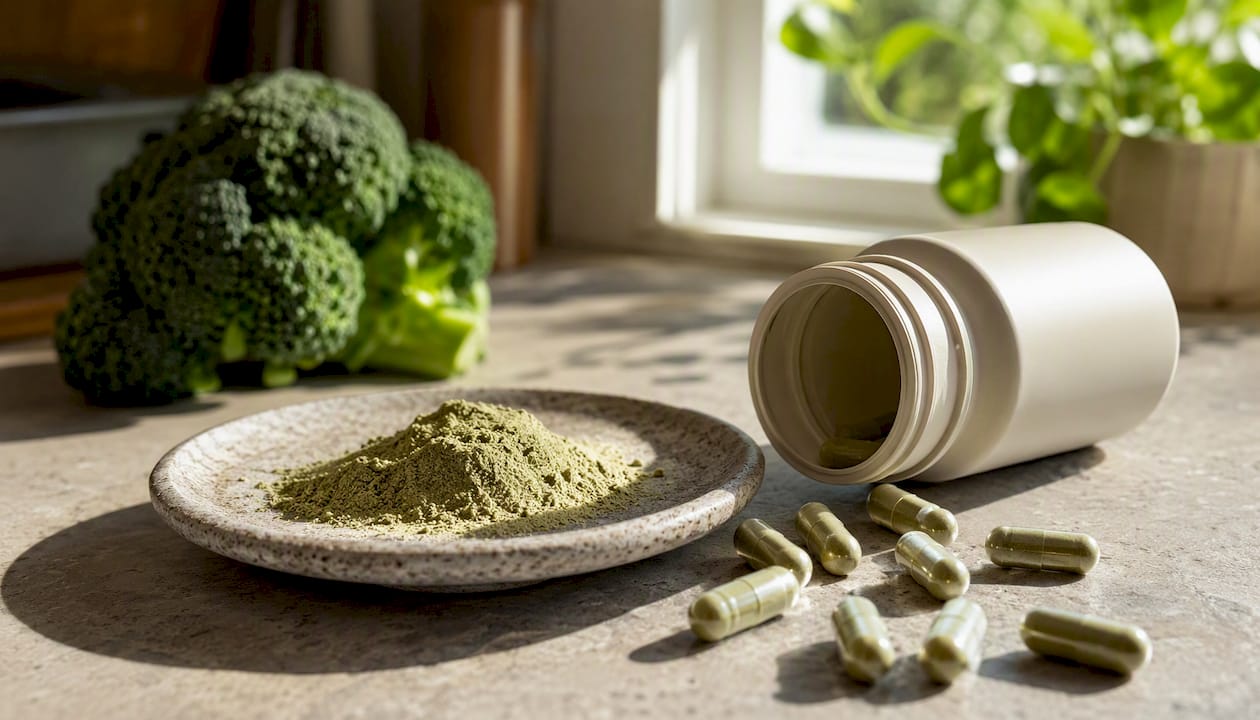
SFN also activates Nrf2 through epigenetic mechanisms, including inhibition of DNMT and HDAC enzymes, which can reactivate silenced Nrf2 expression in preclinical cancer models.
Formulation note: Glucoraphanin is a stable prodrug; it requires gut myrosinase to convert to active SFN. Formulations that provide either glucoraphanin plus active myrosinase or stabilized preformed sulforaphane produce higher systemic exposure than glucoraphanin alone.
- Evidence grade: Human clinical PD data (strongest in this category)
- Typical study dose: 20–100 µmol SFN equivalent per day in human trials
- Safety flags: Generally well tolerated; GI discomfort at high doses; caution with anticoagulants and in active cancer treatment
Pro Tip: When choosing a broccoli sprout supplement, look for a product that specifies either stabilized sulforaphane content or glucoraphanin plus active myrosinase on the label. A product listing only “broccoli extract” without standardization gives you no assurance of active SFN delivery.
2. Curcumin (bioavailability-optimized forms)
Curcumin, the primary polyphenol in turmeric, activates Nrf2 through multiple mechanisms including Keap1 modification and kinase-mediated signaling. Standard curcumin has notoriously low oral bioavailability, but formulations such as phospholipid complexes (Meriva), nanoparticles, and piperine co-administration substantially improve plasma exposure. Human and animal evidence shows Nrf2 pathway induction and reductions in oxidative stress biomarkers, though Nrf2-specific human PD data is less robust than sulforaphane’s.
- Evidence grade: Moderate; human trials with bioavailability-enhanced forms
- Typical study dose: 500–2,000 mg/day of curcuminoid-standardized extract
- Safety flags: Inhibits CYP3A4 and P-glycoprotein; interactions with anticoagulants (warfarin), immunosuppressants, and chemotherapy agents; avoid high doses in pregnancy
3. Resveratrol
Resveratrol, a stilbene polyphenol found in red grape skin, activates Nrf2 partly through SIRT1-mediated deacetylation and kinase signaling. Human bioavailability is variable and first-pass metabolism is extensive, meaning plasma levels from standard oral doses are modest. Human trials have shown effects on oxidative stress markers, but direct Nrf2 pathway induction in human tissues remains less consistently demonstrated than in animal models.
- Evidence grade: Moderate; human trials on oxidative biomarkers, Nrf2-specific human PD data limited
- Typical study dose: 150–1,000 mg/day in human trials
- Safety flags: May interact with anticoagulants and antiplatelet drugs; estrogenic activity at high doses; caution with hormone-sensitive conditions
4. EGCG (green tea extract)
Epigallocatechin gallate (EGCG) is the principal catechin in green tea. It activates Nrf2 through Keap1 modification and by modulating PI3K/Akt signaling. Human studies on green tea consumption show reductions in oxidative stress markers, but Nrf2-specific gene induction data in human tissues is largely preclinical. Standardized green tea extracts are the most reliable supplement form.
- Evidence grade: Moderate; human oxidative biomarker data, Nrf2 pathway induction mostly preclinical
- Typical study dose: 400–800 mg EGCG/day in human trials
- Safety flags: Hepatotoxicity risk at very high doses (above 800 mg/day); caffeine content in non-decaffeinated extracts; interactions with certain chemotherapy drugs and anticoagulants
5. Quercetin
Quercetin is a flavonoid found in onions, apples, and capers. It activates Nrf2 through Keap1 modification and PI3K/Akt pathways in cell and animal models. Human bioavailability is limited by rapid metabolism, though quercetin phytosome and liposomal forms improve absorption. Direct human Nrf2 PD data is limited; most evidence comes from animal studies and in vitro models.
- Evidence grade: Preclinical to moderate; strong in vitro and animal data, limited human Nrf2-specific evidence
- Typical study dose: 500–1,000 mg/day in human trials (general anti-inflammatory endpoints)
- Safety flags: Generally well tolerated; may interact with antibiotics (fluoroquinolones) and cyclosporine; high doses may inhibit thyroid peroxidase
6. Silymarin (milk thistle)
Silymarin, the flavonolignan complex from milk thistle seeds, activates Nrf2 in hepatocyte models and has a long clinical history in liver disease. Human trials in liver conditions show hepatoprotective effects, and Nrf2 pathway induction is a proposed mechanism. Direct human Nrf2 PD data is sparse compared to sulforaphane.
- Evidence grade: Moderate for hepatoprotection; Nrf2-specific human data limited
- Typical study dose: 420–600 mg/day of standardized silymarin (70–80% silybin) in human trials
- Safety flags: Generally well tolerated; mild GI effects; potential interactions with CYP3A4-metabolized drugs
7. DIM (diindolylmethane)
DIM is a metabolite of indole-3-carbinol, formed during digestion of cruciferous vegetables. It activates Nrf2 in cell and animal models, partly through aryl hydrocarbon receptor (AhR) crosstalk. Human clinical data specifically on Nrf2 pathway induction is limited; most evidence comes from in vitro and animal studies.
- Evidence grade: Preclinical; in vitro and animal data, limited human Nrf2-specific evidence
- Typical study dose: 100–300 mg/day in human trials (hormonal endpoints)
- Safety flags: Estrogenic and anti-estrogenic activity; caution with hormone-sensitive conditions and hormone therapy; may interact with CYP1A2 substrates
8. Melatonin
Melatonin influences Nrf2 signaling indirectly, primarily by reducing oxidative load and modulating upstream kinases in preclinical models. Its role as a direct Nrf2 activator is mechanistically plausible but human PD data for Nrf2-specific gene induction is lacking.
- Evidence grade: Preclinical; indirect Nrf2 influence in models
- Typical study dose: 0.5–10 mg/day (sleep/circadian endpoints in humans)
- Safety flags: Generally well tolerated at low doses; may interact with anticoagulants and immunosuppressants; avoid high doses in pregnancy
The table below compares these compounds across the dimensions that matter most when selecting a supplement.
| Compound | Evidence grade | Bioavailability / formulation | Typical human study dose | Key safety flags |
|---|---|---|---|---|
| Sulforaphane | Human clinical PD | Requires stabilized SFN or glucoraphanin + myrosinase | 20–100 µmol SFN eq./day | GI discomfort; caution with anticoagulants |
| Curcumin | Moderate (human) | Phospholipid complex, nanoparticle, or piperine form needed | 500–2,000 mg curcuminoids/day | CYP3A4 inhibition; anticoagulant interaction |
| Resveratrol | Moderate (human) | Extensive first-pass metabolism; micronized forms preferred | 150–1,000 mg/day | Anticoagulant interaction; estrogenic at high doses |
| EGCG | Moderate (human) | Standardized extract; decaffeinated preferred | 400–800 mg EGCG/day | Hepatotoxicity above 800 mg/day |
| Quercetin | Preclinical to moderate | Phytosome or liposomal form improves absorption | 500–1,000 mg/day | Fluoroquinolone interaction; thyroid effects at high doses |
| Silymarin | Moderate (hepatoprotection) | Standardized 70–80% silybin | 420–600 mg/day | CYP3A4 interaction |
| DIM | Preclinical | Standard capsule; absorption adequate | 100–300 mg/day | Hormonal activity; CYP1A2 interaction |
| Melatonin | Preclinical | Standard oral; low-dose preferred | 0.5–10 mg/day | Anticoagulant interaction; avoid in pregnancy |
Evidence-grade callout: Of the compounds listed, only sulforaphane-based preparations and certain bioavailability-optimized curcumin formulations have human clinical trials showing direct pharmacodynamic effects on Nrf2 pathway biomarkers. The remaining compounds have strong preclinical rationale but limited human Nrf2-specific PD data.
Which Nrf2 activator is actually most potent in practice?
Sulforaphane shows the clearest translational signal of any natural Nrf2 activator. Many polyphenols activate Nrf2 in cell culture at micromolar concentrations, but at dietary levels, oral bioavailability is often too low to achieve comparable plasma exposures in humans. This gap between in vitro potency and real-world effect is the central challenge in interpreting the supplement literature.
How to read potency data critically:
- An EC50 measured in cells tells you the concentration needed to activate Nrf2 in that model, not what your tissues will see after oral dosing
- Plasma Cmax and AUC from human PK studies are more predictive of real-world effect than cell-culture EC50 values
- Formulation changes (lipid carriers, enzyme co-formulation, micronization) can shift human exposure by several fold
- Dosing schedule matters: Nrf2 activation is transient and adaptive; continuous high-dose exposure may trigger compensatory downregulation
One important nuance for older adults: aging may impair the Nrf2 transcriptional response due to increased expression of negative regulators like Bach1 and impaired nuclear shuttling. Supplements that only free Nrf2 from Keap1 may be less effective in this population unless combined with agents that support nuclear translocation or transcriptional activation.
Good human evidence for an Nrf2 activator looks like this: replicated pharmacodynamic markers (NQO1, HO-1, or glutathione induction) measured in PBMCs or target tissues, a dose-response relationship, and a safety dataset from at least one controlled human trial. Superiorformulas’s guide to clinical evidence in supplements explains these evidence tiers in practical terms. For a broader look at which supplements have meaningful preventive potential, this evaluation framework is worth reviewing.
Safety, side effects, and who should be cautious
Most natural Nrf2 activators are well tolerated at studied doses, but several interaction risks and long-term unknowns deserve direct attention before you add any of these supplements to your regimen.
Concrete interaction and safety concerns:
- Anticoagulants (warfarin, apixaban): Curcumin, resveratrol, quercetin, and EGCG all have antiplatelet or anticoagulant properties and can potentiate bleeding risk
- Chemotherapy: Nrf2 activation can upregulate drug efflux transporters (MRP1, P-gp), potentially reducing intracellular drug concentrations; discuss timing with your oncologist
- Liver enzyme modulation: Curcumin and EGCG inhibit CYP3A4 and other CYP enzymes, altering metabolism of many prescription drugs
- Immunomodulatory drugs: Resveratrol and quercetin have immunomodulatory properties that may interact with cyclosporine and tacrolimus
- Pregnancy: Avoid high-dose sulforaphane, curcumin, resveratrol, and DIM during pregnancy; safety data in this population is insufficient
- Liver disease: High-dose EGCG carries documented hepatotoxicity risk; use standardized extracts at studied doses only
Long-term risk caveat: Transient Nrf2 activation can be chemopreventive, but persistent or unregulated activation may support tumor progression in certain cancer contexts. This is a mechanistic concern from preclinical reviews, not a contraindication for healthy adults using studied doses, but it is a reason to avoid chronic high-dose supplementation without clinical oversight, particularly in individuals with a personal or family history of cancer.
Clinician discussion points to prepare:
- Bring a complete medication list, including OTC drugs and other supplements
- Ask about liver function tests if you plan to use high-dose EGCG or curcumin long-term
- Discuss timing of supplements relative to any chemotherapy or immunosuppressive regimen
- Review whether your specific health condition involves Nrf2 pathway dysregulation (e.g., certain neurodegenerative or metabolic conditions)
For context on how nutraceuticals interact with age-related decline, Superiorformulas’s resource on nutraceuticals for aging support covers several of these considerations.
How to choose a quality Nrf2-activating supplement in the U.S.
The single most important rule: prioritize products with clinical pharmacodynamic data, clear ingredient standardization, third-party testing, and transparent dose ranges. A label that says “supports antioxidant pathways” without specifying the active compound, its form, and its concentration tells you almost nothing about whether the product will actually activate Nrf2 in your cells.
Checklist for evaluating a supplement:
- Verify ingredient form and standardization. For sulforaphane products, look for glucoraphanin content (µmol or mg) plus active myrosinase, or a stated stabilized sulforaphane amount. For curcumin, look for curcuminoid percentage and the specific bioavailability technology (phospholipid complex, nanoparticle, or piperine co-formulation). For EGCG, look for stated EGCG concentration in mg per serving.
- Look for third-party testing. USP Verified, NSF Certified for Sport, or an equivalent independent certificate of analysis (COA) confirms that what is on the label is in the bottle and that the product is free from heavy metals and contaminants.
- Confirm GMP manufacturing. The FDA requires dietary supplement manufacturers to follow current Good Manufacturing Practices (cGMP). Look for a statement of GMP compliance on the label or the manufacturer’s website.
- Review human PD or clinical citations. A quality manufacturer links to or cites the specific clinical or translational studies supporting their formulation choices, not just general background papers.
- Check for clear dosing instructions and adverse event reporting. The label should state the dose used in supporting studies and provide a way to report adverse reactions.
Certificate verification: A USP or NSF seal on a supplement label means an independent organization has verified identity, potency, and purity. If a product claims third-party testing but only shows an in-house COA, that is not independent verification. Ask the manufacturer for the certifying body’s name and batch-specific test results.
Label reading in practice: For broccoli sprout products, the label should state glucoraphanin in µmol or mg, not just “broccoli extract.” For curcumin, “95% curcuminoids” is a standardization claim; the bioavailability technology (e.g., Meriva, Longvida, or BCM-95) should also be named. For green tea, “standardized to 50% EGCG” is meaningful; “green tea leaf extract” alone is not.
Superiorformulas’s guide to effective supplement strategies for cellular defense and their overview of evidence-based supplements for longevity both apply these principles in practice.
How to activate Nrf2 naturally through diet and lifestyle
Eating cruciferous vegetables, particularly broccoli sprouts, engaging in regular moderate exercise, and incorporating intermittent metabolic stressors such as time-restricted eating are all associated with transient Nrf2 activation. These approaches produce physiologically relevant but short-lived pathway induction, which is generally considered the safest activation pattern.
Food sources and practical equivalents:
- Broccoli sprouts: The richest dietary source of glucoraphanin; a 30–50 g serving (roughly a small handful) provides meaningful glucoraphanin content. Raw or lightly steamed sprouts preserve myrosinase activity better than heavily cooked preparations.
- Mature broccoli and other cruciferous vegetables: Lower glucoraphanin density than sprouts, but still meaningful at regular servings (1–2 cups cooked per day)
- Green tea: 2–3 cups per day provides EGCG in the range studied for oxidative biomarker effects, though Nrf2-specific induction at this level is modest
- Turmeric: Dietary turmeric provides curcuminoids, but absorption without a fat source or piperine is poor; cooking turmeric in oil or pairing it with black pepper improves bioavailability
- Garlic and onions: Organosulfur compounds and quercetin contribute to Nrf2 signaling in preclinical models
Pro Tip: To maximize sulforaphane yield from broccoli sprouts, chew them thoroughly or briefly chop them before eating. This physical disruption releases myrosinase from plant cell vacuoles, catalyzing glucoraphanin-to-sulforaphane conversion before the food reaches your gut. Cooking above 70°C inactivates myrosinase, so raw or very lightly steamed is preferable. Pairing curcumin-containing foods with a fat source and a pinch of black pepper (piperine) can similarly improve curcuminoid absorption.
For a broader look at how dietary choices support cellular health, the partner resource on eating for optimal health covers phytochemical-rich dietary patterns in practical terms.
Prescription vs. supplement Nrf2 activation: what the FDA approval means
Omaveloxolone is an FDA-authorized drug that targets the Nrf2 pathway for a specific rare disease indication, Friedreich’s ataxia, and it is not the same as any consumer supplement. Its development illustrates how prescription Nrf2 modulation differs from dietary supplements00281-2) in regulation, potency, and required clinical monitoring.
Key distinctions:
- Regulatory pathway: Omaveloxolone went through the FDA’s New Drug Application (NDA) process, requiring phase 1–3 clinical trials demonstrating safety and efficacy for a specific indication. Dietary supplements are regulated under DSHEA (Dietary Supplement Health and Education Act) and do not require pre-market efficacy proof.
- Potency and pharmacokinetics: Prescription Nrf2 activators are engineered for high potency and defined pharmacokinetics. Consumer supplements rely on natural compounds with variable absorption and conversion.
- Required monitoring: Omaveloxolone carries prescribing requirements including liver function monitoring. No equivalent monitoring requirement exists for supplement use, placing the responsibility on the consumer and their clinician.
- Labeled use: The FDA approval covers a specific disease indication. Using omaveloxolone outside that indication is off-label prescribing. Consumer supplements cannot legally claim to treat, cure, or prevent any disease.
U.S. consumer distinction: An FDA drug approval means the agency reviewed clinical trial data for safety and efficacy in a defined population. A dietary supplement’s structure/function claim (“supports antioxidant defense”) requires no pre-market FDA review of efficacy. These are fundamentally different regulatory standards, and conflating them is a common source of consumer confusion.
What to look for in a trustworthy Nrf2 supplement manufacturer
The one-line standard: check for physician-formulated credentials, GMP manufacturing, third-party testing, and citations to clinical or pharmacodynamic data before purchasing any Nrf2-targeting supplement.
Trust signals to verify:
- Author or formulator credentials: Is the product formulated by a physician-scientist or a team with documented expertise in biochemistry or clinical nutrition? Look for named credentials, not just marketing language.
- Citations to peer-reviewed trials: Does the product page link to specific PMC or PubMed studies supporting the formulation choices, not just general wellness claims?
- GMP facility evidence: Is there a stated GMP certification and, ideally, an FDA facility registration number?
- Third-party certificates: USP, NSF, or Informed Sport certificates should be batch-specific and verifiable on the certifying body’s website.
- Transparent COAs: A certificate of analysis from an independent lab, available on request or on the product page, confirms identity and purity.
- Clear adverse event reporting: A quality manufacturer provides a mechanism for reporting adverse reactions, as required by FDA regulations for dietary supplements.
Superiorformulas was founded by a physician-scientist and manufactures its products in GMP-certified facilities with third-party testing for purity and consistency. Its formulations for cellular antioxidant and Nrf2 pathway support are built on clinically studied ingredients, with transparent standardization and dosing. Superiorformulas’s scientific approach to supplement formulation describes the manufacturing and evidence standards applied across its product line.
COA verification tip: When a manufacturer provides a COA, check that it is dated within the last 12 months, issued by a named independent laboratory (not the manufacturer’s own facility), and includes identity, potency, and contaminant testing results. A COA that only shows a pass/fail result without underlying test values is less informative than one with quantitative data.
The evidence gap most supplement buyers miss
The conventional advice on Nrf2 activation supplements tends to flatten a meaningful hierarchy into a generic list of “antioxidant-supporting” compounds. That framing obscures the most important practical truth: the distance between in vitro potency and human effect is enormous for most polyphenols, and formulation is the variable that closes or widens that gap.
Sulforaphane’s advantage is not just that it is more potent in cell models. It is that it is electrophilic enough to modify Keap1 directly at physiologically achievable concentrations, and that broccoli-based preparations have been put through actual clinical PD studies measuring gene induction in human tissues. Most other natural Nrf2 activators have not cleared that bar. Resveratrol, for instance, activates Nrf2 convincingly in vitro, but its rapid first-pass metabolism means that the plasma concentrations needed to replicate those cell-culture results are rarely achieved with standard oral doses.
The second thing most buyers miss is the aging variable. Older adults may have impaired Nrf2 nuclear translocation regardless of how much Keap1 is modified, because negative regulators like Bach1 accumulate with age. A supplement that works well in a 35-year-old may produce a blunted response in a 65-year-old unless the formulation addresses the full pathway, not just the Keap1 step.
The practical takeaway: prioritize compounds with human PD data, demand standardization and third-party testing, and treat the dose ranges from clinical studies as your reference point, not the manufacturer’s suggested serving. The science on Nrf2 is genuinely promising. The supplement market’s execution of that science is uneven, and the difference between a well-formulated product and a poorly standardized one is the difference between activating the pathway and spending money on an inert extract.
Superiorformulas and physician-formulated Nrf2 pathway support
Physician-formulated supplements designed specifically for Nrf2 pathway activation are rare. Most products on the market use generic ingredient blends without standardization data or clinical citations. Superiorformulas takes a different approach: its LONGEVITY Daily Nrf2 Activate+ is formulated by a physician-scientist, manufactured in a GMP-certified facility, and third-party tested for purity and potency.
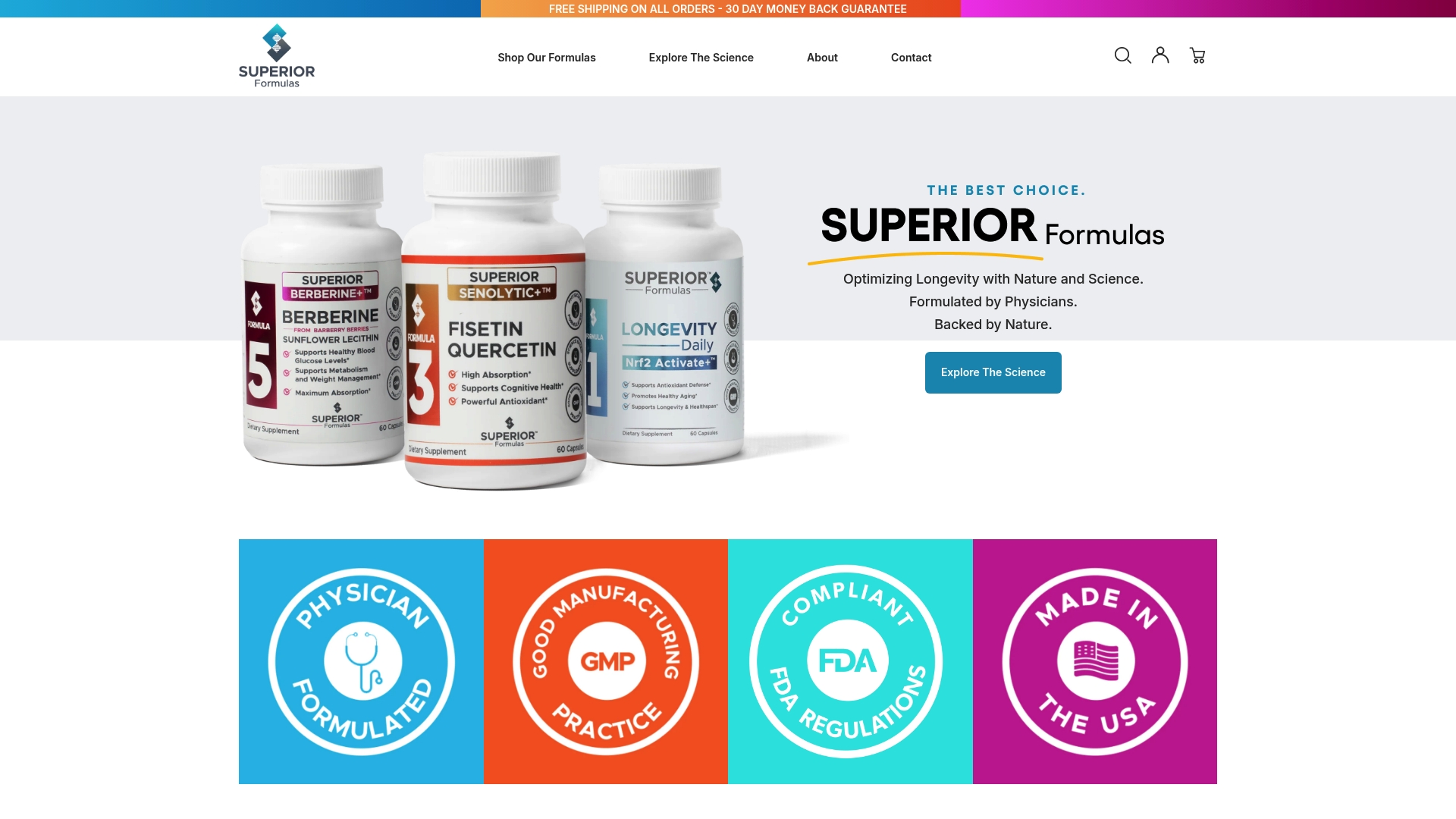
The formulation addresses the bioavailability challenges this article covers directly: ingredient forms are selected for systemic exposure, standardization is stated on the label, and the product page links to the clinical and translational studies that informed each formulation choice. If you are on prescription medications or managing a health condition, Superiorformulas recommends consulting your clinician before adding any Nrf2-targeting supplement to your regimen.
To review the full ingredient panel, standardization details, and third-party testing certificates, visit the Nrf2 Activate+ product page and explore Superiorformulas’s healthy aging pathways resource for context on where Nrf2 fits within a broader longevity strategy.
This article is general information, not a substitute for advice from a qualified doctor. Consult a qualified healthcare professional about your own circumstances before acting on anything here.
Sources
- Sulforaphane activates TFEB and Nrf2: mechanism paper - PMC
- KEAP1 and done? Targeting the NRF2 pathway with sulforaphane - Johns Hopkins Pure
- Nrf2 Activators — Cognitive Vitality / AlzDiscovery (research brief) - PDF
- An update of Nrf2 activators and inhibitors in cancer prevention/promotion | Cell Communication and Signaling | Springer Nature Link


