


A scientific approach to dietary supplements is defined as the systematic evaluation of clinical evidence, product quality verification, and safety monitoring to determine whether a supplement delivers measurable health benefits. The industry term for this practice is evidence-based supplementation, and it stands in direct contrast to marketing-driven purchasing decisions. For adults over 30 focused on longevity and cellular health, the difference between these two approaches is the difference between meaningful results and wasted money. Superiorformulas was built on this exact principle: that every ingredient in a formulation must earn its place through peer-reviewed research, not brand storytelling.
What types of scientific evidence support dietary supplement efficacy?
Not all research is created equal, and understanding the hierarchy of evidence is the first skill any serious supplement user needs. The quality of scientific research on supplements follows a clear progression, from weakest to strongest:
- In vitro and animal studies establish biological plausibility but cannot confirm human effects.
- Pilot and exploratory trials test feasibility, dosing ranges, and early effect sizes in small human populations.
- Randomized controlled trials (RCTs) represent the gold standard, using placebo controls and randomization to isolate a supplement’s true effect.
- Meta-analyses and systematic reviews pool data from multiple RCTs to produce the most reliable estimates of efficacy across diverse populations.
The FTC expects multiple well-controlled trials before a supplement claim is considered credible. This matters because single studies are frequently underpowered, conducted in narrow populations, or funded by manufacturers with a financial stake in the outcome. A staged clinical program, moving from exploratory pilot work to confirmatory RCTs, is the gold standard for evidence in this field.
Bioavailability is a factor that marketing materials almost never address, yet it determines whether a supplement actually reaches target tissues. Curcumin, for example, requires piperine co-administration to achieve meaningful absorption in humans. The molecule form matters just as much as the ingredient name on the label.

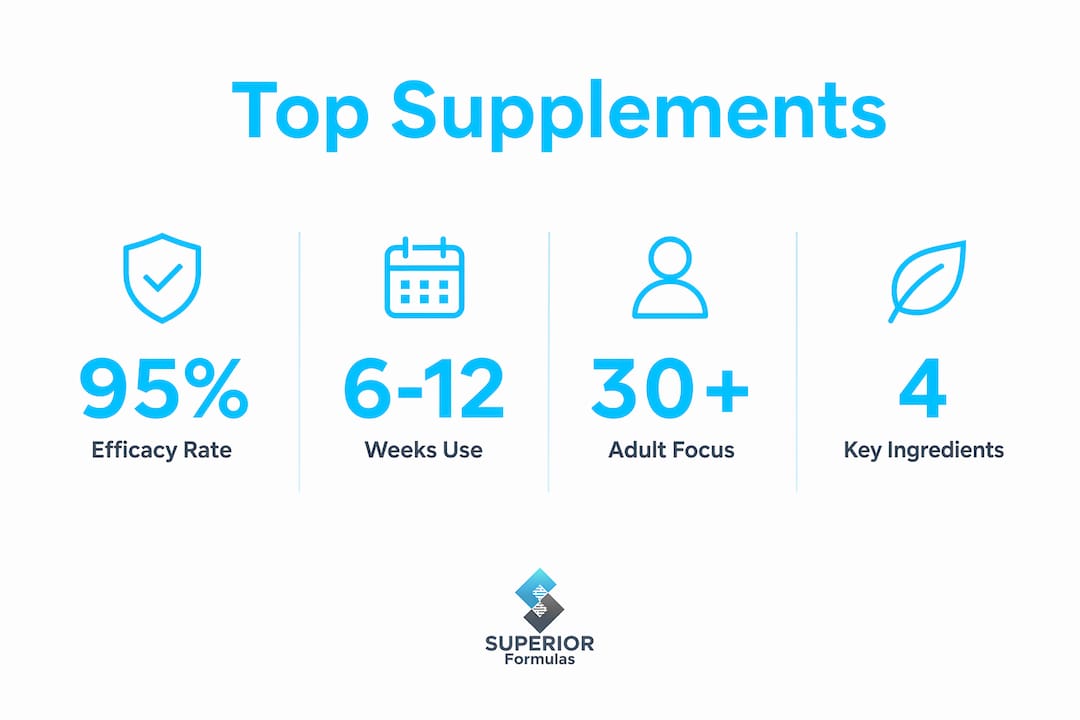
Timing also matters. Supplement interventions typically require 6 to 12 weeks of consistent use before producing measurable physiological changes. Anyone expecting results in two weeks from a new protocol is working against the biology.
Pro Tip: When evaluating a supplement’s research backing, search PubMed for the specific ingredient and form, not just the brand name. Filter for RCTs and meta-analyses published in the last five years to find the most current and relevant evidence.
How do regulations and quality standards affect supplement safety?
The regulatory framework governing dietary supplements in the United States is fundamentally different from the one governing prescription drugs. Under the Dietary Supplement Health and Education Act (DSHEA), the FDA does not require pre-market approval for supplements before they reach store shelves. The FDA monitors safety after market entry and acts against false claims, but it does not routinely test products for potency or purity.
This creates a verification gap that third-party certification programs exist to fill. The most recognized certifications include:
- USP (United States Pharmacopeia): Verifies that a product contains the ingredients listed on the label at the stated potency, with no harmful contaminants.
- NSF International: Provides independent testing for contaminants, label accuracy, and manufacturing quality.
- Informed Sport: Certifies products for banned substance testing, relevant for competitive athletes but also a strong signal of manufacturing rigor.
One of the most persistent misconceptions in supplement selection is that “natural” automatically means safe. Supplement safety depends on manufacturing controls and independent verification, not on whether an ingredient comes from a plant or a lab. Arsenic is natural. So is hemlock. The origin of an ingredient tells you nothing about its safety profile at the dose in the capsule.
| Verification method | What it confirms | What it does not confirm |
|---|---|---|
| FDA DSHEA compliance | Legal market entry | Potency, purity, or efficacy |
| USP certification | Label accuracy and contaminant absence | Clinical effectiveness |
| NSF certification | Manufacturing quality and contaminant testing | Long-term safety data |
| Published RCTs | Efficacy at specific doses | Product-level quality |
Pro Tip: Before purchasing any supplement, search the NSF or USP certified products database directly. A brand claiming certification is not the same as a product appearing in the official registry.
Superiorformulas addresses this gap by manufacturing in GMP-certified facilities and applying third-party testing to every formulation. For a practical walkthrough of what to look for on a label, the supplement quality evaluation guide at Superiorformulas covers the key checkpoints.
What evidence-based supplements support longevity and cellular health after 30?
Applying a scientific lens to supplement selection for adults over 30 narrows the field considerably. The following compounds have the strongest bodies of evidence for longevity, cognitive function, and physical resilience.
- Creatine monohydrate (3 to 5 g/day): Supported by over 1,000 human studies, creatine is the most researched ergogenic compound in existence. Beyond muscle performance, recent research documents cognitive benefits, particularly in older adults under sleep deprivation or mental fatigue. This is not a supplement for bodybuilders only.
- Vitamin D3 (2,000 to 5,000 IU/day): Dosing should be calibrated to blood 25(OH)D levels rather than applied uniformly. The 2,000 to 5,000 IU/day range covers most adults with confirmed insufficiency, but testing first prevents both under-dosing and toxicity risk.
- Magnesium L-threonate or glycinate (1 to 2 g/day): Magnesium L-threonate over 6 weeks improved cognitive performance and sleep quality in adults with self-reported poor sleep. The L-threonate form crosses the blood-brain barrier more effectively than magnesium oxide, which is the form found in most low-cost supplements.
- Omega-3 fatty acids (EPA/DHA, 1 to 3 g/day): At dietary achievable doses, DHA supplementation over 12 weeks significantly elevated the Omega-3 Index and reduced delayed onset muscle soreness. Cardiovascular and inflammatory benefits are well-documented across multiple meta-analyses.
- Zinc (8 to 15 mg/day with copper monitoring): High-dose zinc supplementation can induce copper deficiency, causing anemia, immune dysfunction, and neurological damage. Zinc is worth including for immune and hormonal support, but only at appropriate doses and with periodic blood monitoring.
| Supplement | Evidence strength | Typical effective dose | Key benefit for adults 30+ |
|---|---|---|---|
| Creatine monohydrate | Very strong (1,000+ RCTs) | 3 to 5 g/day | Muscle, cognitive function |
| Vitamin D3 | Strong | 2,000 to 5,000 IU/day | Bone, immune, metabolic health |
| Magnesium L-threonate | Moderate to strong | 2 g/day | Cognition, sleep quality |
| Omega-3 (EPA/DHA) | Strong | 1 to 3 g/day | Cardiovascular, inflammation |
| Zinc | Moderate | 8 to 15 mg/day | Immune, hormonal support |
A personal bloodwork panel before starting any new supplement protocol is the single most useful step you can take. Supplementing nutrients you are not deficient in rarely produces measurable benefit and sometimes creates new imbalances.
How to critically assess supplement claims and avoid selection mistakes
The supplement industry generates billions of dollars annually, and a significant portion of that revenue comes from products with weak or misrepresented scientific backing. Protecting yourself requires a specific set of critical thinking skills applied before purchase.
- Demand a body of evidence, not a single study. One positive RCT, especially a small or industry-funded one, is not sufficient justification for a purchase. Look for consistent findings across multiple independent trials.
- Check the form of the ingredient. Magnesium oxide and magnesium L-threonate are both “magnesium,” but their clinical profiles are entirely different. The same principle applies to vitamin K1 versus K2, or standard curcumin versus phospholipid-bound curcumin.
- Assess supplement-drug interaction risk. St. John’s Wort reduces the effectiveness of oral contraceptives, anticoagulants, and antiretroviral medications. High-dose fish oil increases bleeding risk in patients on warfarin. These are not theoretical concerns.
- Verify certifications in official registries. A seal printed on a label is not the same as a listing in the NSF, USP, or Informed Sport database. Take 60 seconds to confirm.
- Consult a physician before starting any new protocol. This is especially relevant for adults managing chronic conditions, taking prescription medications, or planning pregnancy.
Pro Tip: Use the clinical evidence guide from Superiorformulas to learn how to read a supplement study abstract without a science degree. Understanding study design, sample size, and funding source takes less than an hour to learn and saves years of wasted spending.
Supplement selection for adults 35+ requires matching ingredients to your actual health data, not to trending wellness content.
Key takeaways
Evidence-based supplementation requires clinical trial depth, third-party quality verification, and personal blood data working together before any supplement protocol produces reliable results.
| Point | Details |
|---|---|
| Evidence hierarchy matters | Prioritize meta-analyses and multiple RCTs over single studies or animal research. |
| Regulatory gaps are real | FDA pre-market approval is not required; USP and NSF certification fills the verification gap. |
| Form determines bioavailability | Magnesium L-threonate, not oxide, crosses the blood-brain barrier; curcumin needs piperine to absorb. |
| Bloodwork before supplementation | Testing nutrient levels first prevents unnecessary dosing and identifies genuine deficiencies. |
| Allow 6 to 12 weeks for results | Physiological changes from supplements require consistent use over weeks, not days. |
Why I think most supplement buyers are solving the wrong problem
I have spent years reading clinical literature on supplementation, and the pattern I see most often is not ignorance. It is impatience combined with misplaced trust. People read a compelling product page, see a reference to a study, and assume the science is settled. It almost never is after one trial.
The supplements with the strongest evidence, creatine, vitamin D3, magnesium, omega-3s, are also the least exciting to market. They are not new. They do not activate obscure cellular pathways with names that sound futuristic. They are just consistently effective across decades of independent research. That consistency is exactly what you should be looking for, and it is exactly what most marketing glosses over in favor of novelty.
What I have found actually works is a minimalist protocol built on confirmed reliable effects at adequate doses, verified by bloodwork twice a year. Not 15 supplements. Not a new stack every quarter. A short list of well-studied compounds, taken consistently, adjusted based on lab results. That approach is less exciting than the latest longevity molecule, but it produces results you can measure.
The uncomfortable truth is that most people would benefit more from fixing their sleep, protein intake, and stress response than from adding another supplement. A scientific approach to dietary supplements starts with that honesty, not with a shopping cart.
— cristopher
Explore science-driven supplements built for adults who want results
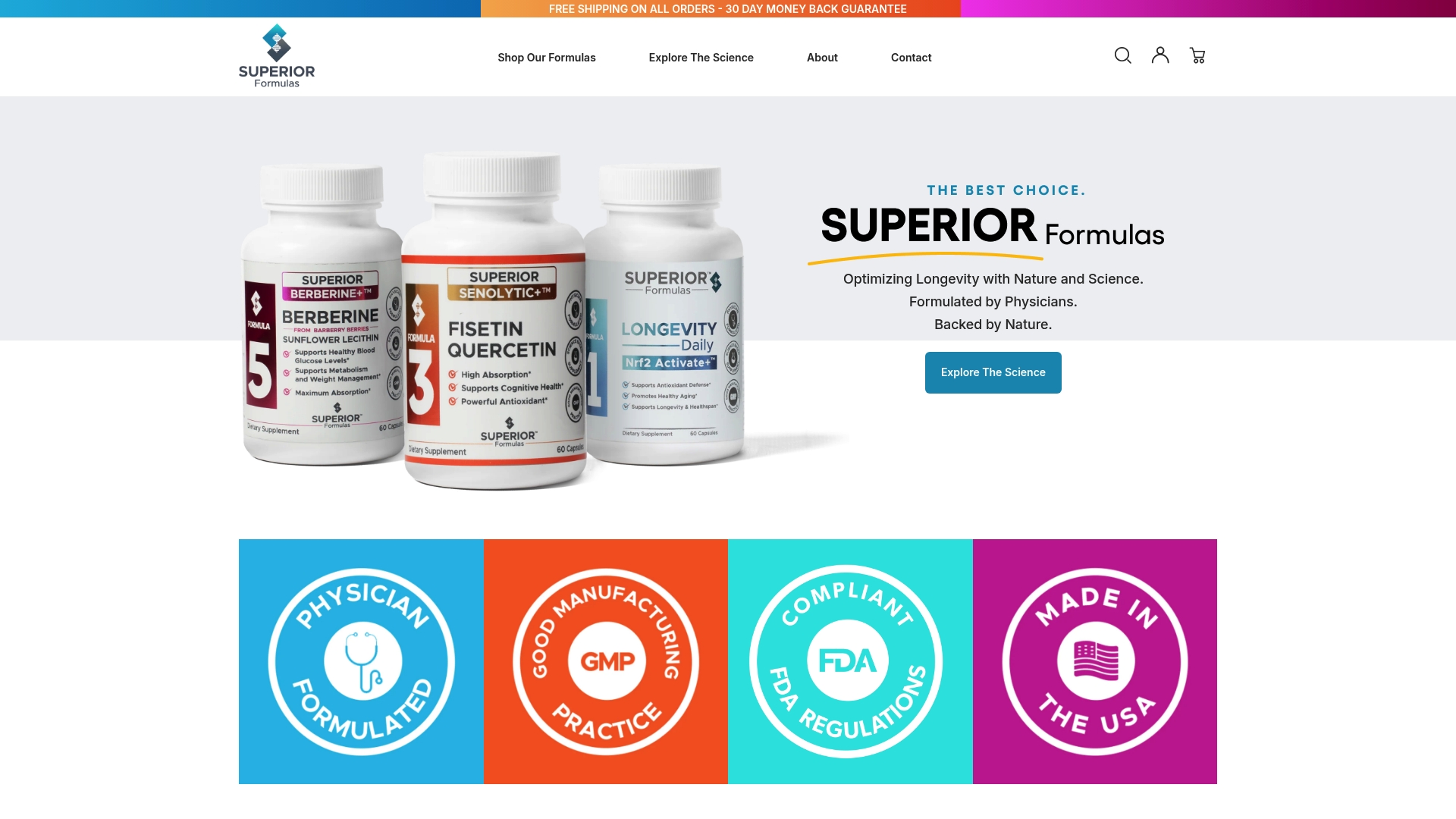
Superiorformulas was founded by a physician-scientist with one goal: to build formulations that can withstand scientific scrutiny. Every product in the lineup is manufactured in a GMP-certified facility, third-party tested for purity and potency, and formulated around ingredients with meaningful clinical backing. No proprietary blends designed to obscure underdosing. No ingredients included because they trend on wellness platforms. If you are ready to apply the same evidence standards to your supplement shelf that you would apply to any other health decision, explore the science behind Superiorformulas’ formulations and see how each ingredient earns its place.
FAQ
What does a scientific approach to supplements actually mean?
A scientific approach means selecting supplements based on peer-reviewed clinical evidence, verified product quality through third-party certification, and personal health data such as bloodwork. It excludes decisions based solely on marketing claims or anecdotal reports.
How long does it take for supplements to show results?
Standardized supplement interventions typically require 6 to 12 weeks of consistent use to produce measurable physiological changes. Expecting results in days is not supported by clinical research.
Are natural supplements automatically safer than synthetic ones?
No. Supplement safety depends on manufacturing controls and independent verification, not ingredient origin. The FDA does not require pre-market testing, so third-party certifications from USP or NSF are the most reliable safety indicators available to consumers.
Which supplements have the strongest evidence for adults over 30?
Creatine monohydrate, vitamin D3, magnesium L-threonate, and omega-3 fatty acids (EPA/DHA) have the most consistent bodies of clinical evidence for muscle function, cognitive support, and cardiovascular health in adults over 30.
Should I get bloodwork before starting a supplement protocol?
Yes. A baseline bloodwork panel identifies genuine nutrient deficiencies and prevents unnecessary supplementation. Dosing based on actual blood levels, particularly for vitamin D3 and zinc, reduces both waste and risk of adverse effects.
Putting this scientific approach into a single daily product, our Formula 9 — Superior Multi+ Daily (with AREDS2 nutrients) was designed with exactly this clinical rationale in mind. Explore the science behind the formulation to see how it applies to your own routine.
Recommended
- Implement science-driven supplementation for better health - SUPERIOR Formulas
- How to assess dietary supplements for real wellness gains - SUPERIOR Formulas
- Types of dietary supplements: A health-conscious guide - SUPERIOR Formulas
- Step by Step Supplement Selection for Adults 35+ | SUPERIOR Formulas


