


We can say this plainly: pairing quercetin with resveratrol is a reasonable, evidence-supported strategy for antioxidant and metabolic support, but the benefit depends heavily on formulation, dose, and your own health context. Animal studies show genuine synergy on inflammatory and metabolic pathways. Small human trials of combined polyphenol supplements report improvements in inflammatory and antioxidant markers, though the data remain limited by short study durations and modest sample sizes. Bioavailability, not biological plausibility, is usually the deciding factor in whether you notice anything at all.
TL;DR:
- The effectiveness of quercetin and resveratrol depends heavily on proper formulation and delivery technology, with bioavailability being a key factor.
- Animal studies show that combining these polyphenols can improve fat metabolism and reduce inflammation through the AMPK and SIRT1 pathways, surpassing single compounds.
- Human trials using multi-ingredient formulations report biomarkers of inflammation and antioxidant capacity improvement, but short duration and small sample sizes limit conclusions.
- Most bioavailability-boosting technologies, such as phytosomes and micelles, significantly enhance absorption compared to unformulated compounds.
- Dosage in human studies typically remains below 1 gram daily, with safety concerns mainly related to medication interactions rather than adverse effects from the supplements themselves.
Table of Contents
- Mechanisms and Preclinical Evidence for Combined Action
- What Human Clinical Trials Report So Far
- Why Formulation Determines Whether You Absorb Any of This
- Dosing, Safety Signals, and Drug Interactions Worth Knowing
- Who Is Likely to Benefit, and Who Should Hold Off
- The Evidence Behind the Formulation Checklist
- A Clinician’s View on Where the Evidence Actually Stands
- A Physician-Formulated Option Built Around This Same Evidence
- FAQ
- Sources
Mechanisms and Preclinical Evidence for Combined Action
Quercetin and resveratrol are both polyphenols, but they do not work through identical pathways, and that is precisely why researchers pair them. Resveratrol is best known for activating SIRT1, a protein deacetylase tied to metabolic regulation and cellular stress resistance. Quercetin influences AMPK signaling, a cellular energy sensor, and also inhibits the proteasome, a protein-degradation complex involved in muscle breakdown and inflammatory signaling. When combined, these two compounds appear to hit complementary nodes in the same metabolic network rather than duplicating each other’s effects.

A rat study found that combination treatment with quercetin and resveratrol attenuated high-fat-diet-induced obesity and associated inflammation through the AMPKα1/SIRT1 signaling pathway, with the combined effect exceeding what either compound achieved alone. The animals receiving both compounds showed reduced fat accumulation across multiple adipose depots and lower markers of systemic inflammation compared to single-compound or control groups.
That finding matters because it points to a mechanism beyond simple antioxidant mopping-up: the combination appears to recalibrate how the body stores and burns fat, not just how it neutralizes free radicals.
Several threads of preclinical work converge on similar themes:
- Combined quercetin and resveratrol treatment suppressed NF-κB activity in rodent models, a transcription factor central to inflammatory cytokine production.
- Reduced output of inflammatory cytokines accompanied the metabolic improvements seen in fat-depot studies.
- Animal work on muscle signaling suggests the pairing may influence myostatin and ActRIIA/ActRIIB pathways, which govern muscle growth and breakdown, relevant to preventing sarcopenic obesity in aging models.
- Proteasome inhibition by quercetin, layered onto resveratrol’s SIRT1 activation, appears to slow age-associated protein turnover changes in some animal tissues.
Statistic callout: The rat study on AMPKα1/SIRT1 signaling reported that combination treatment reduced fat mass across multiple depots beyond what either compound achieved individually, direct evidence that the pairing produces more than an additive effect in this model.
None of this guarantees the same outcome in people. Animal studies typically use doses, delivery routes, and durations that do not map cleanly onto human supplementation. Rodents are often dosed by body weight at levels far exceeding what a person would reasonably take, and intraperitoneal or intragastric delivery in a lab setting bypasses the digestive and metabolic hurdles that oral supplements face in humans. The mechanistic story is compelling and consistent across several rodent models, but it functions as a hypothesis-generator for human trials, not as proof of a clinical benefit on its own.
What Human Clinical Trials Report So Far
Mechanistic plausibility is one thing. Whether a person taking a combined supplement actually sees measurable change is a separate question, and the human evidence, while encouraging in places, is thinner than the preclinical work.
The most frequently cited human data come from trials of Nutritional Supplement-5 (NS-5) and its successor NS-7, formulations combining resveratrol, quercetin, and delta-tocotrienol, designed around proteasome inhibition. A randomized crossover trial of this combined polyphenol supplement reported reductions in serum nitric oxide, C-reactive protein, and gamma-glutamyl transferase after six weeks of supplementation, alongside an increase in total antioxidant status. Those are meaningful biomarkers: CRP reflects systemic inflammation, nitric oxide relates to vascular tone, and total antioxidant status is a composite measure of the body’s oxidative defense capacity.
Separately, small pilot work using Quercetin Phytosome, a lecithin-bound delivery form, explored adjunctive use in outpatient settings. A 42-patient open-label outpatient study during the COVID-19 pandemic found faster viral clearance and improved biomarkers among patients receiving the phytosome formulation alongside standard care. This is a narrow, pandemic-specific application, but it illustrates how formulation choice shaped the trial’s ability to detect any signal at all.
On the pharmacokinetic side, co-administration studies have asked a practical question: does taking quercetin alongside resveratrol change how the body processes either compound? Some PK work has found that quercetin did not meaningfully alter resveratrol’s pharmacokinetic profile when taken together, suggesting the two can be combined without one compound blocking the other’s absorption or clearance, at least in the specific protocols tested.
A few patterns stand out across this body of work:
- Most positive human findings involve multi-ingredient formulations (quercetin plus resveratrol plus additional polyphenols), not quercetin and resveratrol in isolation.
- Biomarker improvements, such as lower CRP or higher antioxidant status, are more consistently reported than hard clinical endpoints like cardiovascular events or weight loss.
- Study durations cluster around four to eight weeks, too short to assess long-term safety or durability of benefit.
- Sample sizes are small, often in the dozens rather than the hundreds, which limits how confidently findings generalize.
| Study type | Formulation | Key reported outcome |
|---|---|---|
| Randomized crossover trial | NS-5/NS-7 (resveratrol, quercetin, delta-tocotrienol) | Reduced serum NO, CRP, and gamma-GT; increased total antioxidant status over 6 weeks |
| Open-label pilot (n=42) | Quercetin Phytosome, adjunctive | Faster viral clearance and improved biomarkers in outpatient setting |
| Randomized crossover PK/safety trial | Micellar flavonoid formulation | Substantially higher systemic exposure versus unformulated compound; well tolerated over 30 days |
The methodological limits here are worth naming directly rather than glossing over. Small sample sizes mean a handful of outlier responses can swing results. Mixed endpoints across studies, some tracking inflammation, others tracking antioxidant capacity, others tracking viral clearance, make it hard to build a single coherent efficacy picture. And because formulations vary so much from one trial to the next, a positive result for a phytosome-based product does not necessarily transfer to a standard capsule blend. Taken together, the human data support cautious optimism about combined quercetin and resveratrol supplementation for inflammatory and antioxidant markers, not a confirmed treatment effect for any specific condition.
Why Formulation Determines Whether You Absorb Any of This
Here is the uncomfortable truth behind most quercetin and resveratrol supplements: both compounds have notoriously poor oral bioavailability in their raw, unformulated state. Quercetin is poorly soluble in water and undergoes rapid metabolism in the gut wall and liver before much of it reaches systemic circulation. Resveratrol faces a similar problem, rapid glucuronidation and sulfation, meaning the body converts much of an oral dose into inactive metabolites before it can act on target tissues.
This is why the formulation question is not a minor technical detail. It is often the single biggest variable separating a supplement that does something measurable from one that largely passes through unabsorbed.
A systematic review and meta-analysis of quercetin bioavailability examined how different delivery strategies, encapsulation, emulsification, sugar-moiety conjugation, and food-matrix pairing, affect plasma exposure. The review found that these approaches significantly increase both the area under the curve (a measure of total drug exposure over time) and peak plasma concentration compared to unformulated quercetin, with emulsification and cyclodextrin-based approaches producing the largest gains among the strategies studied.
Statistic callout: The bioavailability meta-analysis found that specific delivery strategies produced substantially higher plasma AUC and Cmax values than unformulated quercetin, underscoring that the capsule’s engineering matters as much as the dose printed on the label.
More recent pharmacokinetic work reinforces the point. A randomized crossover trial of a micellar flavonoid formulation co-encapsulating quercetin with other flavonoids reported markedly higher systemic exposure compared to unformulated compound, and good tolerability over 30 days of use. Micellar delivery works by packaging the polyphenol inside a lipid structure small enough to cross the intestinal barrier more efficiently than the free compound would on its own.
Several delivery technologies now have at least preliminary human evidence behind them:
- Phytosomes bind quercetin to phospholipids (often from sunflower lecithin), improving membrane permeability.
- Micellar formulations encapsulate polyphenols in lipid micelles, boosting intestinal absorption.
- SMEDDS (self-microemulsifying drug delivery systems) form fine emulsions in the gut that increase surface area for absorption.
- EMIQ (enzymatically modified isoquercitrin) attaches a sugar molecule to quercetin, a modification shown to improve solubility.
- Cyclodextrin complexation encases the compound in a ring-shaped sugar molecule that improves water solubility.
When you are comparing products, a short checklist helps separate marketing language from formulation substance: check whether the label names a specific delivery technology (phytosome, micellar, SMEDDS) rather than just “quercetin” or “resveratrol” by weight; look for a stated dose that matches ranges used in actual clinical trials; and note whether co-ingredients (lecithin, phospholipids, emulsifiers) are listed, since their presence or absence often signals whether real formulation work went into the product supply in Australia.
Dosing, Safety Signals, and Drug Interactions Worth Knowing
Clinical trials of quercetin and resveratrol, alone and combined, give us a reasonable sense of the dose ranges that have actually been tested in people, along with where safety concerns begin to appear.
- Quercetin doses in human trials typically range from 250 milligrams to 1,000 milligrams daily, often split into two doses, and the compound is generally well tolerated at these levels.
- Resveratrol doses in clinical research commonly span 150 milligrams to 500 milligrams daily for general use, though some studies have tested higher amounts for specific metabolic endpoints.
- A safety review of cardioprotective polyphenol formulations reported that resveratrol is associated with dose-related gastrointestinal adverse events and occasional liver enzyme changes, particularly at doses above roughly 1 gram per day, while quercetin and curcumin showed minimal adverse events at the doses studied.
- Above that one-gram resveratrol threshold, nausea, diarrhea, and abdominal discomfort become more commonly reported, which is why most well-formulated combination products stay below it.
- Standardized combination formulas (as opposed to raw-powder, high-dose approaches) tend to report fewer tolerability complaints, likely because formulation strategies that improve absorption also allow for lower effective doses.
Quercetin’s broader safety profile, drawn from reviews covering its sources, mechanisms, and delivery, is generally favorable, with serious adverse events rare among supplement users, though interaction potential with certain medications has been documented and deserves attention.
A few interaction categories merit real caution. Both quercetin and resveratrol can influence enzymes involved in drug metabolism, which means they may alter blood levels of certain anticoagulants, raising bleeding risk if you take warfarin or similar medications. Statins metabolized through overlapping liver pathways could theoretically see altered blood concentrations, and immunosuppressant drugs, where blood levels are tightly managed, carry similar theoretical concern. None of this means avoid the combination outright. It means a conversation with your prescribing clinician before starting, especially if you take any of these medication classes, is not optional caution, it is basic due diligence.
Pro Tip: If you plan to use a quercetin and resveratrol combination for more than a few months, ask your clinician about baseline and follow-up liver enzyme testing, especially if your product includes resveratrol doses near or above 500 milligrams daily.

Who Is Likely to Benefit, and Who Should Hold Off
Matching the evidence to your own situation is more useful than treating this combination as a universal recommendation.
- If your goals center on markers like CRP, total antioxidant status, or general inflammatory load, the human trial evidence, while limited, offers the most direct support.
- If you are interested in metabolic health, such as insulin signaling or fat distribution, the strongest evidence remains preclinical, meaning the rationale is solid but human confirmation is still developing.
- If you are pregnant, breastfeeding, or managing active liver disease, the safety data in these populations simply does not exist in the trials reviewed here, and caution favors avoiding supplementation until you have spoken with your clinician.
- If you take anticoagulants, statins, or immunosuppressants, treat the combination as something to discuss and monitor, not something to add casually alongside your existing regimen.
- If your main interest is overall dietary antioxidant intake, foods naturally rich in these polyphenols, onions, capers, grapes, berries, remain a reasonable complementary approach alongside or instead of supplementation.
- If you have a diagnosed metabolic or cardiovascular condition requiring prescription therapy, this combination is a complement to, not a replacement for, medical treatment.
The Evidence Behind the Formulation Checklist
The formulation principles outlined above, delivery technology, dose ranges matching clinical trials, transparent co-ingredient labeling, are not abstract advice. They reflect how physician-formulated supplements are typically built, and they are the same criteria worth applying to any product you consider.
Our own internal resources dig deeper into specific pieces of this picture for readers who want more detail. Our quercetin supplement benefits article walks through human and preclinical evidence relevant to mechanism, safety, and dosing questions. For readers tracking emerging human trial signals, our note on a randomized controlled trial involving dasatinib and quercetin in 60 women offers a useful reference point for how senolytic-adjacent compounds are being studied clinically. Our roundup of science-backed polyphenols explains the broader rationale for multi-polyphenol strategies, and our guide to bioavailability enhancer categories breaks down phytosome, micellar, and SMEDDS technology for shoppers trying to read a label critically.
- We manufacture our formulations in GMP-certified facilities, a standard that governs consistency and quality control in supplement production.
- We rely on third-party testing to verify purity and label accuracy rather than taking ingredient claims on faith.
- Our formulations are developed by a physician-scientist, integrating clinical training with ongoing nutrition and aging research.
- We avoid unnecessary fillers, aligning with the clean-label expectations many health-conscious readers bring to this category.
These are the same proof points worth demanding from any brand in this space, regardless of which product you ultimately choose.
A Clinician’s View on Where the Evidence Actually Stands
The honest summary is that quercetin and resveratrol, combined, rest on a strong mechanistic foundation and a thin but genuinely encouraging human evidence base. The animal data make biological sense and replicate across several models. The human trials, mostly small, mostly short, mostly biomarker-focused, point in a consistent direction without yet proving a durable clinical benefit for any single condition. That gap between plausibility and proof is normal at this stage of nutraceutical research, not a reason for dismissal.
What would move the field forward is straightforward to name even if it is slow to deliver: larger randomized controlled trials using standardized, bioavailability-optimized formulations rather than the patchwork of proprietary blends currently in the literature. Longer follow-up periods, ideally six months or more, would tell us whether early biomarker improvements translate into outcomes people actually care about, fewer metabolic complications, better vascular markers, slower age-related functional decline. Until that work exists, I think the most defensible position is measured enthusiasm: this combination is worth considering for people focused on inflammatory and antioxidant support, provided the formulation is sound and the expectations stay grounded in what six-week biomarker trials can and cannot tell us.
— cristopher
A Physician-Formulated Option Built Around This Same Evidence
If the formulation checklist above resonates with you, is the quercetin dose within clinical trial ranges, is the delivery technology named rather than implied, are co-ingredients disclosed, our Formula 3, Superior Senolytic+ combines fisetin and quercetin using that same evidence-first approach rather than a high-dose, unformulated blend.
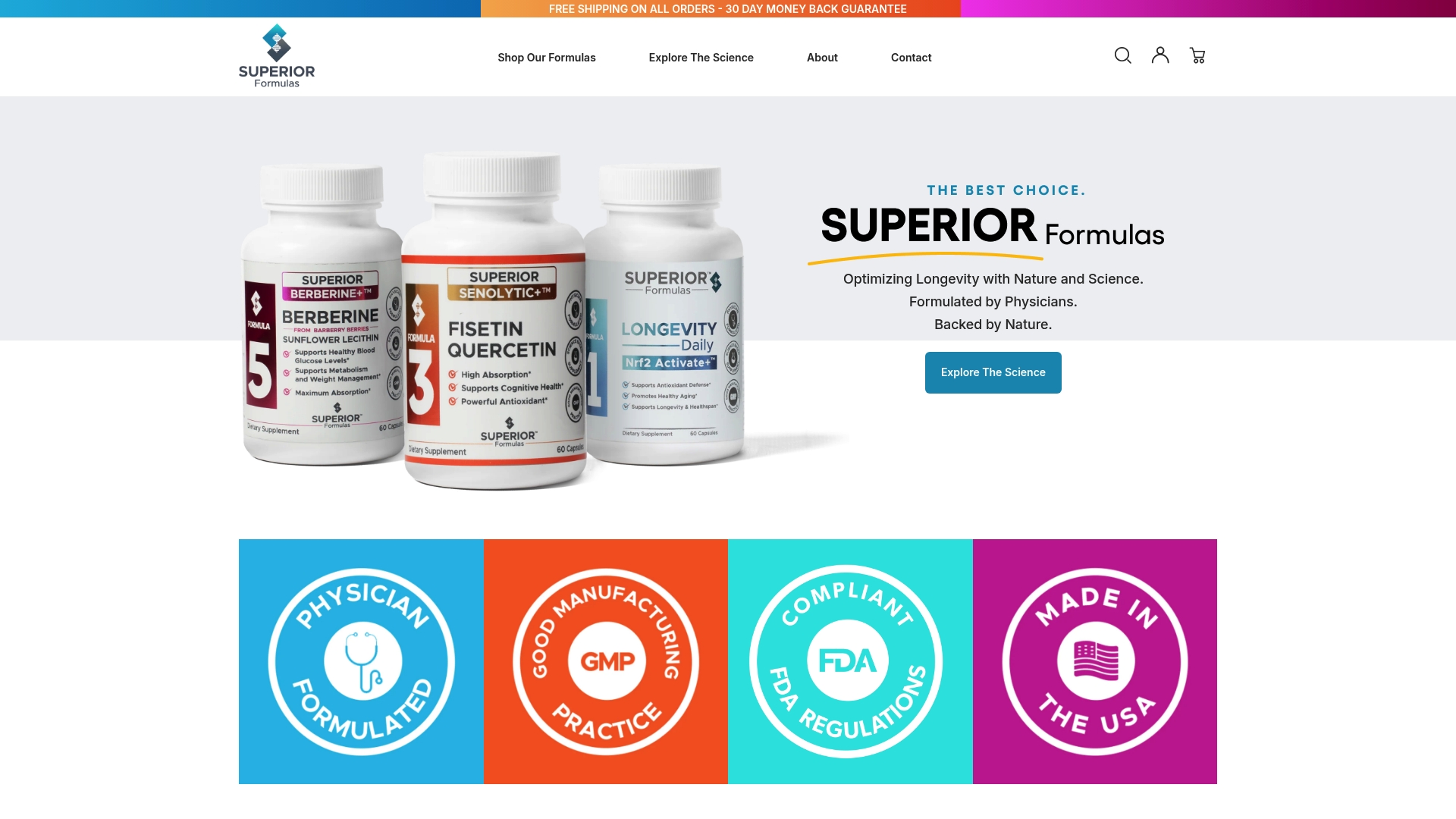
We built this approach around the principle that mechanism without absorption is just theory. Consistency in formulation practices, dosing reflecting published research ranges, and formulation transparency are best practices in the supplement industry.
If you want to see how Formula 3 fits alongside the rest of our lineup, including our Longevity Daily Antioxidant Blend and Berberine+ formulas, visit our full product collection. As with any supplement touching inflammatory or metabolic pathways, a quick conversation with your clinician before starting is worth the five minutes, particularly if you take anticoagulants or manage a chronic condition.
This article is general information, not a substitute for advice from a qualified doctor. Consult a qualified healthcare professional about your own circumstances before acting on anything here.
FAQ
What are the benefits of taking quercetin and resveratrol together?
Combined use shows preclinical evidence of synergistic effects on inflammation and metabolic signaling through the AMPKα1/SIRT1 pathway, and small human trials of combined polyphenol formulas report reduced inflammatory markers like CRP and improved total antioxidant status. The strength of any real-world benefit depends heavily on the formulation’s bioavailability and the dose used.
What should you not mix with resveratrol?
Resveratrol can interact with blood-thinning medications, certain statins, and immunosuppressant drugs because it may influence liver enzymes involved in drug metabolism. Anyone on these medication classes should talk with a clinician before adding resveratrol, and doses above roughly 1 gram per day carry a higher chance of gastrointestinal and liver enzyme effects.
Is there a downside to taking quercetin?
Quercetin is generally well tolerated in clinical studies, with serious adverse events reported as rare among supplement users, though it does carry interaction potential with certain medications processed through shared liver pathways. Poorly formulated, unabsorbed quercetin is more likely to simply pass through the body without effect than to cause harm.
Does quercetin reduce belly fat?
Animal research found that combination treatment with quercetin and resveratrol reduced fat accumulation across multiple adipose depots in a high-fat-diet rat model, working through AMPK and SIRT1 signaling. That finding has not been confirmed in human trials specifically targeting abdominal fat, so it remains a promising mechanistic lead rather than an established effect in people.
Sources
- Combination treatment with quercetin and resveratrol attenuates high fat diet-induced obesity and associated inflammation in rats via the AMPKα1/SIRT1 signaling pathway
- Systematic review on quercetin bioavailability (up to July 2024)
- Comparative Pharmacokinetics and Safety of a Micellar Chrysin-Quercetin-Rutin Formulation: A Randomized Crossover Trial


