


Hydroxytyrosol is a potent olive-derived polyphenol whose strongest backing lies in protecting blood lipids from oxidative stress, an effect recognized by EFSA at daily intakes tied to olive oil consumption. Beyond that benchmark, trials and preclinical research point to cardiovascular, metabolic, neurological, and skin benefits, though the human dose ranges tested (roughly 5 mg to 97 mg per day) vary widely across studies.
TL;DR:
- Consuming at least 5 mg of hydroxytyrosol daily through high-phenol olive oil or supplements can support LDL cholesterol protection against oxidative stress.
- Human studies show modest reductions in total cholesterol, triglycerides, and insulin levels, especially in individuals with higher baseline markers.
- The antioxidant effects primarily work via direct radical scavenging, activation of the Nrf2 pathway, and lipoprotein transport, affecting multiple tissues.
- Evidence for neurological and skin benefits remains preliminary, relying mostly on animal data and mechanistic inference rather than confirmed human outcomes.
- Long-term safety is supported by animal studies and short-term human trials, but further standardized research is needed to confirm optimal dosing and formulations.
Table of Contents
- Quick Benefits Snapshot: What Hydroxytyrosol Can and Cannot Do
- How Hydroxytyrosol Works: Antioxidant Mechanisms and Cellular Signaling
- Cardiovascular Evidence: The EFSA Claim and What It Actually Means
- Metabolic and Glycemic Effects: Clinical and Preclinical Findings
- Neurological Evidence: Neuroprotection and What Human Data Still Lacks
- Skin Benefits: What the Evidence Supports for Topical or Oral Use
- Safety, Tolerability, and Doses Used in Research
- Limits of the Evidence and Where Research Still Needs to Go
- Practical Takeaways: Diet First, Supplement When Needed
- A Clinician-Scientist’s Perspective on Hydroxytyrosol
- Where Superior Formulas Fits Into Your Antioxidant Strategy
- Sources
- FAQ
Quick Benefits Snapshot: What Hydroxytyrosol Can and Cannot Do
Before diving into mechanisms, it helps to see where hydroxytyrosol’s evidence is firm and where it is still emerging. Some effects carry regulatory recognition, others rest on randomized trials and meta-analyses, and a few remain confined to cell and animal models.
- Blood lipid protection (EFSA-recognized): Olive oil polyphenols, including hydroxytyrosol, are recognized as protecting LDL cholesterol from oxidative damage when consumed at the EFSA-defined threshold.
- Cholesterol, triglycerides, and insulin (meta-analysis evidence): A 2025 meta-analysis of 14 randomized controlled trials found measurable reductions in these markers with hydroxytyrosol-related supplementation.
- Endothelial function and platelet activity (mechanistic and trial evidence): Preclinical and clinical work suggests improved vascular responsiveness and reduced clotting tendency, though effect sizes vary by study.
- Metabolic and hepatic fat effects (mostly preclinical): Animal models show reduced hepatic fat accumulation and insulin-sensitizing activity; human confirmation is still limited.
- Neuroprotection (preclinical, early clinical signals): Cell and animal studies show reduced protein aggregation linked to neurodegeneration, but direct human clinical endpoints are scarce.
- Skin protection (mechanistic, limited direct human data): Antioxidant and anti-inflammatory properties suggest skin benefits, though dedicated human trials on topical or oral hydroxytyrosol for skin outcomes remain sparse.
The practical takeaway: treat the cardiovascular and metabolic signals as reasonably well-supported for a polyphenol, and treat the neurological and skin claims as promising directions still awaiting larger human trials.
How Hydroxytyrosol Works: Antioxidant Mechanisms and Cellular Signaling
Hydroxytyrosol’s molecular structure is the starting point for nearly everything it does. It carries a catechol group, two adjacent hydroxyl groups on a benzene ring, which allows it to donate electrons to neutralize free radicals directly and to bind metal ions such as iron and copper that would otherwise catalyze oxidative damage. This direct scavenging activity is well documented across cell studies and forms the baseline explanation for hydroxytyrosol’s antioxidant reputation.
The more consequential mechanism, though, may be indirect. Hydroxytyrosol activates the Nrf2 pathway, a transcription factor that switches on the body’s own antioxidant machinery. Once activated, Nrf2 increases the expression and activity of enzymes including superoxide dismutase (SOD), glutathione peroxidase (GPx), heme oxygenase-1 (HO-1), and catalase. These enzymes do not just neutralize free radicals once; they keep working, cycle after cycle, which is why Nrf2 activation is considered an especially persuasive mechanism. It amplifies the body’s built-in defenses rather than acting as a one-time chemical reaction, and this indirect route may end up mattering as much as hydroxytyrosol’s direct radical-scavenging ability, according to a review of Nrf2 activation and antioxidant enzyme induction. Readers who want a deeper walk-through of how this pathway functions can find one in our explanation of the antioxidant pathway.
A third piece of the puzzle involves how hydroxytyrosol travels through the bloodstream. It binds to lipoproteins, both LDL and HDL, which helps ferry it to tissues and allows it to exert antioxidant protection locally, right at the site where lipid oxidation would otherwise begin. This binding behavior is part of why hydroxytyrosol’s cardiovascular effects are so frequently studied: the molecule is not just floating passively in plasma, it is embedded in the very particles most vulnerable to oxidative damage.
Together, these three mechanisms, direct scavenging, Nrf2-driven enzyme induction, and lipoprotein transport, explain why hydroxytyrosol’s effects show up across such different tissue types. Cardiovascular, metabolic, and neurological systems all depend on managing oxidative stress, and a compound that intervenes at multiple points in that process has a plausible route to benefit each. For a broader look at how oxidative stress drives disease risk in the first place, see our guide to oxidative stress.

Cardiovascular Evidence: The EFSA Claim and What It Actually Means
The clearest, most regulator-backed claim about hydroxytyrosol concerns blood lipids. EFSA recognizes that olive oil polyphenols, hydroxytyrosol and its derivatives among them, contribute to protecting LDL cholesterol from oxidative stress, provided the oil delivers at least 5 mg of hydroxytyrosol and its derivatives per 20 g of daily intake. That is roughly one and a half tablespoons of olive oil, assuming the oil is phenol-rich enough to meet the threshold, which not all olive oils are. This claim applies specifically to olive oil as consumed in the diet; it does not automatically extend to isolated hydroxytyrosol supplements or fortified foods without their own supporting evidence, a distinction reviews of hydroxytyrosol in foods are careful to note.
A 2025 meta-analysis pooling 14 randomized controlled trials and 594 participants found that supplementation with hydroxytyrosol, oleuropein, and tyrosol significantly reduced total cholesterol, triglycerides, and insulin levels, with standardized mean differences of −0.19 for cholesterol, −0.32 for triglycerides, and −0.42 for insulin. These are modest but statistically meaningful shifts, the kind of effect size you would expect from a dietary polyphenol rather than a pharmaceutical, and they align with the mechanistic story of reduced LDL oxidation and improved lipid handling.

Beyond the numbers, mechanistic studies point to hydroxytyrosol reducing LDL oxidation directly, supporting endothelial function, and modestly reducing platelet aggregation, the clumping behavior that contributes to clot formation. Each of these fits the broader picture of a compound that protects the vascular system at several points rather than acting through a single lever.
What hydroxytyrosol cannot reliably do, based on current evidence, is replace established cardiovascular interventions or produce dramatic changes in a single measurement. The effect sizes are real but incremental, more consistent with a supportive role alongside diet and standard care than with the kind of transformation some marketing implies. Readers looking for more context on how antioxidants support long-term cellular health can see our overview of cellular antioxidants and longevity.
Metabolic and Glycemic Effects: Clinical and Preclinical Findings
The same 2025 meta-analysis that found lipid improvements also reported a reduction in insulin levels (SMD −0.42), one of the more notable metabolic signals in the hydroxytyrosol literature. A drop in insulin without a corresponding rise in blood glucose generally suggests improved insulin sensitivity, meaning cells are responding more efficiently to the hormone rather than requiring more of it to do the same job. This is a meaningful direction for a natural compound, though the studies pooled in that analysis varied in dose, duration, and formulation, which tempers how precisely the effect size should be interpreted.
Animal research fills in some of the mechanistic detail that human trials cannot easily capture. Rodent models have shown hydroxytyrosol reducing hepatic fat accumulation, a process relevant to non-alcoholic fatty liver disease, and producing insulin-like signaling effects at the cellular level, according to reviews summarizing its anti-steatotic properties. These findings are encouraging, but animal doses and delivery methods often do not translate directly to human supplementation, so they should be read as mechanistic support rather than proof of clinical benefit in people.
The variability by dose and formulation matters here more than in most nutrition topics. Some trials use hydroxytyrosol isolated from olive mill byproducts, others use olive oil extracts standardized to a phenol content, and still others test combinations with oleuropein and tyrosol. A systematic review of oleuropein and hydroxytyrosol trials found encouraging but mixed results across these formulations, largely because standardization across the field is still developing.
The patients most likely to notice a metabolic benefit are probably those with elevated baseline insulin or triglycerides rather than metabolically healthy individuals, since most supplement trials show the largest relative improvements in participants who started with higher markers. For readers managing blood sugar concerns more broadly, understanding how metabolic interventions work at a clinical level, as tirzepatide does for blood sugar control, can offer useful context for how much change to expect from any single intervention.
Neurological Evidence: Neuroprotection and What Human Data Still Lacks
The neurological case for hydroxytyrosol is built almost entirely on preclinical work, and it is worth being direct about that. Cell and animal studies report reduced microglial activation, the inflammatory response of the brain’s resident immune cells, along with inhibited aggregation of α-synuclein and β-amyloid, the misfolded proteins associated with Parkinson’s and Alzheimer’s disease, according to a review of hydroxytyrosol’s cytoprotective effects. These are exactly the kinds of pathological markers researchers target when screening compounds for neuroprotective potential.
Hydroxytyrosol also appears to support the blood brain barrier and vascular integrity in preclinical models, mechanisms that would, in theory, help protect neural tissue from the oxidative and inflammatory damage that accumulates over time. A comprehensive 2022 review of hydroxytyrosol’s biological effects places neuroprotection among its most consistently reported preclinical findings, alongside antioxidant, anti-inflammatory, and anti-steatotic activity.
What is missing is the direct human clinical endpoint, cognitive test scores, imaging biomarkers, or disease progression data in people taking hydroxytyrosol specifically for brain health. A systematic review of oleuropein and hydroxytyrosol RCTs found promising but mixed results for cognitive and cardiometabolic outcomes combined, again pointing to small sample sizes and inconsistent dosing as the limiting factors. The honest summary: the biological plausibility is strong, the animal data is genuinely encouraging, and the human clinical evidence has not yet caught up.
Skin Benefits: What the Evidence Supports for Topical or Oral Use
The rationale for hydroxytyrosol and skin health follows directly from its core mechanisms. Ultraviolet exposure and everyday environmental stress generate free radicals in skin tissue, and a compound that scavenges radicals directly while also activating Nrf2-driven enzyme defenses has a plausible route to reducing that damage. Reviews summarizing hydroxytyrosol’s biological activity list anti-inflammatory and antioxidant effects among its most consistently reported properties, and skin is one of the tissues most exposed to oxidative stressors.
That said, dedicated human trials testing topical or oral hydroxytyrosol specifically for skin outcomes, wrinkle depth, elasticity, or pigmentation, are not part of the well-established evidence base covered by the major reviews. Most of what supports a skin benefit is mechanistic inference drawn from hydroxytyrosol’s general antioxidant and anti-inflammatory profile rather than skin-specific clinical trials.
In practice, this means oral intake through diet or supplementation is the better-supported route right now, since that is where the cardiovascular and metabolic trial evidence exists. Topical formulations may leverage the same antioxidant chemistry, but readers should treat skin-specific claims as reasonable extrapolation rather than proven outcomes until dedicated trials catch up.
Safety, Tolerability, and Doses Used in Research
Hydroxytyrosol has a reassuring safety profile across the studies conducted so far. Animal toxicology work established a no-observed-adverse-effect level (NOAEL) of 500 mg/kg/day in rats, a substantial margin above the doses used in human research. Human trials have tested doses ranging from about 5 mg per day up to roughly 97 mg per day, and across that range, researchers have not reported significant adverse effects.
That safety picture comes with real caveats. Most human trials are relatively short in duration and modest in size, so long-term safety data at the higher end of that dose range is still limited. Pregnant or breastfeeding individuals are generally not included in these trials, so there is no dedicated safety data for that population, and caution is warranted until more research exists. Anyone taking prescription medications, particularly blood thinners or medications affecting lipid or glucose metabolism, should talk with a clinician before adding a concentrated hydroxytyrosol supplement, since its effects on platelet activity and insulin sensitivity could theoretically interact with those drugs. This is the same practical caution that applies to other well-studied nutraceuticals: dosing that looks safe in trials still deserves a conversation with a healthcare provider before layering it onto an existing regimen, a point echoed in discussions of dosage considerations for other researched compounds like turkey tail.
Limits of the Evidence and Where Research Still Needs to Go
The hydroxytyrosol research base has real strengths, but it also has real gaps worth naming plainly. Dosing and formulations vary so widely across trials, isolated hydroxytyrosol, olive oil extracts, combinations with oleuropein and tyrosol, that pooling results into one clean effect size is genuinely difficult, a limitation the 2025 meta-analysis itself acknowledges.
There is also the confounding problem inherent to any Mediterranean-diet-adjacent compound: people who consume more olive oil tend to eat differently overall, exercise differently, and live differently, which makes it hard to isolate hydroxytyrosol’s individual contribution from the broader dietary pattern surrounding it.
What the field needs, according to a systematic review of oleuropein and hydroxytyrosol trials, is longer, larger randomized trials using standardized hydroxytyrosol preparations with predefined clinical endpoints rather than surrogate markers alone. Until that standardization happens, the right posture toward the current evidence is measured optimism: the mechanisms are sound, the early signals are consistently positive, and the confirmation is still catching up.
Practical Takeaways: Diet First, Supplement When Needed
The evidence points toward a clear, sensible order of operations. Prioritize high-phenol extra-virgin olive oil as your primary source, aim for the EFSA-recognized intake where your diet allows it, and treat supplementation as a tool for filling the gap rather than a replacement for real food.
- Start with food: Aim for roughly 20 g of a genuinely phenol-rich extra-virgin olive oil daily, chosen from early-harvest cultivars when possible.
- Consider a supplement when diet falls short: If your typical oil intake is low, inconsistent, or from oils of unverified phenolic content, a standardized supplement offers a more predictable dose.
- Check for transparency markers: Look for products with third-party testing, clearly stated polyphenol content, and manufacturing in GMP-certified facilities.
- Match expectations to evidence: Expect modest, incremental support for lipids, insulin, and antioxidant status, not a dramatic single-marker transformation.
Pro Tip: Pair any hydroxytyrosol-containing oil or supplement with a source of healthy fat at the same meal, since polyphenols absorb better alongside dietary fat.
The short version: hydroxytyrosol earns its reputation through a genuinely strong antioxidant mechanism and a growing body of cardiometabolic trial data, with neurological and skin benefits still trailing behind on direct human evidence.
A Clinician-Scientist’s Perspective on Hydroxytyrosol
What strikes me most about hydroxytyrosol is not any single trial result, it is how consistently the mechanism, the lipid data, and the metabolic signals all point in the same direction. That kind of convergence is rare in nutrition science, where individual studies often contradict each other. Still, I would caution against treating any single polyphenol as a complete strategy. Diet quality, sleep, and movement patterns matter more than any one compound, and hydroxytyrosol works best as a supporting piece, not the whole plan.
Superior Formulas’ emphasis on transparent, physician-formulated products with third-party testing reflects the same standard I would want to see before recommending any supplement to a patient. If you are on prescription medications or managing a chronic condition, talk with your clinician before adding a new antioxidant supplement to your routine.
— cristopher
Where Superior Formulas Fits Into Your Antioxidant Strategy
If reaching a reliable, standardized hydroxytyrosol-equivalent intake through diet alone feels impractical day to day, a physician-formulated antioxidant blend offers a consistent alternative to guessing at olive oil quality. Superior Formulas builds its Formula 1, Longevity Daily Antioxidant Blend, around the same Nrf2-activation principle described earlier in this guide, using clinically studied polyphenols selected for transparent, verified content rather than a vague “antioxidant blend” label.
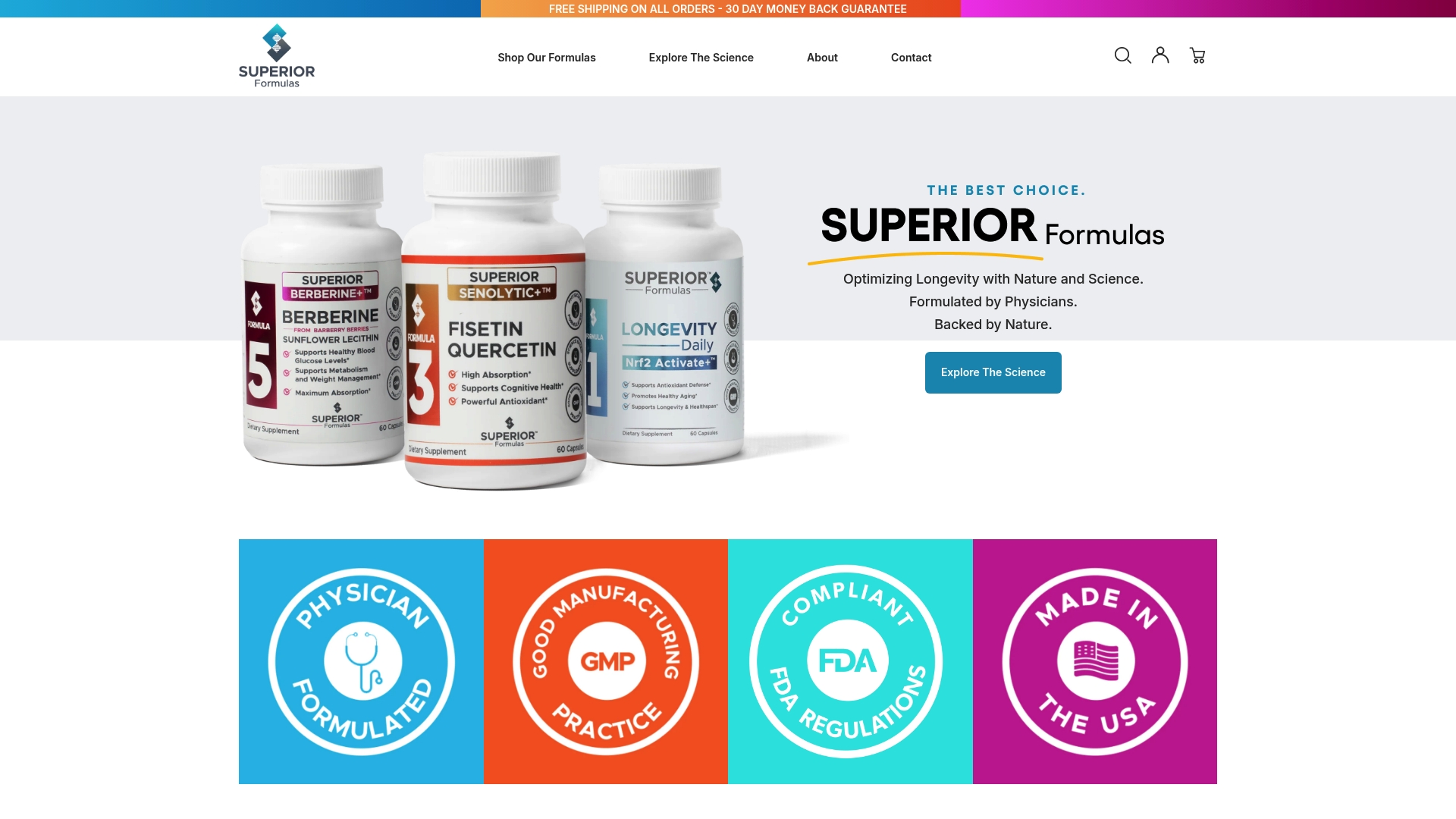
Products are often manufactured in GMP-certified facilities and third-party tested for purity, which are among quality markers recommended in this guide for hydroxytyrosol-related supplements. That formulation approach, developed by a physician-scientist integrating clinical research with nutrition science, is the throughline across the brand’s entire line, from Formula 3, Superior Senolytic+, to its metabolic and multivitamin formulas.
If you want to see the full range of physician-formulated options for antioxidant and longevity support, visit the Superior Formulas collection and compare formulations against the quality markers covered in this guide.
This article is general information, not a substitute for advice from a qualified doctor. Consult a qualified healthcare professional about your own circumstances before acting on anything here.
Sources
Hydroxytyrosol occurs naturally in olives and, most abundantly for dietary purposes, in extra-virgin olive oil. Olive mill wastewater, a byproduct of oil pressing, is also a concentrated source used in some supplement extraction processes. Red wine contains hydroxytyrosol as a minor compound, though at levels far below what olive oil typically provides.
The challenge is that phenolic content in olive oil is far from uniform. Total phenol content across extra-virgin olive oils ranges roughly from 100 to 600 mg/kg, with hydroxytyrosol and its derivatives accounting for close to half of that total in many oils. Cultivar, harvest timing, extraction method, and storage conditions all shift that number substantially.
- Meta-analysis (2025) of HT, oleuropein, and tyrosol supplementation
- Toxicology and safety study (NOAEL data)
- Hydroxytyrosol in foods: analysis, sources, dietary intake and potential uses (2022 review)
Hitting the EFSA benchmark of 5 mg of hydroxytyrosol and derivatives per day generally requires around 20 g, about one and a half tablespoons, of a genuinely phenol-rich oil, not just any bottle labeled extra virgin. For readers whose diet does not reliably include enough high-phenol olive oil, or who want a standardized, measured intake, a supplement becomes a more predictable way to reach a consistent daily dose. Our piece on phytonutrients versus antioxidants explains why compounds like hydroxytyrosol sit in a category worth understanding on their own terms.
FAQ
Does hydroxytyrosol help with weight loss?
Hydroxytyrosol is not established as a weight-loss compound in human trials; its documented effects center on cholesterol, triglycerides, and insulin rather than body weight. Animal studies show reduced hepatic fat accumulation, but that finding has not been confirmed as a weight-loss effect in human trials.
What foods are high in hydroxytyrosol?
Extra-virgin olive oil is the primary dietary source, with table olives and olive mill byproducts also contributing meaningfully. Phenolic content varies widely between oils, roughly 100 to 600 mg/kg total phenols, depending on cultivar, harvest timing, and processing.
Is it safe to take hydroxytyrosol?
Human trials using doses from about 5 mg to roughly 97 mg per day have not reported significant adverse effects, and animal toxicology data support a wide safety margin. Anyone pregnant, breastfeeding, or taking prescription medications should still consult a clinician before starting supplementation, since dedicated safety data for those groups is limited.
Which olive oil is highest in hydroxytyrosol?
Oils from robust, early-harvest cultivars such as Coratina or Chetoui, processed with gentle, low-temperature extraction, tend to carry higher phenolic concentrations than late-harvest or heat-processed oils. The “extra virgin” label alone does not guarantee a high hydroxytyrosol content, so checking for phenolic content disclosures or supplier transparency matters more than the grade designation.


