


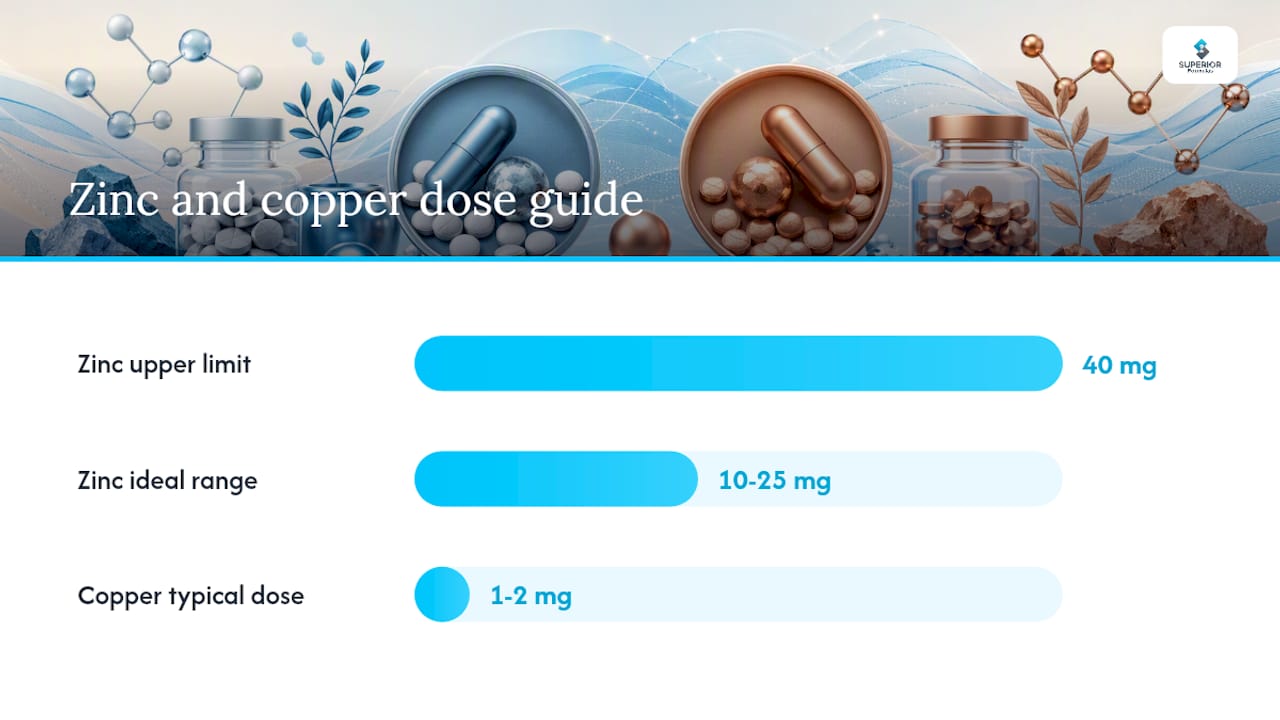
Taking zinc and copper supplements together is safe and often necessary, but only when the doses are balanced. The single most important rule: keep your total daily zinc intake at or below the Tolerable Upper Intake Level of 40 mg/day set by the Food and Nutrition Board, because zinc above that threshold induces intestinal metallothionein, a protein that preferentially binds copper and blocks its absorption. Most adults eating a mixed diet don’t need either mineral in supplement form, but if you’re supplementing zinc long-term, copper must come with it.
The short version: A typical safe combination is moderate elemental zinc paired with a small amount of elemental copper per serving. If you’re already taking a standalone zinc product, check whether copper is included before adding another dose.
Three things to do right now:
- Check your total zinc intake across all supplements, multivitamins, and fortified foods before adding anything new.
- Choose a balanced product that includes copper, or add a separate copper supplement if your zinc product contains none.
- Get baseline lab testing if you’re in a higher-risk group (older adult, strict vegan, malabsorption condition, or long-term zinc user).
Table of Contents
- How zinc can deplete copper, and what toxicity looks like
- Practical steps to keep zinc and copper in balance
- What forms of zinc and copper are actually in supplements
- How to pick a safe, effective zinc and copper supplement
- Which lab tests tell you your actual zinc and copper status
- Quick safety checks before you start supplementing
- Key Takeaways
- The case for dosing-first thinking in mineral supplementation
- Superiorformulas’ physician-formulated approach to zinc and copper
- Useful sources and further reading
How zinc can deplete copper, and what toxicity looks like
The core risk with zinc supplementation is straightforward: too much zinc drives copper deficiency. Zinc upregulates metallothionein in intestinal cells, and metallothionein binds copper with higher affinity than zinc, trapping it in the gut wall and preventing systemic absorption. Research shows that ~60 mg/day of zinc for up to 10 weeks can reduce erythrocyte Cu/Zn SOD activity, a functional marker of copper status, before any classic clinical symptoms appear.
Signs of copper deficiency to watch for:
- Anemia unresponsive to iron therapy
- Neutropenia (low white blood cell count)
- Fatigue and weakness
- Neurological symptoms: numbness, tingling, gait disturbance (myelopathy)
- Bone fragility or osteoporosis
Signs of zinc deficiency:
- Impaired immune response, frequent infections
- Delayed wound healing
- Loss of taste or smell (hypogeusia/anosmia)
- Hair thinning or loss
- Dermatitis, especially around the mouth and extremities
Signs of copper toxicity (less common, but possible with excessive supplementation):
- Nausea, vomiting, abdominal pain
- Liver damage with chronic high intake
- Metallic taste
- Jaundice in severe cases
Zinc also interacts with other nutrients and medications. High zinc competes with iron for absorption, so taking both together reduces the benefit of each. Zinc can reduce the absorption of fluoroquinolone and tetracycline antibiotics, so those should be taken at least two hours apart. Copper interacts with penicillamine (used in Wilson’s disease and rheumatoid arthritis), which chelates copper and can cause deficiency with long-term use.
Practical steps to keep zinc and copper in balance
The core rule: if you’re supplementing zinc above the RDA for more than four to eight weeks, you need copper in the picture, either from a combined product or a separate supplement.
Step-by-step approach:
- Estimate your dietary zinc and copper intake. Track a typical week of eating using a tool like Cronometer or the USDA FoodData Central database. Most adults get zinc and copper from food alone in typical dietary amounts.
- Calculate your total supplemental zinc. Add up every product you take that contains zinc: multivitamins, standalone zinc, immune formulas, protein powders with added minerals.
- Choose your copper dose. If your total zinc from supplements is 15–25 mg/day, 1–2 mg copper is a reasonable addition. If zinc exceeds 25 mg/day, discuss copper dosing with a clinician.
- Decide on timing. Zinc and copper can be taken at the same time in a combined formula. If you’re taking them as separate supplements, taking them together is generally fine at typical doses. Separate them from iron supplements and antibiotics by at least two hours.
- Set a monitoring cadence. Get baseline labs before starting, then recheck at 8–12 weeks if you’ve changed your zinc dose significantly.
Foods naturally rich in zinc and copper to factor into your daily total:
- Zinc-rich: oysters (highest known food source), beef, crab, pumpkin seeds, hemp seeds, lentils, chickpeas, cashews
- Copper-rich: beef liver, oysters, shiitake mushrooms, dark chocolate (70%+), sunflower seeds, almonds, spirulina
Monitoring checklist:
- Serum zinc and serum copper at baseline
- Ceruloplasmin if copper deficiency is suspected
- CBC (complete blood count) to catch neutropenia early
- Recheck at 8–12 weeks after any dose change
- Annual labs if on long-term supplementation above the RDA
What forms of zinc and copper are actually in supplements
No single chemical form of zinc or copper has proven definitively superior for all people in all contexts. That said, form does affect tolerability and, to some degree, absorption efficiency.
Common zinc forms:
- Zinc oxide: widely used, lower cost, moderate bioavailability; the form used in AREDS studies.
- Zinc gluconate: well-tolerated, commonly found in lozenges and general supplements.
- Zinc picolinate: some small studies suggest slightly better absorption, though head-to-head evidence is limited.
- Zinc citrate: good tolerability, moderate bioavailability, commonly used in combination products.
- Zinc bisglycinate: a chelated form with favorable GI tolerability; often chosen for people who experience nausea with other forms.
Common copper forms:
- Cupric oxide: used in AREDS; bioavailability is lower than other forms.
- Copper gluconate: well-absorbed, commonly paired with zinc gluconate.
- Copper bisglycinate: chelated form with good tolerability and absorption.
- Copper amino acid chelates: broad category covering glycinate and other amino acid pairings; generally well-absorbed.
The NIH ODS notes that supplement copper content can range from trace amounts to 15 mg per serving across the market, so form alone doesn’t determine safety. Dose still matters most.
For a deeper look at how chelated mineral formats differ from standard salts, the chelated mineral supplement guide at NutraSmarts covers the formulation rationale clearly.
Pro Tip: If zinc supplements cause nausea or stomach upset, switch to zinc bisglycinate or zinc citrate taken with food. These chelated forms are gentler on the GI tract and may reduce the most common reason people stop taking zinc consistently.
How to pick a safe, effective zinc and copper supplement
Start with the label, not the marketing. Before anything else, confirm the elemental doses, then check for third-party testing, then evaluate the forms.
What to look for on the label:
- Elemental zinc and elemental copper stated explicitly in the Supplement Facts panel
- Total zinc per serving at or below 40 mg (the UL), ideally 10–25 mg for most adults
- Copper included if zinc exceeds the RDA, typically 1–2 mg per serving
- Serving size clearly stated (one capsule vs. two capsules changes the math significantly)
- No unnecessary fillers, artificial colors, or allergens relevant to you
Third-party testing seals to prioritize:
- USP (U.S. Pharmacopeia): verifies that the product contains what the label states, in the stated amounts, and meets dissolution standards.
- NSF International: tests for label accuracy, contaminants, and banned substances; particularly relevant for athletes.
- ConsumerLab: independent testing organization that publishes pass/fail results and identifies products with label inaccuracies.
These seals don’t guarantee a formula is right for you, but they do confirm you’re getting what you paid for. A product without any third-party verification is a product asking you to take its word for it.
| Label Feature | What to Check | Why It Matters |
|---|---|---|
| Elemental dose | Stated explicitly in mg or mcg | Compound weight ≠ elemental dose |
| Zinc:copper ratio | Copper present if zinc > RDA | Prevents zinc-induced copper depletion |
| Third-party seal | USP, NSF, or ConsumerLab | Confirms label accuracy and purity |
| Serving size | Capsules per serving | Doubles dose if you take two instead of one |
| Allergen statement | Gluten, soy, dairy, shellfish | Relevant for sensitive individuals |
| Contraindications | Wilson’s disease warning | Copper supplements contraindicated in Wilson’s |
For a broader framework on reading supplement labels and assessing supplement quality, the Superiorformulas resource library covers the full evaluation process in practical terms.
Which lab tests tell you your actual zinc and copper status
The most useful tests are serum copper, ceruloplasmin, serum zinc, and erythrocyte Cu/Zn SOD. Each reflects a different time window and has specific limitations, which is why interpreting trace element status requires clinical context, not just a single number.
Serum zinc: reflects recent dietary intake and supplementation. It drops quickly with deficiency but also fluctuates with meals, time of day, and acute illness. A morning fasting draw gives the most reliable result. Normal range is typically 70–120 mcg/dL, though lab reference ranges vary.
Serum copper: useful for identifying frank deficiency or excess. Like serum zinc, it can be affected by acute-phase responses. Inflammation artificially elevates serum copper, which can mask a true deficiency.
Ceruloplasmin: the copper-carrying protein in blood. Because it’s an acute-phase reactant, it rises with inflammation and infection, making it unreliable as a standalone copper marker during illness. Most useful when interpreted alongside serum copper.
Erythrocyte Cu/Zn SOD: reflects longer-term copper status because red blood cells turn over slowly. Research shows this enzyme activity can decline within weeks of high-dose zinc supplementation before clinical symptoms appear, making it a sensitive early marker. Not universally available through standard labs, but worth requesting if you’re on long-term high-dose zinc.
Urine copper: used primarily in the context of Wilson’s disease or suspected copper overload, not routine supplementation monitoring.
Recommended monitoring timeline:
- Baseline: before starting any zinc or copper supplement above the RDA
- 8–12 weeks: after any significant dose change
- Annually: if you’re on long-term supplementation above the RDA
Quick safety checks before you start supplementing
Before opening a new bottle of zinc or copper, run through this checklist:
- Review your current medications. Zinc interacts with fluoroquinolones, tetracyclines, and penicillamine. Copper supplements are contraindicated in Wilson’s disease. Check with your pharmacist or physician if you’re on any of these.
- Estimate your total daily zinc from all sources. Add food, multivitamins, immune formulas, and any standalone zinc. If the total exceeds 40 mg/day, you’re above the UL.
- Check for liver or kidney disease. Both conditions affect mineral metabolism and clearance. Supplementing without medical guidance in these contexts carries real risk.
- Rule out Wilson’s disease. If you have a family history or unexplained liver disease, copper supplementation requires medical clearance first.
- Plan your baseline labs. Order serum zinc, serum copper, and ceruloplasmin before starting, especially if you’re in a higher-risk group.
- Schedule a follow-up. Mark your calendar for 8–12 weeks after starting to recheck labs if you’re taking zinc above the RDA.
Key do’s and don’ts:
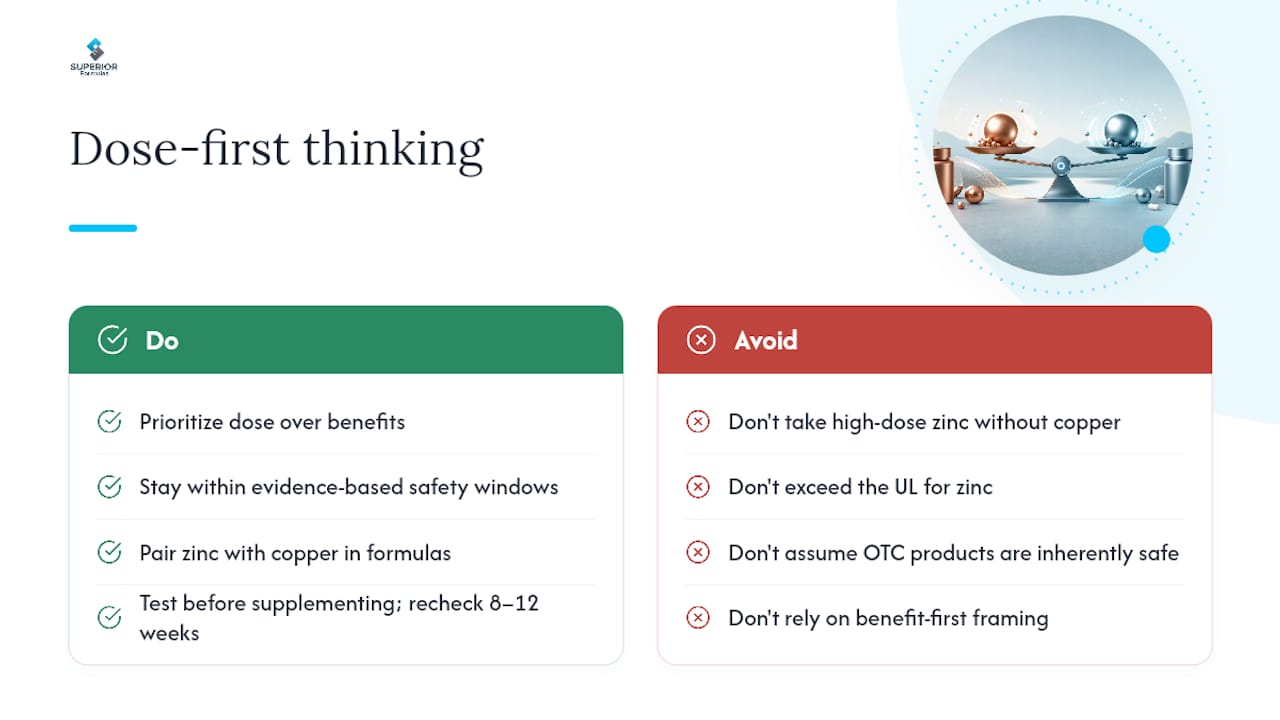
- Do not exceed 40 mg/day total zinc without medical supervision.
- Do include copper (1–2 mg) if supplementing zinc long-term.
- Do take zinc and copper separately from iron supplements and antibiotics by at least two hours.
- Do choose products with third-party testing verification.
- Don’t assume a higher zinc dose means better immune support; the dose-response curve flattens well below the UL.
For a complete supplement safety framework, the Superiorformulas safety guide covers pre-supplementation checks in detail.
Key Takeaways
Keeping zinc at or below 40 mg/day and pairing it with 1–2 mg copper is the single most important rule for safe, effective zinc and copper supplementation.
| Point | Details |
|---|---|
| Zinc UL is 40 mg/day | Total intake from all sources must stay at or below this limit to avoid copper depletion. |
| Always pair zinc with copper | If supplementing zinc above the RDA long-term, include 1–2 mg copper or choose a balanced formula. |
| Monitor labs at 8–12 weeks | Serum zinc, serum copper, and ceruloplasmin should be checked after any significant dose change. |
| Third-party testing matters | Look for USP, NSF, or ConsumerLab seals to confirm label accuracy and purity before buying. |
| Superiorformulas approach | Physician-formulated, GMP-certified, third-party tested formulas with clear elemental labeling and balanced dosing. |
The case for dosing-first thinking in mineral supplementation
The conventional wellness narrative around zinc and copper tends to focus on benefits: immunity, skin, antioxidant enzymes. That framing isn’t wrong, but it consistently underweights the more clinically significant story, which is that these two minerals are biochemically antagonistic at high doses. The benefit-first framing leads people to take 50 mg zinc products thinking more is better, when the actual evidence shows that doses above the UL can create a functional copper deficiency within weeks, before any obvious symptoms appear.
What gets lost in most supplement discussions is that the risk isn’t theoretical. Documented cases of zinc-induced copper deficiency myelopathy, a progressive neurological condition, have been traced to long-term use of zinc-containing denture creams and high-dose zinc supplements taken without copper. These aren’t rare adverse events from pharmaceutical drugs. They’re from over-the-counter products most people assume are inherently safe because they’re “natural.”
The physician-formulated approach that Superiorformulas takes starts from a different premise: dose first, benefit second. That means selecting zinc and copper amounts that stay within evidence-based safety windows, pairing them in ratios that reflect actual biochemical interactions, and manufacturing in GMP-certified facilities with third-party testing to confirm what’s on the label is what’s in the capsule. There’s no universal optimal zinc:copper ratio for every person in every clinical context, as the review literature on synergistic mineral roles makes clear. But there are clear thresholds below which the risk of imbalance drops substantially, and those thresholds should anchor any responsible formulation.
Testing before supplementing and rechecking at 8–12 weeks isn’t overcautious. For anyone supplementing above the RDA, it’s the minimum standard of care.
Superiorformulas’ physician-formulated approach to zinc and copper
Superiorformulas was built on the premise that dosing precision and third-party verification aren’t optional features. They’re the baseline. For zinc and copper specifically, that means formulations with clearly stated elemental doses, copper included wherever zinc exceeds the RDA, and manufacturing in GMP-certified facilities with independent testing to confirm label accuracy.
If you’ve been taking a standalone zinc supplement without copper, or you’re unsure whether your current multivitamin delivers enough of either mineral, the Superiorformulas product line offers physician-formulated options designed with these exact balance principles in mind. Every formula is built to reflect clinical evidence, not marketing trends. Third-party testing confirms purity and potency, so you know the elemental doses on the label match what’s actually in each capsule.
For readers who want a vetted starting point, the Superiorformulas supplement catalog is the right next step. Browse physician-formulated options with transparent labeling and the quality verification that makes the difference between supplementing confidently and supplementing blindly.
Useful sources and further reading
The following sources were used throughout this article. Each is worth bookmarking if you want to go deeper on any specific topic.
- Copper - Health Professional Fact Sheet
- Zinc | Linus Pauling Institute | Oregon State University
- Should You Take Copper and Zinc Supplements Together?
- Synergistic roles of copper and zinc in immunity and tissue repair (review)
- PubMed reference on trace element testing and interpretation
- PubMed study on zinc-induced changes in copper markers
- Zinc Copper – Solaray
Zinc and copper supplementation at doses above the RDA involves real biochemical interactions that warrant clinical oversight. This article provides general information, not medical advice. Discuss testing, therapeutic dosing, and any supplement changes with a qualified healthcare provider before starting.


