


Most healthy adults can take L-arginine and L-lysine supplements together, and the combination shows genuine clinical promise, particularly for stress and anxiety reduction. A randomized, double-blind, placebo-controlled trial by Smriga et al. (2007), published on PubMed, found that oral co-supplementation reduced trait anxiety and blunted stress-induced hormonal changes in healthy adults. A systematic review of 71 clinical studies established a provisional no-observed-adverse-effect level (NOAEL) for supplemental L-lysine at 6.0 g per day, with gastrointestinal symptoms as the primary adverse events at higher doses.
Before you start, note these immediate caveats:
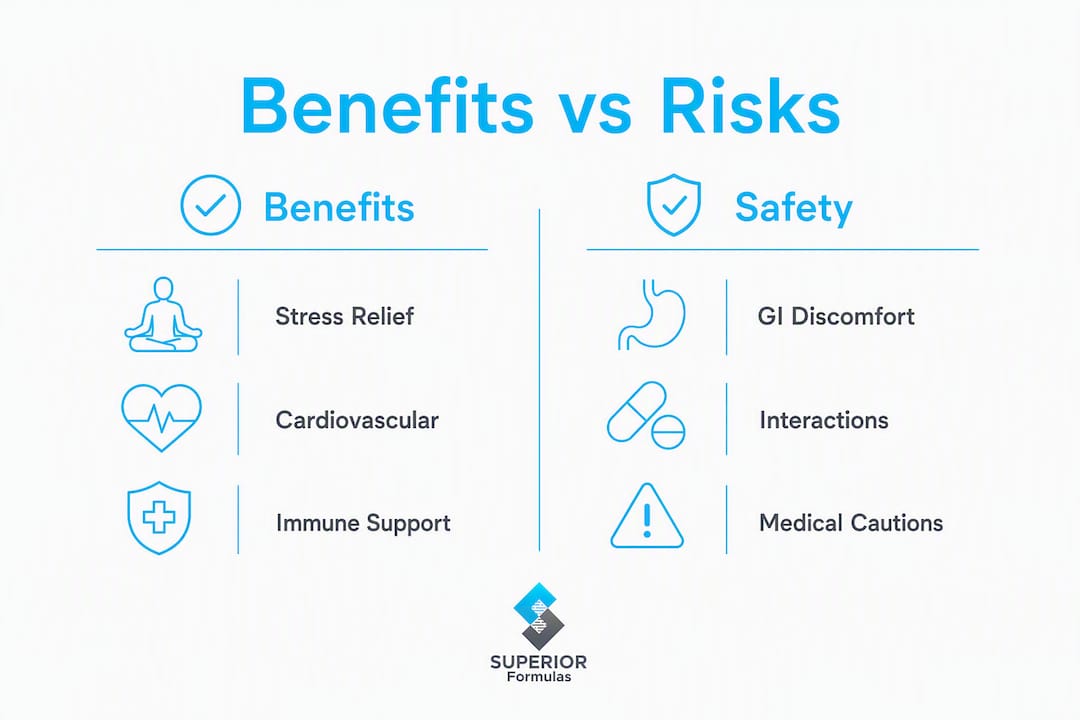
- Drug interactions requiring clinician review: L-arginine is a vasodilator; combining it with blood-pressure medications, nitrates, or PDE5 inhibitors such as tadalafil can produce additive blood-pressure reduction that goes too far.
- Medical conditions that warrant clinician guidance first: kidney disease, liver disease, pregnancy, breastfeeding, and a history of recurrent herpes simplex virus (HSV) outbreaks.
- Who benefits most: healthy adults with stress, cardiovascular support, or cold-sore prevention goals, provided dosing is thoughtful and clinician-reviewed when any of the above apply.
This is general health information, not medical advice. Confirm current dosing and interaction guidance with a qualified healthcare provider before starting any new supplement regimen.
Table of Contents
- Why do people take L-arginine and L-lysine together?
- What does the research show about how these amino acids interact?
- Who should avoid this combination, and what interactions matter?
- How do you evaluate a combined L-arginine + L-lysine product before buying?
- What dosing range is practical and evidence-informed?
- Key Takeaways
- Why physician-led formulation changes how you should think about this combination
- Superiorformulas’ physician-formulated amino-acid approach
- Primary sources and further reading
Why do people take L-arginine and L-lysine together?
The appeal of combining these two amino acids comes from their complementary, and sometimes competing, biological roles. Understanding which goal you are targeting helps you decide whether a fixed-ratio combined product or separate supplementation fits better.
- Stress and anxiety reduction: The Smriga et al. (2007) RCT remains the strongest clinical anchor for this use case. The combination reduced trait anxiety scores and moderated hormonal stress markers in healthy adults, suggesting a synergistic effect on the hypothalamic-pituitary-adrenal axis.
- Cardiovascular support via vasodilation: L-arginine is the direct precursor to nitric oxide (NO) through the enzyme nitric oxide synthase. Higher NO availability relaxes vascular smooth muscle, which supports healthy blood flow and can contribute to blood-pressure modulation. This is the primary reason L-arginine benefits are discussed in cardiovascular contexts.
- HSV suppression: L-lysine competes with L-arginine for cellular uptake, and the herpes simplex virus depends on arginine for replication. Raising the lysine-to-arginine ratio in tissues can reduce the virus’s access to arginine, which is why lysine is a common recommendation for people with recurrent cold sores.
- Muscle recovery and HGH interest: Some supplement marketing positions the combination as a growth hormone (HGH) secretagogue. The clinical evidence for meaningful HGH elevation from oral amino-acid dosing in healthy adults is weak; most positive data comes from intravenous administration at doses impractical for daily supplementation.
- Convenience and complementary roles: Combined products are marketed for simplicity. The trade-off is that a fixed ratio may not optimize either mechanism, since the two amino acids share an intestinal transporter and can compete for absorption.
For adults 35 and older pursuing healthy aging strategies, the stress-reduction and cardiovascular support goals tend to have the most clinical backing from oral supplementation.
What does the research show about how these amino acids interact?
Shared transport and absorption competition
L-arginine and L-lysine are both cationic amino acids, meaning they carry a positive charge at physiological pH. They compete for the same intestinal and cellular transporters, particularly the CAT (cationic amino acid transporter) family. When both are present in high concentrations simultaneously, one can reduce the other’s plasma availability. This is not a reason to avoid the combination, but it does mean that staggering doses across the day tends to produce better individual absorption than taking both at once.

Metabolic crosstalk: arginase and antiviral competition
Lysine also induces arginase activity, the enzyme that breaks down arginine into ornithine and urea. Elevated arginase reduces free arginine availability, which is precisely the mechanism that limits HSV replication. For cardiovascular goals, however, that same reduction in arginine could theoretically blunt nitric oxide production. The practical implication: if your primary goal is cardiovascular support, a lysine-heavy ratio may work against you; if cold-sore suppression is the priority, it works in your favor.
The clinical evidence in context
“Oral treatment with L-lysine and L-arginine reduces anxiety and attenuates stress-evoked changes in hormonal and physiological parameters in healthy human subjects.” — Smriga et al., 2007, as cited in PubMed
The Smriga et al. (2007) study is a randomized, double-blind, placebo-controlled trial, the gold standard design. It provides meaningful evidence for the stress-reduction framing. That said, the trial had a relatively small sample, and replication in larger, longer-duration studies would strengthen the case. For L-lysine’s antiviral role, the evidence base is broader but still mixed, with some trials showing reduced outbreak frequency and others showing modest effects.
The systematic review on lysine safety reviewed 71 clinical studies and set the provisional NOAEL at 6.0 g per day, which gives a meaningful margin of safety above the doses used in most trials.
| Evidence Area | Study Type | Key Finding | Confidence Level |
|---|---|---|---|
| Stress and anxiety reduction | RCT (Smriga et al., 2007) | Reduced trait anxiety and stress hormonal markers | Moderate (small sample, needs replication) |
| HSV suppression | Multiple trials and in vitro | Lysine competes with arginine to reduce viral replication | Moderate (mixed trial results) |
| Cardiovascular / NO production | Mechanistic and clinical | Arginine raises NO; blood-flow benefits documented | Moderate (dose and population dependent) |
| HGH secretion (oral) | Mostly IV-based studies | Oral dosing shows weak effect in healthy adults | Low (IV data does not translate directly) |
| Lysine safety ceiling | Systematic review (71 studies) | NOAEL at a moderate dose; gastrointestinal symptoms are the main adverse events | High |
A note on evidence quality: most positive HGH data comes from intravenous arginine infusion protocols. Oral bioavailability is substantially lower, so claims about oral amino-acid supplements triggering significant HGH release in healthy adults should be read with skepticism.
Who should avoid this combination, and what interactions matter?
Major drug interactions
L-arginine’s vasodilatory pharmacology creates clinically meaningful interaction risk with three drug classes:
- Antihypertensives (blood-pressure medications): Additive vasodilation can lower blood pressure further than intended, increasing the risk of dizziness, fainting, or hypotensive episodes.
- Nitrates (e.g., nitroglycerin, isosorbide): Both nitrates and arginine-derived NO relax vascular smooth muscle; combining them amplifies the effect.
- PDE5 inhibitors (e.g., tadalafil, sildenafil): These drugs already block the breakdown of cyclic GMP, the downstream messenger of NO. Adding arginine can produce excessive blood-pressure reduction.
High-risk medical conditions
| Condition | Primary Concern | Recommended Action |
|---|---|---|
| Kidney disease | Impaired amino-acid clearance; arginine can affect renal blood flow | Consult a nephrologist before use |
| Liver disease | Altered urea-cycle metabolism; arginine is a urea-cycle intermediate | Clinician review required |
| Pregnancy / breastfeeding | Insufficient safety data for supplemental doses | Avoid unless directed by OB/GYN |
| Recurrent HSV outbreaks | Arginine supports viral replication; lysine-only may be preferable | Discuss lysine-first approach with clinician |
| Cardiovascular disease on medications | Interaction risk with antihypertensives and nitrates | Mandatory clinician review |
Side effects and how to manage them
Gastrointestinal discomfort, including nausea, cramping, and loose stools, is the most commonly reported issue with amino-acid supplementation. Starting at the lower end of the dosing range and splitting doses across the day reduces GI burden significantly. If you experience sudden dizziness, significant blood-pressure drops, or signs of an allergic reaction (hives, swelling, difficulty breathing), stop immediately and seek medical attention.
Pro Tip: Before your first clinician appointment to discuss amino-acid supplementation, bring a complete list of your current medications (including OTC drugs), all supplements you take, your relevant health conditions, and any recent blood-pressure readings. This gives your provider everything needed to assess interaction risk in one conversation.
How do you evaluate a combined L-arginine + L-lysine product before buying?
Shopping for evidence-based amino acid supplements requires reading labels with a critical eye. Here is what to check systematically:
- Milligrams per serving, listed separately. A label that says “amino acid blend 1,500 mg” without breaking out individual amounts is a red flag. You need to know exactly how much L-arginine and how much L-lysine you are getting per dose.
- HCl vs. free-base form. L-arginine HCl and L-lysine HCl are salt forms with slightly lower elemental amino-acid content per gram than the free-base versions. This is not a quality issue, but it affects the math when comparing products. A 500 mg L-arginine HCl capsule delivers slightly less elemental arginine than 500 mg of L-arginine free base.
- Third-party certificate of analysis (COA). A COA from an independent lab confirms that the product contains what the label states and is free from heavy metals, microbial contamination, and undisclosed ingredients. Ask the manufacturer for the COA or look for it on their website.
- GMP-certified manufacturing. Good Manufacturing Practice (GMP) certification means the facility follows FDA-regulated quality-control standards. Look for “manufactured in a GMP-certified facility” on the label or product page.
- Lot number and expiration date. Both should be clearly printed. Amino acids are stable when stored correctly, but moisture and heat degrade potency over time.
Ratio guidance by goal
- Stress reduction / general wellness: Roughly equal ratios or a modest lysine advantage (e.g., 500 mg each) align with the Smriga et al. protocol.
- HSV suppression: A lysine-heavy ratio is appropriate; some practitioners recommend 2:1 or higher lysine-to-arginine ratios during active outbreaks.
- Cardiovascular / NO support: An arginine-forward ratio makes more sense; some products provide 1,000–3,000 mg arginine with a smaller lysine complement.
Pro Tip: Avoid products with proprietary blends that list multiple amino acids (ornithine, citrulline, glutamine) without individual mg amounts. You cannot assess whether the dose of any single amino acid is clinically meaningful.
Red flags at a glance
- No individual mg breakdown per amino acid
- Claims of “clinically proven” results without a cited study
- No COA available upon request
- No GMP disclosure
- Excessive fillers: artificial colors, hydrogenated oils, or undisclosed “natural flavors” in capsule products
What dosing range is practical and evidence-informed?
Typical potencies and clinically studied ranges
Supplemental L-lysine doses in clinical trials vary widely from low to several grams daily, depending on the goal. The provisional NOAEL of 6.0 g per day from the systematic review provides the upper safety boundary for long-term use. L-arginine supplementation commonly appears in modest doses used in cardiovascular and nitric oxide-focused research, though the Cleveland Clinic notes that many healthy adults already meet baseline arginine needs through diet, making supplementation most useful for targeted clinical goals.
A practical starter protocol
- Week 1: Begin with the lowest available dose of each amino acid (often 500 mg per amino acid per day). Take with food to reduce GI sensitivity.
- Week 2: If tolerated, split the daily dose into two servings. Morning and evening timing reduces intestinal competition between the two amino acids.
- Weeks 3–4: Assess GI tolerance, any changes in anxiety or stress perception, and blood-pressure readings if cardiovascular support is your goal. Adjust upward only if well-tolerated and your clinician agrees.
- Ongoing: Stay below the lysine NOAEL of 6.0 g per day for long-term use. For arginine, monitor blood pressure, particularly if you are on any cardiovascular medications.
- If side effects appear: Drop back to the previous dose for one week before attempting to escalate again. Persistent GI symptoms, dizziness, or blood-pressure changes warrant a clinician call before continuing.
Staggered vs. simultaneous dosing
Because L-arginine and L-lysine share a cationic transporter, taking them at separate times of day (for example, arginine in the morning and lysine in the evening) reduces competitive absorption. For convenience-focused users who prefer a single combined capsule, the competition effect is real but modest at typical supplemental doses. Staggered dosing matters more at higher doses or when targeting specific therapeutic effects specifically.
| Dosing Approach | Best For | Practical Consideration |
|---|---|---|
| Simultaneous (combined capsule) | General wellness, stress reduction | Convenient; modest absorption competition at standard doses |
| Staggered (separate timing) | Maximizing NO production or antiviral effect | Requires two separate products or split-dose discipline |
| Lysine-only periods | Active HSV outbreak management | Temporarily removing arginine reduces viral substrate |
| Arginine-forward dosing | Cardiovascular / blood-flow support | Keep lysine dose lower to preserve arginine availability |
Storage and shelf life
Store amino-acid supplements in a cool, dry place away from direct sunlight. Moisture is the primary enemy of capsule and tablet stability. Refrigeration is not required but can extend potency in humid climates. Check the expiration date; most products carry a 2–3 year shelf life from manufacture when stored correctly. Once opened, reseal tightly after each use.
Key Takeaways
Combined L-arginine and L-lysine supplementation is clinically supported for stress and anxiety reduction in healthy adults, provided dosing stays within evidence-informed ranges and drug interactions are ruled out first.
| Point | Details |
|---|---|
| Combined use is generally safe | Most healthy adults can take both amino acids together; the lysine NOAEL is 6.0 g/day from a systematic review of 71 studies. |
| Drug interactions are the top risk | Arginine’s vasodilatory effect can combine dangerously with antihypertensives, nitrates, and PDE5 inhibitors like tadalafil. |
| Label transparency is non-negotiable | Require individual mg amounts per amino acid, a GMP disclosure, and a third-party COA before purchasing. |
| Stagger doses for better absorption | Taking arginine and lysine at separate times reduces intestinal competition, especially at higher doses. |
| Superiorformulas offers physician-formulated options | Products are manufactured in GMP-certified facilities with third-party testing and transparent dosing labels. |
Why physician-led formulation changes how you should think about this combination
The conventional wisdom in the amino-acid supplement space is that more is better, and that a fixed 1:1 ratio covers every use case. Neither holds up under clinical scrutiny.
The Smriga et al. (2007) RCT used a specific dosing protocol in a defined population. The lysine safety review covered 71 studies and still arrived at a provisional NOAEL, not an absolute ceiling, because individual variation in GI tolerance and metabolic clearance is real. Arginine’s vasodilatory pharmacology is well-established enough that the Mayo Clinic explicitly flags interaction risk with blood-pressure drugs and PDE5 inhibitors. These are not theoretical concerns.
What gets lost in the “take both and see what happens” approach is that the ratio, timing, and dose all matter differently depending on whether your goal is stress reduction, cardiovascular support, or viral suppression. A lysine-heavy formula that works well for cold-sore prevention may blunt the arginine availability needed for meaningful NO production. An arginine-forward formula that supports blood flow may not deliver enough lysine to shift the lysine-to-arginine ratio in tissues.
Physician-formulated products are not just a marketing label. At Superiorformulas, it means the dosing rationale is tied to specific clinical evidence, the manufacturing follows GMP standards, and third-party testing confirms that what is on the label is what is in the capsule. For readers who want to go deeper on how evidence gets translated into formulation decisions, the evidence-based formulations guide on the Superiorformulas site is worth reading before you buy.
The honest recommendation: if you are healthy, not on interacting medications, and your goal is stress reduction or general wellness, a combined product at moderate doses is a reasonable starting point. If you have a specific clinical goal, a history of HSV, or any cardiovascular medications, individualized dosing with clinician input will serve you better than any off-the-shelf ratio.
Superiorformulas’ physician-formulated amino-acid approach
For health-conscious adults who want the clinical rigor behind their supplement choices, Superiorformulas offers a physician-formulated approach to amino-acid supplementation that goes beyond generic label claims.
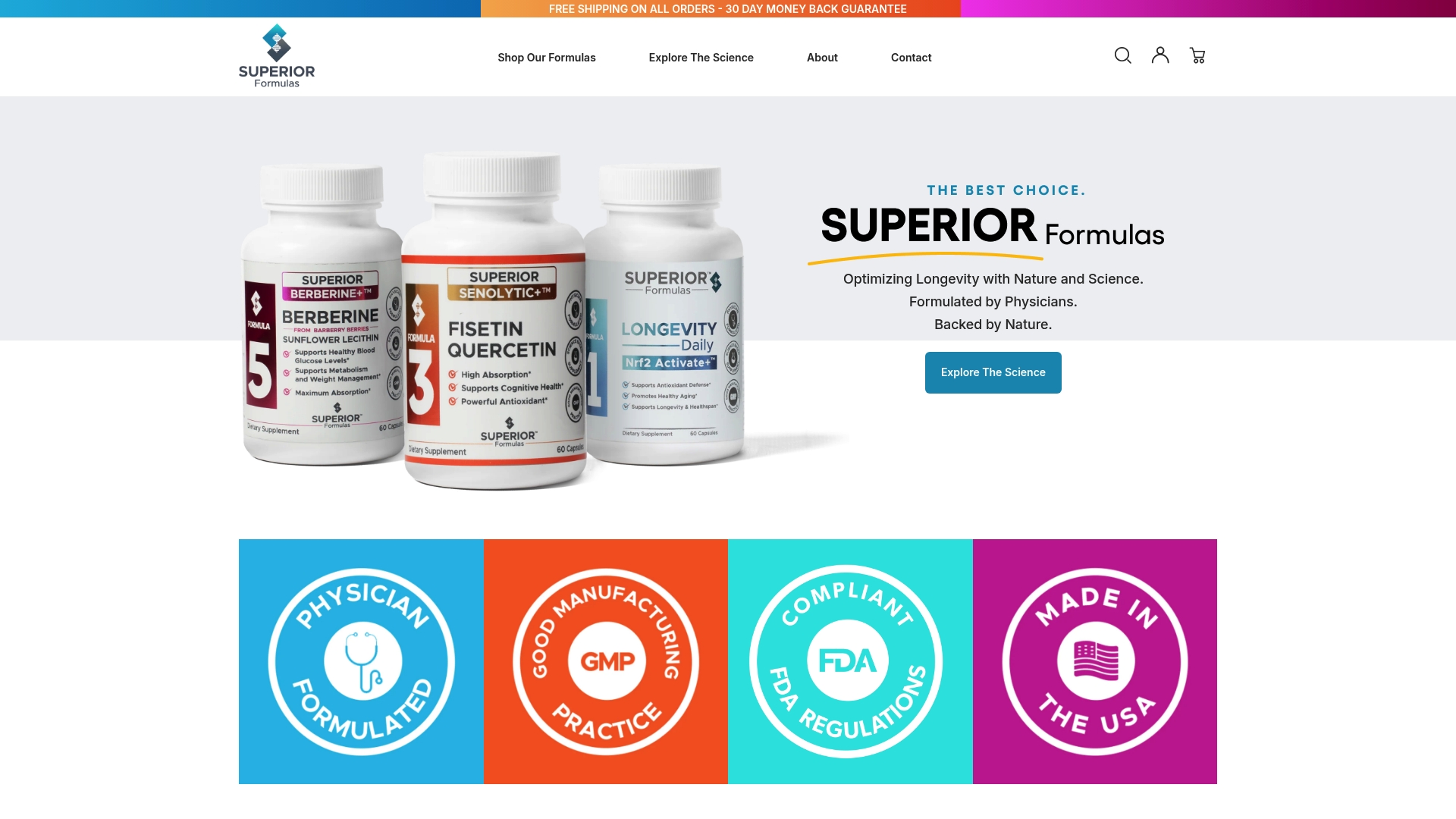
Every Superiorformulas product is manufactured in a GMP-certified facility and backed by third-party testing, with certificates of analysis available to verify potency and purity. The formulation process starts with the clinical evidence, not the marketing angle, which means dosing rationales are tied to specific studies rather than broad wellness promises. For readers who want to understand how to select supplements scientifically, the brand’s resources walk through the evaluation criteria that matter most: ingredient form, dose, sourcing, and quality verification.
Ready to review your options? Visit Superiorformulas to explore the current product lineup, request lab documentation, and find the formulation that fits your specific wellness goals.
Primary sources and further reading
The claims in this article draw from peer-reviewed trials, systematic reviews, and authoritative clinical guidance. Bringing these sources to a clinician visit gives you a concrete foundation for a personalized conversation.
- Oral treatment with L-lysine and L-arginine reduces anxiety (Smriga et al., 2007) — PubMed: The primary RCT supporting stress and anxiety reduction from combined supplementation; randomized, double-blind, placebo-controlled design.
- Comprehensive Safety Assessment of L-Lysine Supplementation — ScienceDirect: Systematic review of 71 clinical studies establishing the provisional NOAEL of 6.0 g/day; the authoritative source for lysine safety thresholds.
- L-Arginine — Mayo Clinic: Clinical guidance on arginine’s drug interactions, particularly with antihypertensives and PDE5 inhibitors; the primary reference for safety caveats.
- L-Arginine Benefits, Uses & Side Effects — Cleveland Clinic: Practical clinical overview of arginine’s semi-essential status, dietary sources, and supplemental dosing context.
- Lysine health benefits: Evidence and food sources — Medical News Today: Accessible summary of lysine’s antiviral role in HSV suppression and the competitive mechanism with arginine.
- Lysine uses, benefits & dosage — Drugs.com: Clinical dosing reference covering the range of lysine doses used in trials, from maintenance to outbreak-treatment levels.
- L-arginine ingredient profile — NutraSmarts: Ingredient-level summary of arginine’s mechanisms, bioavailability, and dosing research; useful for comparing product potencies.
- L-lysine ingredient profile — NutraSmarts: Ingredient-level summary of lysine’s clinical uses, antiviral context, and dosing guidance.
- Competitive absorption and staggered dosing — Biology Insights: Explains the shared cationic transporter mechanism and practical clinician approaches to mitigating absorption competition.


