


Astaxanthin’s antioxidant and anti-inflammatory effects are backed by real clinical evidence, particularly for skin hydration and elasticity, with modest but measurable improvements in cholesterol and inflammatory markers. Most trials use 4 to 12 mg per day. The skin data is the strongest part of the picture; systemic biomarker changes are real but smaller, and long-term outcome data remains limited.
TL;DR:
- Most clinical trials use 4 to 12 mg of astaxanthin daily, with skin benefits observed at 4 to 6 mg over 4 to 16 weeks.
- Skin hydration and elasticity show the strongest and most consistent improvements, while wrinkle reduction results are mixed.
- Systemic effects on cholesterol and inflammation markers are modest but statistically significant, mainly at doses around 12 mg per day.
- Astaxanthin activates Nrf2 and inhibits NF-κB pathways, boosting the body’s antioxidant defenses and reducing inflammation inside cell membranes.
- For optimal absorption, take astaxanthin with a fat-containing meal, and prefer natural algae-sourced, third-party tested products within the 4 to 12 mg dosing range.
Table of Contents
- What Does the Human Evidence Show for Astaxanthin?
- How Does Astaxanthin Help Skin Look and Feel Different?
- What Do Eye, Brain, and Exercise Studies Show?
- How Does Astaxanthin Affect Cholesterol and Inflammation Markers?
- What Is the Mechanism Behind Astaxanthin’s Antioxidant Effects?
- How Much Astaxanthin Should You Take and Is It Safe?
- Why Does Taking Astaxanthin With Fat Improve Absorption?
- Where Does Astaxanthin Come From and Why Supplement It?
- How Long Until Astaxanthin Benefits Show Up?
- Who Should Be Cautious About Taking Astaxanthin?
- Is Astaxanthin Worth Taking at 30 and Beyond?
- Where Superiorformulas Fits Into an Evidence-Based Astaxanthin Strategy
- Sources
What Does the Human Evidence Show for Astaxanthin?
The clinical research on astaxanthin is more mature than most supplement categories get credit for. A 2026 systematic review and meta-analysis found that astaxanthin supplementation reduced inflammatory and oxidative-stress markers including CRP, IL-6, and MDA, while also improving lipid profiles: higher HDL cholesterol alongside lower triglycerides and LDL cholesterol. That combination, hitting inflammation and lipids at the same time, is unusual for a single antioxidant compound.
A broader 2022 review in PMC synthesized clinical and preclinical evidence across skin, metabolic, and immune outcomes, tying the effects back to two molecular switches: Nrf2 activation and NF-κB inhibition. That mechanistic backbone explains why astaxanthin shows up across so many different outcome categories rather than just one.
Not every outcome carries equal weight, though. Here’s how the evidence sorts by strength:
- Strongest signal: Skin moisture and elasticity, consistently improved across multiple randomized trials.
- Moderate signal: Lipid markers (HDL, triglycerides, LDL) and inflammatory markers (CRP, IL-6), improved but by modest margins.
- Weaker or mixed signal: Wrinkle depth reduction, which several trials failed to replicate consistently.
- Preliminary signal: Cognitive and neuroprotective outcomes, based mostly on preclinical work.
The core statistic: The 2026 meta-analysis found astaxanthin supplementation significantly reduced CRP, IL-6, and MDA while raising HDL-C and lowering both triglycerides and LDL-C, a pattern rarely seen this consistently across pooled trial data for a single nutraceutical.
The caveats matter as much as the findings. Many of the trials feeding these meta-analyses are small, ranging from a few dozen to a couple hundred participants, and study designs vary in dose, duration, and the population studied (healthy adults versus those with existing metabolic risk factors). Heterogeneity like that means pooled results should be read as directional evidence, not settled fact. A supporting meta-analysis on skin and metabolic outcomes reinforces the same modest-but-real pattern seen in oxidative stress markers like MDA.
How Does Astaxanthin Help Skin Look and Feel Different?
Skin is where astaxanthin has the most consistent human trial data, and it’s worth understanding exactly what was measured versus what marketing copy tends to imply.
Trials evaluating skin outcomes typically used oral doses of 4 to 6 mg per day, run over periods of 4 to 16 weeks. A meta-analysis of these randomized trials on skin outcomes found statistically significant improvements in skin moisture and elasticity. Wrinkle depth was the outcome that did not hold up consistently across studies. Some trials reported improvement; others found no meaningful change. If a product claims astaxanthin will smooth out wrinkles, that claim is running ahead of what the pooled data actually supports.
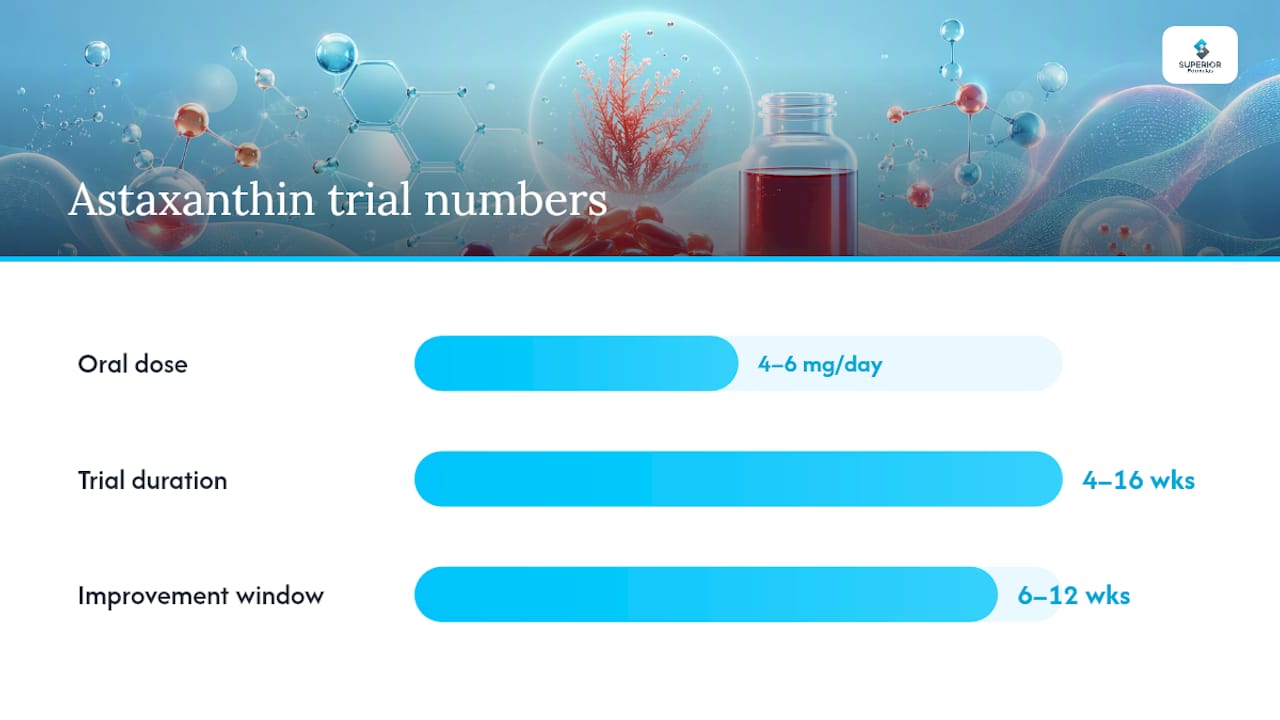
Separate clinical skin study summaries place the improvement window at roughly 6 to 12 weeks for hydration and elasticity gains to become measurable. That timeline tracks with how skin cell turnover works: you’re not going to see meaningful change in a week, and you shouldn’t expect to.
What the trials actually measured:
- Skin moisture content (via corneometry or similar instrumented testing).
- Skin elasticity (measured with tools that gauge how quickly skin returns to shape after light pressure).
- Wrinkle depth (measured via imaging, with inconsistent results across studies).
- Transepidermal water loss in a smaller subset of trials.
Here’s the practical distinction that matters for anyone shopping for a product: nearly all of the human skin data comes from oral astaxanthin, not topical formulations. Topical astaxanthin products exist and show some antioxidant activity in lab settings, but the moisture and elasticity improvements documented in clinical trials were achieved through supplementation, not skin application. If you’re chasing the specific outcomes the research supports, oral intake at a fat-containing meal is the route with actual trial backing behind it. Combining oral supplementation with a broader antioxidant support routine is reasonable, but astaxanthin alone shouldn’t be expected to replace sunscreen, retinoids, or other established skin interventions.
What Do Eye, Brain, and Exercise Studies Show?
Astaxanthin’s reputation extends beyond skin and lipids into vision, cognitive support, and exercise recovery, though the evidence quality varies sharply across these three categories.
Ocular outcomes have the most human data of the three. Trials examining visual fatigue, often in people who spend long hours on screens, used doses generally in the 6 mg per day range and reported reduced eye strain and improved accommodation (the eye’s ability to refocus between near and far objects). Retinal protection data leans more heavily on animal and cell-culture studies, with human trials still catching up.
Neuroprotective signals are the weakest link in the chain right now. Preclinical studies, meaning cell and animal models, show astaxanthin crossing biological barriers and reducing markers of oxidative damage in neural tissue. That’s a promising mechanism. It is not the same as proven cognitive benefit in humans, and readers should treat any claim about memory or brain aging benefits as preliminary until larger human trials catch up.
Exercise recovery sits in the middle. Several randomized trials found astaxanthin supplementation reduced markers of oxidative stress after exertion and modestly improved subjective recovery measures, as discussed in Pure Blue: Fueling Performance, Confidence & Real Wellness. Reduced muscle damage markers and less post-exercise soreness showed up in some trials, though not universally, and effect sizes tend to be small.
Quick summary of where each category stands:
- Eye strain: Reasonably solid human trial support at common doses around 6 mg/day.
- Retinal protection: Mostly preclinical, human confirmation still developing.
- Cognitive/neuroprotective: Early-stage, mechanism-driven, not yet proven in people.
- Exercise recovery: Modest but repeatable improvements in oxidative stress markers.
How Does Astaxanthin Affect Cholesterol and Inflammation Markers?
This is the category where astaxanthin’s dual antioxidant and anti-inflammatory identity shows up most clearly in numbers rather than subjective reports.
The 2026 meta-analysis found consistent movement across a cluster of biomarkers: CRP and IL-6 (inflammation), MDA (a marker of oxidative lipid damage), and the full lipid panel, HDL rising while triglycerides, total cholesterol, and LDL fell. These trials commonly used doses around 12 mg per day when targeting systemic biomarkers specifically, higher than the 4 to 6 mg range typically used in skin studies.
What moved and by how much (directionally):
- HDL cholesterol: increased across pooled trial data.
- Triglycerides: decreased.
- LDL and total cholesterol: decreased.
- CRP and IL-6: reduced, indicating lower systemic inflammation.
- MDA: reduced, indicating less oxidative damage to lipids.
Context that matters: These are real, statistically detectable shifts, but they are modest compared to what a statin does to LDL or what an anti-inflammatory medication does to CRP. Astaxanthin functions more as a supporting lever than a replacement for pharmaceutical-grade intervention in anyone with diagnosed cardiovascular or inflammatory disease.
That distinction is worth sitting with. A supplement that nudges triglycerides down by a modest percentage over 8 to 12 weeks is doing something real at the cellular level, tied back to the same Nrf2 and NF-κB pathways covered next. It is not a substitute for medical management of high cholesterol or active inflammatory conditions, and it shouldn’t be marketed or understood that way.
What Is the Mechanism Behind Astaxanthin’s Antioxidant Effects?
Astaxanthin works differently than most antioxidants you’ve heard of, and the difference comes down to chemistry, not just marketing language.
Nrf2 activation is the headline mechanism. Nrf2 is a protein that, once activated, switches on genes responsible for producing the body’s own antioxidant enzymes, including heme oxygenase-1 (HO-1) and NQO1. Rather than simply neutralizing free radicals on contact, astaxanthin nudges the body into producing more of its own defense enzymes. Research on Nrf2 pathway activation frames this as a protective mechanism against oxidative damage that outlasts the antioxidant molecule itself.
NF-κB inhibition is the anti-inflammatory half of the equation. NF-κB is a signaling protein that, when active, ramps up production of inflammatory cytokines like IL-6 and TNF-α. Astaxanthin appears to dampen this pathway, which lines up with the CRP and IL-6 reductions seen in the biomarker trials covered earlier.
Membrane-binding chemistry is the structural quirk that sets astaxanthin apart from water-soluble antioxidants like vitamin C. Its molecular shape allows it to span cell membranes, sitting within the lipid bilayer where it can neutralize reactive oxygen species right where much of the oxidative damage to cells actually occurs. A 2023 review on astaxanthin’s structure and bioavailability describes this membrane-spanning property as central to its distinctive antioxidant behavior compared to other carotenoids.
Three mechanisms, one coordinated effect:
- Nrf2 activation boosts the body’s internal antioxidant enzyme production.
- NF-κB inhibition reduces the inflammatory cytokines driving CRP and IL-6 elevation.
- Membrane integration allows direct action inside the lipid bilayer, not just in the watery parts of cells.
Pro Tip: If you want to understand why astaxanthin gets grouped with other Nrf2-targeting compounds rather than simple vitamin antioxidants, the mechanism is the reason, not the marketing.
For readers who want the deeper cellular context, how the antioxidant pathway works and reviews of Nrf2-targeted supplements more broadly both build on this same signaling framework.
How Much Astaxanthin Should You Take and Is It Safe?
Dosing isn’t one-size-fits-all with astaxanthin. What you’re targeting changes what the trial data actually supports.
- For skin outcomes: 4 to 6 mg per day, taken consistently, matches the doses used in trials showing improved moisture and elasticity.
- For eye strain or exercise recovery: 6 to 12 mg per day reflects the range most commonly used in trials targeting these outcomes.
- For systemic biomarkers (cholesterol, inflammation): Up to 12 mg per day is the dose most frequently used in trials showing lipid and CRP/IL-6 improvements, per dosing and safety guidance.
- Short-term supervised trials have tested higher doses, but these were run under clinical observation and aren’t a basis for unsupervised self-dosing.
The number that matters: A dedicated safety review found recommended doses vary widely across regulatory authorities, ranging from 2 to 24 mg depending on the jurisdiction and intended use, but concluded that natural astaxanthin is well tolerated at the doses commonly used in human trials.
Reported side effects at studied doses tend to be mild, occasional stomach discomfort or a harmless reddish tint to skin at higher intakes over extended periods, tied to the same pigment that gives salmon its color. Long-term safety data beyond a year or two of continuous use is still limited, which is a fair reason for caution even though short and medium-term trials look clean.
That same safety review draws an important distinction: natural astaxanthin, sourced from Haematococcus pluvialis microalgae, and synthetic astaxanthin should be evaluated separately, since their safety profiles and regulatory treatment differ. If you’re pregnant, breastfeeding, or taking blood thinners or immunomodulating medications, talk to your doctor before starting astaxanthin. Human trial data in these groups is either absent or too thin to draw firm conclusions.
Why Does Taking Astaxanthin With Fat Improve Absorption?
Astaxanthin is fat-soluble, not water-soluble, and that single chemical fact drives most of the practical advice around how to take it.
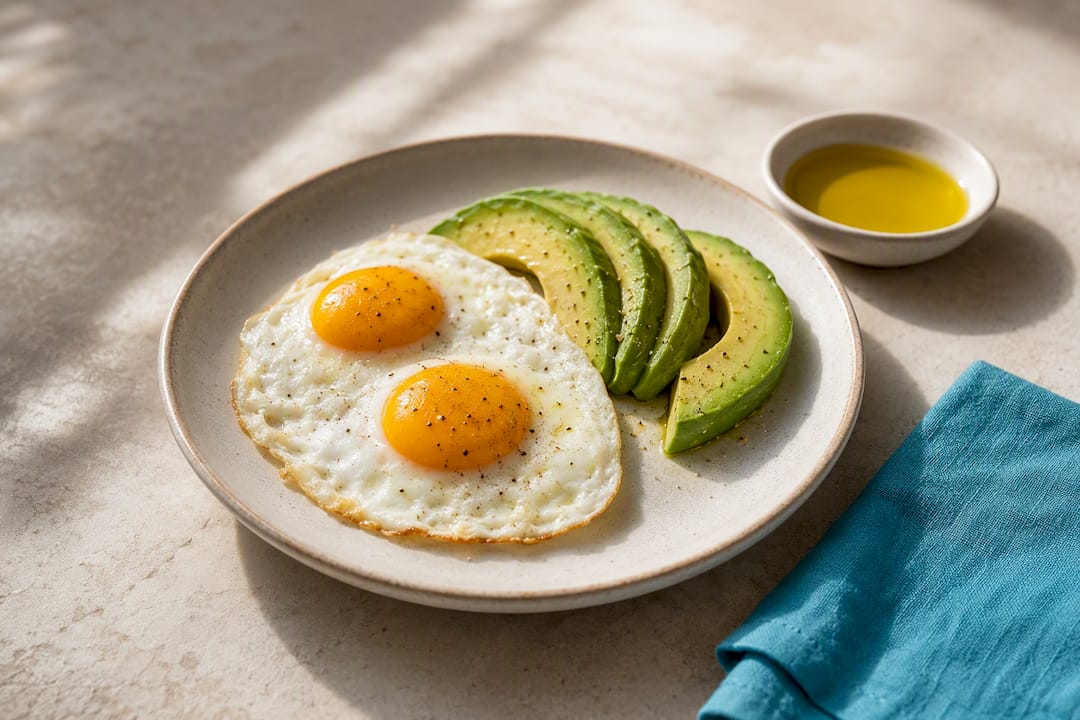
Swallow an astaxanthin capsule with a glass of water on an empty stomach, and you’ll absorb a fraction of what the same dose would deliver alongside a meal containing fat. This isn’t a minor tweak. It’s the difference between a supplement doing meaningful work and one that mostly passes through unused. Taking astaxanthin with eggs, avocado, olive oil, or any meal with a reasonable fat content noticeably improves how much actually reaches your bloodstream.
Formulation matters too. Premium supplements increasingly rely on algal oil carriers, phospholipid complexes, or microencapsulation to boost absorption without depending entirely on what you happen to eat alongside the capsule. These formulation strategies exist specifically to reduce the guesswork of meal timing.
What to check before buying:
- Source: natural astaxanthin from Haematococcus pluvialis algae, the form used in nearly all the human trials referenced in the research above.
- Carrier: algal oil, phospholipid, or emulsified formats generally outperform plain powder-in-capsule formats for absorption.
- Third-party testing: independent verification confirms both potency and purity, since astaxanthin content can vary meaningfully between brands claiming the same milligram dose.
Pro Tip: Take your astaxanthin capsule with the largest fat-containing meal of your day rather than splitting attention across multiple smaller meals. Consistency in timing tends to matter more than the specific meal you choose.
Where Does Astaxanthin Come From and Why Supplement It?
Haematococcus pluvialis microalgae is the primary natural source of astaxanthin and the species behind nearly every clinical trial referenced throughout this article. When these algae face environmental stress, drought, high salinity, intense light, they produce astaxanthin as a protective pigment, which is also why the compound carries such potent antioxidant chemistry in the first place.
Wild salmon, shrimp, krill, and other seafood contain astaxanthin too, since it accumulates up the food chain from algae. The catch: food-based quantities are far lower than research doses. You’d need to eat several servings of wild salmon daily, consistently, to approach the 4 to 12 mg range used in clinical trials, which is neither practical nor advisable given mercury and calorie considerations.
That gap between food-level intake and trial-level dosing is the entire rationale for supplementation. It’s not that astaxanthin from food doesn’t count; it’s that reaching research-backed amounts through diet alone isn’t realistic for most people.
Label signals worth checking:
- Milligram dose per serving, stated clearly and matched to your goal (skin versus systemic).
- Source species named specifically (Haematococcus pluvialis, ideally).
- Third-party testing certification or batch verification.
- Manufacturing standard (GMP certification is a baseline worth expecting).
How Long Until Astaxanthin Benefits Show Up?
Patience matters more than most supplement marketing suggests. Skin-related improvements in moisture and elasticity generally take 4 to 12 weeks to become measurable, based on the trial durations reviewed earlier. Systemic biomarkers like CRP, IL-6, and lipid panel changes tend to shift within a similar window, though individual variation is real.
Consistency beats intensity here. Skipping doses, switching formulations frequently, or under-dosing relative to your specific goal (remember, skin and systemic biomarkers use different dose ranges) will blunt results regardless of how good the underlying product is. An 8 to 12 week trial period, sticking with one consistent dose and formulation, is a reasonable framework for judging whether astaxanthin is doing anything for you personally.
If you’ve supplemented consistently for 12 weeks with no noticeable change and no bloodwork improvement, it’s reasonable to stop and reassess rather than push further on faith. Likewise, any adverse reaction, unusual digestive upset, skin changes beyond the expected mild pigmentation shift, or anything else out of the ordinary, warrants stopping and checking in with a healthcare provider rather than waiting it out.
Who Should Be Cautious About Taking Astaxanthin?
Astaxanthin’s safety profile at studied doses looks favorable overall, but a few groups and situations deserve specific caution rather than a blanket “it’s natural, so it’s fine” assumption.
People on anticoagulants or antihypertensive medications should talk to a doctor before adding astaxanthin. While direct interaction data is limited, astaxanthin’s effects on lipid and inflammatory markers mean it’s operating in the same physiological territory as several cardiovascular medications, and stacking effects unknowingly is not a smart bet.
Pregnant and breastfeeding individuals have essentially no dedicated human trial data covering astaxanthin’s safety in these situations. The responsible position, and the one most safety reviews take, is to avoid supplementation or consult a physician first rather than assume safety by extension from general adult data.
Anyone considering a product without clear source labeling should be cautious for a different reason entirely: quality control. The safety review specifically flags that natural and synthetic astaxanthin need separate safety evaluation, yet plenty of labels don’t specify which form they contain.
Red flags to watch for:
- No stated source species or vague “astaxanthin extract” language.
- No mention of third-party testing or certificate of analysis availability.
- Dosing far outside the 4 to 12 mg range with no explanation of the intended use case.
Is Astaxanthin Worth Taking at 30 and Beyond?
The evidence here earns a measured “yes, with realistic expectations.” Skin hydration and elasticity improvements hold up across multiple trials at 4 to 6 mg per day, and that’s genuinely useful for anyone watching for early signs of skin aging in their 30s and 40s. The cardiometabolic and inflammatory biomarker data is real but modest, worth having as one piece of a broader approach to long-term antioxidant support, not a standalone fix for cholesterol or inflammation.
Where I’d push back on the enthusiasm: cognitive and neuroprotective claims are running well ahead of the human data, and wrinkle depth reduction, despite being astaxanthin’s most-hyped cosmetic promise, is the one skin outcome that hasn’t replicated consistently. Readers deserve that nuance instead of a blanket “antioxidant superfood” pitch.
What actually works: consistent oral dosing, taken with a fat-containing meal, from a natural source, given 8 to 12 weeks before judging results. That’s a defensible, evidence-aligned approach, and it’s a lower bar than most supplement categories can honestly claim.
— cristopher
Where Superiorformulas Fits Into an Evidence-Based Astaxanthin Strategy
If you’ve read this far, you already know what separates a defensible astaxanthin choice from a marketing-driven one: natural sourcing from Haematococcus pluvialis, a milligram dose that matches your actual goal, and verification that what’s on the label matches what’s in the capsule.
The formulations rest on standards including physician involvement, manufacturing in GMP-certified facilities, and third-party testing to confirm purity and potency batch to batch. That matters more with astaxanthin than with most supplements, given how much the natural-versus-synthetic distinction affects both absorption and safety profile. Before you buy any antioxidant supplement, run the label past this quick checklist: stated milligram dose, named source species, and visible testing verification. If a product skips any of the three, that’s a reason to keep looking. For more information on formulation and ingredient sourcing approaches, visit Explore the Science and consider whether the antioxidant support in your current routine aligns with these standards.
Sources
- Inflammopharmacology review / meta-analysis (Springer)
- The role of astaxanthin as a nutraceutical (2022)
- Dosing and safety context (PubMed entry)
- Astaxanthin safety review (Wiley)


