


Cellular renewal is defined as the body’s continuous process of replacing lost or damaged cells through division, differentiation, and repair to preserve tissue function and overall health. In scientific literature, this process is also called cell turnover or the cellular regeneration process, and it operates across every organ system in your body. After age 30, this process slows measurably, and that slowdown drives much of what we recognize as aging. Understanding how cellular renewal works gives you a real biological framework for the choices you make about sleep, nutrition, exercise, and supplementation.
What is cellular renewal and how does it work biologically?
Cellular renewal replaces lost or damaged cells through three coordinated mechanisms: cell division, differentiation, and repair. The process is not uniform across the body. Scientists classify cells into three categories based on their renewal capacity.
| Cell Type | Examples | Renewal Rate | Primary Mechanism |
|---|---|---|---|
| Labile | Skin cells, gut lining, blood cells | Days to weeks | Continuous stem cell division |
| Stable | Hepatocytes (liver), kidney cells | Weeks to months | Triggered by injury or demand |
| Permanent | Neurons, cardiac muscle cells | Minimal to none | DNA repair, protein maintenance |
Labile cells, like those lining your gut, replace themselves every few days. Stable cells, like hepatocytes in the liver, regenerate on demand. Permanent cells, including most neurons, rely almost entirely on maintenance rather than replacement. This distinction matters because it explains why brain health and heart health require a different renewal strategy than skin or gut health.
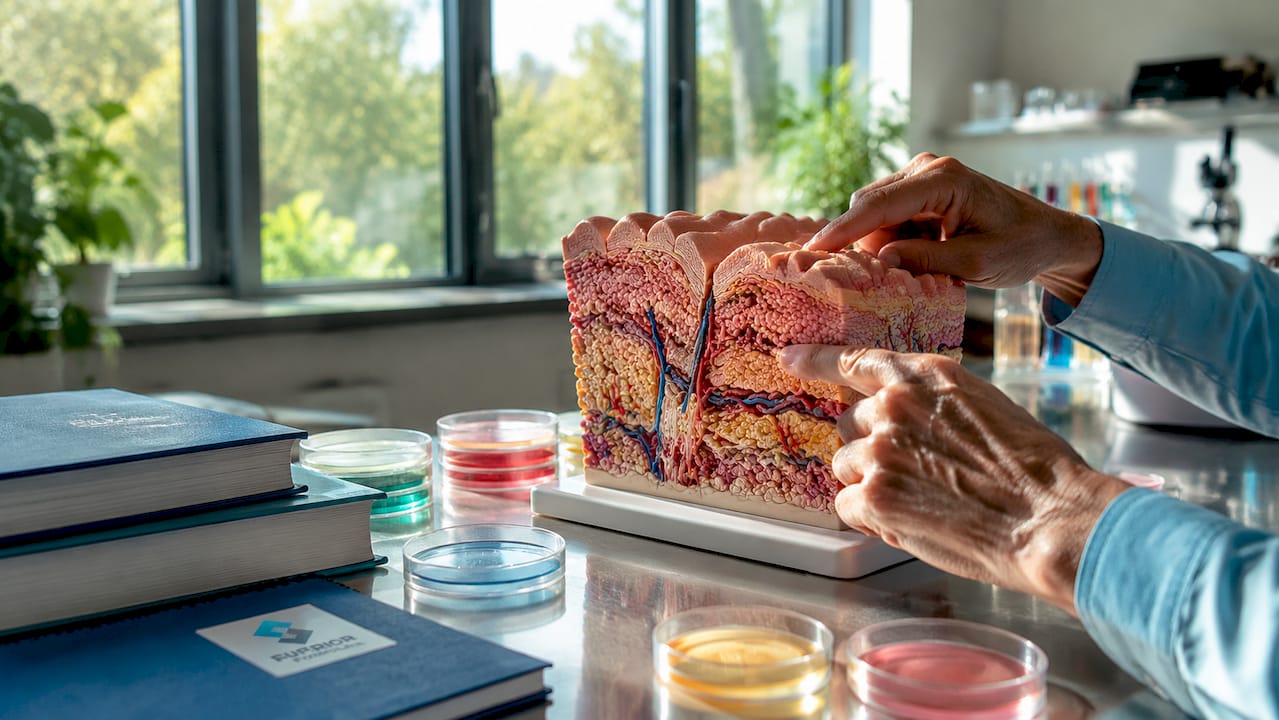
Stem and progenitor cells drive the renewal of labile and stable tissues. They self-renew and differentiate into specialized cell types as needed. With age, stem cell function declines, signaling pathways weaken, and the overall pace of turnover slows.
Beyond cell division, four integrated quality-control systems keep renewal running efficiently. DNA repair, autophagy, protein quality control, and mitochondrial maintenance work together to clear damaged components before they accumulate. Autophagy, in particular, acts as the body’s internal recycling system, breaking down dysfunctional proteins and organelles so their raw materials can be reused. When these systems fall behind, damaged cells accumulate and tissue function declines.
Pro Tip: Think of autophagy as your body’s overnight cleaning crew. It runs most efficiently during sleep and fasting windows, which is why both habits directly support cellular renewal.
Why cellular renewal matters for aging and long-term wellness
Aging reflects an imbalance between cellular damage and the body’s capacity to repair it. This is not a cosmetic concern. When renewal slows, energy production drops, inflammation rises, and tissue integrity weakens across multiple organ systems simultaneously.
“Cellular renewal is foundational for long-term health, not just an anti-aging trend. Reducing environmental stressors can recover capacity that many people assume is permanently lost.” — Dr. Fred Bloem, longevity physician
The common misconception is that cellular renewal is primarily a skin care concept. Dermatology brands have popularized the term, but the biology runs far deeper. Efficient renewal in the gut, liver, immune system, and cardiovascular tissue determines your resilience to illness, your recovery speed after exertion, and your metabolic stability over decades.
Supported cellular renewal delivers measurable benefits across multiple dimensions of health:
- Energy production: Healthy mitochondria generate ATP more efficiently, reducing fatigue.
- Inflammation control: Timely clearance of damaged cells prevents the chronic low-grade inflammation linked to metabolic disease.
- Tissue integrity: Consistent turnover in labile tissues maintains barrier function in the gut and skin.
- Immune resilience: Fresh immune cells respond more accurately to threats and clear infections faster.
- Recovery speed: Muscle and connective tissue repair accelerates when stem cell signaling is intact.
Cellular renewal includes repair, recycling, and immune clearance, not just the production of new cells. Quality maintenance through integrated biological systems matters more than the raw speed of cell proliferation.
How lifestyle factors influence and support cellular renewal
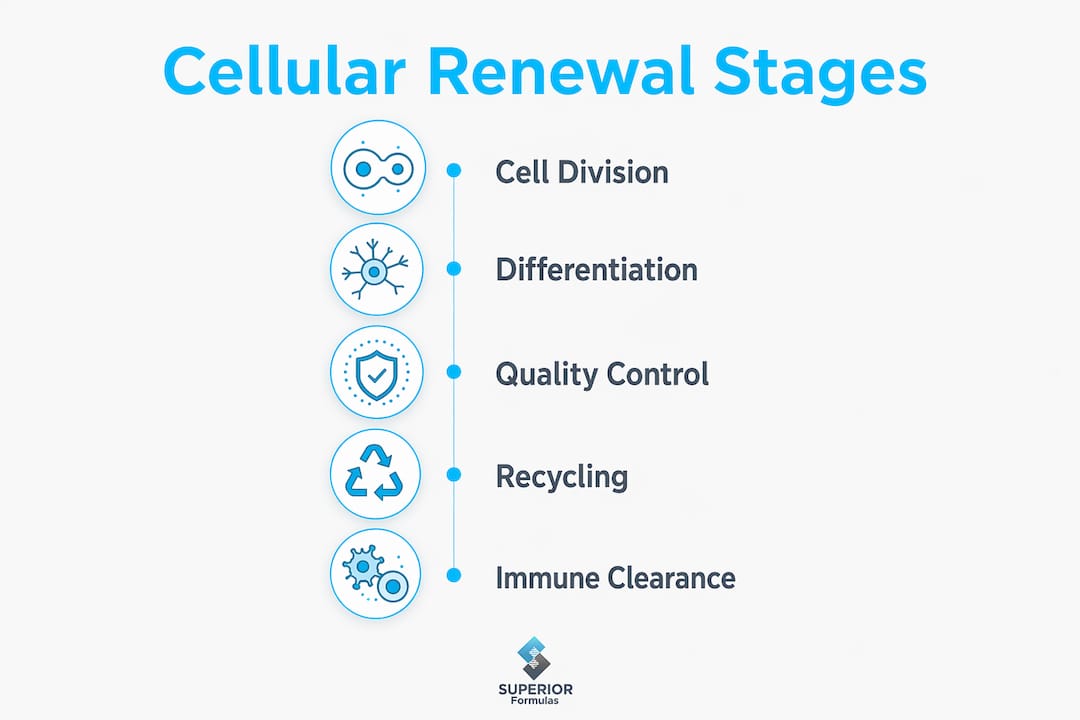
Lifestyle choices are the most direct levers you have over your cellular renewal rate. Three factors carry the most scientific weight: sleep quality, eating patterns, and exercise intensity.
Sleep and circadian alignment
Poor sleep and frequent snacking suppress autophagy and repair signaling. The body’s renewal cycle follows a day/night clock. Morning light triggers stem cell differentiation, while darkness promotes stem cell resetting and reprogramming. Disrupting this rhythm with late-night light exposure, irregular sleep schedules, or shift work directly blunts renewal capacity.
Eating patterns and metabolic windows
Intermittent fasting creates a metabolic window that activates autophagy. When you stop eating for 12–16 hours, insulin drops, cellular energy sensors like AMPK activate, and the body shifts resources toward repair rather than growth. Renewal prioritizes survival under energy scarcity by downregulating DNA repair when metabolic stress is chronic. The key distinction: a controlled, time-limited fast activates repair. Chronic caloric deprivation or metabolic stress from poor diet quality does the opposite.
Exercise intensity and recovery balance
Moderate exercise stimulates mitochondrial biogenesis and stem cell activation. Overtraining without adequate recovery does the reverse. Excessive fasting or intense exercise without recovery can disrupt circadian rhythms and increase systemic inflammation, pushing cells into defensive states that block renewal rather than promote it.
Here is a practical framework for adults over 30 who want to support the cellular regeneration process without overcorrecting:
- Align sleep with the sun. Target 7–9 hours with a consistent bedtime. Dim screens 90 minutes before sleep to protect melatonin production and stem cell resetting.
- Use a 12–16 hour eating window. A nightly fast of this length activates autophagy without the metabolic stress of prolonged fasting protocols.
- Exercise at moderate intensity four to five days per week. Zone 2 cardio and resistance training stimulate renewal signals. Build in at least two full recovery days.
- Reduce chronic inflammatory inputs. Processed seed oils, excess alcohol, and high-glycemic foods create metabolic noise that forces the body to prioritize damage control over renewal.
- Support the rebuild phase with nutrient density. After fasting or exercise, prioritize protein, polyphenols, and micronutrients to give renewal systems the raw materials they need.
Pro Tip: The reset and rebuild rhythm is the key to effective renewal. Reset means autophagy and repair during fasting or sleep. Rebuild means nutrient-dense eating after. Skipping either phase reduces the benefit of both.
You can explore a structured approach to these habits in the cellular health checklist from Superiorformulas, which maps these strategies to specific daily habits.
Natural renewal vs. intervention approaches: what actually works?
Not all cellular renewal strategies carry equal evidence or equal risk. The table below compares natural biological renewal with common intervention approaches.
| Approach | Mechanism | Benefits | Risks |
|---|---|---|---|
| Circadian-aligned sleep | Stem cell resetting, autophagy | Free, foundational, no side effects | Requires consistency; disrupted by modern schedules |
| Intermittent fasting (12–16 hrs) | AMPK activation, autophagy | Clinically studied, accessible | Can backfire if prolonged or poorly timed |
| Moderate exercise | Mitochondrial biogenesis | Broad health benefits | Overtraining blunts renewal |
| Targeted nutraceuticals (polyphenols, NAD+ precursors) | Nrf2 activation, sirtuin support | Adjunct benefit when basics are in place | Ineffective without lifestyle foundation |
| LED phototherapy | Mitochondrial stimulation | Emerging evidence | Cost, access, limited long-term data |
Higher intensity interventions can impair renewal if natural biological cues are ignored. This is the central error most health-conscious adults over 30 make. They layer supplements and fasting protocols on top of poor sleep and chronic stress, then wonder why results are modest.
The body’s renewal is regulated by delicate feedback loops. More intervention is not always better. Removing roadblocks, specifically poor sleep, chronic inflammation, and metabolic dysregulation, produces more renewal benefit than adding any single supplement or protocol.
Nutraceuticals like polyphenols, NAD+ precursors, and adaptogens do carry genuine evidence for supporting renewal pathways, particularly Nrf2 activation and mitochondrial function. Their role is as an adjunct to a solid lifestyle foundation, not a replacement for one. If you are curious about the evidence behind specific compounds, the aging support nutraceuticals guide from Superiorformulas covers the clinical research in accessible detail.
Pro Tip: Before adding any supplement protocol, audit your sleep and eating window first. If those two variables are inconsistent, no nutraceutical will compensate for the missing renewal signal.
Key takeaways
Cellular renewal is the body’s primary defense against aging, and its efficiency depends on consistent sleep, controlled eating windows, and moderate exercise before any supplement strategy.
| Point | Details |
|---|---|
| Renewal slows after 30 | Stem cell function and repair signaling decline with age, accelerating tissue damage. |
| Three cell categories | Labile, stable, and permanent cells require different renewal strategies and timelines. |
| Lifestyle drives renewal | Sleep alignment, intermittent fasting, and moderate exercise are the most evidence-backed inputs. |
| Balance over intensity | Excessive fasting or overtraining disrupts circadian rhythms and blocks renewal feedback loops. |
| Supplements are adjuncts | Polyphenols and NAD+ precursors support renewal pathways only when lifestyle basics are in place. |
Why I think most people approach cellular renewal backwards
I have spent years reviewing the research on cellular aging, and the pattern I see most often among health-conscious adults over 30 is the same one. They discover autophagy, buy a fasting protocol, add a stack of supplements, and push hard for six weeks. Then they plateau and conclude that cellular renewal is overhyped.
The biology tells a different story. Renewal is not a sprint. It is a rhythm your body has been running since birth, and your job is to stop disrupting it rather than force it harder. Circadian alignment is the single most underrated lever in this space. I have seen people transform their energy and recovery simply by fixing their sleep schedule and eating window before touching a single supplement.
The other misconception I want to address directly: cellular renewal is not primarily about looking younger. It is about maintaining the functional capacity of your organs, immune system, and metabolism across decades. That framing changes how you prioritize. You stop chasing skin-deep results and start building the internal conditions where your biology can do what it was designed to do.
Start with the basics. Protect your sleep. Create a consistent eating window. Move your body at a sustainable intensity. Then, once those inputs are stable, consider whether targeted nutraceuticals from a physician-formulated source like Superiorformulas make sense for your specific goals. That sequence works. Reversing it rarely does.
— cristopher
How Superiorformulas supports your cellular renewal goals
Superiorformulas builds its formulations around the same biological principles covered in this article. Every product in the cellular health line is physician-formulated and manufactured in GMP-certified facilities, with third-party testing for purity and consistency.
The focus is on compounds with genuine clinical backing: polyphenols for Nrf2 activation, NAD+ precursors for mitochondrial support, and adaptogens that reduce the chronic inflammatory load that blocks renewal. These are not replacements for sleep and lifestyle. They are precision tools for adults who have already built the foundation and want to go further. Visit Superiorformulas to explore the full product line and find formulations matched to your cellular health goals.
FAQ
What is cellular renewal in simple terms?
Cellular renewal is the body’s ongoing process of replacing and repairing damaged or worn-out cells to maintain tissue function. It involves cell division, autophagy, DNA repair, and protein quality control working together.
How does cellular renewal slow with age?
Stem cell function declines with age, and repair signaling weakens, leading to slower cell turnover and accumulation of damaged cells. This slowdown is a primary driver of inflammation and tissue decline after age 30.
What lifestyle habits best support cellular renewal?
Consistent sleep aligned with circadian rhythms, a 12–16 hour nightly eating window, and moderate exercise four to five days per week are the most evidence-backed habits for supporting the cellular regeneration process.
Can supplements enhance cellular renewal?
Compounds like polyphenols, NAD+ precursors, and adaptogens support renewal pathways such as Nrf2 activation and mitochondrial function. They work most effectively as an adjunct to solid sleep and nutrition habits, not as a substitute.
Is cellular renewal the same as cellular regeneration?
Cellular renewal is the broader term covering replacement, repair, and recycling of cells across all tissue types. Cellular regeneration typically refers to the regrowth of specific tissues after injury and is a subset of the full renewal process.


