


Polyphenols for longevity are plant-derived bioactive compounds that extend healthspan by activating the body’s own cellular repair mechanisms, not by acting as simple antioxidants. Research published in 2026 confirms that anthocyanins and flavonoids support telomere length, mitochondrial quality control, and genomic stability. High polyphenol intake above 650 mg per day is associated with a 30% reduction in overall mortality. That number reflects decades of cumulative cellular protection, not a short-term effect. The gut microbiome plays a central role in converting these compounds into bioactive metabolites, which means your microbial health determines how much benefit you actually receive.
1. polyphenols for longevity: why they work at the cellular level
Polyphenols are not direct antioxidants in the classical sense. Polyphenols function as hormetic signaling molecules that activate endogenous pathways including AMPK, SIRT1, Nrf2, and mTOR modulation. This distinction matters because it explains why eating a handful of blueberries produces effects that a vitamin C capsule cannot replicate.
The hormetic model means a low-dose stress signal from polyphenols triggers the cell to upregulate its own repair systems. Think of it as training your cells the same way exercise trains your muscles. The response is adaptive, durable, and systemic.

Polyphenols also influence telomere preservation, mitophagy, and the suppression of inflammaging, which is the chronic low-grade inflammation that accelerates biological aging. These are not isolated effects. They operate as an interconnected network of cellular defense.
2. anthocyanins: the telomere protectors in berries
Anthocyanins are the pigments that give blueberries, blackberries, and cherries their deep color. They are among the most studied polyphenols for anti-aging outcomes. The Nurses’ Health Study 2026 found that women in the highest quintile of anthocyanin intake had a telomere length of 0.46 ± 0.11 compared to 0.02 ± 0.08 in the lowest quintile (P-trend = 0.001). Longer telomeres directly correlate with reduced biological age and lower disease risk.
Best food sources: blueberries, blackcurrants, elderberries, red cabbage, and purple sweet potato.
Anthocyanins also reduce NF-κB activity, which lowers systemic inflammation at the gene expression level. This makes them relevant not just for cellular aging but for cardiovascular and metabolic health as well.
3. resveratrol: the sirt1 activator in red grapes
Resveratrol activates SIRT1, a longevity-associated protein that regulates DNA repair, mitochondrial biogenesis, and metabolic efficiency. It also modulates AMPK, the cellular energy sensor that promotes autophagy and suppresses mTOR, a key driver of cellular aging when chronically overactivated.
Best food sources: red grapes, red wine (in moderation), peanuts, and Japanese knotweed root.
Resveratrol’s bioavailability from food is modest, which is why researchers continue studying concentrated forms. However, whole dietary patterns in Mediterranean and Okinawan populations suggest that synergistic compounds in whole foods outperform isolated resveratrol supplements in long-term outcomes.
4. EGCG: green tea’s mitochondrial guardian
Epigallocatechin gallate, or EGCG, is the primary catechin in green tea and one of the most potent polyphenols for mitochondrial quality control. It activates Nrf2, the master regulator of the cellular antioxidant response, and promotes mitophagy, the selective removal of damaged mitochondria.
Best food sources: matcha, sencha green tea, white tea, and some dark chocolates.
Damaged mitochondria are a primary driver of cellular senescence and age-related decline. By clearing them efficiently, EGCG helps maintain the energy output and signaling integrity of aging cells. Drinking two to three cups of high-quality green tea daily provides a meaningful dose without requiring supplementation.
5. quercetin: the nrf2 and nf-κb dual regulator
Quercetin is one of the most abundant flavonoids in the human diet and operates through two complementary pathways. It activates Nrf2 to upregulate cellular defense genes while simultaneously suppressing NF-κB to reduce inflammatory signaling. This dual action makes it particularly relevant for polyphenols and disease prevention.
Best food sources: capers, red onions, kale, apples, and broccoli.
Quercetin also shows senolytic properties in preclinical studies, meaning it may help clear senescent cells that accumulate with age and drive tissue dysfunction. Combining quercetin-rich foods with a source of healthy fat improves absorption, since quercetin is fat-soluble.
6. curcumin: the inflammation and mitochondrial target
Curcumin, the active compound in turmeric, targets both mitochondrial function and systemic inflammation through NF-κB suppression and Nrf2 activation. It also inhibits mTOR, which supports autophagy and cellular renewal. The challenge with curcumin is bioavailability. Standard curcumin is poorly absorbed without a bioavailability enhancer.
Best food sources: turmeric root, curry blends, and golden milk preparations.
Pairing turmeric with black pepper, which contains piperine, increases curcumin absorption by up to 20-fold according to pharmacokinetic studies. This is one of the clearest examples of food synergy improving polyphenol efficacy in practice.
Pro Tip: Combine turmeric with black pepper and a healthy fat like olive oil or coconut milk to maximize curcumin absorption at every meal.
7. urolithin a: the gut-derived mitophagy activator
Urolithin A is not consumed directly from food. It is produced when gut bacteria metabolize ellagic acid from pomegranates, walnuts, and raspberries. Gut microbiota transform polyphenols into bioactive metabolites like urolithin A, which are largely responsible for the mitochondrial benefits attributed to these foods.
Best food sources: pomegranates, walnuts, raspberries, and strawberries.
Urolithin A is the most clinically validated polyphenol metabolite for mitophagy induction in humans. Clinical trials show it improves muscle endurance and mitochondrial gene expression in older adults. The catch is that only about 40% of people carry the gut bacteria needed to produce it efficiently, which is why fiber intake and microbiome diversity matter so much.
8. ferulic and hippuric acids: blueberry metabolites that protect telomeres
Ferulic acid, isoferulic acid, vanillic acid, and hippuric acid are polyphenol metabolites derived from blueberry consumption. These metabolites attenuate telomere shortening under metabolic stress conditions, according to 2026 in vitro research. This finding adds a second layer of telomere protection beyond the direct anthocyanin effects described above.
Best food sources: blueberries, whole grains, and oats (for ferulic acid specifically).
The fact that these are metabolites, not the polyphenols themselves, reinforces the central role of gut health in polyphenol efficacy. A compromised microbiome produces fewer of these protective compounds even when dietary intake is adequate.
9. how polyphenols interact with the hallmarks of aging
Polyphenols affect mitochondrial quality control, autophagy, and inflammation, targeting multiple interconnected molecular hallmarks of aging simultaneously. This multi-target action is what separates them from single-pathway drugs.
| Mechanism | Direct Antioxidants | Polyphenol Signaling |
|---|---|---|
| Primary action | Neutralize free radicals | Activate AMPK, SIRT1, Nrf2 |
| Duration of effect | Short-term, dose-dependent | Sustained via gene expression |
| Cellular repair | Minimal | Promotes autophagy and mitophagy |
| Inflammation | Indirect reduction | Direct NF-κB suppression |
| Telomere support | Limited evidence | Documented in clinical studies |
The table above clarifies why polyphenols outperform standard antioxidant supplements for longevity outcomes. They do not just neutralize damage. They instruct cells to repair themselves more efficiently.
Pro Tip: Rotate your polyphenol sources weekly rather than eating the same berries daily. Different compounds activate different pathways, and diversity compounds the benefit.
10. best dietary patterns for polyphenol-driven longevity
Health authorities recommend 30 distinct plant-based foods per week to achieve the polyphenol diversity needed for microbiome and cardiovascular benefits. Thirty plants sounds like a lot until you count herbs, spices, nuts, seeds, legumes, and teas alongside fruits and vegetables.
Centenarian populations in Mediterranean, Nordic, and Okinawan regions consistently consume plant-heavy diets rich in complex phytochemicals. These populations do not take isolated polyphenol supplements. They eat diverse whole foods across decades.
Practical benefits of diverse polyphenol-rich dietary patterns include:
- Reduced systemic inflammation and lower CRP levels
- Improved gut microbiota diversity and short-chain fatty acid production
- Better cardiovascular risk profiles including lower LDL oxidation
- Enhanced insulin sensitivity and metabolic flexibility
- Stronger DNA repair capacity and reduced oxidative DNA damage
- Longer average telomere length across population studies
Fiber is the critical co-factor here. Without adequate dietary fiber, the gut bacteria that convert polyphenols into bioactive metabolites cannot thrive. Aim for 30 grams of fiber daily alongside your polyphenol-rich foods.
Key takeaways
Polyphenols extend healthspan by activating cellular repair pathways through AMPK, SIRT1, and Nrf2 signaling, not by acting as direct antioxidants, and their full benefit depends on a healthy, diverse gut microbiome.
| Point | Details |
|---|---|
| Polyphenols as signaling agents | They activate AMPK, SIRT1, and Nrf2 rather than simply neutralizing free radicals. |
| Anthocyanins and telomere length | Highest anthocyanin intake correlates with significantly longer telomeres in clinical data. |
| Gut microbiome dependency | Urolithin A and other key metabolites require healthy gut bacteria to form from food. |
| Dietary diversity over supplements | Consuming 30 plant foods weekly delivers broader longevity benefits than isolated compounds. |
| Mortality risk reduction | Polyphenol intake above 650 mg per day is linked to a 30% lower overall mortality risk. |
The honest case for patience and whole foods
By cristopher
After reviewing the clinical literature on polyphenols and aging, the most consistent finding is not which specific compound wins. It is that diversity and consistency beat any single ingredient every time.
The centenarian data from Okinawa, Sardinia, and Ikaria does not point to resveratrol capsules or EGCG extracts. It points to decades of varied plant consumption, moderate caloric intake, regular movement, and low chronic stress. Polyphenols are a critical part of that picture, but they are not the whole picture.
What I find genuinely underappreciated is the microbiome dependency. You can eat pomegranates every day and produce almost no urolithin A if your gut bacteria are depleted from years of low-fiber eating or antibiotic use. This means two people following identical diets can experience dramatically different longevity outcomes from the same polyphenol-rich foods. Personalized nutrition, including genomic and microbiome profiling, is where this field is heading.
The gap in the evidence is randomized controlled trials with hard longevity endpoints. Most of what we have is observational. That does not make the data weak. It makes it directional. The direction is clear: eat more plants, eat more variety, protect your gut, and give the process years to compound.
If you are looking for a place to start, the phytonutrients and aging overview from Superiorformulas is a solid next read for adults over 35 who want the science without the noise.
— cristopher
How Superiorformulas supports your longevity goals
Superiorformulas develops physician-formulated supplements designed to work alongside a polyphenol-rich diet, not replace it. The brand’s formulations target cellular health pathways including Nrf2 activation, mitochondrial resilience, and healthy aging at the molecular level.
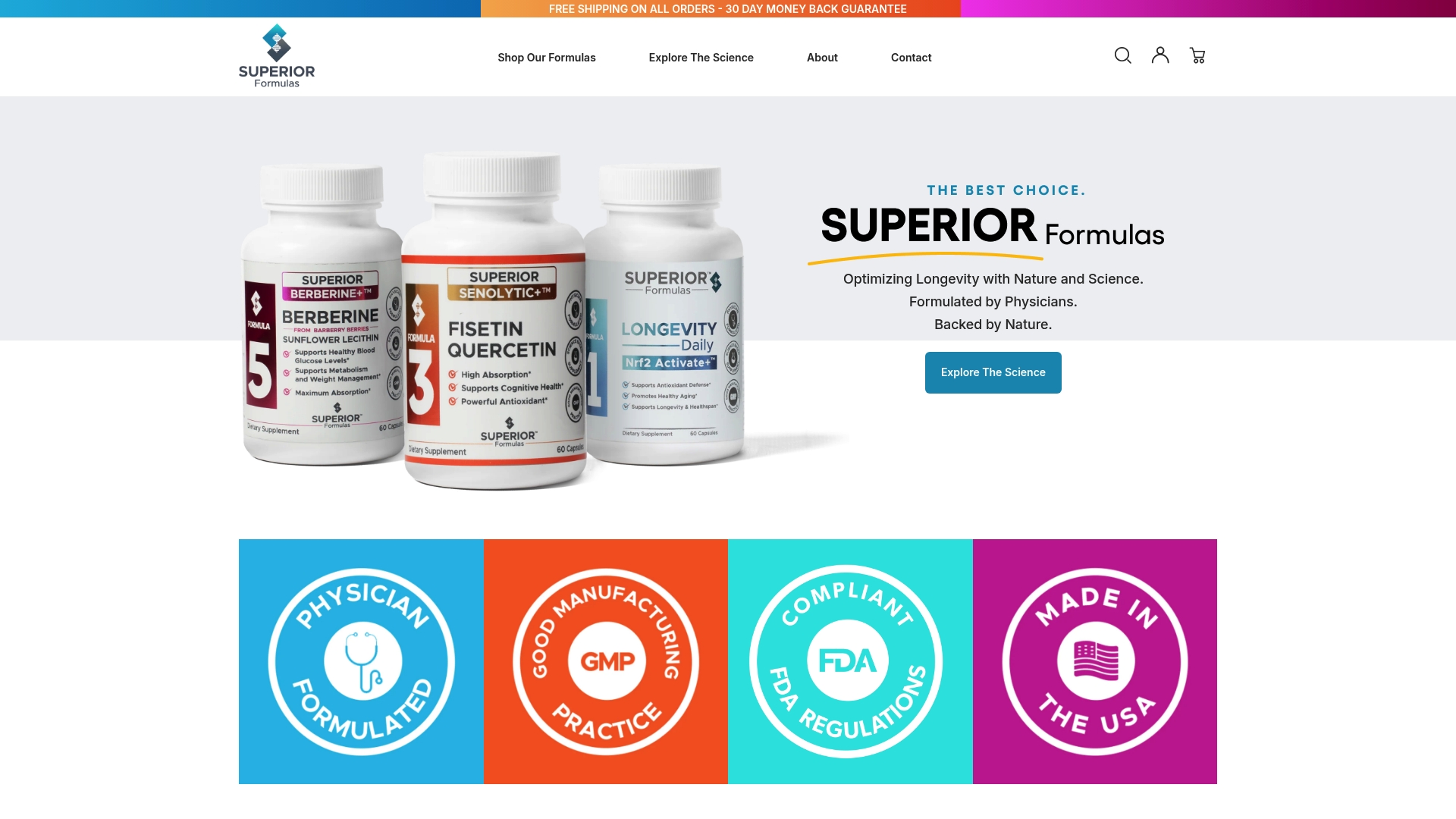
If you are building a longevity-focused nutrition strategy, Superiorformulas offers science-backed longevity supplements developed by a physician-scientist and manufactured in GMP-certified facilities with third-party testing. Every formulation is built around clinically studied ingredients, free from unnecessary fillers. Explore the full product line and find the right support for your cellular health goals.
FAQ
What are the best polyphenols for longevity?
Anthocyanins, EGCG, quercetin, resveratrol, curcumin, and urolithin A are the most evidence-backed polyphenols for longevity. Each targets distinct cellular pathways including telomere protection, mitophagy, and inflammation suppression.
How do polyphenols affect lifespan at the cellular level?
Polyphenols activate SIRT1, AMPK, and Nrf2 signaling pathways that regulate DNA repair, mitochondrial quality control, and cellular senescence. These effects collectively slow the molecular hallmarks of aging rather than simply reducing oxidative stress.
Which polyphenol-rich foods should i eat daily?
Blueberries, green tea, red onions, pomegranates, walnuts, turmeric, and dark leafy greens provide the broadest range of longevity-relevant polyphenols. Rotating sources across the week maximizes pathway diversity and microbiome support.
Do polyphenol supplements work as well as whole foods?
Observational studies of centenarian populations consistently show that whole dietary patterns outperform isolated supplements for longevity outcomes. Supplements can fill specific gaps but should complement, not replace, a diverse plant-based diet.
Why does gut health matter for polyphenol benefits?
Most polyphenols are poorly absorbed in the small intestine and require colonic bacteria to convert them into bioactive metabolites like urolithin A. Without a healthy, fiber-fed microbiome, the longevity benefits of polyphenol-rich foods are significantly reduced.
Formulated around several of the polyphenol pathways discussed above, our Formula 1 — LONGEVITY Daily Nrf2 Activate+ was designed with exactly this clinical rationale in mind. Explore the science behind the formulation to see how it applies to your own routine.


