


Glycine’s best-documented benefit is sleep: 3 grams before bed improves sleep onset, sleep quality, and next-day alertness in human trials. It also serves as the rate-limiting precursor for glutathione, your body’s primary antioxidant, and shows early metabolic promise in trials involving insulin response. Muscle recovery and longevity effects remain plausible but rest mainly on animal data. Anyone considering doses beyond what’s studied, or managing a chronic condition, should talk to a clinician first.
TL;DR:
- Consistently, 3 grams of glycine taken 30 to 60 minutes before sleep reliably improves sleep onset and subjective sleep quality in human trials.
- Glycine’s role in glutathione synthesis supports antioxidant defenses, especially as aging tissues tend to have lower glutathione levels.
- Doses above study ranges lack safety data, and typical supplementation falls between 3 and 15 grams daily, with side effects like nausea and headache being rare.
- Animal studies suggest possible lifespan and healthspan benefits, but human evidence for longevity remains preliminary and unconfirmed.
- Glycine’s proven benefit center on sleep, while metabolic and anti-inflammatory effects need larger, longer-term research for validation.
Table of Contents
- Glycine Benefits: Sleep, Antioxidant Support, Collagen, and Metabolism
- What the Human Trials and Reviews Actually Show
- How Glycine Works in the Body
- Glycine Dosage, Safety, and When to Check With a Doctor
- Why This Guide Leans on Clinical Evidence, Not Marketing Claims
- Why Sleep Deserves More Credit Than Longevity Hype
- Where Superiorformulas Fits Into Your Glycine Routine
- Sources
Glycine Benefits: Sleep, Antioxidant Support, Collagen, and Metabolism
The evidence for glycine splits cleanly into two tiers: what human trials confirm, and what animal studies merely suggest. Understanding that split matters more than any single statistic, because it tells you which claims to trust today and which to watch for future research.
-
Sleep quality and onset. Trials using 3 grams of glycine taken 30 to 60 minutes before bed show reduced time to fall asleep and improved subjective sleep quality, with some participants also reporting sharper next-day cognition. A systematic review of glycine’s effects in human adults confirms this pattern held even in short trials lasting just two to four days. That speed of effect is unusual for an amino acid and one reason glycine has become a go-to option among people who want an alternative to melatonin or sedative antihistamines.
-
Antioxidant support through glutathione. Glycine is a rate-limiting building block for glutathione, the enzyme system your cells rely on to neutralize oxidative stress. Aging tissue tends to run low on glutathione, and research on glycine’s role in glutathione synthesis frames adequate glycine intake as one lever for maintaining that defense system as you get older.
-
Collagen and connective tissue. Collagen is roughly one-third glycine by amino acid content, which makes it a structural building block for skin, tendons, and joints rather than a minor nutrient. Diets low in glycine-rich foods, like skin, bone broth, and gelatin, can leave this pathway under supported.
-
Muscle repair and creatine biosynthesis. Glycine feeds into creatine production through the arginine glycine amidinotransferase pathway, and some researchers have proposed a role in muscle regeneration through mTOR signaling. A review of glycine supplementation for physical performance notes real promise in preclinical work, but human performance trials remain small and inconsistent.
-
Metabolic markers. In longer trials, multi-gram doses taken multiple times daily for several months produced reductions in A1C and inflammatory markers in some studies, while others showed mixed lipid and glucose responses. The metabolic signal is real but not uniform across trial populations.
-
Geroprotective signals. Animal studies link glycine to extended lifespan and improved healthspan markers, but human confirmation is still missing. Treat this as a research direction, not a settled benefit.
Statistic Callout: In the trials behind these findings, 3 grams before bedtime was the dose most consistently tied to measurable sleep improvements, making it the single most reproducible number in the entire glycine literature.
What the Human Trials and Reviews Actually Show
Sleep is the outcome glycine has earned the most credit for, and it’s worth asking why. The answer comes down to trial design: sleep studies used consistent 3 gram doses, short but clear endpoints, and subjective plus cognitive measures that lined up across separate research groups. Metabolic trials, by contrast, varied wildly in dose, duration, and patient population, which explains why their results read as promising rather than proven.
- Sleep RCTs used consistent 3 g doses and showed convergent results across separate trials.
- Metabolic syndrome and type 2 diabetes trials tested multi-gram regimens over months, with inconsistent glucose and lipid findings.
- Psychiatric adjunct studies (glycine alongside standard treatment) show mixed results and small sample sizes.
- Muscle recovery data comes mostly from animal models, with human trials too limited to draw firm conclusions.
Small samples, short durations, and inconsistent dosing show up across nearly every glycine trial outside of sleep research. That’s not a flaw unique to glycine, it’s typical for a nutrient that only recently attracted serious clinical attention.
Sleep support has the strongest, most consistent human evidence behind it. Metabolic and inflammatory effects show a coherent but limited signal that needs larger, longer trials before anyone calls them proven. Lifespan extension remains a preclinical finding, observed in animal models, not yet validated in people.
The practical takeaway: build expectations around sleep first. Treat metabolic and anti-inflammatory benefits as reasonable hypotheses worth monitoring, and file longevity claims under “watch this space” rather than “expect this to work.”
How Glycine Works in the Body
Glycine’s benefits trace back to a small number of biochemical roles, each one explaining a different clinical effect.
- Glutathione synthesis: glycine, along with cysteine and glutamate, forms glutathione, the antioxidant your cells use to manage oxidative stress and detoxification.
- Inhibitory neurotransmission: glycine acts as an inhibitory neurotransmitter in the spinal cord and brainstem, and some researchers believe this, combined with a mild core temperature drop from peripheral vasodilation, helps explain its sleep effects.
- Creatine biosynthesis: glycine combines with arginine through the enzyme arginine glycine amidinotransferase to form creatine’s precursor, linking glycine to energy metabolism in muscle tissue.
- Anti-inflammatory and cytoprotective signaling: animal and cell studies show glycine can calm certain inflammatory pathways, though how well this translates to human inflammation is still being worked out.
Pro Tip: If you’re taking glycine specifically for sleep, timing matters more than the exact form. Take it 30 to 60 minutes before bed rather than with dinner. Trials showing sleep benefits used that window specifically, not an all-day dosing schedule.
These four pathways sit at the core of nearly every claim made about glycine, which is why understanding them helps you separate a well-supported benefit from a speculative one.
Glycine Dosage, Safety, and When to Check With a Doctor
Clinical trials give a reasonably clear dosing picture. Sleep studies used 3 grams before bed. Metabolic trials tested higher totals, sometimes multiple grams taken multiple times daily for months. Most commercial glycine products fall somewhere in that 3 to 15 gram daily range.
- Stick to studied ranges. Doses far beyond what trials have tested haven’t been shown safe, and some reviews flag concerns about organ stress at very high cumulative intake.
- Watch for mild side effects. Trials report occasional nausea, soft stool, or headache, though these appear infrequently.
- Check medication interactions. Glycine can interact with certain antipsychotics and anticonvulsants, and it may modestly affect blood pressure, so anyone on those medications should loop in a clinician.
- Know when to pause and ask. Pregnancy, breastfeeding, kidney or liver disease, and any psychiatric medication regimen are all reasons to get medical input before adding glycine.
Statistic Callout: The safety literature on glycine supplementation points to very high single or cumulative doses as the main area of concern, reinforcing why staying inside clinically studied ranges is the safer approach.
Why This Guide Leans on Clinical Evidence, Not Marketing Claims
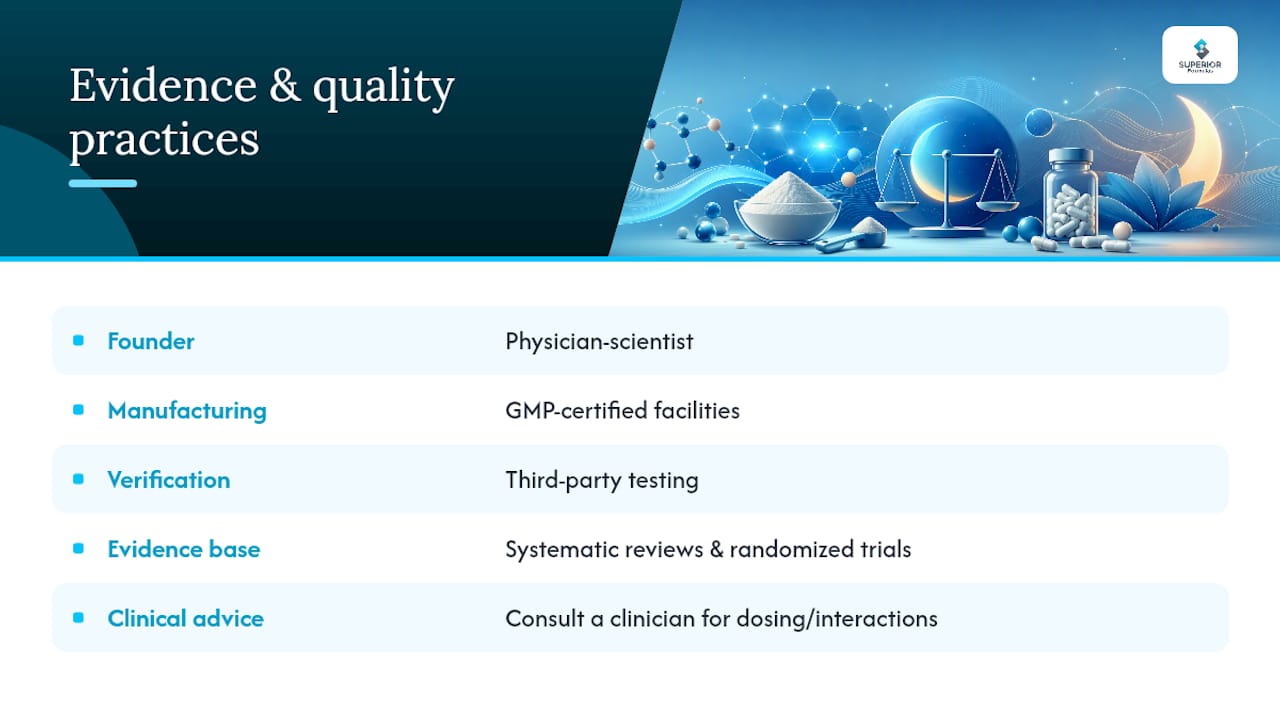
Superiorformulas was founded by a physician-scientist who built the brand around clinically studied ingredients rather than trend-driven formulations. Every product is manufactured in GMP-certified facilities and verified through third-party testing, which the FDA identifies as a baseline marker of a responsibly regulated supplement.
This article draws on systematic reviews and randomized controlled trials rather than anecdotal claims, and distinguishes proven human outcomes from preclinical findings throughout. cristopher, brings to this analysis. For personalized dosing or medication interactions, talk to a clinician who knows your health history.
Why Sleep Deserves More Credit Than Longevity Hype
Glycine has become an easy target for oversell. Wellness marketing loves to lump “improves sleep,” “fights aging,” and “supports metabolism” into one breathless list, as if all three claims carried the same weight. They don’t, and treating them as equivalent does readers a disservice.

Sleep support is the outcome with the cleanest, most repeatable human trial data, using a consistent 3 gram dose with convergent results. That alone makes glycine worth a second look for anyone struggling with sleep onset, and it deserves top billing over the more speculative claims.
Where conventional advice falls short is in blurring that line between confirmed and hypothesized. Metabolic effects show a real signal worth monitoring, not a guarantee worth building a treatment plan around. Longevity claims belong in the category of “interesting animal research,” not “proven human benefit.”
If you’re new to glycine, start with the sleep use case, where the evidence is strongest, and treat everything else as a bonus worth tracking rather than the reason you bought the bottle.
— cristopher
Where Superiorformulas Fits Into Your Glycine Routine
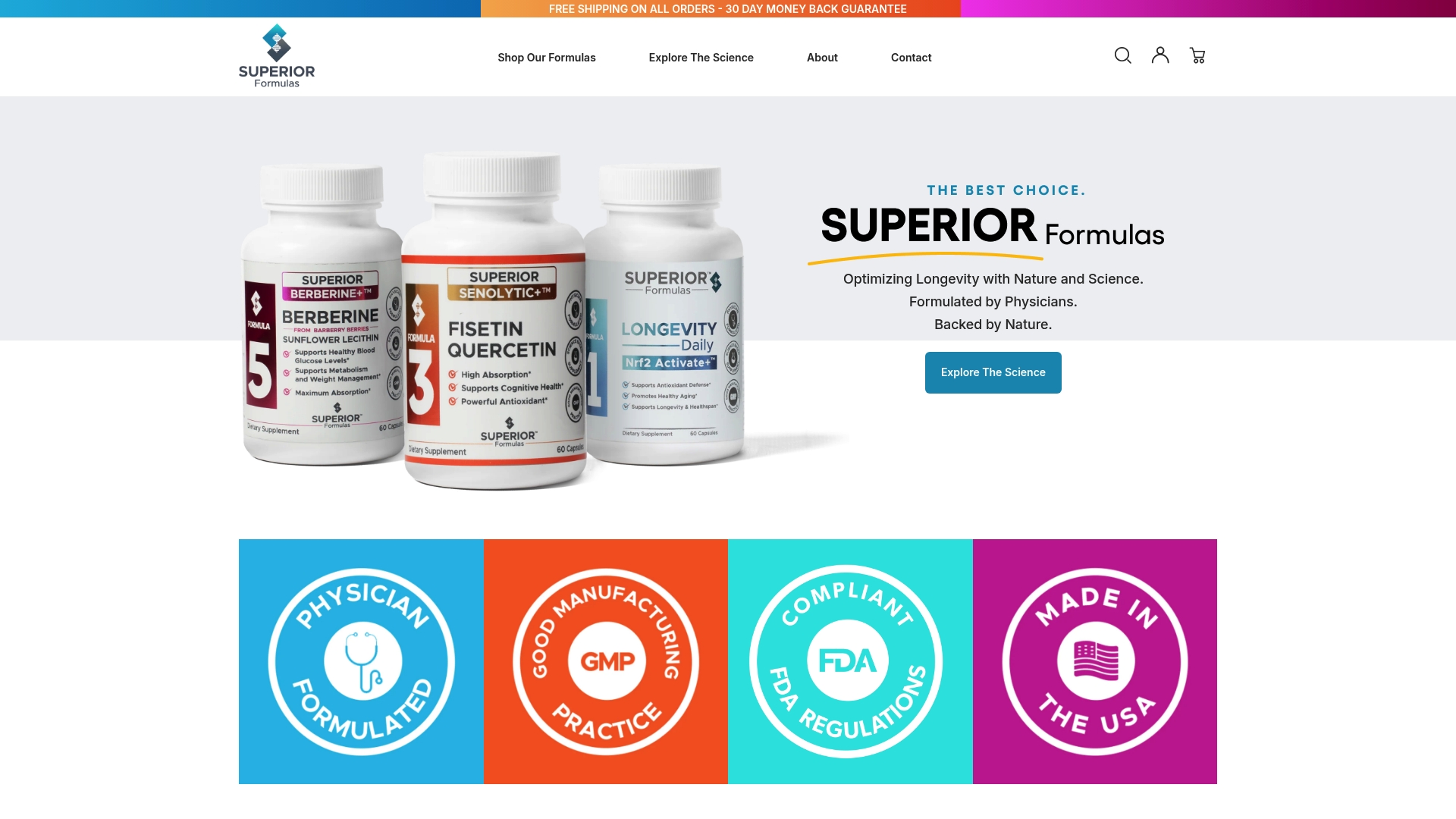
Superiorformulas builds its formulations around the same principle this guide follows: back every ingredient with human trial evidence, not marketing language. If you’re adding glycine to support sleep or want broader cellular antioxidant support tied to the glutathione pathway discussed above, Superiorformulas’ physician-formulated approach gives you a manufacturing standard built on GMP certification and third-party testing rather than guesswork.
For readers pairing glycine with a broader antioxidant strategy, Superiorformulas’ guide to cellular antioxidant support for longevity walks through how glutathione fits into a full healthy aging routine. If you’re building out a recovery or performance stack alongside glycine, amino acid formulations designed for muscle recovery are worth reviewing as a complementary approach. Ready to see how a physician-formulated, evidence-backed supplement lineup fits your goals? Visit Superiorformulas to browse the current formulations and find the one that matches what you’re trying to support.
This article is general information, not a substitute for advice from a qualified doctor. Consult a qualified healthcare professional about your own circumstances before acting on anything here.
Sources
- The effect of glycine administration on the characteristics of physiological systems in human adults: A systematic review
- Top 7 Benefits and Uses of Glycine
- Dietary Supplements | FDA


