


EGCG, the dominant catechin in green tea, has clinically observed effects on blood pressure, LDL cholesterol, fat metabolism, and skin inflammation when used at the doses studied in human trials. The strongest evidence sits in cardiovascular and metabolic outcomes; cognitive and cancer-related benefits remain more preliminary. High-dose supplemental extracts also carry a documented, if rare, liver-safety signal, so anyone with liver disease, on medication, or pregnant should talk to a clinician before supplementing.
TL;DR:
- Drinking three to five cups of green tea daily provides a moderate EGCG dose that supports cardiovascular and metabolic health with minimal safety risks.
- Concentrated EGCG supplements delivering over 800 milligrams daily may pose liver injury risks, especially if taken on an empty stomach or without medical advice.
- Bioavailability of EGCG from tea and supplements remains low, but advanced formulation methods like liposomal or nanoencapsulation can improve blood absorption.
- Evidence for cognitive, skin, and cancer benefits remains preliminary, with most supporting data coming from observational or early-stage human studies.
- For targeted health support, using standardized, third-party tested products with known EGCG amounts and taking them with food minimizes safety concerns.
Table of Contents
- What EGCG Is, Where It Comes From, and How It Works
- The Evidence, System by System
- Dosage, Safety, and Drug Interactions
- Bioavailability: Why Tea, Supplements, and Topicals Perform Differently
- Getting EGCG Safely: A Quick-Start Guide
- How Superiorformulas Weighs the Evidence Behind Ingredients Like EGCG
- Where This Evidence Comes From
- Why the Gap Between Lab Hype and Human Evidence Matters More Than the Hype Itself
- Sources
What EGCG Is, Where It Comes From, and How It Works
EGCG stands for epigallocatechin gallate, a polyphenol that makes up roughly half of the total catechin content in green tea. Among the four major green tea catechins, it’s the largest and most biologically active, which is why nearly every clinical study on green tea’s health effects tracks EGCG specifically rather than treating the leaf as a single ingredient.
Green tea remains the primary dietary source. Black and oblong tea contain far less EGCG because the oxidation process used to make them converts catechins into other polyphenol compounds. Matcha, made from whole ground tea leaves, tends to carry more EGCG per serving than steeped green tea, since you’re consuming the leaf material itself rather than just what dissolves into hot water.
Once swallowed, EGCG doesn’t just move quietly into your bloodstream. Absorption happens mainly in the small intestine, but a substantial portion travels on to the colon, where gut bacteria break it down into smaller metabolites. This matters clinically: two people drinking the same cup of tea can end up with meaningfully different plasma EGCG levels depending on their microbiome composition, which helps explain why individual responses to green tea vary so widely in trials.
At the cellular level, EGCG’s benefits trace back to a handful of overlapping mechanisms:
- Direct antioxidant action. EGCG neutralizes free radicals and reduces oxidative stress markers, the same mechanism that underlies a lot of the “cellular protection” language you see attached to polyphenols generally.
- NF-κB modulation. This transcription factor drives inflammatory signaling, and EGCG appears to dial it down, which is the biochemical basis for most of the anti-inflammatory claims made about green tea.
- AMPK activation. This enzyme acts as a kind of energy-status sensor inside cells, and its activation is central to EGCG’s metabolic and fat-oxidation effects.
- Nitric oxide support. EGCG appears to influence vascular tone through nitric oxide pathways, a plausible mechanistic explanation for the blood pressure findings covered below.
Here’s the catch that most casual EGCG content skips entirely: many of the studies demonstrating these mechanisms use concentrations far higher than what a human body ever reaches after drinking tea or taking a standard supplement. A review of EGCG’s chemical and biomedical profile points out this exact translational gap, noting that in vitro effects observed at high micromolar concentrations don’t necessarily predict what happens at the low nanomole to micromolar range typically achieved in human plasma. That gap is the single most important filter to apply to any bold EGCG claim you encounter.
The Evidence, System by System
This is where EGCG research gets genuinely interesting, because the strength of the evidence varies dramatically depending on which health outcome you’re asking about. Treating all “EGCG benefits” as equally proven is the most common mistake in consumer-facing coverage of this compound.
Cardiovascular health
Cardiovascular outcomes have some of the best human trial support in the entire EGCG literature. A review of EGCG’s cardiovascular mechanisms describes consistent findings across multiple trials: reductions in systolic and diastolic blood pressure, improvements in total and LDL cholesterol, and measurable gains in endothelial function, the flexibility and responsiveness of blood vessel linings that’s an early marker of cardiovascular risk.
The effect sizes are real but modest, and they cluster around intake levels equivalent to several cups of green tea daily or concentrated extracts delivering comparable EGCG doses. Nobody drinking a single cup of green tea a day should expect a measurable blood pressure change. The trials showing benefit generally used sustained daily intake over weeks to months, not a one-off dose.
Pro Tip: If cardiovascular support is your main goal, consistency beats intensity. A moderate daily habit sustained for months tends to outperform occasional high-dose extract use, based on how these trials are actually structured.
Metabolic health and weight support
The metabolic story runs through AMPK activation and its downstream effect on fat oxidation. A 2025 pharmacological review of EGCG summarizes human trial data showing modest but measurable improvements in energy expenditure and fat oxidation, particularly when EGCG is combined with caffeine, a combination that appears to have a synergistic effect beyond either compound alone.
The realistic takeaway: EGCG is not a weight-loss drug. The human trial evidence points to a small metabolic nudge, not dramatic fat loss. Anyone expecting rapid results from a green tea extract supplement is working from marketing copy, not from the clinical literature.
This is a good moment to flag the gap between mechanistic promise and lived results. AMPK activation sounds dramatic when described in a lab context, since it’s the same pathway targeted by some metabolic drugs. But the magnitude of AMPK activation achievable through diet or standard supplementation is nowhere near what pharmaceutical intervention produces. It’s a real, directionally positive effect. It’s not a substitute for the fundamentals of diet and activity.
Brain and cognitive support
Cognitive claims about EGCG rest on a thinner foundation than the cardiovascular or metabolic data, and it’s worth being direct about that. Much of the supporting evidence comes from observational research: population studies linking regular tea consumption to better long-term health outcomes, including some cognitive measures. Observational data like this is genuinely useful for spotting patterns, but it can’t separate EGCG’s effect from other habits common among regular tea drinkers, like better overall diet quality or higher physical activity levels.
Early-stage human trials on EGCG and cognition do exist, and the mechanistic case, antioxidant protection of neural tissue plus anti-inflammatory effects in the brain, is plausible on paper. But this remains the benefit category where “encouraging early signal” is a more honest description than “proven benefit.” Anyone buying an EGCG supplement specifically for memory or focus should calibrate their expectations accordingly.
Skin health
Skin is where the tea-versus-topical distinction matters most, and it’s a distinction most articles blur together carelessly. Systemic intake, drinking tea or taking oral capsules, delivers EGCG to the skin only after it survives digestion, liver metabolism, and dilution through the entire bloodstream. Topical application skips all of that.
Research on topical EGCG’s skin-protective effects shows it inhibits matrix metalloproteinases, enzymes that break down collagen, and supports collagen synthesis directly at the skin surface. Because topical delivery avoids first-pass liver metabolism entirely, it can achieve meaningfully higher local concentrations than any amount of oral intake would produce at the skin level. This lines up with broader research on how antioxidants function in skincare formulations generally: topical delivery tends to outperform oral intake for localized anti-aging and anti-inflammatory endpoints, simply because the compound reaches the target tissue directly instead of getting diluted system-wide.
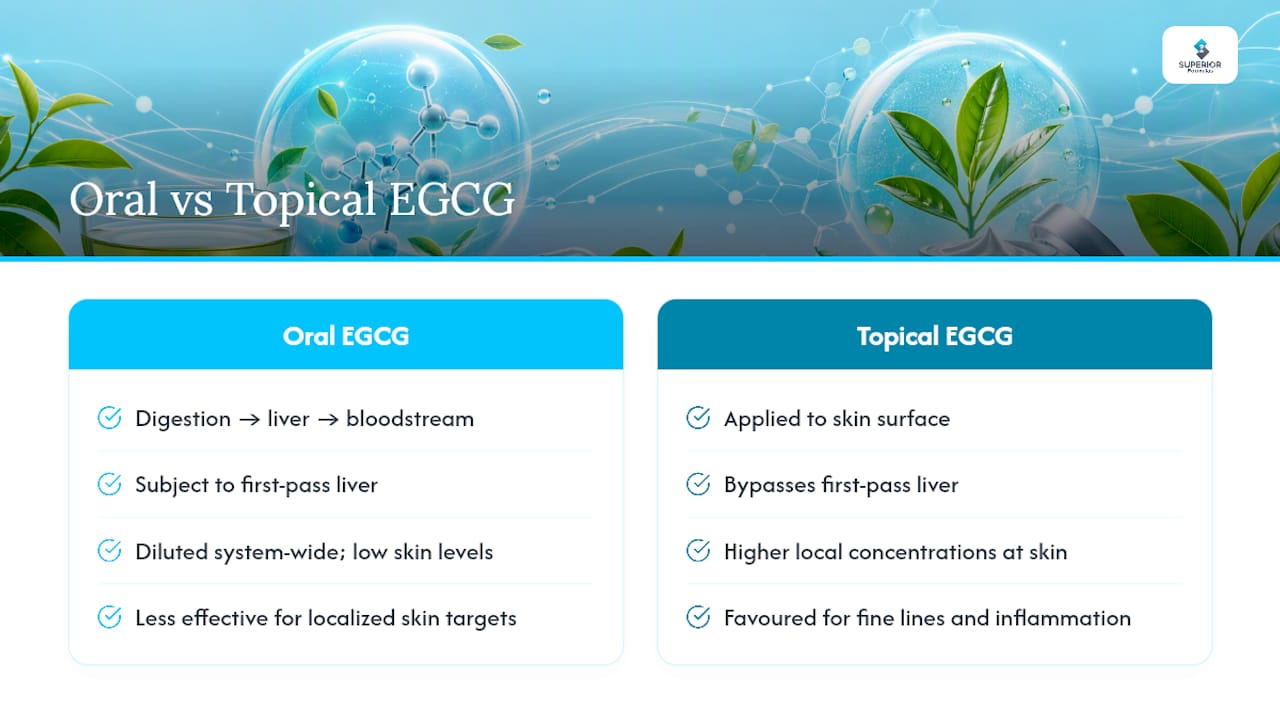
If your goal is specifically about fine lines, inflammation, or skin barrier support, a topical EGCG product is doing a fundamentally different job than a supplement capsule, and the clinical logic favors the topical route for that particular outcome.
Cancer and chronic disease signals
This is the category where the gap between headline and evidence is widest, and where caution matters most. Preclinical models, cell cultures and animal studies, have shown EGCG interfering with tumor cell proliferation and angiogenesis through several mechanisms. Those findings routinely get compressed into “green tea fights cancer” headlines, which badly overstates where the human evidence actually sits.
Human data on EGCG and cancer outcomes is limited, mixed across cancer types, and highly dependent on dose, duration, and the specific population studied. Some observational studies suggest tea drinkers have somewhat lower rates of certain cancers, but as with the cognitive data, this can’t separate EGCG’s contribution from broader lifestyle patterns. Nothing in the current human literature supports treating EGCG as a cancer treatment or a reliable preventive intervention on its own. The honest summary: biologically plausible, mechanistically interesting, and nowhere near clinically proven in people.
Dosage, Safety, and Drug Interactions
Human trials on EGCG use a fairly wide dose range, which is part of why the supplement aisle looks so inconsistent. Cardiovascular and metabolic studies commonly used doses equivalent to 300 to 800 milligrams of EGCG daily, often delivered through standardized green tea extracts rather than brewed tea alone, since getting that much EGCG from cups of tea would require drinking eight to ten cups a day for some study protocols.
That gap between “trial dose” and “realistic tea consumption” is exactly why concentrated extract supplements exist. It’s also exactly why the safety conversation matters more for supplements than for tea drinking.
- Know the liver signal. A small but well-documented number of liver injury cases have been linked to high-dose concentrated green tea extract supplements, typically involving doses well above what’s found in brewed tea and often taken on an empty stomach.
- Respect upper limits used in research. Most trials showing benefit without adverse effects stayed at or below roughly 800 milligrams of EGCG daily; going meaningfully higher moves you into territory with a less-established safety profile.
- Check your medication list. EGCG can interact with certain beta-blockers, blood thinners, and some chemotherapy agents, and it measurably reduces the absorption of non-heme iron when consumed at the same time as iron-rich meals or iron supplements.
- Flag pregnancy and liver conditions. Anyone pregnant, breastfeeding, or managing existing liver disease should treat high-dose EGCG supplementation as an off-limits category without direct clinician guidance.
- Watch for early warning signs. Unusual fatigue, dark urine, or abdominal discomfort after starting a concentrated extract warrants stopping the product and checking in with a doctor.
Pro Tip: Take EGCG supplements with food rather than on an empty stomach. Several of the reported liver injury cases involved fasted dosing, and taking the extract alongside a meal appears to blunt the concentration spike that seems to drive that risk.
Bioavailability: Why Tea, Supplements, and Topicals Perform Differently
Low bioavailability is the defining practical problem with EGCG, and it explains almost every inconsistency you’ll notice between lab claims and real-world results. After drinking a standard cup of green tea, peak plasma EGCG concentrations typically land in a range far below what most in vitro studies use to demonstrate benefit. Standard capsule extracts improve on tea somewhat, but a large fraction of ingested EGCG still gets broken down by gut bacteria or cleared by the liver before it ever reaches systemic circulation in its intact form.
That absorption bottleneck is exactly why formulation science has become such an active research area. A review of EGCG bioavailability enhancement strategies outlines several approaches that measurably improve systemic exposure compared with plain extract or tea alone:
- Liposomal encapsulation, which wraps EGCG in a lipid shell that helps it survive digestion intact before release.
- Nanoencapsulation, using tiny particle carriers to protect the compound and slow its breakdown in the gut.
- Co-formulation with other polyphenols or absorption enhancers like piperine, which can interfere with the metabolic pathways that would otherwise clear EGCG too quickly.
- Timing with food, which slows gastric emptying and appears to modestly extend the absorption window compared with fasted dosing.
Formulation choice isn’t a marketing detail bolted onto an ingredient list. It’s the difference between a supplement that delivers a clinically meaningful EGCG dose to your bloodstream and one that mostly just clears through digestion unused.
For skin outcomes specifically, topical EGCG bypasses the entire gastrointestinal and liver metabolism process, which is precisely why it’s a more direct route to meaningful dermal concentrations than any oral product could achieve for that particular target tissue.
When you’re reading a supplement label, look past the word “EGCG” itself and check whether the product states a standardized milligram amount per serving, rather than a vague “green tea extract” listing with no specified catechin content. A physician-formulated approach to concentrated phytonutrients generally treats this kind of standardization as non-negotiable, precisely because unstandardized extracts make it impossible to know what dose you’re actually taking.
Getting EGCG Safely: A Quick-Start Guide
For most healthy adults, three to five cups of green tea daily delivers a moderate, well-tolerated EGCG intake, roughly in the range associated with some of the cardiovascular benefits described earlier. That’s often sufficient if your goal is general antioxidant support rather than a specific clinical outcome.
- Start with diet if your goals are general. Daily tea drinking is the lowest-risk way to get consistent, modest EGCG exposure.
- Consider a standardized supplement for targeted goals. If you’re pursuing a specific outcome studied at higher doses, like blood pressure or metabolic support, look for a product listing an exact standardized EGCG amount per serving.
- Check for third-party testing. Independent verification of purity and potency matters more with concentrated extracts than with whole-leaf tea.
- Skip it entirely if pregnant, liver-compromised, or on interacting medications until you’ve talked with a clinician.
- Watch for early symptoms and stop use if anything feels off.
Pro Tip: If you’re unsure whether your current intake lines up with what’s actually been studied, a clinical evidence checklist for supplements is a useful filter before you buy anything labeled “green tea extract.”
How Superiorformulas Weighs the Evidence Behind Ingredients Like EGCG
Formulating with a compound like EGCG means confronting the same gap this article has walked through: the difference between what a cell culture shows and what a person’s bloodstream actually receives. The clinical background of Superiorformulas’ founder shapes the company’s approach to ingredients with a wide range of preclinical promise but a narrower, more specific band of human trial support.
In practice, that means favoring standardized doses that reflect what’s actually been studied in people, rather than doses chosen because they performed well in a lab dish. It also means taking bioavailability seriously as a formulation problem, not an afterthought, since an ingredient that never reaches meaningful plasma concentration isn’t doing much for anyone regardless of what it costs. Products with those standards are manufactured in GMP-certified facilities and third-party tested for purity, standards that matter most precisely with polyphenols like EGCG, where potency and quality control vary enormously across raw material sources.
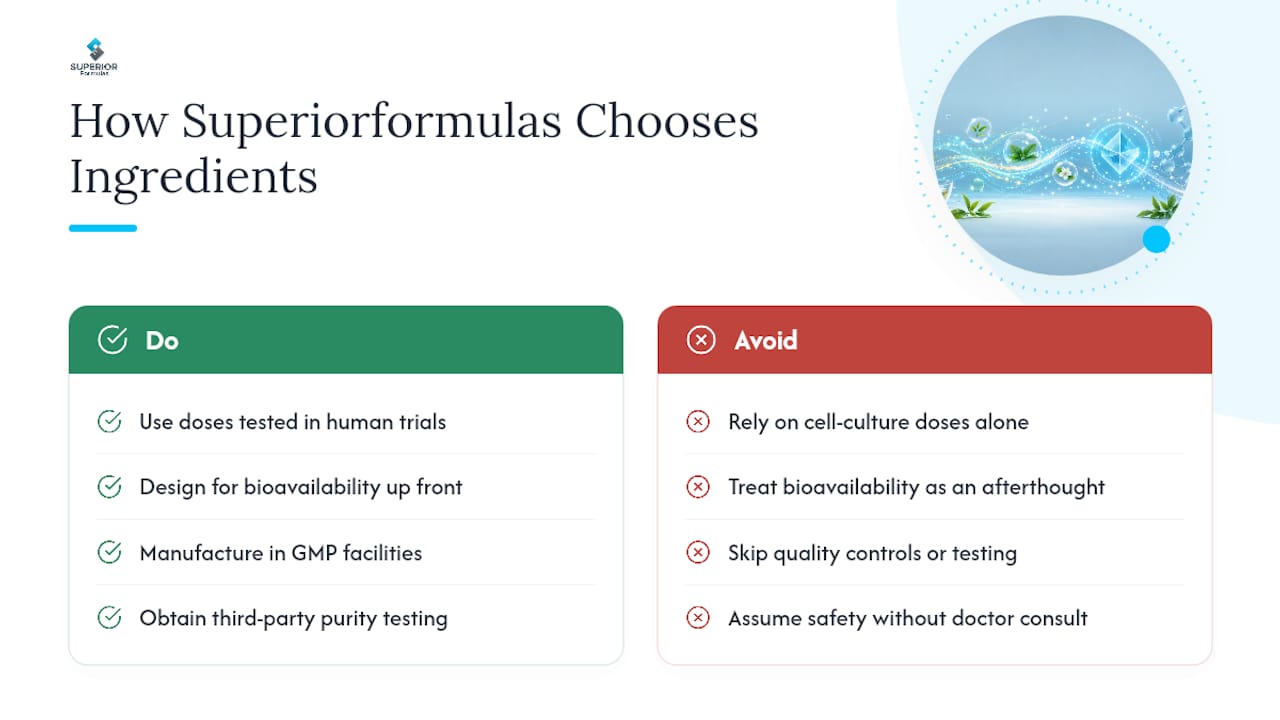
None of this replaces a conversation with your own doctor, particularly if you’re managing a chronic condition or taking medication that could interact with a concentrated botanical extract. Readers who want to dig further into the reasoning behind specific formulation choices can review the science and research pages Superiorformulas maintains for its ingredient decisions.
Where This Evidence Comes From
- Dietary EGCG: bioactivities and bioavailability advances, the primary reference for EGCG’s identity, proportion in green tea, and mechanistic breadth.
- EGCG chemical and biomedical perspectives, the core source on the lab-to-human translational gap and liver safety signals.
- Bioavailability enhancement strategies for EGCG, covering liposomal and co-formulation approaches to improve absorption.
- Cardiovascular mechanisms of EGCG, supporting the blood pressure and cholesterol findings.
- Pharmacological properties and therapeutic potential of EGCG, covering metabolic and weight-related trial data.
- Topical EGCG’s skin-protective mechanisms, the basis for the skin and topical delivery discussion.
Why the Gap Between Lab Hype and Human Evidence Matters More Than the Hype Itself
Most EGCG content online treats every preclinical finding as if it were already proven in people, and that habit does readers a real disservice. The compound has genuine, human-trial-backed benefits for blood pressure, cholesterol, and metabolic markers. It also carries a long tail of preclinical claims, especially around cancer, that get repeated as settled fact when the actual research is still exploratory.
What strikes me most about the EGCG literature is how much of the real story is about delivery, not the molecule itself. A compound can be genuinely bioactive and still underperform in a finished product if the formulation doesn’t account for how poorly it survives digestion. That’s a less exciting story than “miracle antioxidant,” but it’s the one that actually determines whether a supplement does anything measurable. Readers who understand this distinction, human trial evidence versus in vitro concentration, and absorbed dose versus label dose, are better equipped to evaluate any polyphenol supplement, not just this one. The compound deserves its reputation as a well-studied, mechanistically interesting polyphenol. It doesn’t need the inflated claims some marketing attaches to it, and honestly, the real evidence is compelling enough on its own.
Sources
- Dietary (−)-Epigallocatechin Gallate (EGCG): State-of-the-Art Advances in Bioactivities, Bioavailability Enhancement Strategies, and Applications in Nutrition and Health
- Epigallocatechin-3-gallate (EGCG): Chemical and biomedical perspectives


