


Clinical trials on urolithin A have tested chronic doses between 250 and 1,000 mg per day, with single doses up to 2,000 mg shown to be tolerable in phase 1 safety studies. Where you land in that range depends on your goal.
- 250–500 mg/day — a conservative starting point studied for effects on cellular biomarkers and general maintenance.
- 500–1,000 mg/day — the range most often used in trials measuring muscle endurance and strength, with 1,000 mg/day the dose tied to the clearest functional results.
- Safety snapshot — trials lasting up to four months at 1,000 mg/day reported no serious adverse events, making it the most well-documented chronic dose available.
The right number for you hinges on whether you’re chasing measurable biomarker shifts or a functional payoff you can feel in the gym or on a walk. The rest of this guide breaks down exactly which trials produced which results, so you can match your dose to your goal instead of guessing.
Key Takeaways
Urolithin A’s dosing evidence supports a maintenance range and a higher range for measurable muscle endurance benefits, with the higher end showing the strongest four-month trial results.
| Point | Details |
|---|---|
| Trial dose range | Human trials tested 250 to 1,000 mg/day chronically, with single doses up to 2,000 mg tolerated in phase 1 studies. |
| Functional benefit dose | 1,000 mg/day for four months produced the clearest muscle endurance and mitochondrial biomarker improvements in older adults. |
| Safety profile | No serious adverse events reported up to 1,000 mg/day in multi-week human trials, backed by a wide animal safety margin. |
| Evidence certainty | Pooled analysis of five RCTs rated functional outcome evidence as low certainty, so results vary by individual. |
| Product quality check | Superiorformulas formulates with GMP-certified manufacturing and third-party testing, letting you verify dose accuracy before purchase. |
Table of Contents
- Urolithin A Dosage Recommendations From Human Clinical Trials
- Is Urolithin A Safe? What the Trial Data Shows
- Choosing a Dose: Maintenance vs. Muscle Endurance Goals
- Timing, Frequency, and How Trials Actually Dosed It
- How Long Before You Notice a Difference?
- Interactions and Who Should Check With a Doctor First
- The Clinical and Formulation Perspective Behind This Guidance
- What the Research Actually Tells You to Do
- Where Superiorformulas Fits Into Your Dosing Plan
- Sources
Urolithin A Dosage Recommendations From Human Clinical Trials
The dosing guidance circulating around urolithin A isn’t guesswork. It comes from a specific, traceable set of human trials, each testing a defined dose over a defined period, and each reporting outcomes clinicians can actually compare. Understanding where those numbers came from tells you more than the numbers themselves.
Phase 1 human trials established the safety foundation first. Researchers tested single ascending doses up to 2,000 mg and multiple-day dosing between 250 and 1,000 mg, tracking pharmacokinetics including bioavailability and half-life. Urolithin A showed up reliably in plasma and skeletal muscle tissue, confirming the compound reaches the tissue where mitochondrial effects would need to occur. These early-phase trials found no serious adverse events, which is what allowed researchers to move into longer efficacy studies with confidence.
From there, the evidence builds through three types of trials:
- Foundational safety and dose-ranging trials. These established that 250 to 1,000 mg/day was tolerable across multiple dosing windows, with trial durations spanning 28 days to 4 months. This range became the template every later efficacy study built on.
- Randomized controlled trials in older adults. A notable randomized clinical trial published via JAMA Network Open gave older adults 1,000 mg/day for four months and reported improvements in muscle endurance alongside favorable shifts in mitochondrial biomarkers, with good tolerability throughout. This is the single strongest data point behind the “1,000 mg for function” recommendation you’ll see referenced across the supplement space.
- Trials in trained or athletic populations. Separate randomized studies applied the same 1,000 mg/day dose to athletes, again over multi-week to multi-month windows, examining whether the mitochondrial signal translated into performance metrics.
Here’s where the evidence gets more nuanced, and where a lot of marketing copy glosses over an important detail: not every trial found dramatic functional change. A recent systematic review pooling five randomized controlled trials covering 236 participants found that outcomes on the 6-minute walk test were heterogeneous. The pooled effect size was modest, and the review rated the overall certainty of evidence as low.
That’s a meaningful qualifier. A pooled improvement with a wide confidence interval spanning slightly negative to notably positive doesn’t mean urolithin A doesn’t work. It means the current trial base is still too small and too varied to call the functional benefit definitive for every population.
Three limitations show up consistently across this evidence base:
- Sample sizes remain small. Most individual RCTs enroll dozens of participants, not hundreds, which limits how confidently results generalize.
- Endpoints vary trial to trial. Some studies measure 6-minute walk distance, others measure grip strength or specific mitochondrial biomarkers, making direct comparison difficult.
- Long-term data past four months is scarce. Nobody has published a multi-year human trial yet, so anything beyond the four-month mark is extrapolation, not documented evidence.
None of this undermines the dosing guidance. It does mean you should treat urolithin A as a compound with a genuinely promising, well-documented safety and mitochondrial-biomarker signal, and a functional benefit signal that’s real but still maturing.
Is Urolithin A Safe? What the Trial Data Shows
Tolerability data on urolithin A is more consistent than the functional efficacy data, and that consistency matters if you’re deciding whether to try it.
Across multi-week human trials, no serious adverse events were reported at doses up to 1,000 mg/day, including the four-month trial in older adults. In earlier phase 1 work, single doses as high as 2,000 mg were tolerated without triggering the kind of red-flag findings that halt drug development. That combination, chronic tolerability at 1,000 mg and acute tolerability well above it, is unusually reassuring for a supplement ingredient still relatively new to the consumer market.
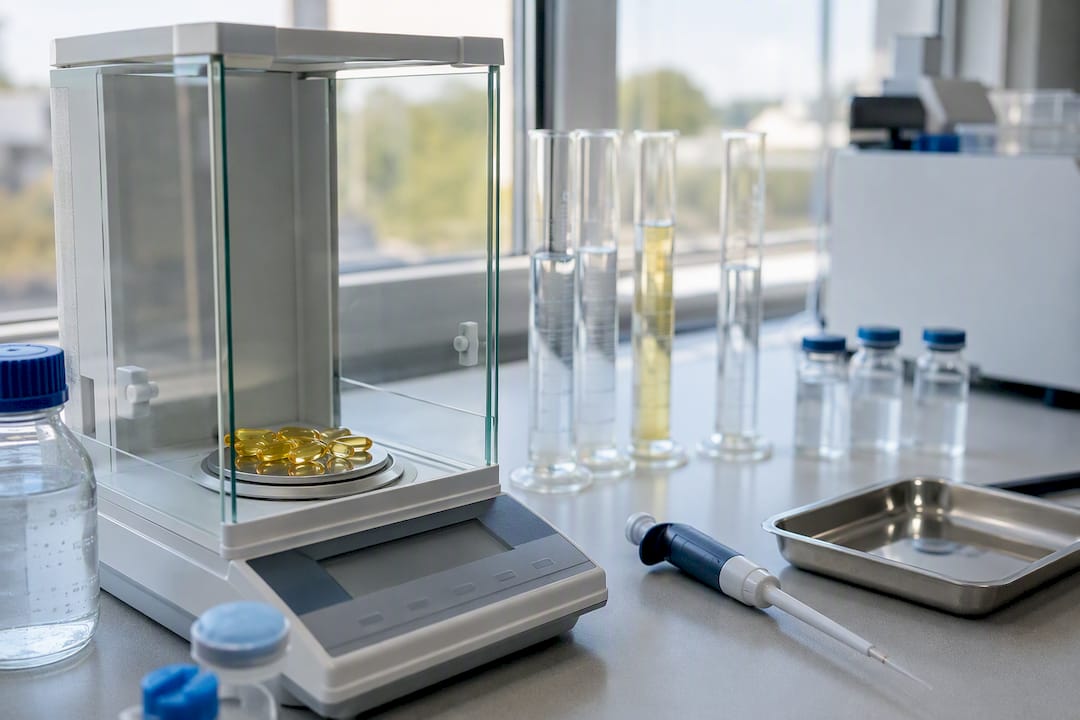
Preclinical animal studies add another layer of context. Toxicology work reported no-observed-adverse-effect-level (NOAEL) figures in the range of roughly 3,451 to 3,826 mg per kilogram of body weight per day, far above anything tested in humans. That’s a wide margin, and it’s worth understanding what it does and doesn’t tell you. Animal NOAEL data establishes a safety ceiling for regulatory purposes; it does not set the human dose. Human trials, not rodent tolerance, are what determined the 250 to 1,000 mg/day range doctors and researchers now reference.
Mild, transient side effects have appeared in some trial reports, generally gastrointestinal discomfort or muscle soreness that resolved without intervention. None of the published human trials describe these as dose-limiting.
A few practical monitoring notes worth keeping in mind:
- Baseline labs aren’t necessary for most healthy adults starting at 250 to 500 mg/day, but they’re reasonable if you have existing liver or metabolic conditions.
- If you notice persistent gastrointestinal symptoms beyond the first week or two, that’s worth mentioning to a clinician rather than pushing through.
- Anyone on multiple medications should flag urolithin A use during routine checkups, simply because formal interaction research is still limited.
Pro Tip: Start a simple log on day one, noting dose, timing, and any symptoms. If you eventually increase from 500 mg to 1,000 mg, that log makes it obvious whether a new symptom is actually related to the dose change or just coincidence.
Choosing a Dose: Maintenance vs. Muscle Endurance Goals
Your goal should decide your starting number more than anything else. Trials point toward two practical tiers.
The maintenance tier: 250–500 mg/day. This range is a conservative entry point studied for effects on cellular biomarkers tied to mitochondrial health, without pushing into the doses reserved for functional outcome trials. If your interest in urolithin A and mitochondrial support is about long-term cellular resilience rather than an immediate performance target, this tier is a reasonable place to begin.
The performance tier: 500–1,000 mg/day. This is where the strongest functional signal in the literature lives. The JAMA Network Open trial that found improved muscle endurance and mitochondrial biomarker shifts used the full 1,000 mg/day dose, sustained for four months. Athlete-focused RCTs used the same 1,000 mg/day figure. If muscle endurance or strength is your actual target, the evidence base clusters around this number, not the lower tier.
Who benefits most isn’t uniform across ages and training status. Subgroup findings from the older-adult RCT suggest that participants with lower baseline mitochondrial function saw more pronounced improvements than those who started from a healthier metabolic baseline. That tracks with a broader pattern in longevity research: interventions targeting mitochondrial decline tend to show bigger, more measurable effects in people who have more room to improve. A well-trained 30-year-old with efficient mitochondrial function may notice smaller, harder-to-measure gains than a 65-year-old with age-related mitochondrial decline.
There’s also a biological reason supplementation matters regardless of age. Urolithin A is normally produced when gut bacteria metabolize ellagitannins from foods like pomegranates and walnuts, but individual production capacity varies enormously based on microbiome composition. Supplementation bypasses that variability entirely, delivering a consistent dose regardless of what your gut bacteria happen to be doing that week.
Progressing safely between tiers doesn’t require complexity:
- Start at 250 mg/day for one to two weeks and note how you tolerate it.
- If your goal is functional (endurance, strength, recovery), step up toward 500 to 1,000 mg/day gradually rather than jumping straight to the top of the range.
- Anyone managing a chronic condition should loop in a clinician before increasing past the maintenance tier.
Timing, Frequency, and How Trials Actually Dosed It
Trial protocols consistently used once-daily dosing, and the pharmacokinetics back that choice up. Urolithin A and its phase II metabolites show longer half-lives in circulation, and enterohepatic recirculation may extend that exposure window further, which is why once-a-day administration made pharmacological sense rather than splitting doses across the day.
Some trials, including the older-adult RCT that produced the strongest functional data, administered the full 1,000 mg dose as multiple softgels taken in the morning on an empty stomach with water. That protocol detail matters if you’re trying to mirror the conditions under which the published benefits were actually observed.
A few practical notes on administration:
- Consistency beats precision. Taking your dose around the same time daily matters more than hitting an exact hour.
- Formulation affects absorption. Excipients, fillers, and softgel versus capsule delivery can all influence how much urolithin A actually reaches circulation, so third-party testing and transparent labeling aren’t cosmetic details.
- Pre-exercise timing is an emerging idea, not an established one. Some athletes time their dose before training sessions on the theory that it may support exercise-related mitochondrial signaling, but no trial has specifically tested pre-workout timing against standard morning dosing.
Pro Tip: If you’re trying to replicate trial conditions as closely as possible, take your full dose in one sitting in the morning before eating, rather than splitting it across breakfast and dinner.
Always check the label for third-party testing certification and scan the ingredient list for allergens or fillers you’d rather avoid, particularly if you have sensitivities to common softgel excipients.
How Long Before You Notice a Difference?
Patience matters more with urolithin A than with faster-acting supplements. Biomarker shifts, changes in specific mitochondrial and metabolic markers, can start appearing within a matter of weeks in some trial protocols. Functional changes are a different timeline entirely.

The strongest evidence for improved muscle endurance and strength came from a trial spanning four full months at 1,000 mg/day. That’s the timeline to plan around if strength or endurance is your goal, not four weeks.
It’s worth separating two different ideas here: a statistically significant group effect in a clinical trial versus a change you can personally feel. When researchers report improved 6-minute walk distance across a study group, that average improvement doesn’t guarantee every single participant felt a noticeable difference. Some individuals respond more than others, which is part of why the pooled data across multiple RCTs still carries a “low certainty” rating for functional outcomes.
A sensible approach:
- Commit to a minimum of 3 to 4 months before evaluating whether a dose is working for your functional goals.
- Track a concrete metric, walk distance, grip strength, or a specific endurance benchmark, rather than relying on how you feel.
- Reassess at the 3 to 4 month mark and adjust dose or discontinue based on actual data, not impatience.
Supplementation works alongside training stimulus, not instead of it. The clearest functional results in trials came from participants who maintained their normal activity levels throughout the study period.
Interactions and Who Should Check With a Doctor First
Formal drug interaction studies on urolithin A are limited, and that gap deserves honesty rather than a false sense of blanket safety.
Because urolithin A undergoes metabolic processing in the liver, exercise added caution if you’re taking medications cleared through hepatic conjugation pathways, or if you’re managing complex polypharmacy with multiple prescriptions. The interaction risk isn’t well quantified yet, which means caution substitutes for data here.
A few groups should hold off or check in with a specialist before starting:
- Pregnant or breastfeeding individuals — no human safety data exists for this population, so avoiding supplementation or consulting a specialist first is the responsible move.
- Anyone with severe liver disease — given the compound’s hepatic processing, a clinician should weigh in before use.
- Immunosuppressed patients — consult your treating physician given the lack of dedicated safety data in this group.
Whatever your health status, tell your healthcare providers about any supplement you’re taking, including strategies like creatine for bone health along with urolithin A. It costs nothing and closes a real gap in your medical record, especially relevant when combining supplements with other nutritional strategies or existing medications.
The Clinical and Formulation Perspective Behind This Guidance
These dosing recommendations reflect a physician-formulated approach to translating trial data into practical guidance, prioritizing peer-reviewed randomized controlled trials and systematic reviews over marketing claims or anecdotal reports. Every dose figure in this guide traces back to a specific published trial, not an estimate.
That approach comes with a deliberate bias toward transparency about the evidence’s limits. The functional outcome data, while promising, still carries a low-certainty rating in pooled analysis, and it would be dishonest to present 1,000 mg/day as a guaranteed path to measurable strength gains for every person who takes it.
Formulation quality matters as much as dose selection. GMP-certified manufacturing and third-party testing verify that a capsule labeled 500 mg actually contains 500 mg of bioavailable urolithin A, free of undisclosed fillers. This dosing guidance is educational, not a substitute for individualized medical advice, particularly for anyone managing existing health conditions or taking prescription medications.
What the Research Actually Tells You to Do
Most of the noise around urolithin A treats it like a single magic number applies to everyone. It doesn’t. The trial data supports a two-tier reality: a well-documented, low-risk maintenance range and a higher, still-promising performance range with real but not yet definitive functional evidence.
Where conventional advice falls short is in overstating certainty. Plenty of marketing implies 1,000 mg/day guarantees a measurable strength jump. The pooled trial data doesn’t support that level of confidence, and pretending otherwise does readers a disservice.
What I’d prioritize first: start at the conservative end, track a real metric instead of a feeling, and give it the full four months trials actually used before judging results. Chasing a faster verdict than the evidence itself allows is the single most common mistake I see in how people approach this compound.
— cristopher
Where Superiorformulas Fits Into Your Dosing Plan
Superiorformulas builds its formulations the same way this guide approaches dosing: starting from published trial data, not assumptions. As a physician-founded company, Superiorformulas manufactures in GMP-certified facilities and relies on third-party testing to confirm that what’s on the label matches what’s in the capsule, the exact transparency this guide recommends you look for before choosing any urolithin A product.
If you’re weighing where to start, the maintenance or performance tier discussed above, the smartest next step is reading the formulation science directly rather than taking any brand’s word for it. Visit the Explore the Science page to review testing certificates and formulation details before you buy. Start conservatively, monitor how your body responds over the first month, and loop in a clinician if you’re managing any existing condition. That combination, verified formulation plus a patient, data driven approach to dosing, is how you actually get a fair read on whether urolithin A works for you.
Sources
- Effects of Urolithin A supplementation on muscle health outcomes in humans from randomized controlled trials
- Phase I trial and early human studies on urolithin A
- Preclinical safety and pharmacology references for urolithin A


