


Ergothioneine is a diet-derived antioxidant with encouraging, though still early, evidence for cellular protection, cognitive support, and skin resilience. Most human trials use doses around 25 milligrams per day and report good tolerability, and large observational cohorts link higher blood levels to lower cardiovascular and total mortality. Large, long-term randomized trials that confirm these effects, however, are still missing.
TL;DR:
- Human trials on ergothioneine are small and short, with evidence for cognitive benefits suggesting improvement over months in older adults with mild impairment.
- Most research supports its antioxidative and cell-protective effects through mechanisms involving mitochondrial concentration and modulation of antioxidant pathways, but large clinical trials are lacking.
- The compound’s safety profile is well-established at doses around 25 milligrams per day, with food sources like mushrooms providing variable amounts and supplements offering precise dosing.
- Long-term cohort studies associate higher blood ergothioneine with lower cardiovascular and overall mortality, but causation remains unproven, especially for aging and longevity effects.
- Future benefits may be more noticeable in those with lower baseline intake or early cognitive signs, emphasizing the need for larger, targeted trials in specific populations.
Table of Contents
- Ergothioneine benefits by body system: what’s proven and what’s promising
- How ergothioneine works: transporter uptake, NRF2, and sirtuins
- What human trials and cohort studies actually show
- Dosage, safety, and what the FDA’s GRAS status means
- Who is most likely to benefit and where the research still falls short
- How a physician-formulated supplement fits into the picture
- How ergothioneine gets into cells beyond the transporter
- Does ergothioneine interact with other antioxidants and nutrients?
- Ergothioneine’s role in immune function and inflammation
- Pharmacokinetics: how the body absorbs and retains ergothioneine
- Pure ergothioneine versus getting it from food
- An honest read on where ergothioneine stands today
- Where to explore ergothioneine-focused formulations
- Sources
- FAQ
Ergothioneine benefits by body system: what’s proven and what’s promising
Ergothioneine’s reputation rests on a mix of laboratory findings, population data, and a handful of small human trials. The strength of evidence differs sharply depending on which benefit you’re asking about, and separating the two matters if you’re deciding whether to change your diet or your supplement routine.
The antioxidant and cellular protection story is the most established at the mechanistic level. In vitro and animal studies consistently show ergothioneine neutralizing reactive oxygen species and protecting mitochondria from oxidative damage, a pattern that lines up with its unusual biochemistry, discussed more below. Cognitive benefits sit one step further along the evidence chain: cohort studies associate low plasma ergothioneine with cognitive decline, and a small randomized trial reported measurable improvements in learning tests. Muscle and recovery claims remain the least supported in humans, resting mostly on preclinical work and dietary-intervention signals rather than controlled trials. Skin protection has solid cell-culture and UV-exposure data behind it, which is why ergothioneine shows up in dermal research and some cosmetic formulations. Cardiometabolic and longevity associations come from large observational cohorts, useful for spotting patterns but not proof of cause and effect.
- Antioxidant and cellular protection: supported by in vitro and animal mechanistic studies, considered biologically plausible but not confirmed in large human trials.
- Cognition: cohort associations plus a small randomized trial showing improved learning and biomarker stabilization, an early but genuine human signal.
- Muscle and recovery: mostly preclinical and dietary-pattern evidence, with limited direct human trial data.
- Skin health: strong cell-culture and UV-protection evidence, with growing dermatological interest but few dedicated human trials.
- Cardiometabolic and longevity markers: cohort-level associations between higher plasma ergothioneine and lower cardiovascular and total mortality, not yet tested prospectively as an intervention.
How ergothioneine works: transporter uptake, NRF2, and sirtuins
Ergothioneine’s effects trace back to a transporter called SLC22A4, also known as OCTN1, which actively pulls the compound out of the bloodstream and concentrates it inside cells and mitochondria. This selective uptake explains why tissue levels can stay elevated long after a meal, and why chronic dietary intake may matter more than a single dose. Once inside the cell, ergothioneine acts as a direct antioxidant, buffering oxidative stress that would otherwise damage mitochondrial membranes and proteins.
Beyond direct scavenging, ergothioneine modulates the KEAP1-NRF2 pathway, a cellular switch that activates the body’s own antioxidant defense genes, and appears to interact with sirtuin signaling, a family of proteins tied to stress resistance and cellular aging. Together these actions describe a plausible route from a dietary molecule to healthy-aging outcomes. You can read more about how the antioxidant pathway functions at the cellular level. None of this constitutes proof that supplementation improves clinical outcomes. Mechanisms explain why an effect is plausible, not that it has been demonstrated in people.
What human trials and cohort studies actually show
The human evidence for ergothioneine splits into two categories: small controlled trials and larger observational cohorts, each with different strengths.
The most cited randomized trial enrolled older adults with mild cognitive impairment, giving them 25 milligram capsules three times a week for a year. Participants receiving ergothioneine showed improved performance on learning tests and stabilized neurofilament light chain levels compared with placebo, with no safety signals reported. On the observational side, a Swedish cohort study following roughly 3,236 participants for a median of 21.4 years found that higher plasma ergothioneine was associated with reduced coronary disease, cardiovascular mortality, and overall mortality.
A large Swedish cohort found that higher blood ergothioneine levels were linked to lower cardiovascular and total mortality over two decades of follow-up. That kind of long-horizon association is exactly what makes ergothioneine interesting for longevity research, even though it cannot establish causation on its own.
Several limitations temper how far these findings can be extended:
- Randomized trials to date involve small sample sizes, often fewer than two dozen participants per arm.
- Trial durations are short relative to the decades-long cohort data, making it hard to confirm whether benefits compound over time.
- Many trials recruit relatively healthy volunteers, which may underestimate effects in people with lower baseline ergothioneine or existing disease.
- Researchers have specifically called for larger trials targeting low-baseline or older populations to establish dose-response relationships.
Dosage, safety, and what the FDA’s GRAS status means
Most human trials use 25 to 30 milligrams per day, typically taken several times weekly rather than daily, and tolerability has been consistently good. A placebo-controlled study found no adverse effects in healthy volunteers at doses up to 25 milligrams daily for seven days, and animal studies report very high no-observed-adverse-effect levels, suggesting a wide margin of safety.
The FDA reviewed a GRAS notice for an ergothioneine ingredient, examining intended food uses, exposure estimates, and toxicology data before concluding the ingredient was generally recognized as safe for those specific food applications. GRAS status addresses safety for food use; it says nothing about whether a product treats or prevents disease, and therapeutic claims fall outside what that designation supports.
- Trial doses cluster around 25 to 30 milligrams per day, often on a non-daily schedule.
- Short-term human safety data show no adverse effects at these doses, backed by wide safety margins in animal toxicology studies.
- GRAS approval confirms food-use safety, not clinical efficacy or disease treatment claims.
- Pregnant people, those with serious illness, or anyone on multiple medications should talk to a clinician before adding any new supplement.
Pro Tip: If you’re combining ergothioneine with other antioxidant supplements, introduce one change at a time so you can track how your body responds.
Who is most likely to benefit and where the research still falls short
Older adults, people with lower dietary intake of mushrooms and legumes, and those noticing early cognitive changes appear to be the groups most likely to see a measurable effect, based on where the current cohort and trial data cluster. Benefits, where they show up, tend to accrue over months rather than days, so realistic expectations matter more than looking for immediate effects. Objective markers like neurofilament light chain, tracked in the cognitive trial discussed above, offer one way researchers are trying to measure change over time.
The field’s biggest gaps are dose-response data, trials that specifically enroll people with low baseline ergothioneine rather than healthy volunteers, and studies long enough to match the multi-decade cohort findings. For a broader look at how antioxidant status connects to frailty and aging, see this piece on cellular antioxidants and longevity.
How a physician-formulated supplement fits into the picture
Some supplements are formulated by physician-scientists and manufactured in GMP-certified facilities with third-party testing, an important consideration for compounds like ergothioneine where potency depends heavily on sourcing. Formulation quality won’t manufacture a clinical effect that hasn’t been proven, but it does reduce the risk of inconsistent dosing or contamination that plagues less transparent supplement brands. Quality control is a safeguard, not a substitute for the evidence itself.
How ergothioneine gets into cells beyond the transporter
SLC22A4 handles the initial job of pulling ergothioneine from the blood into cells, but the compound’s behavior once inside is what makes it biologically distinctive. Ergothioneine concentrates preferentially in mitochondria and other organelles under high oxidative stress, effectively positioning itself where reactive oxygen species are generated rather than staying diffused throughout the cytoplasm. This targeted intracellular distribution helps explain why tissues like the liver, kidney, and red blood cells, which face heavy oxidative loads, tend to accumulate disproportionately high concentrations.

Researchers studying ergothioneine’s biosynthesis and mechanistic pathways note that its unusual chemical structure, a stable sulfur-containing compound resistant to oxidation itself, allows it to persist in tissue for extended periods without being rapidly metabolized or excreted. That stability is part of why a single dietary source, like a mushroom-rich meal, can influence tissue antioxidant status for days rather than hours. The practical takeaway is that ergothioneine behaves less like a fast-acting nutrient and more like a slow-accumulating tissue reserve, which is also why researchers suspect chronic dietary patterns matter more than occasional high intake.
Does ergothioneine interact with other antioxidants and nutrients?
Ergothioneine doesn’t function in isolation. Cellular antioxidant defense relies on a network of compounds, and glutathione is the one most frequently discussed alongside ergothioneine because the two are often measured together in food analyses and appear correlated in mushroom tissue. Whether that correlation reflects a direct biochemical interaction or simply shared growing conditions in the source organism isn’t fully settled.
Mechanistically, ergothioneine’s activation of the KEAP1-NRF2 pathway overlaps with how other dietary polyphenols and phytonutrients are believed to support the body’s endogenous antioxidant enzyme systems, rather than acting as standalone free-radical scavengers. This shared pathway raises a reasonable question about whether combining ergothioneine with other NRF2-activating compounds produces additive effects, but no human trials have directly tested combination dosing. Until that research exists, it’s more accurate to describe ergothioneine as one contributor to a broader antioxidant network than as an ingredient with confirmed synergistic interactions. Readers interested in how antioxidant interventions balance against the body’s own adaptive stress responses may find this discussion of hormesis useful context.

Ergothioneine’s role in immune function and inflammation
Preclinical research has examined ergothioneine’s effects in models of inflammatory disease, generally finding that it dampens markers of oxidative and inflammatory stress in cell and animal studies. Because oxidative stress and chronic low-grade inflammation are closely linked, a compound that reduces one often shows effects on the other, and ergothioneine’s mitochondrial-protective actions appear to extend into this territory.
That said, the jump from inflammatory disease models to confirmed immune benefits in people has not been made. No large human trials have tested ergothioneine specifically for an inflammatory or autoimmune condition, so any immune-related benefit remains a plausible extension of its antioxidant mechanisms rather than a demonstrated clinical outcome. The cognitive trial discussed earlier did not report immune-specific endpoints, which underscores how much of this territory is still mapped only in preclinical settings. Readers should treat immune-support claims for ergothioneine as an area to watch, not a settled benefit.
Pharmacokinetics: how the body absorbs and retains ergothioneine
Once ingested, ergothioneine is absorbed in the small intestine and taken up via the SLC22A4 transporter, which gives it notably different pharmacokinetics than most water-soluble antioxidants. Rather than peaking and clearing quickly, ergothioneine accumulates in tissues and is retained for extended periods, with minimal metabolic breakdown and slow urinary excretion. This is a major reason researchers believe chronic, lower-dose intake may matter more than occasional high-dose consumption.
The randomized trial in older adults that reported cognitive benefits used a schedule of 25 milligrams three times weekly rather than daily dosing, a pattern consistent with the idea that tissue reservoirs, not blood spikes, drive its effects. Bioavailability studies suggest that a meaningful fraction of ingested ergothioneine reaches systemic circulation, though exact absorption percentages vary across the available literature and are not yet standardized enough to report as a single figure. For readers tracking supplement timing, this pharmacokinetic profile explains why manufacturers often suggest non-daily dosing schedules rather than assuming more frequent intake produces proportionally greater benefit.
Pure ergothioneine versus getting it from food
Choosing between a dietary source and a purified supplement comes down to consistency versus variability. Whole foods, particularly certain mushroom species, deliver ergothioneine alongside other compounds like glutathione and various phytonutrients, but the actual dose you receive swings widely depending on species, growing conditions, and harvest flush, as mushroom analyses have documented. A pure compound supplement, by contrast, delivers a known, consistent milligram amount every time, which matters if you’re trying to approximate the doses used in clinical trials.
The trade-off is that whole foods provide a broader nutritional package, while a standardized supplement removes the guesswork about whether today’s serving contains a meaningful amount of the compound. Neither format has been shown to outperform the other in direct human comparison, since no trial has tested food-derived versus synthetic ergothioneine head-to-head, but the practical case for a standardized form rests on dose reliability rather than any claimed superiority in how the body uses it.
An honest read on where ergothioneine stands today
Ergothioneine is one of the more mechanistically interesting longevity compounds on the market, but the human trial base is still thin. I’d treat it as a reasonable addition for older adults or those with low dietary intake, paired with a conversation with your clinician and attention to objective markers over time.
— cristopher
Where to explore ergothioneine-focused formulations
If you’ve decided ergothioneine’s antioxidant profile fits your longevity strategy, formulation quality is what separates a reliable product from an inconsistent one. Some supplement brands emphasize physician-led formulation, GMP-certified manufacturing, and third-party testing, which helps ensure label accuracy.
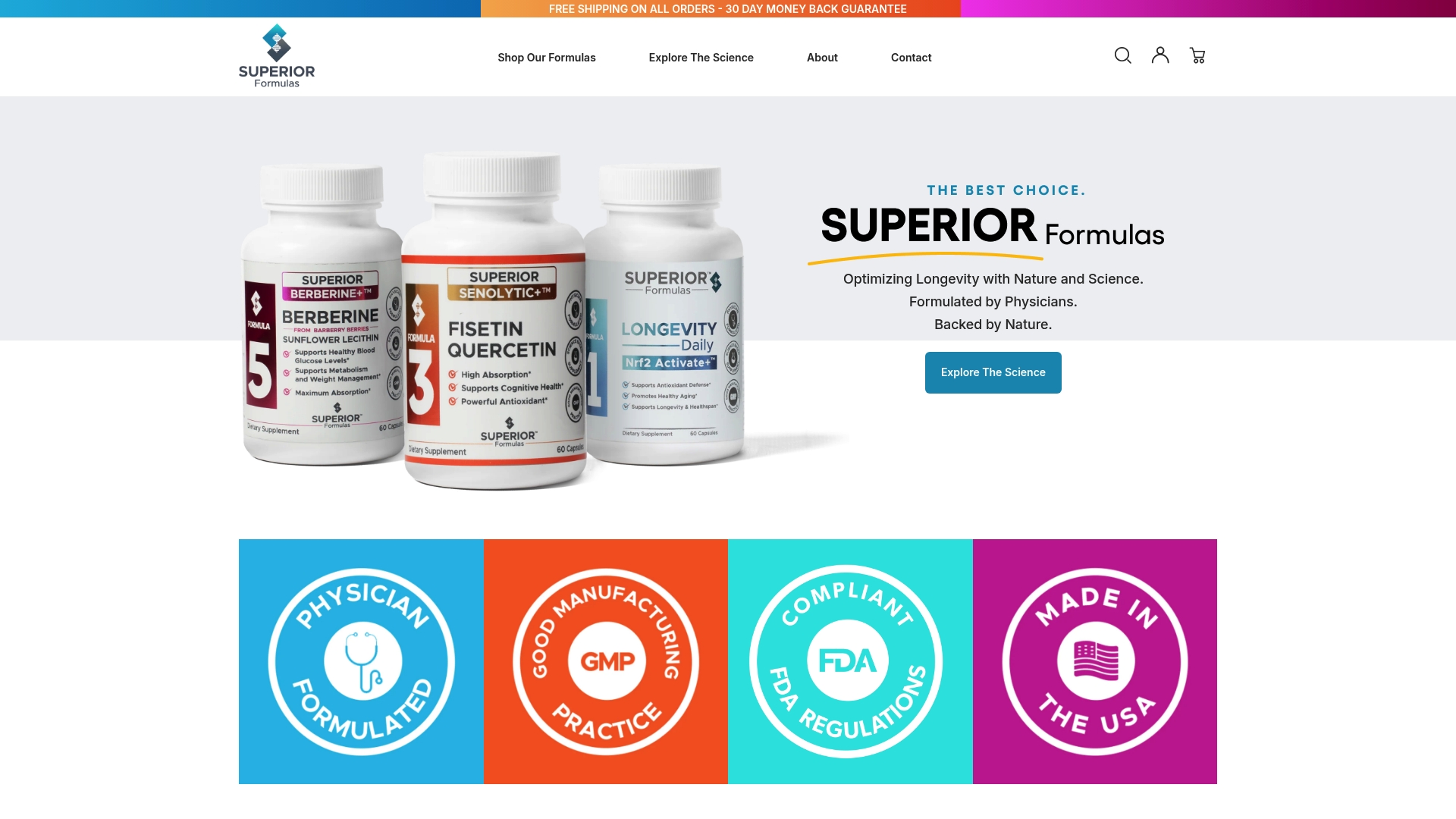
You can browse the current lineup, including the Longevity Daily Antioxidant Blend and other formulas, or read more about testing standards and ingredient sourcing on the Explore the Science page before you decide. For a broader view of how antioxidant nutrients fit into an aging-support routine, this overview of science-backed longevity picks is worth a look, as is Life Extension’s GEROPROTECT Autophagy Renew for readers comparing categories.
Sources
Mushrooms are by far the richest dietary source, though concentrations vary enormously. Analyses across mushroom species found ergothioneine ranging from 0.15 to 7.27 milligrams per gram dry weight, with levels also shifting by harvest flush and tissue type. Beans, oats, and liver contain measurable but generally lower amounts.
- Clinical trial of ergothioneine in older adults (NCT03641404) — Europe PMC
- Ergothioneine and its congeners: anti-ageing mechanisms and pharmacophore biosynthesis
- Ergothioneine: an underrecognised dietary micronutrient required for healthy ageing? | British Journal of Nutrition
- Agency response letter GRAS Notice No. GRN 000734 (FDA)
For most people, a varied diet rich in mushrooms is a reasonable starting point. Anyone wanting a consistent, measured intake, however, faces a real gap between what a meal provides and what a trial dose delivers.
FAQ
What foods are high in ergothioneine?
Mushrooms contain the highest dietary levels of ergothioneine, with concentrations varying widely by species and harvest flush. Beans, oats, and liver also contain measurable but smaller amounts.
When is the best time to take ergothioneine?
There’s no established best time of day, since ergothioneine accumulates in tissue and is retained over extended periods rather than acting quickly. Trials showing benefits have used non-daily schedules, such as 25 milligrams three times a week, rather than a specific time of day.
Is ergothioneine safe to take?
Short-term human studies report no adverse effects at doses up to 25 milligrams daily, and animal toxicology data show wide safety margins. Pregnant people, those with serious illness, or anyone taking multiple medications should still consult a clinician before starting it.
What is the most powerful antioxidant on Earth?
There’s no single, universally agreed answer to which antioxidant is the most powerful, since potency depends on what’s being measured and under what conditions. Ergothioneine stands out for its unusual stability and transporter-mediated tissue retention, which is why researchers study it alongside better-known antioxidants like glutathione rather than in place of them.


