


The process for supplement compliance is defined as a structured series of regulatory and quality control steps that dietary supplement manufacturers and distributors must follow to meet FDA requirements under the Dietary Supplement Health and Education Act (DSHEA). These steps span ingredient notification, current Good Manufacturing Practices (cGMP) under 21 CFR Part 111, labeling accuracy under 21 CFR Part 101, adverse event reporting, and ongoing recordkeeping. Skipping any one of these steps can render a product adulterated or misbranded under federal law. Superiorformulas builds every formulation inside this framework from day one, treating compliance not as a final checkpoint but as a continuous operational discipline.
What are the key regulatory requirements for supplement compliance?
Dietary supplement compliance in the U.S. rests on several interlocking federal frameworks. Understanding each one is the foundation of any effective compliance strategy.
21 CFR Part 111 (cGMP) governs how supplements are manufactured, packaged, labeled, and held. It requires written procedures, identity testing of every raw material, batch production records, and personnel training documentation. Non-compliance with Part 111 is the most common trigger for FDA warning letters.
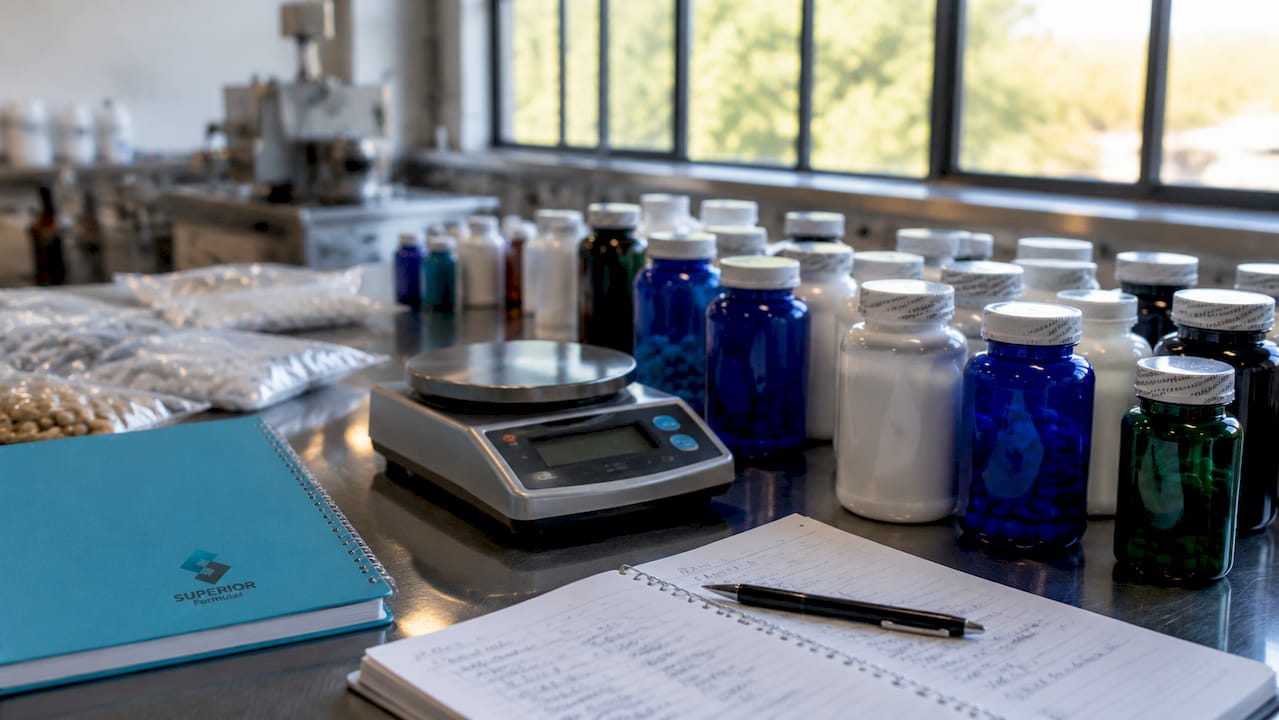
21 CFR Part 101 sets labeling standards. Every supplement must carry a Supplement Facts panel, a statement of identity, net quantity of contents, and the name and address of the manufacturer or distributor. Claims on the label must stay within legal boundaries.
New Dietary Ingredient (NDI) notifications apply to any ingredient not commercially marketed in the U.S. before october 15, 1994. The NDI notification must be submitted at least 75 days before first U.S. marketing. Failure to file renders the product adulterated by law.
Additional requirements include:
- Adverse event reporting: Serious adverse events must be reported to FDA within 15 business days using MedWatch Form 3500A, submitted to the Center for Food Safety and Applied Nutrition (CFSAN).
- FTC Act compliance: Advertising claims must be truthful, not misleading, and backed by competent and reliable scientific evidence. The FTC and FDA share enforcement authority over supplement marketing.
- DSHEA amendments: These govern structure/function claim notifications and the required FDA disclaimer on product labels.
Every business in the nutraceutical sector needs a written compliance map that addresses each of these frameworks before a product reaches market.
How to implement effective cGMP for dietary supplements
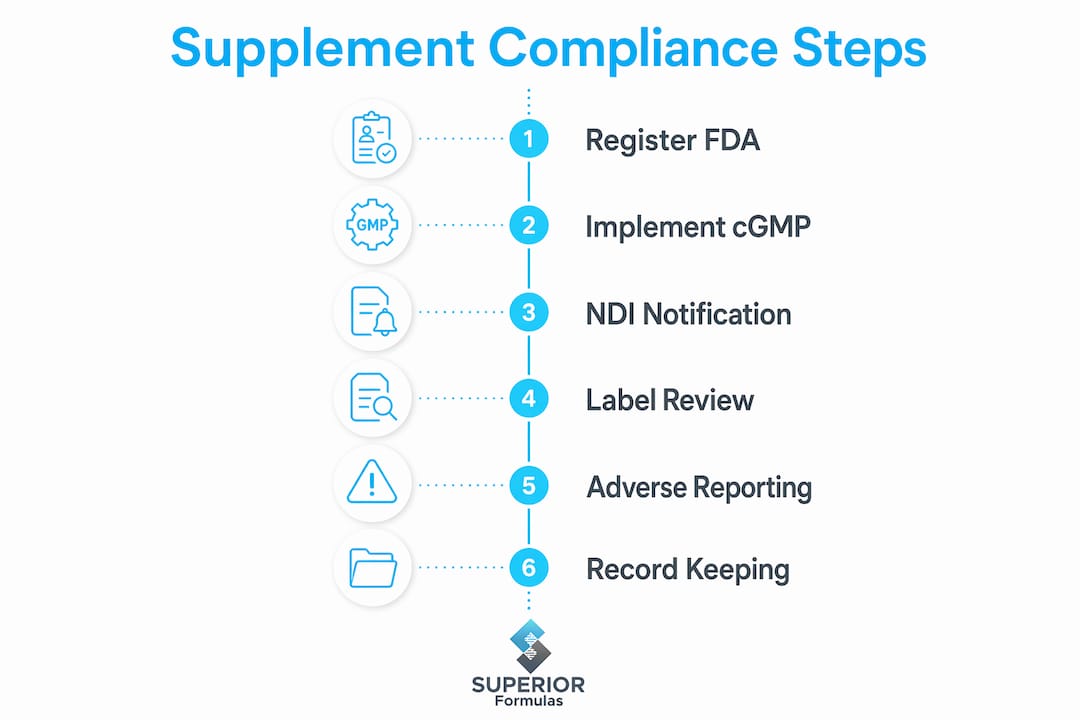
Current Good Manufacturing Practices are the operational backbone of supplement quality assurance. The FDA’s Five Pillars of GMP compliance are specifications, methods, records, laboratory controls, and personnel training. Together, they form a documented defense for manufacturers facing FDA enforcement or consumer litigation.
Implementing cGMP effectively requires these steps:
-
Establish master manufacturing records (MMRs) and batch production records (BPRs). An MMR defines the formula, process, and quality controls for each product. A BPR documents every step taken during a specific production run. Both must be retained and accessible.
-
Test every incoming raw material lot. Identity testing of components is mandatory. Supplier certificates of analysis (COAs) alone do not satisfy FDA cGMP mandates. Manufacturers must conduct independent testing or maintain a validated supplier qualification program with documented verification.
-
Document personnel qualifications and training. Every employee handling production, quality control, or packaging must have training records on file. FDA inspectors routinely request these during facility reviews.
-
Maintain sanitation schedules, equipment calibration logs, and facility maintenance records. These are not optional administrative tasks. They are required documentation under 21 CFR Part 111 and must be current at all times.
-
Build a complaint handling and recall readiness system. Written procedures for receiving, investigating, and resolving consumer complaints must exist before a product ships. A recall plan should be tested periodically, not drafted after a problem surfaces.
Pro Tip: Review your cGMP documentation against FDA’s most recent inspection observations (Form 483s) published on the FDA website. The most cited violations involve missing identity test results and incomplete batch records. Fixing these gaps before an inspection is far less costly than addressing them after.
For a broader view of quality standards across the nutraceutical sector, the core principles of nutraceuticals guide from Superiorformulas covers the foundational GMP areas that matter most in clinical supplement manufacturing.
What are the critical steps for dietary supplement labeling compliance?
Labeling is the most visible compliance risk for supplement brands. The FDA and FTC both have authority to act on misleading or illegal label content.
Every supplement label must include these mandatory elements:
- Statement of identity (e.g., “Dietary Supplement”)
- Net quantity of contents
- Supplement Facts panel with serving size, servings per container, and ingredient amounts
- Name and address of the manufacturer, packer, or distributor
- Directions for use
- Any required warnings
Structure/function claims vs. disease claims is the line most brands cross accidentally. A structure/function claim states how a nutrient affects normal body structure or function, for example, “supports immune health.” A disease claim states that a product diagnoses, cures, treats, or prevents a disease. Disease claims require FDA drug approval. They are prohibited on supplement labels.
Claims on supplement labels must be truthful, not misleading, substantiated by reliable scientific evidence, and notified to FDA within 30 days of first marketing. That 30-day window is a hard deadline, not a suggestion.
Every label carrying a structure/function claim must also display this FDA disclaimer: “This statement has not been evaluated by the Food and Drug Administration. This product is not intended to diagnose, treat, cure, or prevent any disease.” The disclaimer must appear prominently and conspicuously.
Common labeling pitfalls that trigger enforcement include:
- Using testimonials that imply disease treatment
- Listing ingredient amounts that differ from tested finished product content
- Omitting allergen declarations required under federal food labeling law
- Making claims in marketing materials that exceed what the label states
A living substantiation file and legal review before any marketing claim goes live are the most effective tools for preventing costly post-market corrections. The Superiorformulas supplement quality checklist provides a practical framework for reviewing label claims before product launch.
How to manage adverse event reporting and compliance records
Adverse event reporting is a legal obligation, not a voluntary quality initiative. Serious adverse events must be reported to FDA within 15 business days of receiving the report. All adverse event records, including non-serious events, must be retained for at least 6 years.
A functional adverse event system includes these elements:
- A written procedure for receiving and triaging consumer complaints
- Clear criteria defining what constitutes a “serious” adverse event under DSHEA (death, life-threatening condition, hospitalization, disability, or congenital anomaly)
- A designated responsible person for submitting MedWatch Form 3500A to CFSAN
- A log of all adverse events received, regardless of severity
- Periodic quality control reviews of complaint trends to identify potential safety signals
Record retention under 21 CFR Part 111 requires keeping records for at least one year beyond a product’s shelf life, or two years past the manufacture date if no shelf life is stated. These records must be immediately accessible during an FDA inspection.
Pro Tip: Set up a dedicated email address and phone line for consumer complaints. Route all incoming reports through a single intake system so nothing gets missed. A missed serious adverse event that surfaces during an FDA inspection is one of the fastest paths to a warning letter.
Cross-functional coordination between quality, regulatory, and customer service teams is essential for herbal and wellness compliance, where ingredient interactions and consumer health profiles add complexity to safety monitoring.
What ongoing practices sustain supplement compliance over time?
Compliance is not a project with a finish line. Manufacturers who treat it as a one-time checkbox consistently fall behind on SOP updates, miss regulatory changes, and face avoidable enforcement actions. The businesses that stay clean are the ones that build compliance into their daily operations.
The following practices define a mature compliance program:
-
Conduct internal audits at least annually. Audit every area covered by 21 CFR Part 111, including raw material testing, production records, labeling, and personnel training. Document findings and corrective actions.
-
Retain a dedicated compliance officer or regulatory consultant. Regulatory requirements change. FDA guidance documents are updated. A qualified person whose job is to track these changes protects the entire operation.
-
Qualify and periodically re-verify suppliers. Documented supplier qualification is a cGMP requirement. Periodic re-verification, including retesting of materials, catches quality drift before it reaches finished products.
-
Integrate regulatory review into R&D from the start. Waiting until a formula is finalized to check compliance creates expensive reformulation cycles. Compliance review at the ingredient selection stage prevents this.
-
Maintain ready-to-inspect status at all times. FDA inspections of supplement facilities are typically unannounced. SOPs, master and batch production records, and personnel training logs must be organized and immediately retrievable on any given day.
“Companies with documented compliance can negotiate from strength during FDA enforcement or consumer litigation. The Five Pillars of GMP compliance, which are specifications, methods, records, laboratory controls, and personnel training, build a defensive shield that protects manufacturers when it matters most.”
The best practices for supplement safety guide from Superiorformulas expands on how to structure legal review and substantiation files for structure/function claims, which is one of the highest-risk areas for enforcement in 2026.
Key Takeaways
A complete supplement compliance strategy requires cGMP adherence, accurate labeling, timely adverse event reporting, and continuous operational updates to stay inspection-ready under FDA oversight.
| Point | Details |
|---|---|
| NDI notification timing | Submit at least 75 days before first U.S. marketing for any ingredient new since october 15, 1994. |
| Identity testing is mandatory | Supplier COAs alone do not satisfy cGMP; manufacturers must conduct independent raw material testing. |
| Label claims require notification | Structure/function claims must be notified to FDA within 30 days of first marketing and carry the required disclaimer. |
| Adverse event records last 6 years | All adverse event records, serious or not, must be retained for a minimum of 6 years and be inspection-ready. |
| Compliance is an ongoing system | Annual internal audits, SOP updates, and supplier re-verification prevent the drift that leads to warning letters. |
What I’ve learned about building compliance that actually holds up
Most compliance failures I’ve seen don’t happen because a company ignored the rules. They happen because the company treated compliance as a department instead of a system. Quality sits in one silo, marketing writes claims in another, and R&D finalizes formulas before anyone checks the regulatory landscape. By the time an FDA inspector arrives, the gaps are already baked in.
The manufacturers who consistently pass inspections share one trait. They treat every new product as a compliance project from day one. The formula, the label, the claims, and the supplier documentation all move through a single review process before anything is finalized. That integration is not bureaucratic overhead. It is the only way to avoid the expensive corrections that come after a product is already on shelves.
The other lesson is that regulatory guidance is not static. FDA updates its thinking on NDI notifications, cGMP expectations, and claim substantiation standards regularly. A compliance program that was current in 2023 may have gaps in 2026. The companies that stay ahead assign someone to monitor FDA guidance documents, warning letters, and import alerts as a standing job function, not a once-a-year task.
Compliance done right is not a cost center. It is the infrastructure that lets a brand grow without fear of enforcement, litigation, or product recalls. That is the frame I’d encourage every nutraceutical business to adopt.
— cristopher
Superiorformulas and your supplement compliance foundation
Superiorformulas was built on the principle that science and regulatory integrity are inseparable. Every formulation the brand develops goes through GMP-certified manufacturing, third-party testing, and rigorous label review before it reaches consumers.
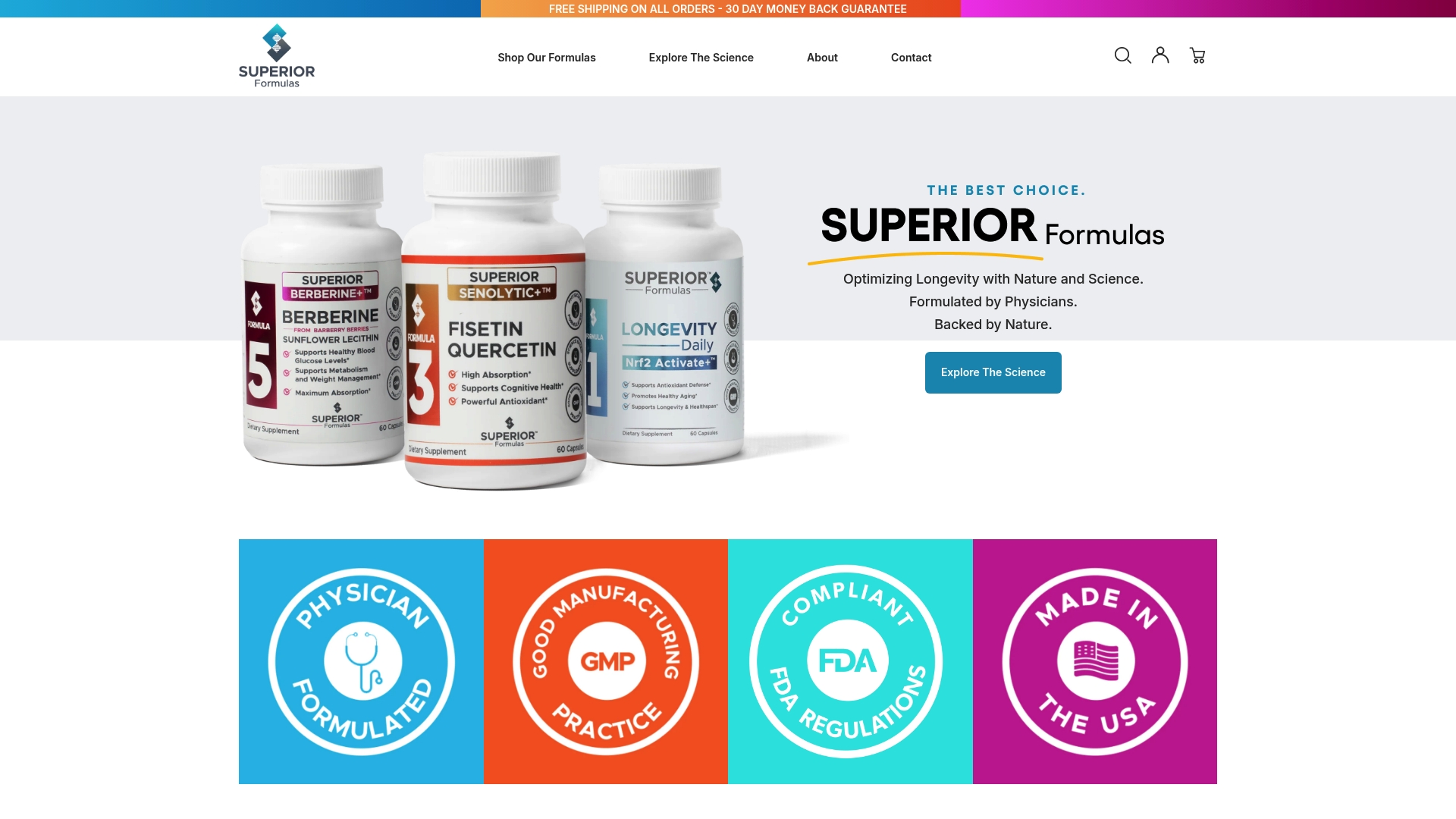
If you are building or refining your supplement compliance process, Superiorformulas offers physician-formulated products that demonstrate what full-cycle compliance looks like in practice. From ingredient sourcing to finished product testing, the brand’s approach reflects the same standards described throughout this guide. Visit Superiorformulas to learn more about the quality standards behind every product and to find resources that support your compliance planning.
FAQ
What is the process for supplement compliance in the U.S.?
The process for supplement compliance covers FDA registration, cGMP adherence under 21 CFR Part 111, NDI notifications, labeling under 21 CFR Part 101, and adverse event reporting under DSHEA. Each step must be completed before and after a product reaches market.
How long must supplement manufacturers keep compliance records?
Under 21 CFR Part 111, records must be kept for at least one year beyond a product’s shelf life, or two years past the manufacture date if no shelf life is stated, and must be available for unannounced FDA inspections.
What is a New Dietary Ingredient notification and when is it required?
An NDI notification is a required submission to FDA for any dietary ingredient not commercially marketed in the U.S. before october 15, 1994. It must be filed at least 75 days before the product first goes to market.
What is the difference between a structure/function claim and a disease claim?
A structure/function claim describes how an ingredient supports normal body function, such as “supports bone health.” A disease claim states the product treats or prevents a disease, which requires FDA drug approval and is prohibited on supplement labels.
How quickly must serious adverse events be reported to FDA?
Serious adverse events must be reported to FDA within 15 business days of receipt, using MedWatch Form 3500A submitted to CFSAN. All adverse event records must be retained for at least 6 years.


