


Curcumin is the primary active compound in turmeric, not a separate ingredient, and that distinction changes how you should actually use each one. Turmeric belongs in your kitchen for everyday antioxidant support; a clinically formulated curcumin supplement belongs in your regimen when you need the trial-level doses that studies on joint pain or metabolic markers actually used.
TL;DR:
- Most turmeric contains only 2 to 9 percent curcuminoids, with curcumin making up about three-quarters of that fraction, making food sources unlikely to reach therapeutic doses.
- Effective curcumin doses in studies range from 40 mg using bioavailable formulations to over 1,500 mg from less-optimized extracts, with higher doses generally needed for standardized supplements.
- Curcumin’s poor bioavailability, due to rapid metabolism and elimination, necessitates advanced delivery technologies like lipids, piperine, or nanoparticles to achieve trial-level effects.
- High-dose supplementation carries rare risks such as liver injury and bleeding, especially for individuals with liver issues or on blood-thinning medications, requiring medical consultation.
- When choosing a supplement, prioritize formulations with demonstrated absorption benefits and third-party testing over simple curcuminoid percentage claims.
Table of Contents
- Curcumin vs Turmeric: The Basic Definitions
- What the Clinical Research Actually Shows
- Why Bioavailability Determines Whether Curcumin Works at All
- Safety, Side Effects, and Drug Interactions to Know First
- How to Decide: Turmeric, Extract, or Formulated Curcumin
- How Much Curcumin Is Actually in Your Turmeric Jar
- From Ancient Spice to Modern Extract
- Whole Turmeric or Isolated Curcumin: Which Wins in Trials?
- How Superiorformulas Evaluates Curcuminoid Formulations
- A Clinically Minded Approach to Curcuminoid Supplements
- Sources
Curcumin vs Turmeric: The Basic Definitions
Turmeric is the dried, ground rhizome of Curcuma longa, a plant in the ginger family used as a spice and in traditional medicine systems across South Asia for thousands of years. Curcumin is one specific molecule found inside that root, and it is the one researchers isolate and study most closely.
Whole turmeric powder is not mostly curcumin. Curcuminoids, the family of yellow-pigmented compounds that includes curcumin, make up only about 2 to 9 percent of turmeric by weight, and curcumin itself accounts for roughly 75% of that curcuminoid fraction. The rest is a mix of demethoxycurcumin, bis-demethoxycurcumin, and non-curcuminoid constituents like volatile oils, starches, and proteins.
A few compositional details matter for how your body handles it:
- Curcumin is lipophilic, meaning it dissolves in fat, not water, which shapes how well your gut absorbs it.
- The other curcuminoids share some biological activity but are studied far less than curcumin.
- Turmeric’s essential oils (turmerones) may support curcumin’s effects, though the evidence here is thinner.
- Because curcumin is such a small fraction of the whole spice, getting a clinical-trial dose from food alone is not realistic.
What the Clinical Research Actually Shows
The strongest evidence for curcumin’s therapeutic effects comes from joint health and metabolic research, not general wellness claims. A 2021 review of 15 randomized controlled trials found that curcumin relieved osteoarthritis pain and stiffness as effectively as, or better than, certain NSAIDs, a notable finding given that NSAIDs carry their own long-term GI and cardiovascular risks.
By the Numbers: In a 9-month randomized trial of prediabetic adults, 16.4% of the placebo group progressed to type 2 diabetes, compared with 0% of the curcumin-treated group. That’s a striking result, though it comes from one trial and needs replication in larger, more diverse populations before it can guide broad recommendations.
Dosing across successful studies was not uniform, which matters if you’re comparing labels:
- Highly bioavailable curcumin formulations produced benefits at doses as low as 40 mg per day.
- Standard, less-optimized extracts required up to 1,500 mg per day to show similar effects.
- Short tolerability studies have tested single doses as high as several grams without acute harm, though that says nothing about long-term safety at those levels.
- Trial length in the osteoarthritis reviews typically ran 8 to 12 weeks, not years.
None of this makes curcumin a settled matter. Sample sizes in many trials are modest, and researchers reviewing this literature consistently call for larger, longer studies before curcumin can be positioned as an alternative to standard medical treatment for any condition. What’s clear is that when benefits show up, they show up at doses no one gets from cooking with turmeric.
Why Bioavailability Determines Whether Curcumin Works at All
Curcumin’s biggest limitation isn’t its biology, it’s your gut. Once swallowed, curcumin faces poor water solubility, rapid metabolism by liver enzymes (a process called glucuronidation), and quick elimination through feces, all of which mean that very little unmodified curcumin ever reaches your bloodstream. Bioavailability in unformulated curcumin is often estimated at under 1%.
This is why formulation technology, not curcuminoid percentage alone, determines whether a supplement can plausibly deliver trial-level effects. Three approaches dominate the market:
- Piperine (black pepper extract): Can meaningfully boost absorption, but it also slows the liver enzymes that clear many medications, which raises real interaction risk.
- Lipid and phytosome carriers: Bind curcumin to fat-soluble carriers that mimic how it would travel if eaten with a fatty meal, generally with fewer interaction concerns than piperine.
- Micellar or nanoparticle formulations: Break curcumin into smaller particles for faster gut absorption, though quality varies widely between manufacturers.
Pro Tip: Check whether a brand publishes actual absorption or pharmacokinetic data for its specific formulation, not just a curcuminoid percentage on the label. A “95% curcuminoids” claim tells you nothing about how much reaches your bloodstream. For a deeper look at how these technologies compare, this formulation optimization guide breaks down the tradeoffs in more technical detail, and Superiorformulas’ own breakdown of clinical evidence in supplements explains what to look for beyond marketing language. If you’re using plain turmeric, pairing it with a fat source and a pinch of black pepper at least improves on doing nothing.
Safety, Side Effects, and Drug Interactions to Know First
Curcumin is generally well tolerated at food-level intake, and even at higher supplemental doses, most people report only mild issues: nausea, diarrhea, or a metallic taste are the most common complaints in trials. Rare but real problems deserve more attention than they usually get.
Between 2004 and 2022, researchers documented ten confirmed cases of liver injury linked to curcumin-containing herbal and dietary supplements. Ten cases against millions of users is a small number, but it’s large enough that anyone with existing liver disease, or unexplained abnormal liver labs, should talk to a clinician before starting a concentrated curcumin product.
Interaction risk is the other piece people underestimate:
- Curcumin can thin the blood, so combining it with warfarin, aspirin, or other anticoagulants raises bleeding risk.
- It may interfere with chemotherapy or immunosuppressant drug metabolism, a concern detailed in this patient guide on supplements during immunotherapy.
- Piperine-boosted formulas can alter how your liver processes many prescription medications, not just curcumin itself.
- Surgery patients should stop high-dose curcumin supplements at least two weeks beforehand due to bleeding risk.
- Pregnant or breastfeeding individuals should stick to food-level turmeric and skip concentrated extracts absent clinician guidance.
How to Decide: Turmeric, Extract, or Formulated Curcumin
Match the product to your actual goal instead of defaulting to whatever’s cheapest on the shelf.
- Define your goal first. General antioxidant support and flavor mean turmeric in cooking is enough. Joint discomfort or metabolic markers you’re actively tracking mean you likely need trial-level curcumin doses.
- Read the label for curcuminoid content, not just “turmeric extract.” Standardized extracts should state the percentage of curcuminoids, though standardization claims aren’t FDA-regulated, so treat this as one data point, not proof of quality.
- Check for a named absorption technology. Piperine, phytosome, or micellar delivery, and ask whether the brand cites its own pharmacokinetic testing.
- Confirm third-party testing. Heavy-metal contamination has been documented in turmeric supply chains, so a published Certificate of Analysis matters more than marketing copy.
- Ask your clinician before combining with medications for blood clotting, cancer treatment, or immune suppression.
Pro Tip: If you’re on any prescription medication, bring the exact supplement label to your next appointment rather than describing it verbally. Curcuminoid content and delivery technology vary enough between brands that “I’m taking a turmeric pill” doesn’t give your doctor enough to work with.
How Much Curcumin Is Actually in Your Turmeric Jar
A teaspoon of ground turmeric contains roughly 200 mg of curcuminoids, and curcumin itself makes up a fraction of that. Compare that to a clinical dose of 500 to 1,500 mg of standardized curcumin, and the math gets uncomfortable fast: you’d need dozens of teaspoons of turmeric daily to approach what a single capsule delivers.
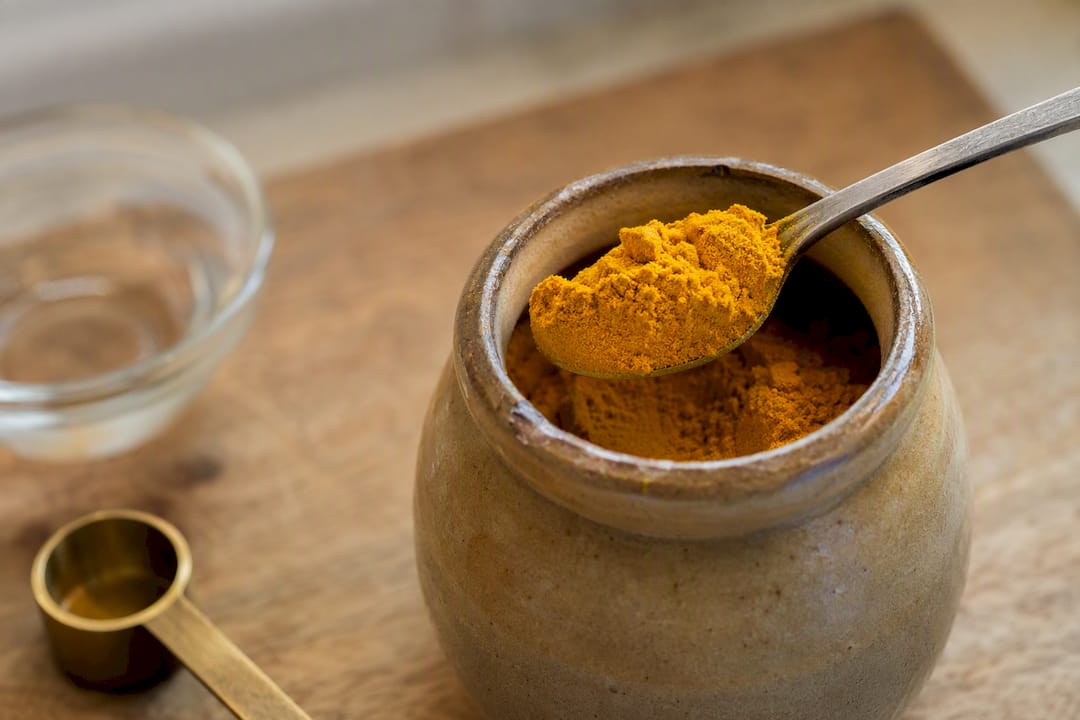
Concentration is the entire story here. Manufacturers extract and concentrate curcuminoids from raw turmeric, then often standardize the result to a specific percentage, commonly around 95% curcuminoids, to create a product with a predictable, measurable dose. Raw turmeric offers no such consistency. Curcumin content varies by growing region, soil, harvest timing, and processing method, so two jars of turmeric powder from different suppliers can differ meaningfully in potency even at the same weight.
This is also why turmeric supplements aren’t automatically equivalent to curcumin supplements. A capsule labeled “turmeric root extract” might concentrate the whole spectrum of curcuminoids and oils, while one labeled “curcumin” or “curcuminoid complex” isolates the compounds researchers actually test. Neither is inherently better for every use case, but they are not interchangeable. The label language is your only clue to which one you’re actually buying.
From Ancient Spice to Modern Extract
Turmeric’s use predates modern chemistry by millennia. Ayurvedic and traditional Chinese medicine systems used the whole root, typically as a paste, tea, or cooking spice, to address digestive complaints, skin conditions, and general inflammation long before anyone had isolated a single active molecule. That whole-food context matters: traditional use always combined curcumin with turmeric’s other compounds, fats from cooking, and often black pepper, inadvertently solving the absorption problem centuries before scientists understood why it worked.
Modern curcumin research began in earnest in the mid-20th century, once chemists could isolate and purify individual curcuminoids for laboratory study. That shift let researchers test curcumin’s mechanisms directly, largely its influence on inflammatory signaling pathways, rather than studying turmeric as an undifferentiated whole. It also created the bioavailability problem discussed earlier: isolating curcumin from its traditional food matrix strips away the very context that once helped the body absorb it.
The practical takeaway is that traditional use and modern supplementation solve different problems. Traditional turmeric use was about sustained, modest exposure through diet. Modern curcumin extraction is about hitting a specific, measurable dose for a specific, measurable outcome, which is exactly why formulation technology has become the center of curcumin research rather than an afterthought.
Whole Turmeric or Isolated Curcumin: Which Wins in Trials?
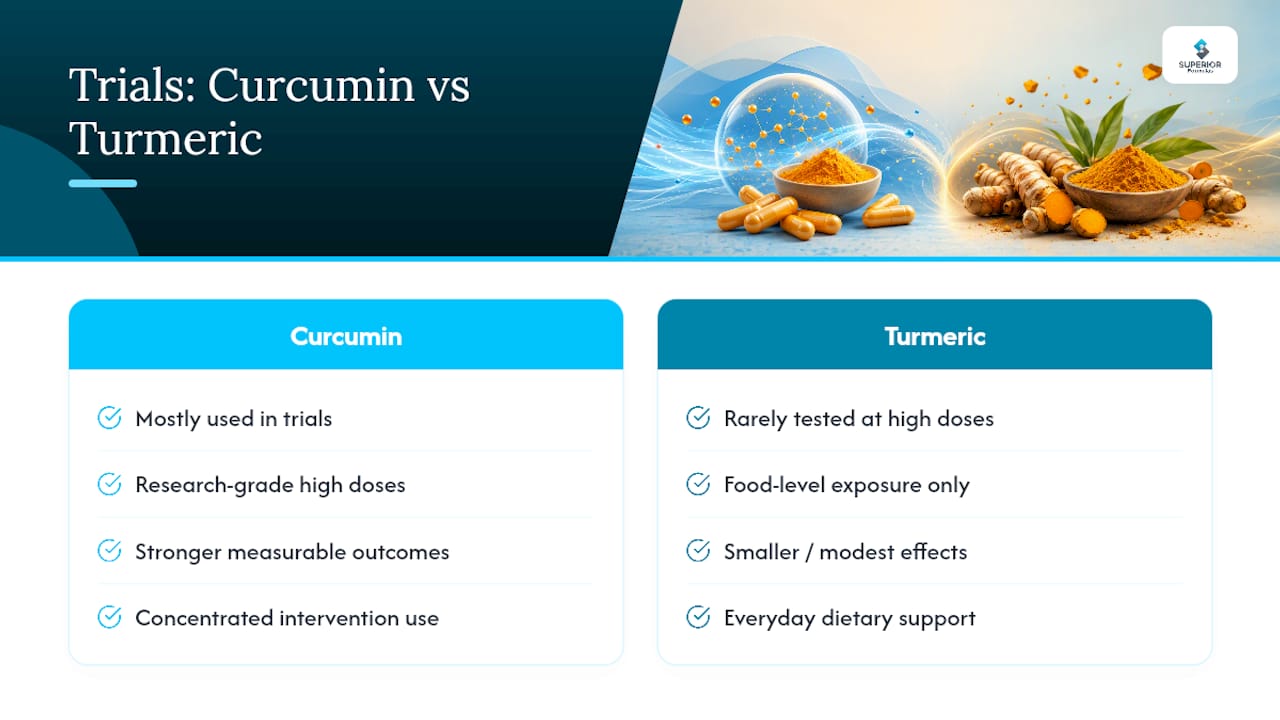
Clinical outcomes tilt clearly toward isolated, concentrated curcumin, mostly because whole turmeric has almost never been tested at research-grade doses. The osteoarthritis and metabolic trials cited earlier all used curcumin extracts or standardized curcuminoid complexes, not turmeric powder, largely because reaching those dose levels through food would mean consuming amounts of raw spice no one realistically eats.
That doesn’t mean turmeric is useless, it means it’s understudied at high doses rather than proven ineffective. A handful of smaller studies using turmeric powder or extract still show modest anti-inflammatory and antioxidant effects, just generally smaller in magnitude than what concentrated curcumin trials report. Johns Hopkins Medicine researchers note that food-based turmeric intake, especially combined with black pepper and a fat source, offers reasonable everyday support, while cautioning against routine high-dose turmeric supplementation without a clinician’s input.
The honest comparison, then, isn’t “turmeric versus curcumin” as competitors. It’s food-level exposure versus concentrated intervention. If your outcome of interest is a specific, measurable one, joint pain scores, fasting glucose, inflammatory markers, the evidence points toward formulated curcumin. If your goal is general dietary antioxidant support alongside a varied diet, turmeric in food does real work without the interaction risks that come with concentrated extracts.
How Superiorformulas Evaluates Curcuminoid Formulations
Superiorformulas was founded by a physician-scientist, and that clinical background shapes how the company approaches curcuminoid formulation: favoring measured curcuminoid content and documented absorption technology over vague “turmeric extract” labeling. Every formulation decision starts with the same question researchers ask in trials, does this delivery method actually raise plasma curcumin levels, not just the percentage printed on a bottle.
Products are manufactured in GMP-certified facilities and undergo third-party testing for purity and contaminants, addressing the same supply-chain concerns documented in turmeric heavy-metal research. That transparency standard, publishing what’s tested and how, reflects a broader position: a supplement’s value should be judged by its evidence and its formulation quality, not by curcuminoid percentage alone.
— cristopher
A Clinically Minded Approach to Curcuminoid Supplements
If you’ve made it this far, you already know that not all curcumin products are formulated to actually work. A physician-formulated approach means measured curcuminoid content, documented absorption technology, and third-party testing you can verify, rather than a curcuminoid percentage with no evidence behind how much of it your body can use.
Superiorformulas builds its cellular health and antioxidant formulations around the same principle discussed throughout this piece: bioavailability determines whether a compound does anything at all. That approach shows up in related formulations covering quercetin’s anti-inflammatory research and in resources on reading formulation technology on supplement labels, both useful if you’re comparing curcuminoid products against other polyphenol-based options.
If you’re ready to look at a curcuminoid formulation built around measured content and third-party verification rather than marketing percentages, visit Superiorformulas to see the current formulation and testing documentation before you decide what belongs in your regimen.
This article is general information, not a substitute for advice from a qualified doctor. Consult a qualified healthcare professional about your own circumstances before acting on anything here.
Sources
- PMC article on curcumin trials (2021 review)
- Case reports / review documenting liver injury from curcumin supplements
- Tufts Nutrition Letter summary of randomized trial on curcumin preventing diabetes
- Frontiers review: Curcumin — biological activities, bioavailability, and human health benefits (2025)


