


 can measurably shift thyroid hormone levels, and that fact matters most if you already have a thyroid condition or take thyroid medication. Small randomized trials show the herb raises T3 and T4 while l...&media=http://cdn//csuxjmfbwmkxiegfpljm.supabase.co/storage/v1/object/public/blog-images/organization-27528/1786279439555_Enzyme-assays-for-thyroid-hormone-conversion-in-lab.jpeg)


Ashwagandha (Withania somnifera) can measurably shift thyroid hormone levels, and that fact matters most if you already have a thyroid condition or take thyroid medication. Small randomized trials show the herb raises T3 and T4 while lowering TSH in subclinical hypothyroid adults. At the same time, published case reports document thyrotoxicosis, a state of excess thyroid hormone, that resolved only after stopping the supplement. The National Center for Complementary and Integrative Health (NCCIH) and Memorial Sloan Kettering Cancer Center (MSK) both advise that people with thyroid disorders should avoid ashwagandha unless under direct clinical supervision.
Here is who this guidance applies to most directly:
- May see benefit (with monitoring): Adults with confirmed subclinical hypothyroidism who are not yet on medication and who have a clinician tracking their labs.
- At elevated risk: Anyone with autoimmune thyroid disease (Hashimoto’s or Graves’), anyone already taking levothyroxine or other thyroid hormone replacement, and anyone with a history of hyperthyroidism.
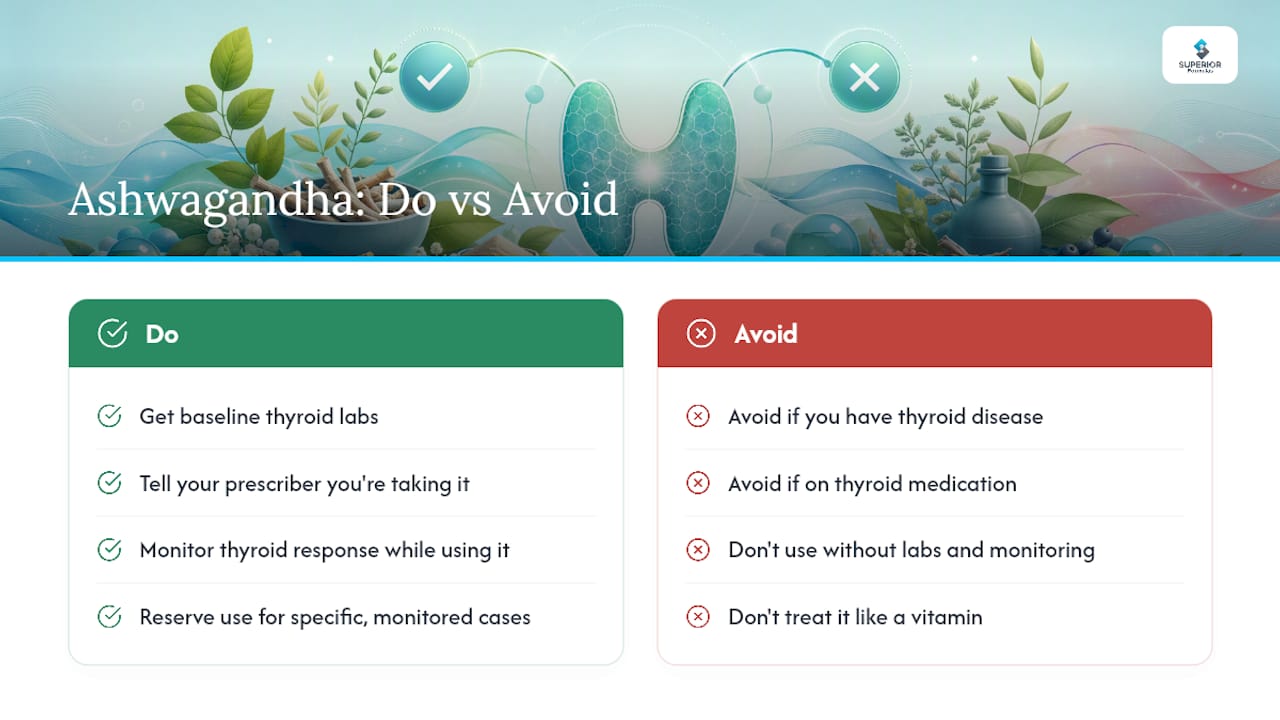
- Immediate action required: Stop ashwagandha and contact your clinician if you develop palpitations, unexplained weight loss, heat intolerance, tremor, or rapid heart rate. These are red-flag signs of rising thyroid hormones.
Pro Tip: Before starting any adaptogen, get a baseline TSH, free T4, and free T3. That single step gives your clinician a reference point if symptoms develop later.
Key Takeaways
Ashwagandha can raise T3 and T4 while lowering TSH, making clinician oversight and baseline lab testing non-negotiable for anyone with a thyroid condition or on thyroid medication.
| Point | Details |
|---|---|
| Thyroid hormone shifts are documented | A 50-person RCT showed TSH decreased and T3/T4 increased at 600 mg/day over 8 weeks. |
| Thyrotoxicosis is a real risk | Case reports confirm thyrotoxicosis linked to ashwagandha use; symptoms resolved after stopping. |
| Key groups must avoid without supervision | People with autoimmune thyroid disease, those on levothyroxine, and pregnant people should not use ashwagandha without explicit clinician approval. |
| Monitor labs if you proceed | Get baseline TSH, free T4, and free T3 before starting; recheck at 4–8 weeks. |
| Superiorformulas applies clinical standards | Physician-formulated, GMP-certified, third-party tested products with standardized withanolide content for reliable dosing. |
Table of Contents
- How does ashwagandha affect thyroid function?
- What do clinical trials and case reports actually show?
- Who should avoid ashwagandha, and what are the safety concerns?
- Does ashwagandha interact with levothyroxine and other medications?
- What symptoms suggest thyroid changes, and how should you monitor?
- How do study doses compare to what’s in retail supplements?
- Practical steps before you start or stop ashwagandha
- A physician-scientist’s perspective on risk vs. benefit
- Superiorformulas and the standard for adaptogen quality
- Sources
How does ashwagandha affect thyroid function?
The short answer: ashwagandha likely influences the thyroid through more than one pathway, though no single mechanism has been definitively confirmed in humans.
The most plausible route runs through the hypothalamic-pituitary-adrenal (HPA) axis. Ashwagandha is classified as an adaptogen, meaning it tends to reduce cortisol output under chronic stress. Elevated cortisol suppresses the hypothalamic-pituitary-thyroid (HPT) axis, so lowering cortisol could, in theory, allow TSH secretion to rise and subsequently stimulate greater thyroid hormone production. The observed pattern in trials, where TSH falls and T3/T4 rise, does not fit this model cleanly, which suggests additional mechanisms are at work.
A second hypothesis involves peripheral conversion. The body converts the relatively inactive T4 into active T3 through deiodinase enzymes. Some researchers propose that withanolides, the steroidal lactones in ashwagandha root, may influence this conversion process. A third line of thinking points to immune modulation: because autoimmune activity drives both Hashimoto’s thyroiditis and Graves’ disease, any herb with immunomodulatory properties carries theoretical risk of altering disease activity in either direction.
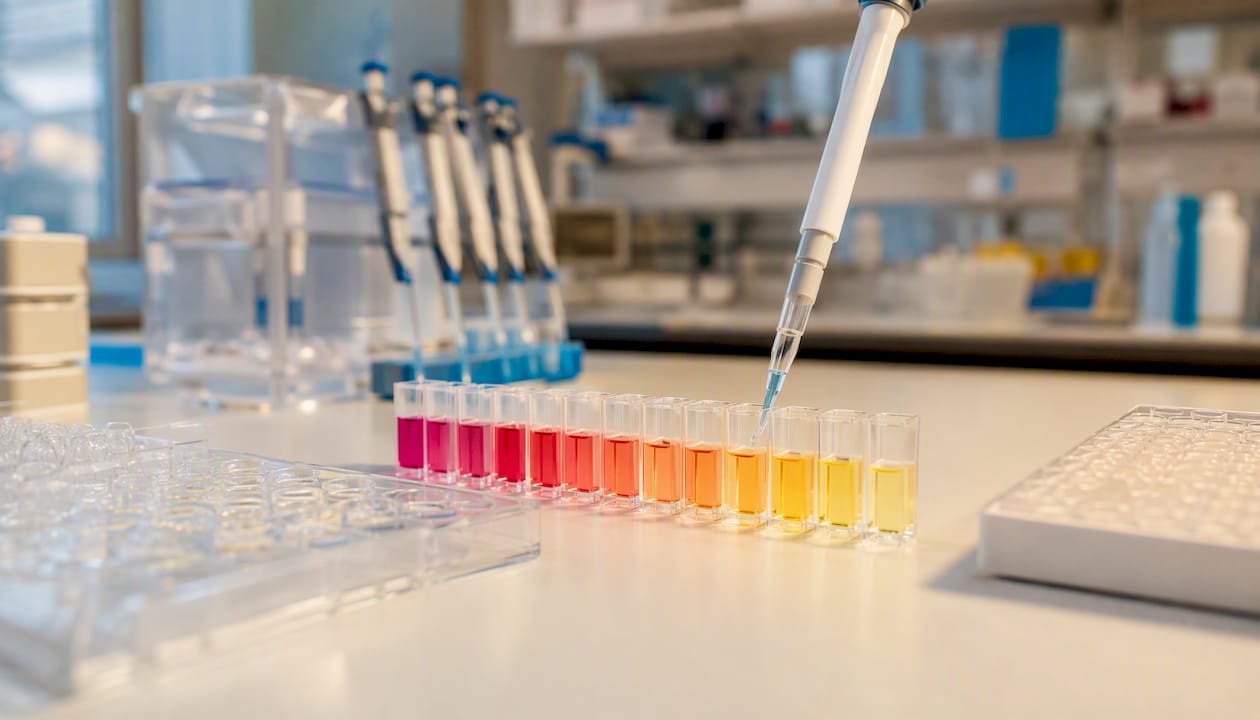
What the data consistently show, across small studies, is a directional shift toward higher circulating thyroid hormones. Whether that shift is clinically meaningful, beneficial, or harmful depends entirely on where a person’s thyroid function sits at baseline.
What do clinical trials and case reports actually show?
The evidence base is real but narrow. Two categories of human data exist: small controlled trials showing hormone normalization in subclinical hypothyroidism, and case reports showing thyrotoxicosis in people who were not hypothyroid at baseline.
The key randomized trial
The most cited study is a randomized, double-blind, placebo-controlled trial enrolling 50 adults with subclinical hypothyroidism. Participants received 600 mg/day of ashwagandha root extract for 8 weeks. At the end of the trial, the ashwagandha group showed significantly reduced TSH and increased T3 and T4 compared with placebo. The sample was small and the duration short, but the hormonal direction was consistent and statistically significant within the trial’s own parameters.
A separate, smaller study in healthy men using 500 mg/day also reported increases in T4. Neither trial was large enough to establish long-term safety or to determine which subgroups respond most predictably.
Case reports of thyrotoxicosis
Published case reports and a PMC case-series review document patients who developed thyrotoxicosis, meaning excess thyroid hormone, while taking ashwagandha. In reported cases, symptoms resolved after stopping the supplement. One case involved a very high dose, though thyrotoxicosis has appeared at other doses as well. The ODS fact sheet summarizes three such case reports, all with resolution on cessation.
These two patterns, benefit in subclinical hypothyroidism and harm in others, are not contradictory. They reflect the same pharmacological reality: an herb that raises thyroid hormones will help someone whose levels are too low and potentially harm someone whose levels are already normal or elevated.
Limitations of the current evidence
- Sample sizes in all trials are small (the largest RCT had 50 participants).
- Study durations are short, with the primary RCT running only 8 weeks.
- Commercial formulations vary widely in withanolide content, making dose comparisons across studies unreliable.
- No long-term safety data exist for thyroid-specific outcomes.
- Most trials excluded people already on thyroid medication, so evidence in that population comes only from case reports and interaction data.
Who should avoid ashwagandha, and what are the safety concerns?
Harvard Health and MSK are direct on this point: several populations should not take ashwagandha without explicit clinician approval.
Groups who should avoid or use with close supervision:
- Pregnant or breastfeeding people (traditional use as an abortifacient; safety data absent)
- People with autoimmune thyroid disease (Hashimoto’s or Graves’), given the herb’s immunomodulatory activity
- Anyone currently taking levothyroxine or other thyroid hormone replacement
- People scheduled for surgery within two weeks (potential sedative and blood pressure effects)
- Men with hormone-sensitive prostate conditions
- People taking immunosuppressants, sedatives, or antidiabetic medications
Documented safety concerns across the published literature:
- Loose stools, nausea, and stomach upset (most common, typically mild)
- Drowsiness and sedation, particularly at higher doses
- Rare but serious liver injury reports, including cases requiring hospitalization
- Potential endocrine disruption at doses above those studied in trials
The liver injury signal deserves specific attention. While rare, several case reports have linked ashwagandha to hepatotoxicity. The ODS notes this risk, and it is one reason clinicians are cautious about recommending the herb without monitoring, especially at higher doses or for extended periods.
Pro Tip: “Natural” does not mean endocrine-neutral. Ashwagandha is biologically active at the hormonal level. Treat it with the same caution you would apply to any supplement that directly influences hormone output.
Does ashwagandha interact with levothyroxine and other medications?
Yes. Drugs between ashwagandha and levothyroxine, recommending clinical and laboratory monitoring when both are used together. The concern is straightforward: if ashwagandha raises thyroid hormone levels and the patient is simultaneously taking a fixed dose of levothyroxine, the combined effect could push free T3 and T4 above the therapeutic range.
The Merck Manuals list additional drug classes where interaction potential exists:
- Antidiabetic agents: Ashwagandha may lower blood glucose; combined use risks hypoglycemia.
- Antihypertensives: Additive blood pressure lowering is possible.
- Sedatives and CNS depressants: Ashwagandha’s sedative properties may amplify these effects.
- Immunosuppressants: The herb’s immunomodulatory activity could counteract immunosuppressive therapy.
Whether these interactions are pharmacodynamic (competing or additive effects on the same physiological system) or pharmacokinetic (one substance altering how the other is absorbed or metabolized) is not fully established for most combinations.
Practical steps if you take thyroid medication:
- Disclose ashwagandha use to your prescriber before starting, not after.
- Do not adjust your levothyroxine dose based on how you feel. Wait for lab results.
- Request a TSH and free T4 check 4–6 weeks after adding or stopping ashwagandha.
- Take ashwagandha and levothyroxine at different times of day to reduce the chance of absorption interference, and confirm timing with your pharmacist.
- Report any new symptoms, including palpitations, fatigue changes, or weight shifts, promptly.
What symptoms suggest thyroid changes, and how should you monitor?
Thyrotoxicosis from ashwagandha can develop gradually, which is why symptom awareness matters as much as lab monitoring. The classic signs of rising thyroid hormones include:
- Heart palpitations or a noticeably rapid heart rate
- Unexplained weight loss despite normal or increased appetite
- Heat intolerance and excessive sweating
- Tremor, anxiety, or feeling “wired”
- Loose stools or increased bowel frequency
- Difficulty sleeping
Conversely, if ashwagandha is somehow suppressing thyroid function in a given individual, symptoms would trend the other direction: fatigue, cold intolerance, weight gain, and cognitive slowing.
A practical monitoring plan if you and your clinician decide to proceed:
- Baseline labs before starting: TSH, free T4, free T3. Record the date and the product’s withanolide content.
- First follow-up at 4–8 weeks: Repeat TSH and free T4. Adjust or discontinue based on results and symptoms.
- Ongoing monitoring: Every 3 months for the first year if continuing, or sooner if symptoms develop.
- Stop immediately and seek care if you develop palpitations, chest pain, or tachyarrhythmia. An ECG and urgent referral are appropriate in that scenario.
Pro Tip: Keep a simple symptom log during the first 8 weeks. Note your resting heart rate each morning. A sustained rise of 10 or more beats per minute without another explanation is worth reporting to your clinician before your scheduled lab check.
Monitoring frequency is ultimately a clinical decision. The timeline above reflects what the published trials used as their assessment windows, not a universal protocol. Your clinician may adjust it based on your baseline thyroid status and medication regimen.
How do study doses compare to what’s in retail supplements?
The doses used in clinical trials and the doses found in commercial products do not always match, and that gap has real safety implications.
The primary RCT used a standardized root extract at 600 mg/day. Many retail products fall within that range, but withanolide content, the active constituent, varies considerably across brands. A product labeled “500 mg ashwagandha” may contain anywhere from trace withanolides to a concentrated extract with several times the biological activity of what was tested in the trial.
This is not a minor formulation footnote. It means dose-safety inferences from the published RCT cannot be applied uniformly to every commercial product. A supplement that looks equivalent on the label may deliver a meaningfully different biological dose.
Products without these disclosures offer no reliable way to match the doses studied in trials. Our guide on assessing dietary supplements walks through exactly what to check.*
Practical steps before you start or stop ashwagandha
If you have a thyroid condition or take thyroid medication, the decision to use ashwagandha is a clinical one, not a self-directed one. Here is a clear action framework.
Before starting:
- Get baseline labs: TSH, free T4, free T3, and liver enzymes if you plan to use it long-term.
- Disclose the specific product, dose, and withanolide content to your prescriber.
- Confirm there are no contraindications given your current medications and conditions.
- Set a follow-up lab date at 4–8 weeks.
Who should not start without explicit clinician approval:
- Anyone with Hashimoto’s thyroiditis or Graves’ disease
- Anyone currently taking levothyroxine, methimazole, or propylthiouracil
- Pregnant or breastfeeding people
- Anyone with a history of liver disease
When to stop immediately:
- Palpitations, rapid or irregular heartbeat, or chest pain
- Sudden anxiety, tremor, or significant sleep disruption
- Unexplained weight loss over a short period
- Jaundice or upper-right abdominal pain (potential liver signal)
A script for your clinician appointment:
For broader guidance on safe supplement practices, including how to evaluate product quality and track your response over time, that resource covers the full framework.
A physician-scientist’s perspective on risk vs. benefit
The clinical picture for ashwagandha and thyroid health is genuinely nuanced, and that nuance is precisely where most popular health content fails the reader.
The RCT data in subclinical hypothyroidism is real and directionally consistent. For a person with mildly elevated TSH who has not yet crossed the threshold for medication, the possibility of a natural intervention that normalizes thyroid hormones without a lifetime prescription is worth taking seriously. The trial was small and short, but the signal was not noise.
What concerns me more is the pattern in case reports. Thyrotoxicosis is not a mild side effect. It stresses the cardiovascular system, accelerates bone loss, and in vulnerable individuals can trigger arrhythmia. The fact that symptoms resolved on cessation is reassuring, but it also means some people experienced a clinically significant hormonal disruption before anyone connected it to their supplement.
The deeper problem is that most people taking ashwagandha for stress or sleep are not getting baseline thyroid labs, are not disclosing it to their prescriber, and are not monitoring their response. They are treating an endocrine-active compound as though it were a vitamin. That gap between how the supplement is marketed and how it actually behaves in the body is where the real risk lives.
Cautious optimism is warranted for specific, monitored cases. For everyone else, especially those with existing thyroid disease or on thyroid medication, the conservative guidance from NCCIH and MSK is not overcautious. It reflects the honest limits of what the current evidence can and cannot tell us.
Superiorformulas and the standard for adaptogen quality
If you’ve read this far, you understand that ashwagandha’s effect on thyroid hormones is real, variable, and dose-dependent. The quality of the product you choose matters as much as the decision to use it.
Superiorformulas was founded by a physician-scientist and manufactures every product in GMP-certified facilities with third-party batch testing for purity and potency. When it comes to adaptogens, that means standardized withanolide content, transparent labeling, and formulations built around the doses and durations that clinical research has actually studied. No unnecessary fillers, no guesswork on active-ingredient concentration. For readers who want to understand what clean, clinician-formulated adaptogen supplementation looks like in practice, the physician-formulated supplement standards page explains the formulation process in detail. When you’re ready to review specific products or discuss options with your own clinician, visit Superiorformulas to see the full product line and quality documentation.
Sources
The following primary sources were used in preparing this article and are recommended for deeper review:
- Ashwagandha: Is it helpful for stress, anxiety, or sleep? - Health Professional Fact Sheet (ODS)
- Efficacy and Safety of Ashwagandha Root Extract in Subclinical Hypothyroid Patients (PubMed)
- Ashwagandha as a Unique Cause of Thyrotoxicosis: Case series and review (PMC)
- Drugs
- Ashwagandha benefits, side effects, and safety concerns (Harvard Health)
- Ashwagandha — Memorial Sloan Kettering Cancer Center
This article provides general health information and is not a substitute for professional medical advice. Consult your clinician or a qualified healthcare provider before starting, stopping, or changing any supplement, especially if you have a thyroid condition or take prescription medication. Verify current guidance with your prescriber or a primary source.


