


Natural compounds for wellness are bioactive substances from plants, fungi, and other natural sources that promote health by modulating inflammation, metabolism, and cellular resilience. The field has shifted significantly: scientific consensus in 2026 now treats these compounds as multi-target therapeutics rather than single-action remedies. That shift matters because it means one well-chosen compound can support cardiovascular, immune, and cognitive health simultaneously. The industry term for this category is “bioactive phytochemicals,” and understanding how they work gives you a real advantage when choosing supplements for longevity and long-term health.
1. What are natural compounds in wellness?
Natural bioactive compounds function as systemic modulators of inflammatory and metabolic pathways, influencing cardiovascular, immune, and gut health. The major classes include polyphenols, flavonoids, carotenoids, alkaloids, glucosinolates, and phytosterols. Each class acts through distinct molecular mechanisms, which is why broad-spectrum supplementation tends to outperform single-compound approaches. Think of them as a network of switches inside your cells, each one regulating a different pathway that affects how you age, recover, and resist disease.
The wellness industry is moving from traditional herbal remedies toward standardized, bioavailable botanical supplements supported by scientific evidence and quality control. That transition is good news for consumers. It means the polyphenol extract you buy today is far more likely to deliver a consistent, clinically relevant dose than the herbal teas your grandmother brewed.

2. Top polyphenols and flavonoids for longevity
Polyphenols are the most studied class of plant-based wellness compounds, and for good reason. They act on multiple aging-related pathways at once, including oxidative stress, chronic inflammation, and cellular senescence.
Key polyphenols and flavonoids worth knowing:
- Fisetin: A flavonol found in strawberries and apples, fisetin acts as a multitarget agent providing antioxidant, anti-inflammatory, and neuroprotective effects. It also modulates aging-related signaling pathways, making it one of the most researched compounds in the longevity space.
- EGCG (epigallocatechin gallate): The dominant polyphenol in green tea, EGCG supports metabolic health and has documented effects on inflammation and cellular repair.
- Quercetin: A flavonoid concentrated in onions and capers, quercetin supports immune function and cardiovascular health through its anti-inflammatory activity.
- Resveratrol: Found in red grapes and berries, resveratrol activates sirtuins, a family of proteins linked to cellular longevity.
Natural food sources for these compounds include blueberries, strawberries, green tea, apples, onions, and dark chocolate. You can find a detailed breakdown of polyphenol-rich foods to help you build a diet that reinforces your supplement strategy.
The challenge with polyphenols is bioavailability. Fisetin, for example, has low water solubility, which limits how much your body actually absorbs from a standard capsule. Modern formulation technologies are closing that gap, but the delivery method matters as much as the compound itself.
Pro Tip: When choosing a polyphenol supplement, look for products that specify the extraction method and standardized percentage of the active compound. “Fisetin 98%” tells you far more than “fisetin extract.”
For a deeper look at how polyphenols support cardiovascular and systemic health, the role of polyphenols in longevity is worth reading before you build your supplement stack.
3. Adaptogenic herbs and stress resilience
Adaptogens are a specific category of herbal remedies for health that help the body normalize its response to physical and psychological stress. They do not suppress stress responses. They regulate them, bringing overactive or underactive systems back toward balance.
Ashwagandha (Withania somnifera) is the most clinically validated adaptogen available. Its active compounds include withanolides and alkaloids. Ashwagandha improves systemic resilience by reducing stress markers and enhancing physical performance, including cardiorespiratory endurance and muscle strength. That combination of mental and physical benefits is rare in a single plant compound.
Key clinical benefits of ashwagandha:
- Reduces cortisol levels and perceived stress
- Supports immune modulation, particularly natural killer cell activity
- Improves VO2 max and muscular recovery in physically active individuals
- Demonstrates anti-inflammatory effects relevant to metabolic health
Standardized extracts are critical here. Standardized ashwagandha extracts account for varying phytochemical content by raw material source, which is why two products labeled “ashwagandha” can produce very different results. Always choose a product that specifies its withanolide percentage.
Other notable adaptogens include Rhodiola rosea for cognitive fatigue, Panax ginseng for energy and immune support, and Eleuthero for physical endurance. Each works through slightly different pathways, so combining two or three adaptogens can provide broader coverage than relying on one alone.
Pro Tip: Adaptogens work best with consistent daily use over 6–8 weeks. A single dose will not produce measurable results. Treat them like a training protocol, not a quick fix.
4. β-glucans, phytosterols, and gut health compounds
Beyond polyphenols and adaptogens, several other natural health boosters deserve attention for their effects on immune function, cholesterol, and gut health.
- β-glucans: Soluble fibers found in oats and medicinal mushrooms, β-glucans reduce LDL cholesterol via bile acid excretion and activate innate immune cells. The cholesterol-lowering effect is one of the most replicated findings in nutritional science.
- Phytosterols: Plant-derived compounds structurally similar to cholesterol, phytosterols compete with cholesterol for intestinal absorption, reducing circulating LDL levels. They are found in nuts, seeds, and vegetable oils.
- Bioactive peptides: Peptides from novel sources like black soldier fly larvae show antioxidant, anti-inflammatory, and anticancer activity. This emerging category is expanding what counts as a wellness compound well beyond traditional plant sources.
The gut microbiome plays a central role in how all of these compounds perform. Natural compounds interact complexly with gut microbiota, influencing their metabolization and systemic bioactivity. A person with a diverse, healthy microbiome will extract more benefit from the same dose of a phytochemical than someone with a depleted gut flora. This is why dietary diversity and probiotic support are not optional add-ons. They are prerequisites for getting full value from your supplement regimen.
5. How bioavailability shapes supplement effectiveness
Poor oral bioavailability is the single biggest gap between what a natural compound can do in a lab and what it actually does in your body. Fisetin’s low solubility is a textbook example. Even at high doses, standard fisetin capsules may deliver only a fraction of the compound into systemic circulation.
| Delivery Method | How It Works | Best For |
|---|---|---|
| Standard capsule | Direct oral ingestion, no enhancement | Highly soluble compounds |
| Liposomal encapsulation | Wraps compound in lipid bilayer for cell-like uptake | Fat-soluble polyphenols, curcumin |
| Nanotechnology | Reduces particle size to nanoscale for faster absorption | Poorly soluble flavonoids like fisetin |
| Standardized extract | Guarantees minimum active compound percentage | Adaptogens, herbal extracts |
Advanced delivery systems such as liposomal encapsulation and nanotechnology improve absorption and therapeutic outcomes for compounds that would otherwise pass through the digestive tract largely intact. The practical implication is clear: a lower dose of a well-formulated supplement often outperforms a higher dose of a poorly formulated one.
Third-party testing adds another layer of assurance. A certificate of analysis from an independent lab confirms that what is on the label is actually in the capsule, and that no contaminants are present. GMP-certified manufacturing, like the standard Superiorformulas follows, provides the production-level controls that make third-party results meaningful.
Pro Tip: Look for supplements that list both the form of delivery (liposomal, nanoemulsion, standardized extract) and the third-party testing certification on the label. If neither is listed, the product is likely a commodity formulation.
6. Safe and practical use of botanical wellness supplements
Botanical wellness supplements are not risk-free simply because they are natural. Some natural compounds pose dose-dependent risks and can interact with medications. Fisetin and ashwagandha, for example, have potential genotoxicity concerns at very high doses.
Practical guidelines for safe use:
- Consult a healthcare provider before starting any new supplement, especially if you take prescription medications or have a chronic condition.
- Choose quality-tested products manufactured in GMP-certified facilities with third-party verification.
- Diversify your sources to achieve broad-spectrum benefits. No single compound covers all wellness pathways.
- Prioritize consistent, long-term intake over high acute doses. No official daily intake recommendations exist for most bioactive phytochemicals, which makes sustained, moderate use the safest default.
- Pair supplements with dietary sources of the same compounds to reinforce absorption and microbiome diversity.
Understanding how natural supplements control inflammation can also help you prioritize which compounds to add first, particularly if inflammatory markers are your primary concern.
For a broader foundation on what nutraceuticals are and how they support healthy aging, the guide to nutraceuticals from Superiorformulas is a useful starting point.
Key Takeaways
The most effective approach to natural compounds for wellness combines standardized, bioavailable formulations with consistent long-term use and a diverse dietary foundation.
| Point | Details |
|---|---|
| Polyphenols target multiple pathways | Fisetin, EGCG, and quercetin each address oxidative stress, inflammation, and aging simultaneously. |
| Adaptogens require standardization | Ashwagandha’s benefits depend on withanolide content; always choose a standardized extract. |
| Bioavailability determines real-world results | Liposomal and nanoparticle delivery systems significantly improve absorption of poorly soluble compounds. |
| Gut health amplifies compound efficacy | A diverse microbiome metabolizes phytochemicals more effectively, increasing their systemic impact. |
| Dose-dependent risks are real | High doses of fisetin and ashwagandha carry safety concerns; consistent moderate intake is the evidence-backed approach. |
What I’ve learned after years of watching this field evolve
The most common mistake I see health-conscious individuals make is chasing single-compound solutions. Someone reads about fisetin’s neuroprotective effects, buys a generic capsule, takes it for two weeks, and notices nothing. They conclude the compound does not work. The real problem was the formulation, the dose, and the timeline.
What the science actually shows is that these compounds work as a system. Polyphenols reduce the inflammatory burden that would otherwise blunt the effects of adaptogens. β-glucans support the gut microbiome that determines how much of any compound you actually absorb. Ashwagandha reduces cortisol, which in turn improves the cellular environment where antioxidants like EGCG do their work. Treating each compound as an isolated intervention misses the entire point.
The transition from traditional herbal remedies to standardized, evidence-backed formulations is genuinely exciting. For the first time, you can take a product with a known withanolide percentage, a verified fisetin concentration, and a delivery system designed to get those compounds into your bloodstream at clinically relevant levels. That is a meaningful advance over brewing tea and hoping for the best.
My honest recommendation: start with the science, not the marketing. Read the research on the specific compound, check the formulation technology, verify the third-party testing, and commit to at least 8 weeks of consistent use before evaluating results. The compounds work. The question is always whether the product delivers them properly.
— cristopher
Superiorformulas: science-backed natural wellness formulations
Superiorformulas was founded by a physician-scientist with one specific goal: to close the gap between what clinical research shows and what supplement products actually deliver. Every formulation in the Superiorformulas line is built around clinically studied ingredients, including polyphenols, adaptogens, and phytonutrients selected for their scientific backing and bioavailability profile.
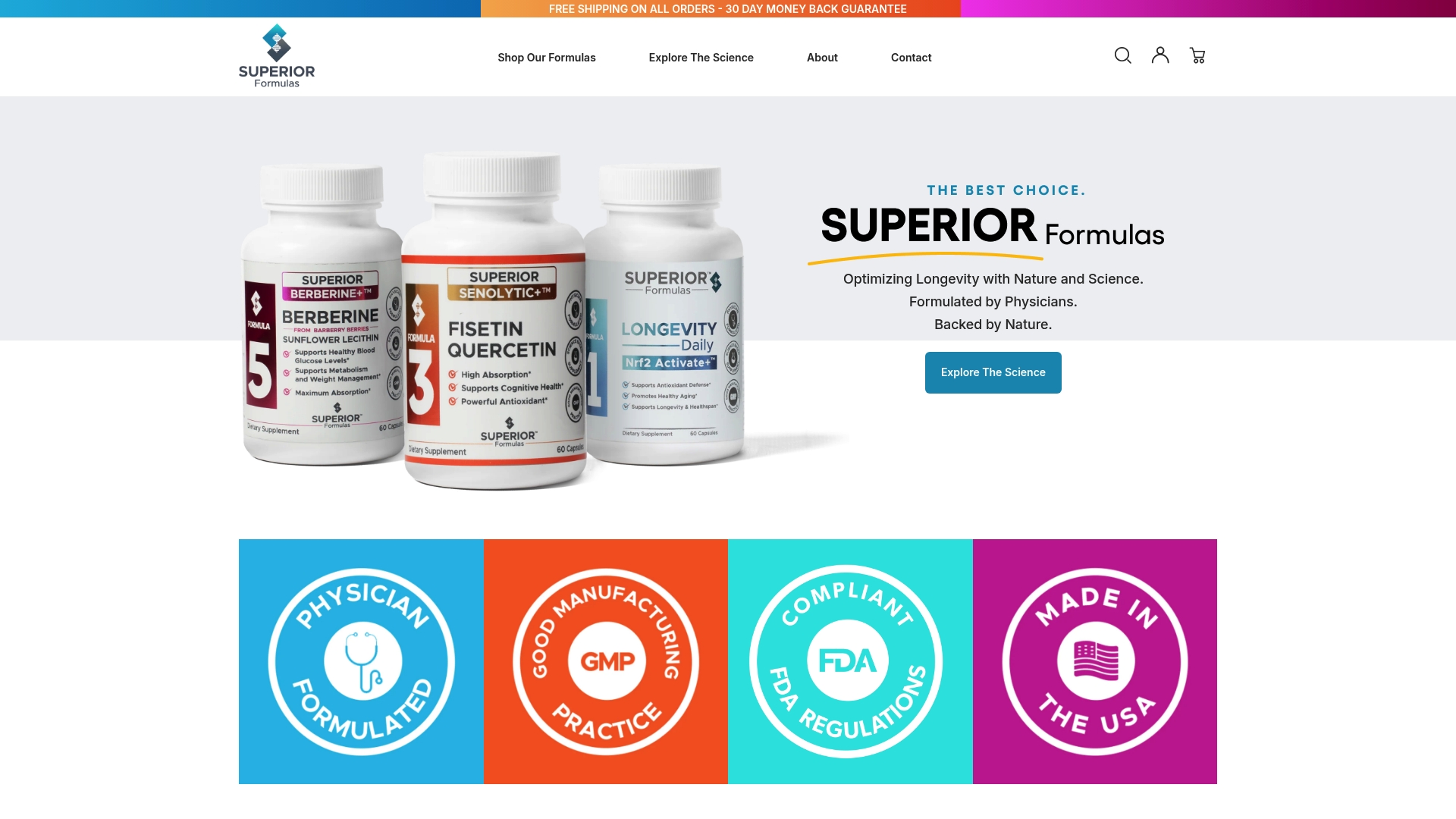
Products are manufactured in GMP-certified facilities and verified through third-party testing, so you know exactly what you are getting in every capsule. If you want to understand the science behind each ingredient and how the formulations are designed to maximize absorption and efficacy, the Superiorformulas science page is the right place to start. The research is there. The formulations are built on it.
FAQ
What are natural compounds in wellness?
Natural compounds in wellness are bioactive substances from plants, fungi, and other natural sources that modulate inflammation, metabolism, and immune function. Key classes include polyphenols, flavonoids, adaptogens, β-glucans, and phytosterols.
Which natural compounds are best for longevity?
Fisetin, EGCG, quercetin, and ashwagandha are among the most researched natural health boosters for longevity, each targeting oxidative stress, inflammation, or cellular aging pathways through distinct mechanisms.
How do I know if a botanical supplement is high quality?
Look for GMP-certified manufacturing, third-party testing certificates, and standardized extract percentages on the label. Products that list their delivery technology, such as liposomal or nanoemulsion, offer additional assurance of bioavailability.
Can natural compounds interact with medications?
Yes. Compounds like fisetin and ashwagandha can interact with certain medications and carry dose-dependent risks at high intake levels. Always consult a healthcare provider before adding new supplements to your regimen.
How long does it take for plant-based wellness compounds to work?
Most adaptogens and polyphenols require 6–8 weeks of consistent daily use to produce measurable effects. Single or short-term doses are unlikely to deliver the systemic benefits documented in clinical research.
Recommended
- Core Principles of Nutraceuticals: Your 2026 Guide | SUPERIOR Formulas
- Longevity Nutrients: Science-Backed Choices for Cellular Health - SUPERIOR Formulas
- What Are Nutraceuticals? A Guide for Healthy Aging | SUPERIOR Formulas
- How to assess dietary supplements for real wellness gains - SUPERIOR Formulas


