


The most evidence-backed approach is a Mediterranean-style, low-glycemic eating pattern built around fiber-rich carbohydrates, nonstarchy vegetables, lean protein, and healthy fats, with added sugars and ultra-processed foods cut way back. Start today with three moves: swap sugary drinks for water or unsweetened options, add a protein source to breakfast, and fill half your plate with nonstarchy vegetables at lunch and dinner. Supplements can support this foundation, but they work as adjuncts, and the right combination depends on your individual metabolic picture.
TL;DR:
- Consistently eating fiber-rich nonstarchy vegetables, whole grains, legumes, and healthy fats can significantly improve insulin sensitivity more than supplements.
- Replacing sugary drinks with water and adding protein to meals are simple, impactful steps that support blood sugar regulation from the start.
- A Mediterranean-style, low-glycemic diet combined with regular walking after meals and resistance training offers the strongest evidence for reducing diabetes risk.
- Foods and drinks high in refined carbs, ultra-processed snacks, and excess alcohol worsen insulin resistance and should be replaced or limited.
- Supplements like berberine and inositol can support metabolic health but only as adjuncts after establishing sustainable diet and exercise habits.
Table of Contents
- What Foods Improve Insulin Sensitivity the Most?
- Which Foods Make Insulin Resistance Worse?
- What Does a Sample Insulin Resistance Meal Plan Look Like?
- How Do You Personalize a Diet for Insulin Resistance?
- Do Supplements Like Berberine and Inositol Actually Help?
- Your Insulin Resistance Grocery List and Daily Rules
- Does When You Eat Matter as Much as What You Eat?
- Why Does Exercise Matter as Much as Diet Here?
- What Are the Biggest Myths About Diet and Insulin Resistance?
- What Keeps Insulin Sensitivity Improvements Going Long-Term?
- A Realistic Take on Diet, Discipline, and Supplements
- An Adjunct Worth Considering Once Your Diet Is Set
- Sources
- FAQ
What Foods Improve Insulin Sensitivity the Most?
Your grocery cart does more for insulin sensitivity than almost any pill on the market. The categories that move the needle share a common trait: they slow glucose absorption and reduce the insulin spike that follows a meal.
Nonstarchy vegetables, legumes, intact whole grains, fatty fish, nuts, seeds, olive oil, lean poultry, eggs, and high-fiber fruits form the backbone of every dietary pattern with strong trial support. Here’s what to prioritize:
- Nonstarchy vegetables: broccoli, spinach, peppers, zucchini, cauliflower
- Legumes: lentils, chickpeas, black beans, edamame
- Whole grains: oats, barley, quinoa (intact, not ultra-milled)
- Fatty fish: salmon, sardines, mackerel
- Healthy fats: extra-virgin olive oil, avocado, walnuts, almonds
- Lean protein: poultry, eggs, tofu, Greek yogurt
- High-fiber fruit: berries, apples, pears (with the skin on)
The mechanism behind this list is straightforward. Fiber physically slows how fast glucose enters your bloodstream, and monounsaturated and polyunsaturated fats replace the saturated fat that tends to worsen insulin signaling in muscle and liver tissue. Protein at meals blunts the glucose curve further by slowing gastric emptying.
The strongest real-world proof comes from the PREDIMED-Plus trial, which combined a Mediterranean diet with calorie reduction and exercise and significantly reduced new type 2 diabetes cases compared with usual care. That is not a marginal effect. It’s one of the larger dietary intervention results in metabolic research, and it’s a big reason clinicians now lead with this pattern instead of generic “eat less sugar” advice.
Practical combos work better than isolated food swaps. Pair a fiber-rich carb with protein and fat at every meal: oats with walnuts and Greek yogurt, or quinoa with salmon and olive oil dressing. Aim for a palm-sized portion of protein, a fist of whole grains, and unlimited nonstarchy vegetables.
Which Foods Make Insulin Resistance Worse?
Not every food deserves equal blame, but a handful of categories consistently raise insulin demand and drive the inflammation that keeps cells from responding to insulin properly.
- Sugary beverages: soda, sweetened coffee drinks, fruit juice
- Refined grains: white bread, white rice, most breakfast cereals
- Ultra-processed snacks: chips, packaged pastries, candy
- Processed meats high in saturated fat: bacon, sausage, deli meats
- Excess alcohol: more than one to two drinks regularly
Sugary drinks and refined grains hit your bloodstream fast, forcing a large insulin surge with almost no fiber to slow the absorption. Ultra-processed snacks compound the problem by pairing refined carbs with inflammatory fats and additives that research links to worsening insulin signaling. Excess alcohol adds empty calories and interferes with how your liver manages glucose overnight.
You don’t need to eliminate everything, just trade up. Replace soda with sparkling water and a splash of citrus. Swap white bread for whole-grain bread with a protein spread like nut butter or hummus. Trade the afternoon vending-machine snack for a handful of almonds and an apple.
Pro Tip: Check the ingredient list, not just the nutrition label. If sugar (or one of its aliases, like dextrose or cane syrup) appears in the first three ingredients, the product behaves like a dessert, no matter how it’s marketed.
What Does a Sample Insulin Resistance Meal Plan Look Like?
Principles only help once you see them on a plate. Here’s a three-day outline that follows the same template every time: protein plus fiber-rich carb plus nonstarchy vegetables plus healthy fat.
Day 1 Breakfast: Scrambled eggs with spinach and avocado on whole-grain toast. Lunch: Lentil soup with a side salad dressed in olive oil. Snack: Greek yogurt with berries. Dinner: Grilled salmon, roasted broccoli, and a small portion of quinoa. Snack: A small handful of walnuts.
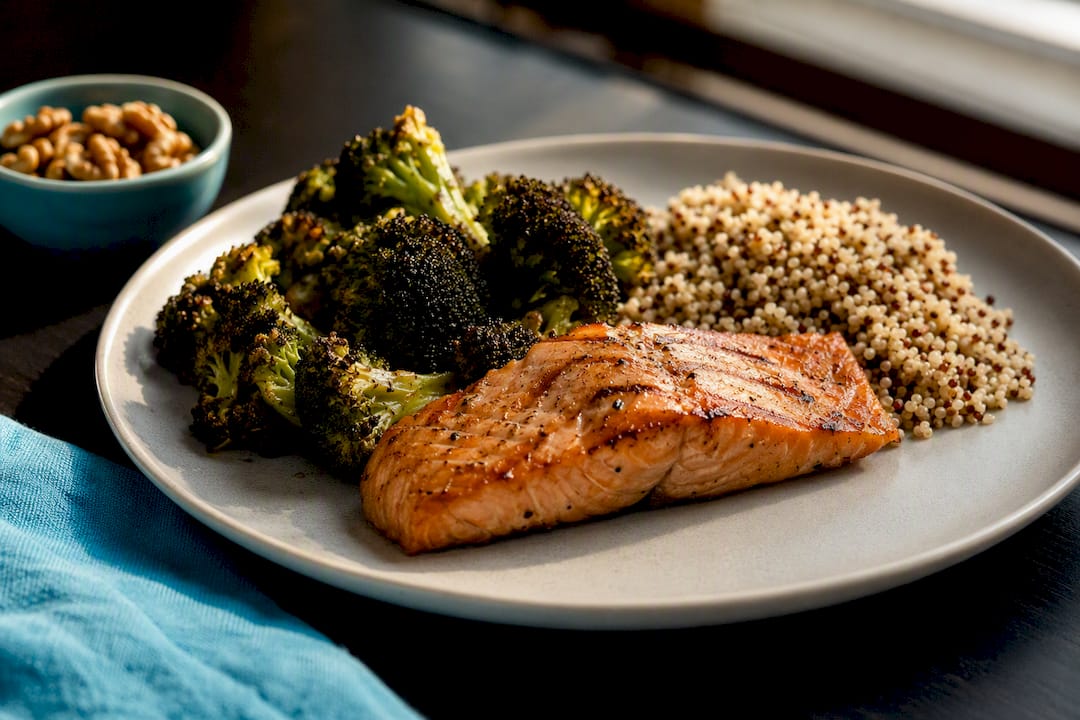
Day 2 Breakfast: Overnight oats with chia seeds, almond butter, and cinnamon. Lunch: Grilled chicken over mixed greens with chickpeas and a vinaigrette. Snack: Sliced apple with peanut butter. Dinner: Turkey chili with black beans, topped with avocado. Snack: Baby carrots with hummus.
Day 3 Breakfast: Cottage cheese with sliced pear and pumpkin seeds. Lunch: Tuna salad with olive oil and a side of steamed vegetables. Snack: A boiled egg. Dinner: Stir-fried tofu with broccoli, peppers, and brown rice. Snack: A small square of dark chocolate with almonds.
To keep this sustainable long-term:
- Batch-cook a whole grain (quinoa, barley) and a protein (grilled chicken, hard-boiled eggs) every Sunday.
- Keep pre-washed vegetables on hand so dinner prep takes fifteen minutes, not fifty.
- Take a 10 to 15 minute walk after your largest meal of the day to blunt the post-meal glucose spike.
- Rotate two or three breakfast templates instead of reinventing the meal daily.
How Do You Personalize a Diet for Insulin Resistance?
There is no single official insulin resistance diet, and clinicians increasingly frame this as a matter of matching the pattern to your metabolic phenotype rather than searching for one universal formula, according to a narrative review on nutrition and insulin resistance. What works for someone managing PCOS-related insulin resistance may not be the best fit for someone with fasting hyperinsulinemia and no weight-loss goal.
Before settling on an approach, run through this checklist:
- Is your primary goal weight loss, or are you already at a stable weight?
- Do you have PCOS, which often responds well to inositol-supported strategies alongside diet?
- Is your issue mainly fasting hyperinsulinemia or postprandial (after-meal) spikes?
- Do you have kidney disease, which changes protein and mineral recommendations?
- Are you on metformin or other glucose-lowering medication that could interact with dietary changes?
- Can you realistically sustain this pattern for years, not weeks?
Track your response with more than the bathroom scale. Fasting glucose, A1C, and, where your clinician can order it, the HOMA-IR index give a clearer picture of whether your insulin sensitivity is actually improving, since fasting glucose alone can miss underlying hyperinsulinemia. Bring these numbers, along with your symptom changes, to your next appointment, and flag any unexplained fatigue, rapid weight change, or persistently high fasting glucose for medical review.
Do Supplements Like Berberine and Inositol Actually Help?
Supplements never replace the plate, but a few have real trial data behind them as adjuncts to a Mediterranean-style diet.
Berberine has meta-analytic support for improving fasting glucose and insulin sensitivity markers, with effects that some research compares to low-dose metformin. Typical trial dosing runs 900 to 1,500 mg daily, split across meals to reduce gastrointestinal side effects.
Myo-inositol and D-chiro-inositol, often studied together in a 40:1 ratio, show meaningful benefits particularly in women with PCOS or metabolic syndrome. A randomized placebo-controlled trial combining inositol with alpha-lipoic acid alongside a low-calorie diet produced significant reductions in HOMA-IR over six months, a notable finding given how few supplement trials measure that specific marker.
Alpha-lipoic acid shows similar adjunct value in that same trial, generally dosed between 300 and 600 mg daily.
Magnesium matters mainly if you’re deficient. Correcting a true deficiency tends to help insulin signaling; supplementing when your levels are already adequate shows little added benefit.
- Take berberine and alpha-lipoic acid with meals to reduce stomach upset.
- Ask your doctor before combining berberine with metformin or other glucose-lowering drugs, since both lower blood sugar and the combined effect needs monitoring.
- Skip these supplements if you’re pregnant, breastfeeding, or have significant kidney or liver impairment, without medical clearance first.
- Ask for a basic magnesium level before assuming you need to supplement it.
- Choose products that are third-party tested for purity, since supplement quality varies widely across brands.
Emerging research on citrus flavonoid compounds used alongside metformin also shows promise for postprandial glucose control, though the evidence base is still younger than what exists for berberine or inositol, per a 2025 study in Frontiers in Nutrition. Read more on the research behind alpha-lipoic acid and what the berberine trials actually show before adding either to your routine.
Your Insulin Resistance Grocery List and Daily Rules
Keep this list on your phone for your next grocery run.
- Vegetables: spinach, broccoli, peppers, zucchini, cauliflower, cucumber
- Proteins: eggs, chicken, salmon, sardines, tofu, Greek yogurt, lentils
- Whole grains: oats, quinoa, barley (skip instant or heavily milled versions)
- Healthy fats: olive oil, avocado, walnuts, almonds, chia seeds
- Flavor without sugar: cinnamon, garlic, turmeric, fresh herbs, vinegar
Three rules make this stick without a spreadsheet: build every plate around protein plus fiber-rich carb plus vegetables plus fat, keep snacks paired (fruit with nuts, never fruit alone), and take a short walk within 30 minutes of your biggest meal. Batch-cook grains and proteins once a week to cut your reliance on convenience food when you’re tired or short on time.
Does When You Eat Matter as Much as What You Eat?
Meal timing changes how your body handles the same food, sometimes dramatically. Skipping breakfast, in particular, tends to backfire for people managing insulin resistance. Going long stretches without eating and then facing a large lunch or dinner often produces a bigger glucose and insulin spike than spreading similar calories across smaller, protein-anchored meals.
Intermittent fasting protocols, including time-restricted eating windows of 8 to 10 hours, show benefit for some people, particularly around weight loss and modest improvements in fasting insulin. But the research is mixed on whether fasting outperforms simple calorie-conscious eating once weight loss is accounted for, and fasting isn’t automatically better for everyone. If you take insulin-sensitizing medication, have a history of disordered eating, or are pregnant, longer fasting windows need a conversation with your clinician first, not a default assumption that longer is better.
What’s clearer: eating a protein-forward breakfast rather than skipping it or defaulting to cereal or pastries tends to reduce glucose swings for the rest of the day. Consistency in meal timing, eating around similar times most days, also appears to support better glucose regulation than an erratic schedule where dinner happens at 6 p.m. one night and 10 p.m. the next.
If you want to experiment with a fasting window, start modest. A 12-hour overnight fast (stopping food at 8 p.m., eating again at 8 a.m.) is a low-risk starting point that most people tolerate well, and you can extend it gradually while watching how you feel and how your fasting glucose responds.
Why Does Exercise Matter as Much as Diet Here?
Diet gets most of the attention, but physical activity may be the single most powerful lever you’re not pulling hard enough. Exercise improves insulin sensitivity through a mechanism separate from weight loss: contracting muscle pulls glucose out of the bloodstream without needing as much insulin to do it, an effect that lasts for hours after a workout ends.
Research on exercise and insulin sensitivity suggests that resistance training and post-meal walking produce improvements that are 5 to 10 times more effective than typical supplement interventions for the same outcome. That’s a striking gap, and it’s the reason no serious insulin resistance protocol treats supplements as a shortcut around movement.
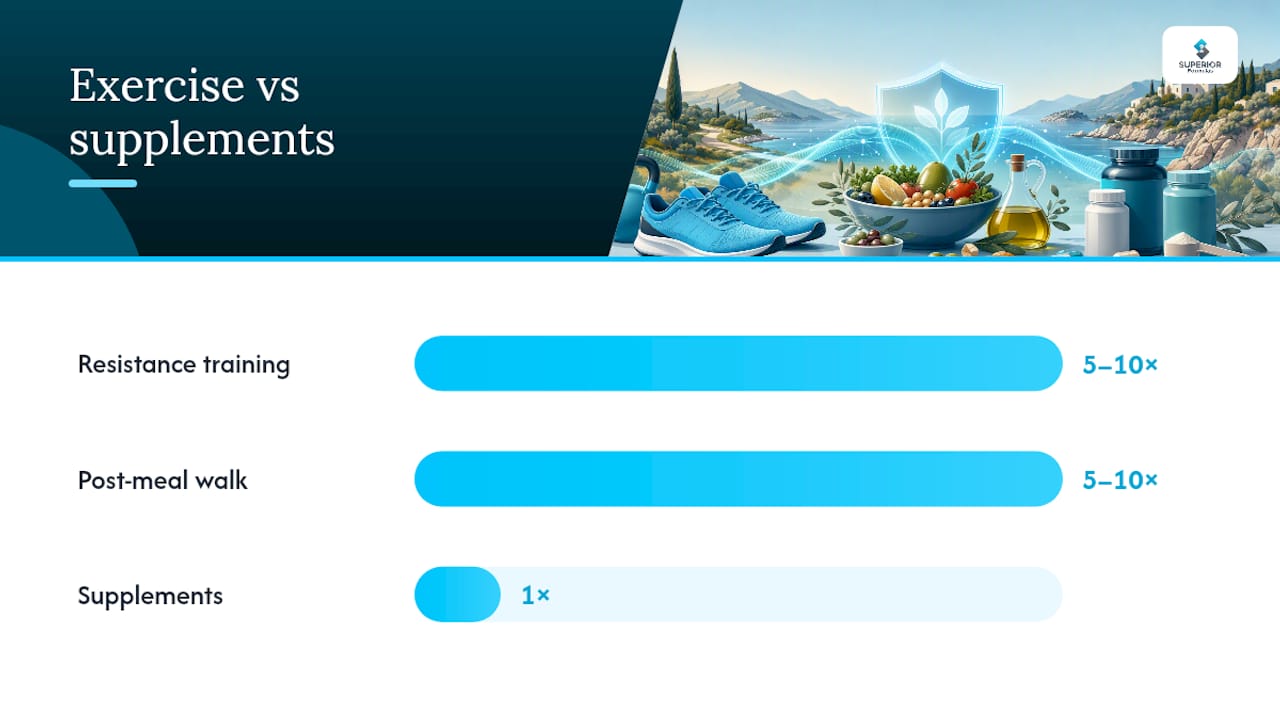
Two forms of activity matter most. Resistance training two to three times a week builds the muscle tissue that soaks up glucose, and even modest programs (bodyweight squats, resistance bands, light dumbbells) produce measurable benefit within weeks. Walking for 10 to 15 minutes after your largest meals blunts the glucose spike from that specific meal, an effect you can feel in continuous glucose monitor data almost immediately.
You don’t need an hour at the gym to see results. A 20-minute walk plus two short strength sessions a week, combined with the dietary changes above, moves the needle more than either strategy alone. The CDC’s guidance on insulin resistance and type 2 diabetes treats physical activity as inseparable from diet in any serious risk-reduction plan, not as an optional add-on.
What Are the Biggest Myths About Diet and Insulin Resistance?
The myth that causes the most damage is the idea that carbohydrates themselves are the enemy. Carbohydrate quality, not carbohydrate presence, is what matters. A cup of lentils and a can of soda both contain carbohydrates, but they behave completely differently in your bloodstream. Fiber-rich, minimally processed carbs are part of nearly every diet pattern with strong trial support, including the Mediterranean approach behind the PREDIMED-Plus results.
Another persistent myth: that insulin resistance means you’re “pre-diabetic and there’s nothing to do but wait.” Dietary and activity changes measurably reduce risk of progression, and the 31% reduction in new diabetes cases from the PREDIMED-Plus trial exists specifically because participants changed their behavior, not because the condition was inevitable.
A third myth worth retiring: that any single “superfood” or supplement can substitute for the overall eating pattern. Cinnamon, apple cider vinegar, and various trendy powders show modest or inconsistent effects in isolation. None of them come close to the impact of the food categories and activity patterns already covered here.
Finally, many people assume fruit is off-limits because it contains sugar. Whole fruit, with its fiber intact, behaves very differently from fruit juice or dried fruit with added sugar. Berries, apples, and pears are part of the recommended food list for good reason, not despite their natural sugar content.
What Keeps Insulin Sensitivity Improvements Going Long-Term?
The dietary changes that move your numbers in the first few months only stick if they turn into habits rather than a temporary project. Sustainability beats intensity. A moderately strict pattern you can maintain for years outperforms a very strict one you abandon after eight weeks, and this holds up across most long-term dietary research.
Build in flexibility. Rigid all-or-nothing rules tend to break down around holidays, travel, and stressful weeks. A pattern that allows occasional dessert or a less-than-perfect meal without triggering a full abandonment of the plan tends to survive real life better than a zero-tolerance approach.
Reassess periodically rather than assuming your first plan is permanent. Weight loss, changes in activity level, medication adjustments, or new health conditions all shift what your body needs. Revisit your food choices and activity routine every few months, and don’t hesitate to adjust based on how your fasting glucose, energy levels, and weight trend over time.
Sleep and stress management belong in this conversation too, even though they’re not strictly dietary. Poor sleep and chronic stress both raise cortisol, which works against insulin sensitivity regardless of how clean your diet looks on paper. The NIDDK’s guidance on diet, eating, and physical activity frames long-term blood sugar management as a combination of consistent habits across multiple domains, not a single fix. Treat this as a multi-year practice, not a 30-day challenge.
A Realistic Take on Diet, Discipline, and Supplements
The uncomfortable truth about insulin resistance management is that most of the effective strategy is boring. It’s vegetables, walking after dinner, and reading ingredient labels, not a breakthrough discovery waiting to be found. The Mediterranean pattern behind PREDIMED-Plus wasn’t exotic. It was consistent, moderate, and sustained over years.
Where I’d push back on conventional advice: too many resources treat supplements and dietary patterns as competing strategies, when the actual research treats them as sequential. Diet and activity come first because the effect sizes are simply larger. Supplements like berberine, inositol, and alpha-lipoic acid earn their place afterward, for people who have already built the foundation and want additional support, not as a substitute for the harder work. Anyone selling a supplement as a standalone fix for insulin resistance is overselling the data.
The other place I’d disagree with the mainstream framing: personalization gets treated as an afterthought when it should be the starting question. A postmenopausal woman with PCOS and a shift worker managing fasting hyperinsulinemia need meaningfully different emphases within the same broad pattern, and a good clinician or dietitian should help you find that fit rather than handing you a generic sheet.
— cristopher
An Adjunct Worth Considering Once Your Diet Is Set
Diet and activity do the heavy lifting here, and nothing changes that. But once those fundamentals are in place, some readers look for additional support, particularly around berberine or alpha-lipoic acid, two of the compounds with the most consistent trial data as adjuncts to dietary change. Some brands build their formulas around the principle of evidence-based ingredients meant to complement your plate, not replace it.

Certain dietary supplements are manufactured in GMP-certified facilities and third-party tested for purity, adhering to high-quality standards often sought in evidence-based supplement development. These products are not a substitute for a Mediterranean-style diet, regular movement, or any medication your doctor has prescribed. Talk to your clinician before starting any new supplement, especially if you take metformin or another glucose-lowering drug. If you’re ready to explore what a well-formulated adjunct looks like, browse the full collection and see which formula fits where you are in your plan.
Sources
- Mediterranean diet combined with calorie reduction and exercise lowers diabetes risk 31% (PREDIMED-Plus coverage)
- Targeting insulin resistance through nutrition: pathophysiological insights and dietary interventions (narrative review)
- Combination of inositol and alpha lipoic acid in metabolic syndrome-affected women: a randomized placebo-controlled trial (INOSIDEX)
- About insulin resistance and type 2 diabetes — CDC
- Diet, eating, and physical activity — NIDDK/NIH
FAQ
What is the best diet if you have insulin resistance?
A Mediterranean-style, low-glycemic pattern rich in nonstarchy vegetables, whole grains, legumes, lean protein, and olive oil has the strongest trial support, including the PREDIMED-Plus trial, which showed a significant reduction in new type 2 diabetes cases. There’s no single official plan, so the right version depends on your goals, medical history, and what you can sustain long-term.
What should I eat first in the morning for insulin resistance?
A protein-forward breakfast, such as eggs with vegetables or Greek yogurt with berries and nuts, tends to produce a smaller glucose spike than cereal, pastries, or skipping the meal altogether. Pairing protein with fiber and healthy fat slows digestion and keeps insulin demand steadier through the morning.
What are common signs of insulin resistance?
Common signs include fatigue after meals, difficulty losing weight despite effort, increased hunger or sugar cravings, dark patches of skin (acanthosis nigricans), and elevated fasting glucose or triglycerides on bloodwork. Many people have no obvious symptoms at all, which is why routine bloodwork and a HOMA-IR check, when available, matter more than symptom-watching alone.
What is the fastest way to improve insulin resistance?
Combining a Mediterranean-style dietary shift with regular physical activity produces the fastest measurable change, since exercise alone can improve insulin sensitivity within days through increased muscle glucose uptake. Cutting sugary drinks and refined carbs immediately, walking after meals, and adding resistance training two to three times weekly stack these effects rather than relying on any single change.
Can supplements replace diet changes for insulin resistance?
No. Supplements like berberine, inositol, and alpha-lipoic acid show real benefit in trials, including measurable HOMA-IR reductions in the INOSIDEX trial, but only as an addition to diet and activity changes, never as a replacement for them. Current pricing for adjunct formulations like Superior Berberine+ is available on the Superiorformulas site.


