


, daily habits (adequate sleep, regular moderate exercise, not smoking), and targeted supplements used only to correct a documente...&media=http://cdn//csuxjmfbwmkxiegfpljm.supabase.co/storage/v1/object/public/blog-images/organization-27528/1787146850087_Serving-sauerkraut-from-bowl-with-jar-of-kefir-nearby.jpeg)


The most reliable immune support examples are whole foods (citrus, oily fish, leafy greens, nuts, yogurt), daily habits (adequate sleep, regular moderate exercise, not smoking), and targeted supplements used only to correct a documented deficiency, never as a substitute for either.
- Foods: citrus and berries, oily fish like salmon, leafy greens, nuts and seeds, yogurt or kefir
- Habits: consistent sleep schedule, regular moderate exercise most days, moderate alcohol consumption
- Supplements: vitamin D, zinc, or vitamin C only when a blood test or diet history points to a gap
Three examples you can copy today: Greek yogurt with berries at breakfast, a spinach salad with salmon at lunch, and a 20 minute walk after dinner. Talk to a healthcare provider before starting any new supplement.
Key Takeaways
Consistent nutrition and lifestyle habits build immune resilience over time, while supplements only add measurable value when they correct a specific, documented deficiency.
| Point | Details |
|---|---|
| Food comes first | Consuming foods such as citrus, oily fish, leafy greens, nuts, and fermented foods provides many key nutrients important for immune health. |
| Sleep and movement matter as much as diet | adequate sleep and regular moderate exercise most days support immune cell function directly. |
| Supplements fix gaps, not habits | Vitamin D, zinc, and vitamin C supplements are beneficial primarily for those with documented deficiencies. |
| Quick fixes don’t hold up | IV drips, detox teas, and single-herb claims lack evidence for preventing infection. |
| Superiorformulas targets documented deficiencies | Physician-formulated, third-party-tested supplements are built for correcting real gaps, not blanket daily use. |
Table of Contents
- How Nutrition and Lifestyle Actually Shape Immune Function
- Foods and Nutrients That Support Immune Health
- Lifestyle Habits That Actually Move the Needle
- What the Evidence Actually Says About Supplements
- A One-Day Blueprint for Immune-Supportive Eating
- Separating Real Immune Support From Marketing Claims
- When to See a Doctor About Immune Health
- A Clinical Take on Realistic Immune Support
- A Science-First Approach to Filling Real Gaps
- Frequently Asked Questions
- Sources
How Nutrition and Lifestyle Actually Shape Immune Function
The CDC names balanced nutrition, adequate sleep, and regular activity as the foundational inputs your immune system runs on. Nutrients don’t work in isolation. Vitamin C and zinc help maintain the physical barriers of your skin and gut lining, protein and specific vitamins fuel the production of white blood cells, and compounds like omega-3s help regulate inflammation so your immune response doesn’t overreact or underreact.
Pro Tip: Whole foods deliver nutrients alongside fiber, water, and dozens of plant compounds that work together, a food matrix effect that a single-nutrient pill can’t replicate. Prioritize the plate before the bottle.
Foods and Nutrients That Support Immune Health
Specific nutrients drive immune function, and specific foods deliver them more reliably than most supplements do. A peer-reviewed review of common immune-supportive foods points to citrus, berries, garlic, ginger, yogurt, nuts, and seeds as consistent sources of the antioxidants and bioactive compounds your immune cells rely on. Here’s how the main nutrient categories break down into real meals:
- Vitamin C: one orange or one cup of strawberries covers a full day’s needs; red bell pepper and broccoli work too.
- Vitamin D: oily fish like salmon or sardines twice a week, or fortified milk, since sunlight exposure alone is often inconsistent.
- Vitamin A and carotenoids: sweet potato, carrots, and spinach.
- Vitamin E: almonds, sunflower seeds, and hazelnuts.
- Zinc: shellfish, especially oysters, plus legumes and pumpkin seeds.
- Selenium: one or two Brazil nuts a day, or seafood like tuna.
- Protein: eggs, lean poultry, beans, and lentils to support antibody and immune cell production.
- Omega-3 fatty acids: salmon, sardines, and walnuts.
- Fiber and probiotics: yogurt, kefir, sauerkraut, and other fermented foods that feed gut bacteria tied to immune signaling.
A simple swap makes this easier to sustain: trade the afternoon bag of chips for a handful of mixed nuts, and you’ve added vitamin E, zinc, and selenium in one move. The NIH Office of Dietary Supplements confirms that deficiencies in vitamins A, C, D, E, B6, B12, folate, copper, iron, magnesium, selenium, and zinc are all tied to weaker immune responses, which is exactly why this list covers so much ground rather than fixating on one nutrient.
Pro Tip: Fermented foods like kefir and sauerkraut feed the bacteria that communicate directly with your gut’s immune tissue. Adding one serving a day is a low-effort way to support that signaling.

Lifestyle Habits That Actually Move the Needle
Food is half the picture; consistent healthy skin habits routines that include nourishing lifestyle choices are the other half. The other half is how you sleep, move, and manage stress day to day, and the CDC treats these as equally foundational to immune resilience.
- Sleep: adequate, consistent sleep. Poor sleep is linked to reduced T-cell function, one of your immune system’s primary defense mechanisms.
- Exercise: regular moderate exercise most days, which public health guidelines tie to lower systemic inflammation.
- Healthy weight: maintained through food quality and regular movement rather than restrictive dieting; excess weight has been associated with weaker vaccine responses.
- Smoking and alcohol: quitting smoking entirely, and limiting alcohol to moderate levels (generally up to one drink a day for women and two for men).
- Stress management: five to ten minutes of daily breathing exercises or a short walk to bring down cortisol spikes that suppress immune signaling over time.
None of these require an overhaul. Start with three micro-habits: a fixed bedtime, a ten-minute walk after lunch, and one added vegetable at two meals a day. Stack those for a few weeks and they become the routine, not the exception.
What the Evidence Actually Says About Supplements
Supplements correct deficiencies. They don’t reliably prevent infections in people who are already getting enough nutrients from food, according to the NIH’s consumer fact sheet on immune function. That distinction should guide every supplement decision you make.
Certain groups are more likely to actually need supplementation: older adults, people with limited sun exposure, those on restrictive diets (vegan, low-calorie, or elimination diets), and people with malabsorption conditions like celiac disease or Crohn’s disease. For these groups, testing comes before supplementing, not after.
The NIH’s health professional fact sheet also flags a common pitfall: assuming more supplement always means more protection. Fat-soluble vitamins (A, D, E) and high-dose zinc or selenium can build up to toxic levels or interact with medications, so targeted dosing based on actual bloodwork matters more than stacking megadoses.
Practical steps if you suspect a gap:
- Ask for a 25(OH)D blood test if you have limited sun exposure or live at a northern latitude.
- Review your diet for zinc and vitamin C sources before assuming you need a pill.
- Talk to your provider about interactions if you take blood thinners, immunosuppressants, or thyroid medication.
For a deeper look at how to evaluate supplement quality once you know what you actually need, Superiorformulas breaks down science-driven supplementation in more detail.
A One-Day Blueprint for Immune-Supportive Eating
Turning this into a routine is easier with a template you can repeat and adjust.
- Breakfast: Greek yogurt or a dairy-free alternative with berries and a tablespoon of ground flaxseed.
- Lunch: spinach salad topped with grilled salmon or, for a vegetarian swap, chickpeas and pumpkin seeds.
- Snack: an orange or a small handful of Brazil nuts and almonds.
- Dinner: roasted sweet potato, a lean protein source, and steamed broccoli.
A few notes on timing: pair vitamin D with a meal containing fat, since it is fat-soluble and absorbs better that way. Midday sun exposure, even 10 to 15 minutes, adds a natural boost alongside dietary sources. If you’re dairy-free, coconut yogurt with live cultures covers the probiotic angle without the lactose.
Separating Real Immune Support From Marketing Claims
Not every popular claim holds up. Here’s a quick reality check on the ones you’ll see most often:
- IV vitamin drips: no evidence they outperform a balanced diet for immune function.
- Detox teas and cleanses: your liver and kidneys already do this job; no added benefit shown.
- Elderberry and echinacea: some studies suggest modest reductions in cold symptom duration, but neither is proven to prevent infection.
- Single “miracle” herbs: Harvard Health is direct about this: the immune system is too complex for any single product to reliably boost it.
Immune function is multi-factorial, and consistent habits beat acute interventions every time. Vaccines remain the most effective tool for building protection against specific diseases.
When to See a Doctor About Immune Health
Frequent or severe infections, persistent unexplained fatigue, a known malabsorption condition, or plans for high-dose supplementation all warrant a conversation with a provider. So does starting any immunosuppressive medication.
- Ask about testing: 25(OH)D, zinc, CBC, and ferritin cover the most common gaps.
- Seek urgent care for recurrent pneumonia, unexplained weight loss, or night sweats.
A Clinical Take on Realistic Immune Support
Correcting a real deficiency matters. Chasing a “boost” doesn’t. That’s the practical distinction I’d want every reader to walk away with: whole foods first, consistent habits second, and supplements reserved for documented gaps rather than blanket use. Physician-formulated products built in GMP-certified facilities exist to fill that specific, narrow role, not to replace the plate. For readers deciding what’s worth taking versus skipping, Superiorformulas’s checklist on evaluating antioxidant support walks through third-party testing and ingredient transparency, the two things worth checking before any supplement earns a spot in your routine.
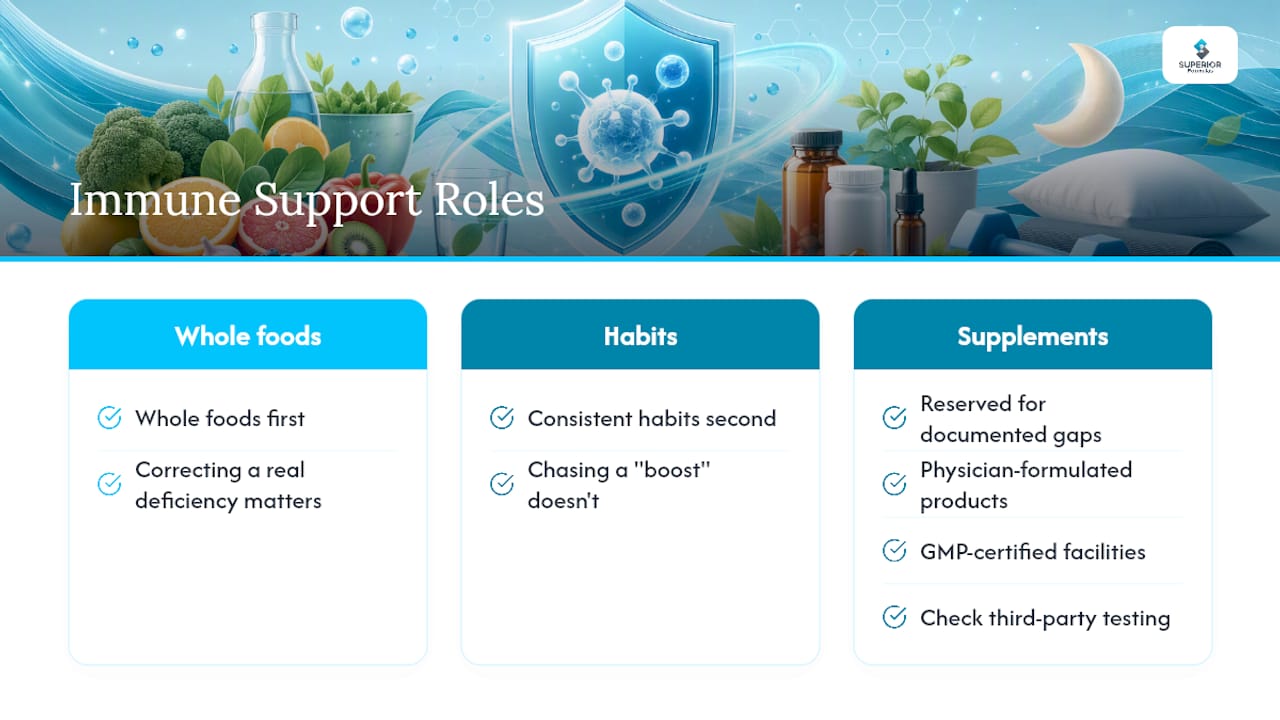
Pro Tip: Before buying any supplement, check for third-party testing and a full ingredient list with dosages, not just a proprietary blend label.
A Science-First Approach to Filling Real Gaps
Superiorformulas exists for the narrow, real situation this article just described: when a blood test or diet history actually shows a gap that food alone isn’t closing. Unlike generic multivitamin shelves stocked with unverified blends, every formulation is physician-designed and manufactured in GMP-certified facilities with third-party testing behind it.
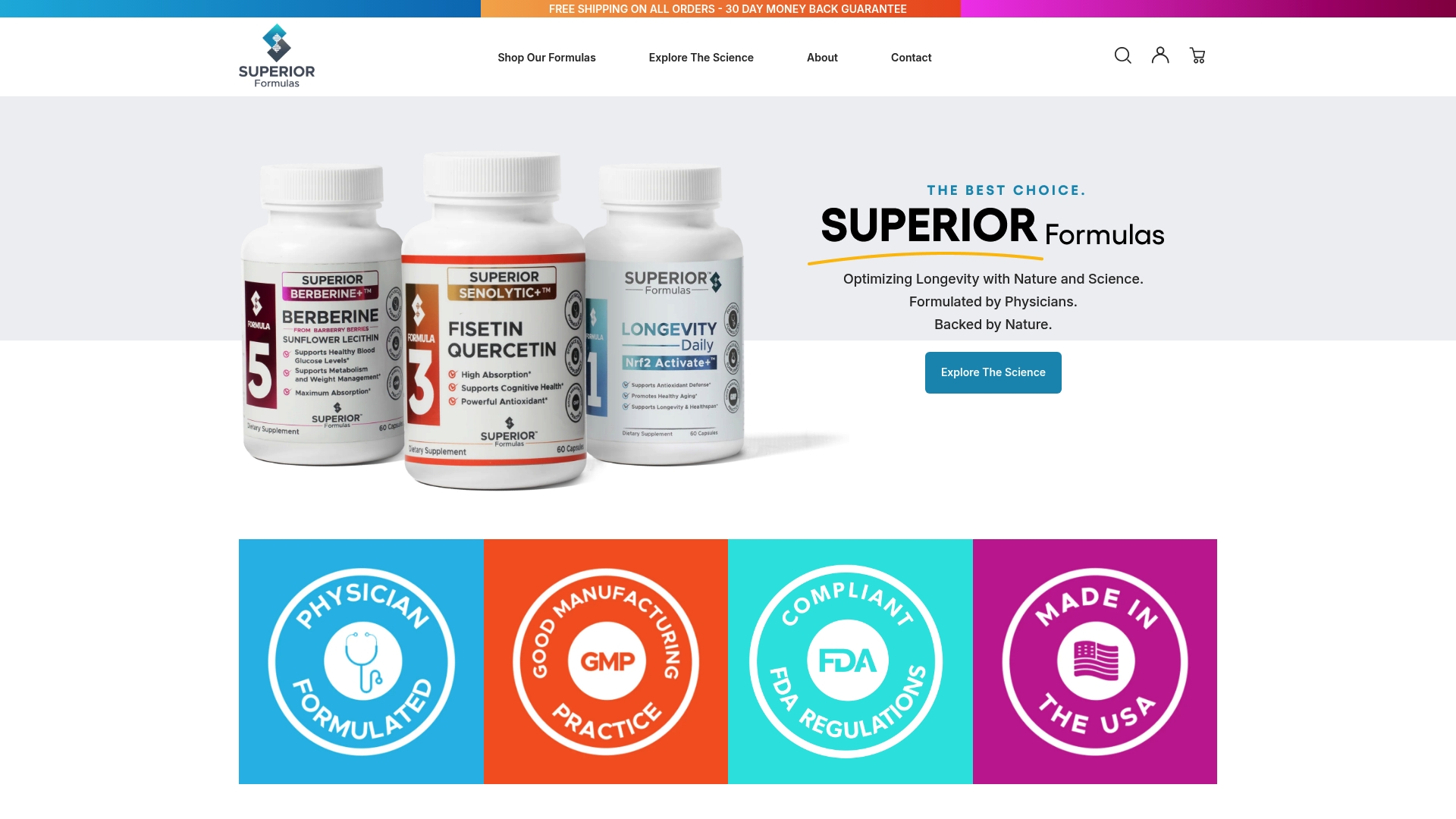
That matters because the biggest risk in supplementing isn’t taking too little. It’s taking the wrong thing in the wrong dose without knowing what your body actually needs. Superiorformulas’s approach to supplements in preventive health starts from the same evidence base cited throughout this piece: correct documented deficiencies, skip the megadoses, and demand transparency on what’s actually in the bottle. If you’ve identified a specific gap through bloodwork or a conversation with your provider, browse the Superiorformulas product line to see which formulation targets it, and check with your healthcare provider to confirm it fits your personal health picture.
Frequently Asked Questions
What are the best examples of immune support foods? Citrus fruits, oily fish like salmon, leafy greens, nuts and seeds, and fermented foods like yogurt or kefir cover most of the nutrients tied to immune function, including vitamin C, vitamin D, zinc, and probiotics.
Do immune support supplements actually work? They work well for correcting a documented deficiency in nutrients like vitamin D, zinc, or vitamin C. For people already eating a balanced diet, routine supplementation hasn’t been shown to prevent infections, according to the NIH.
What lifestyle habits support immune health the most? Consistent sleep of 7 to 9 hours, regular moderate exercise, maintaining a healthy weight, not smoking, and limiting alcohol are the habits the CDC points to as foundational.
Can you boost your immune system quickly? No single food, herb, or drip reliably boosts immunity overnight. Immune resilience builds over weeks and months through consistent nutrition and lifestyle habits, not acute interventions.
When should I consider taking an immune supplement? Consider it if bloodwork shows a deficiency, if you have limited sun exposure, follow a restrictive diet, or have a condition affecting nutrient absorption. Talk to a healthcare provider before starting.
This article is general information, not a substitute for advice from a qualified doctor. Consult a qualified healthcare professional about your own circumstances before acting on anything here.
Sources
- Healthy Habits: Enhancing Immunity | Healthy Weight and Growth | CDC
- How to boost your immune system - Harvard Health
- Review of common foods known for potential to boost human immunity | PMC
Recommended
- Enhance Cellular Defense: Effective Supplement Strategies - SUPERIOR Formulas
- Your antioxidant support checklist: What works for cellular health - SUPERIOR Formulas
- Supplements in preventive health: What really works? - SUPERIOR Formulas
- Antioxidant Support: Evidence-Based Steps for Healthy Aging - SUPERIOR Formulas


