


A step by step detox protocol is a structured, phased approach that supports your liver, kidneys, gut, and lymphatic system to reduce toxic load and improve vitality safely. The term “detox” is widely misused in wellness marketing, but the clinical concept, formally called detoxification support, refers to reducing the body’s toxic burden while reinforcing its natural elimination pathways. This guide covers the foundational practices, the science behind how your body clears waste, a phased detox plan with specific dietary and lifestyle steps, and how to troubleshoot common problems. Every recommendation here is grounded in clinical nutrition science, not commercial cleanse culture.
What foundational practices must precede an effective detox protocol?
Preparation is the most skipped and most critical part of any detox plan guide. Attempting to mobilize stored toxins before your elimination pathways are open causes those toxins to recirculate, creating systemic stress symptoms rather than relief. Think of it as clearing the drain before turning on the faucet.
The foundational phase focuses on four pillars:
- Stabilize sleep. Your body performs most cellular repair and waste clearance during deep sleep. Aim for 7–9 hours of consistent sleep before starting any active detox steps.
- Hydrate adequately. Water is the primary transport medium for waste removal through the kidneys. Drink at least 2–3 liters of filtered water daily. Reverse osmosis filters remove over 95% of PFAS and heavy metals, making them the standard choice for home filtration.
- Open elimination pathways. Your bowel, kidneys, and lymphatic system must be moving efficiently. Constipation blocks toxin exit. Prioritize fiber intake, gentle movement, and adequate hydration to keep these channels clear.
- Reduce incoming toxic load. Cut alcohol, processed foods, refined sugars, and unnecessary medications where clinically appropriate. Reducing exposure to PFAS, BPA, and endocrine disruptors lowers the burden your organs must process.
- Establish a consistent food rhythm. Eating at regular intervals supports liver enzyme activity and gut motility, both of which are central to the complete detox process.
Pro Tip: Spend 7–14 days on foundational practices before adding any supplements or active detox steps. Rushing this phase is the single most common reason people experience headaches and fatigue during detox.
How does the body’s detox system work?
Your body detoxifies through two liver phases, supported by the kidneys, gut, skin, and lungs. Understanding these mechanisms explains why specific foods and nutrients appear in every evidence-based detox plan.

Phase I (Biotransformation): Cytochrome P450 enzymes convert fat-soluble toxins into intermediate compounds. These intermediates are often more reactive than the original toxin, which is why Phase II must follow immediately.
Phase II (Conjugation): Enzymes attach molecules like glutathione, glycine, or sulfate to the Phase I intermediates, making them water-soluble and ready for excretion. Cruciferous vegetables, alliums, and fiber directly support these conjugation pathways. Sulforaphane from broccoli activates the Nrf2 pathway, which upregulates the body’s own antioxidant and detox enzyme production.
| Elimination Organ | Primary Role | Key Support Strategy |
|---|---|---|
| Liver | Phase I and II biotransformation | Cruciferous vegetables, choline, glycine |
| Kidneys | Filter blood, excrete water-soluble waste | Hydration, reduced sodium and alcohol |
| Gut | Bind and excrete conjugated toxins | Fiber, probiotics, regular bowel movements |
| Skin | Excrete some heavy metals via sweat | Sauna, exercise, adequate hydration |
| Lungs | Exhale volatile compounds | Deep breathing, clean air exposure |
Nutrients like choline, glycine, and methionine, found in liver, eggs, and legumes, are critical for methylation and conjugation. Processed diets deplete these nutrients, which is why dietary reform is non-negotiable in any safe detox method.
What is the step by step detox protocol for lasting health benefits?
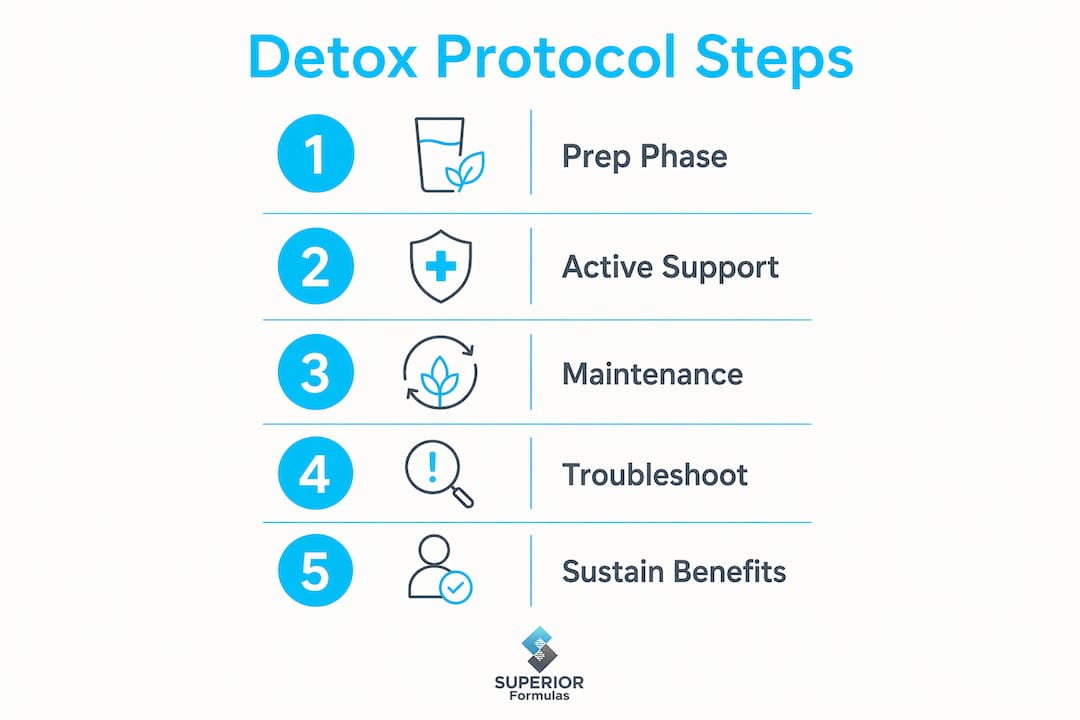
A comprehensive detox protocol lasts 4–6 weeks for full liver support, with shorter 7–10 day resets used to establish foundational habits. The phased structure below prevents the most common errors.
Phase 1: Drainage and preparation (days 1–14)
- Filter your water. Switch to reverse osmosis filtered water immediately. Over 200 million Americans are exposed to PFAS in tap water, and standard carbon filters do not remove these compounds effectively.
- Establish bowel regularity. Consume 25–35 grams of fiber daily from whole foods. Add ground flaxseed, psyllium husk, or cooked vegetables if needed.
- Stabilize your sleep schedule. Set a fixed bedtime and wake time. Sleep rhythm directly regulates cortisol and liver enzyme activity.
- Remove processed inputs. Eliminate alcohol, refined sugars, ultra-processed foods, and artificial additives. This alone reduces your liver’s workload significantly.
- Begin gentle movement. Walk 20–30 minutes daily to stimulate lymphatic flow. The lymphatic system has no pump of its own and depends entirely on movement.
Pro Tip: Do not add binders, chelators, or aggressive supplements during Phase 1. Your drainage pathways need to be fully open before you mobilize stored toxins.
Phase 2: Active detox support (days 15–35)
- Eat cruciferous vegetables (broccoli, cauliflower, Brussels sprouts, kale) at least once daily to activate sulforaphane production and support Phase II liver enzymes.
- Add alliums (garlic, onions, leeks) to meals for sulfur compounds that support glutathione synthesis.
- Increase regular exercise to 150 minutes per week. Exercise reduces fatty liver disease risk and improves kidney filtration through increased blood flow.
- Use sauna sessions (15–20 minutes, 2–3 times per week) as a supportive adjunct for sweat-based elimination. Always rehydrate with electrolytes afterward.
- Practice deep diaphragmatic breathing for 5–10 minutes daily. The lungs eliminate volatile organic compounds and CO2, and breath work improves lymphatic drainage.
- Support sleep quality with magnesium glycinate and a dark, cool sleeping environment.
Phase 3: Maintenance and consolidation (days 36–42+)
| Habit | Frequency | Purpose |
|---|---|---|
| Cruciferous vegetables | Daily | Nrf2 activation, Phase II support |
| Filtered water (2–3 liters) | Daily | Kidney filtration, toxin transport |
| Exercise (150 min/week) | Weekly total | Liver health, circulation, lymph flow |
| Sauna | 2–3x per week | Sweat-based elimination |
| Whole-food meals with fiber | Every meal | Gut binding and excretion |
What are common challenges and how do you troubleshoot detox symptoms safely?
Symptoms during detox are not always a sign of progress. Headaches, fatigue, dizziness, and gastrointestinal distress are warning signs that your elimination pathways are overwhelmed, not evidence that the protocol is working.
The most common mistakes that cause these symptoms include:
- Mobilizing before draining. Adding binders or supplements before bowel regularity and hydration are established forces toxins into circulation with nowhere to go.
- Aggressive fasting or extreme diets. Severe caloric restriction depletes the amino acids your liver needs for Phase II conjugation. Your liver requires fuel to detoxify.
- Overusing saunas or sweat-inducing practices. Excessive sweating without adequate rehydration stresses the kidneys and can cause electrolyte imbalances.
- Assuming all symptoms are “die-off.” This label is frequently misapplied. Most detox symptoms signal that you need to slow down, not push harder.
“Effective detox is a lifestyle sustained over months, not a short cleanse. When symptoms appear, return to foundational practices: hydration, food rhythm, and sleep. Pause mobilization steps until symptoms resolve.” — Clinical detox framework guidance
Seek professional care if you experience severe nausea, persistent vomiting, heart palpitations, or neurological symptoms. These are not normal detox responses.
How to maintain detox benefits and support ongoing natural detoxification
Detox is not a one-time event. The body faces continuous toxic exposure through food, water, air, and personal care products. Sustaining the benefits of your detox regimen requires building permanent habits that lower your toxic burden daily.
Key long-term practices include:
- Eat a whole-food diet rich in fiber, sulfur compounds, and Phase II nutrients like choline, glycine, and methionine. Eggs, legumes, leafy greens, and organ meats are practical sources.
- Reduce endocrine disruptor exposure. Choose glass or stainless steel over plastic food containers. Filter tap water. Choose personal care products free from parabens and phthalates.
- Maintain 150 minutes of exercise per week. This single habit supports liver health, reduces inflammation, and keeps lymphatic and kidney function strong.
- Prioritize sleep hygiene. Seven to nine hours of quality sleep allows the glymphatic system in the brain to clear metabolic waste, a process that only occurs during deep sleep.
- Support methylation with targeted nutrients. Nutrients that support liver methylation pathways include B vitamins (especially B12, B6, and folate), choline, and magnesium. These are often depleted in people eating processed diets.
- Practice nervous system regulation. Chronic stress elevates cortisol, which impairs liver enzyme activity and gut motility. Breathwork, walking in nature, and consistent sleep schedules all reduce this burden.
Key Takeaways
A safe and effective detox protocol requires opening elimination pathways first, supporting liver Phase I and Phase II enzymes with targeted whole foods and nutrients, and sustaining these habits long after the active protocol ends.
| Point | Details |
|---|---|
| Open drainage before mobilizing | Establish bowel regularity, hydration, and sleep for 7–14 days before adding active detox steps. |
| Support both liver phases | Eat cruciferous vegetables and alliums daily to fuel Phase I and Phase II detoxification enzymes. |
| Filter your water | Reverse osmosis removes over 95% of PFAS and heavy metals that standard filters miss. |
| Exercise 150 minutes per week | Regular movement improves liver health, kidney filtration, and lymphatic flow simultaneously. |
| Detox is a long-term lifestyle | Lasting benefits come from sustained dietary and lifestyle habits, not short cleanses. |
What I’ve learned from watching people rush the detox process
The most consistent mistake I see is people skipping straight to the “active” phase. They buy binders, start aggressive supplement stacks, and wonder why they feel worse after three days. The answer is almost always the same: their drainage pathways were never open.
The clinical literature is clear on this. Mobilizing stored toxins before establishing elimination causes recirculation and systemic stress. That is not a detox response. That is a warning sign. The foundational two weeks are not optional prep work. They are the protocol.
The other pattern I find worth naming is the obsession with finding the right product. The word “toxin” gets used to sell everything from teas to IV drips. The evidence does not support most of these interventions. What the evidence does support is reducing incoming toxic load, eating foods that activate your liver’s own enzyme systems, moving your body, sleeping well, and filtering your water. These are not exciting. They are effective.
If you want to add targeted supplements, do it after the foundation is solid. Nutrients like sulforaphane, glutathione precursors, and methylation cofactors have genuine clinical backing. But they work best when your body is already in a stable, well-supported state.
— cristopher
Superiorformulas and the science behind detox support
Choosing the right nutritional support for your detox protocol matters as much as the protocol itself.
Superiorformulas develops physician-formulated supplements built around the same clinical principles covered in this guide: Nrf2 activation, Phase II liver support, and cellular resilience. Every formulation uses clinically studied ingredients, manufactured in GMP-certified facilities with third-party testing for purity. If you are looking for targeted nutrients to complement your detox plan, including compounds that support methylation, glutathione production, and antioxidant pathways, explore Superiorformulas for science-backed options that align with a whole-food, evidence-based approach to lasting wellness.
FAQ
What does a step by step detox protocol include?
A structured detox protocol includes a preparatory drainage phase (7–14 days), an active support phase using cruciferous vegetables, hydration, exercise, and sleep, and a maintenance phase sustaining those habits long-term. The full process typically spans 4–6 weeks for comprehensive liver support.
Are detox teas and juice cleanses effective?
Detox teas and juice fasts lack clinical evidence and can be risky. Effective detoxification focuses on removing processed food inputs, filtering water, sustaining hydration, and supporting liver enzyme pathways through whole foods.
How do I know if I am detoxing too aggressively?
Headaches, fatigue, dizziness, and gastrointestinal distress signal that your elimination pathways are overwhelmed. Pause mobilization steps, return to foundational hydration and food rhythm, and allow symptoms to resolve before continuing.
What foods best support liver detoxification?
Cruciferous vegetables (broccoli, Brussels sprouts, kale), alliums (garlic, onions), and foods rich in choline and glycine (eggs, legumes, organ meats) directly support Phase I and Phase II liver detoxification enzymes.
How long should a detox protocol last?
A comprehensive detox protocol lasts 4–6 weeks. Shorter 7–10 day resets are useful for establishing foundational habits, but lasting benefits require sustained dietary and lifestyle changes beyond any single protocol period.


