


 is the conservative pick: multiple human trials show it reliably raises blood NAD+, with a mild side effect profile. Niacin can push NAD+ up drama...&media=http://cdn//csuxjmfbwmkxiegfpljm.supabase.co/storage/v1/object/public/blog-images/organization-27528/1789623192102_Comparison-of-niacin-NR-and-niacinamide-pathways.jpeg)


For most healthy adults chasing an evidence-first NAD+ boost, nicotinamide riboside (NR) is the conservative pick: multiple human trials show it reliably raises blood NAD+, with a mild side effect profile. Niacin can push NAD+ up dramatically too, but flushing and the need for clinical monitoring make it a tool for supervised, specific cases rather than everyday use. Niacinamide sits in between, flush-free but with its own caveats. None of the three has proven it extends human lifespan.
TL;DR:
- Nicotinamide riboside (NR) reliably raises blood NAD+ levels in humans with mild side effects, making it the safest and most studied choice for general support.
- Niacin can produce larger NAD+ increases more quickly but causes flushing and requires liver monitoring, limiting its practicality for daily wellness.
- Niacinamide may be tolerated without flushing but has weaker evidence for sustained NAD+ elevation and potential interference with cellular repair enzymes at high doses.
- Blood NAD+ increases from NR do not yet prove improvements in insulin sensitivity or lifespan, emphasizing the importance of matching supplements to specific health goals.
- For most people, the best approach is to prioritize evidence-based NAD+ support with minimal side effects, while considering clinical needs and budget when choosing niacin or niacinamide.
Table of Contents
- Niacin vs NR: A Quick Comparison
- How Niacin, NR, and Niacinamide Actually Raise NAD+
- What Human Trials Actually Show
- Flushing, Liver Monitoring, and Other Safety Realities
- Dosing, Cost, and What to Watch
- Choosing by Goal: NR, Niacin, or Niacinamide?
- Where This Analysis Comes From
- Our Take: Stop Chasing the Biomarker, Start Matching the Molecule to the Goal
- Explore Superiorformulas’ Evidence-Based Formulations
- Sources
- FAQ
Niacin vs NR: A Quick Comparison
The “best” B3 form depends on what you’re optimizing for: raw NAD+ elevation, comfort, cost, or a specific clinical need. Niacin vs nicotinamide riboside isn’t really a single contest. It’s three different molecules entering NAD+ metabolism through different doors, each with its own tradeoffs.
Here’s how the three forms stack up at a glance:
- NR (nicotinamide riboside): The deepest human-trial bench of any oral precursor, with repeated blood NAD+ increases and a generally mild side effect profile. Costs more per dose than plain niacin, and effects on energy or performance remain modest in trials.
- Niacin (nicotinic acid): Inexpensive and biochemically potent, with a decades-long track record as a lipid-lowering agent. Causes dose-dependent flushing and, at therapeutic doses, needs clinician oversight for liver enzymes.
- Niacinamide (nicotinamide, NAM): No flush, cheap, and widely tolerated, but human data on sustained NAD+ elevation is weaker than NR’s, and high doses raise theoretical concerns about sirtuin activity.
Evidence strength runs in that same order: NR has the most randomized, placebo-controlled human data specifically measuring NAD+ change. Niacin’s evidence is older and deeper for cholesterol management, but thinner for NAD+ boosting in healthy people. Niacinamide has the least support for durable NAD+ increases among the three.
How Niacin, NR, and Niacinamide Actually Raise NAD+
All three forms of vitamin B3 end up making NAD+, but they take different roads to get there, and the road matters for how fast, how much, and how uncomfortably your NAD+ levels rise.
NR travels the shortest, most efficient path. Once absorbed, it converts through the enzyme NRK into NMN, then into NAD+, largely bypassing rate-limiting steps that slow other precursors. There’s also a subtler wrinkle worth knowing: recent head-to-head biomarker research in Nature Metabolism suggests gut bacteria may convert some NR and NMN into nicotinic acid, meaning part of the systemic NAD+ boost you get from an NR capsule may actually run partly through the microbiome rather than a purely direct route. That could help explain why individual responses to the same NR dose vary.
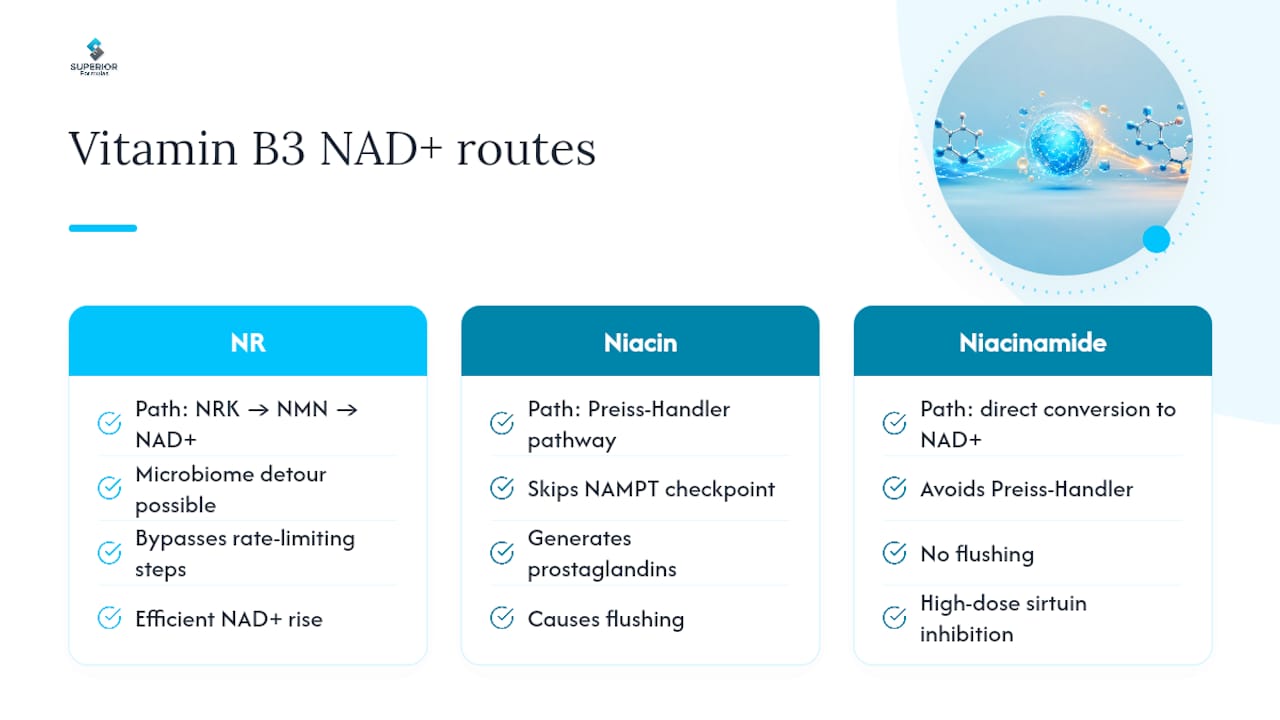
Niacin skips the NAMPT enzyme entirely and enters through what’s called the Preiss‑Handler pathway. That detour can produce large NAD+ increases, which is exactly why niacin has clinical utility in deficiency states. It’s also why niacin triggers flushing: the Preiss‑Handler route generates prostaglandins that dilate blood vessels near the skin, according to the NIH Office of Dietary Supplements.
Niacinamide takes yet another route, converting more directly without the Preiss‑Handler detour or the flush it causes. The catch: at high doses, niacinamide can inhibit sirtuin enzymes in laboratory models, the very proteins that NAD+ is supposed to activate for cellular repair signaling. Dr. Charles Brenner, a leading NAD+ metabolism researcher, has pointed out that these B3 forms enter metabolism at distinct checkpoints and shouldn’t be treated as interchangeable just because they share a vitamin family.
What Human Trials Actually Show
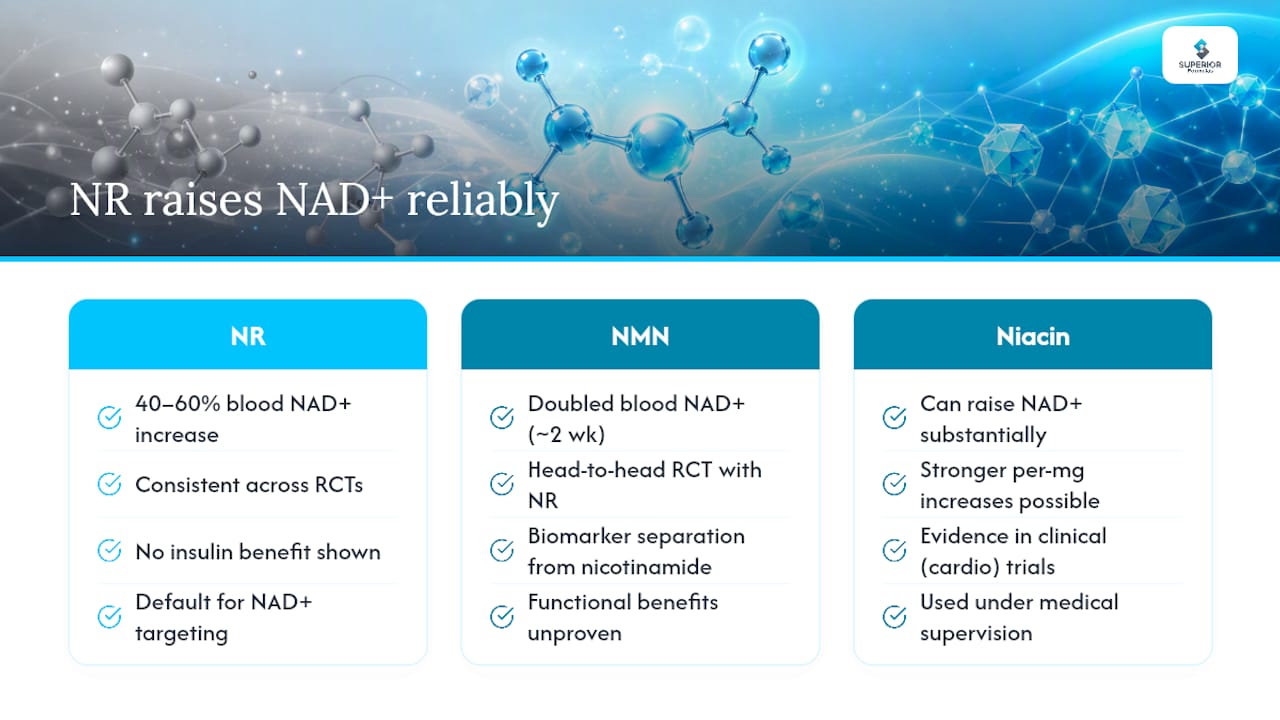
The most cited head-to-head data point: NR and NMN roughly doubled whole-blood NAD+ after approximately two weeks in a randomized human trial, while nicotinamide did not produce the same sustained increase, according to the Nature Metabolism study. That’s the clearest biomarker separation between precursor types published to date.
Beyond that single trial, a broader set of randomized, placebo-controlled studies on NR supplementation report blood NAD+ increases in roughly the 40 to 60 percent range across different dosing protocols and populations, healthy and clinical alike. That consistency across independent research groups is part of why NR has become the default recommendation for people specifically chasing an NAD+ number.
Niacin’s evidence tells a different story. It can raise NAD+ substantially, sometimes more dramatically than NR on a milligram basis, but the strongest data comes from specific clinical populations under medical supervision rather than general wellness use. Niacin’s real evidentiary weight sits in cardiovascular and lipid research, not NAD+ optimization.
Here’s where the caveat matters most. Randomized trials from researchers including Martens and colleagues found that NR reliably raised blood NAD+ but did not improve insulin sensitivity within the trial windows studied. A rising biomarker and a functional health benefit are not the same thing, and confusing them is probably the single most common mistake in how people talk about NAD+ supplements. Review-level analyses echo that gap: current clinical evidence doesn’t yet prove that boosting NAD+ produces consistent longevity or broad functional benefits in humans, even when the blood test moves in the right direction.
That distinction should reframe how you read every NAD+ supplement claim you encounter. The lab value is real. What it means for how you feel, perform, or age is still an open question.
Flushing, Liver Monitoring, and Other Safety Realities
Niacin’s flush is the most immediately noticeable side effect in this entire comparison: a warm, reddening sensation across the face and chest that shows up within 15 to 30 minutes of a dose, driven by those prostaglandins released along the Preiss‑Handler pathway. Extended-release niacin formulations reduce flushing but come with their own tradeoff, a higher association with liver enzyme elevations at the doses used for cholesterol management. Anyone using niacin at therapeutic, NAD+ relevant doses should have liver function monitored by a clinician rather than self-dosing indefinitely.
NR’s safety data looks comparatively clean. Dose-finding and safety trials, including studies testing doses up to 2,000 milligrams per day, report mostly mild gastrointestinal complaints like nausea or stomach discomfort at the higher end, without serious adverse events showing up consistently across trials. That’s a meaningfully different risk profile than niacin’s flush-and-monitor pattern.
Niacinamide carries its own asterisk. High-dose use may inhibit sirtuin activity in laboratory models, which runs counter to the longevity signaling many people take NAD+ precursors to support. It’s a mechanistic concern rather than a documented clinical harm, but it’s a reason niacinamide isn’t the default recommendation for anyone specifically chasing longevity pathways.
One more point deserves equal caution regardless of which precursor you pick: unresolved questions remain about NAD+ metabolism and cell proliferation, including in some cancer contexts. That uncertainty applies to niacin’s larger NAD+ swings just as much as it applies to sustained high-dose NR or NMN use, and it argues for individualized medical input, not blanket avoidance or blanket enthusiasm.
Dosing, Cost, and What to Watch
Clinical trials give a useful starting reference, even though they aren’t a prescription. NR studies have used doses ranging from 250 to 2,000 milligrams daily, with most of the reproducible NAD+ elevation data clustering in the 300 to 1,000 milligram window. Niacin’s NAD±relevant research uses far lower doses than its cholesterol-management protocols, while the higher therapeutic ranges used for lipid control push well past what’s comfortable without a flush and clinician oversight.
Cost separates the two forms sharply. Niacin is one of the least expensive vitamins on the shelf. NR runs considerably higher per dose, reflecting a more complex manufacturing process, though the gap has narrowed as more brands enter the market.
Before you commit to a dose, run through this checklist:
- Track flushing, GI upset, or headaches for the first week and adjust dose or timing accordingly.
- Pause niacin and consult a clinician if you notice unusual fatigue, abdominal pain, or jaundice, all possible signs of liver stress.
- Ask about baseline and follow-up liver panels if you’re using niacin at doses meaningfully above standard multivitamin levels.
- Take NR with food if morning nausea shows up at higher doses.
Pro Tip: NAD+ metabolism doesn’t run on supplements alone. Resistance exercise and adequate dietary protein both support the enzymes that recycle NAD+, so pairing any precursor with those basics tends to matter more than which brand of capsule you choose.
Choosing by Goal: NR, Niacin, or Niacinamide?
Match the precursor to the actual problem you’re solving, not to whichever one is trending. Here’s a practical sequence for deciding:
- Default to NR if you want general, evidence-first NAD+ support. It has the deepest human RCT record and the friendliest side effect profile of the three.
- Consider niacin only under clinician supervision if you have a diagnosed NAD+ deficiency state or a lipid profile that could benefit from its dual action, and you’re prepared for flushing and periodic lab monitoring.
- Choose niacinamide when flushing is a dealbreaker and your goal leans toward skin or joint comfort rather than maximum NAD+ elevation, keeping doses moderate given the sirtuin caveat.
- Let budget guide you honestly. If cost is the deciding factor and you can tolerate the flush, low-dose niacin remains a reasonable, medically boring choice, not a dangerous one, when used sensibly and reviewed periodically with a doctor.
Where This Analysis Comes From
This comparison draws on Superiorformulas’ physician-scientist foundation: our formulations are built by clinicians who track NAD+ and cellular health research directly, not secondhand marketing claims. Every product is manufactured in GMP-certified facilities and third-party tested for purity, a transparency standard that shapes how we interpret conflicting supplement evidence. That clinical lens is exactly why we recommend anyone considering therapeutic-dose niacin loop in a physician first. We have no financial incentive to favor one B3 form over another here. The goal is an honest read of the data.
Our Take: Stop Chasing the Biomarker, Start Matching the Molecule to the Goal
The conventional wisdom on niacin vs NR treats this like a horse race with one winner. That framing misses the point. The real finding buried in the human trial data isn’t “NR beats niacin.” It’s that a rising NAD+ number and a felt health benefit are two different things, and most of the marketing around NAD+ precursors quietly elides that gap.
If you’re optimizing for the most consistent, best-tolerated human evidence, NR earns that recommendation honestly. But readers should prioritize matching the molecule to the actual goal, general cellular support versus a diagnosed clinical need versus flush avoidance, over hunting for whichever precursor promises the biggest number on a lab report. The most overrated claim in this entire category is that a bigger NAD+ increase automatically means a bigger benefit. The trials simply haven’t proven that yet, and pretending otherwise does readers a disservice.
— cristopher
Explore Superiorformulas’ Evidence-Based Formulations
If the mechanistic tradeoffs above have you leaning toward NR-style support but you’d rather not build a supplement stack ingredient by ingredient, Superiorformulas offers a physician-formulated alternative to solo experimentation. Our lineup, including the High Potency Multivitamin with methylated B vitamins, is built by a physician-scientist team that weighs exactly the kind of trial data covered here before anything reaches a bottle.
Formulas ship from GMP-certified, third-party tested facilities to help ensure label accuracy. If you want the formulation reasoning behind our ingredient choices before you buy, our science methodology page breaks down how we vet each compound. Ready to see the full lineup? Browse the complete collection and pick the formula that matches your specific cellular health goal.
Sources
- The differential impact of three different NAD+ boosters on circulatory NAD and microbial metabolism in humans | Nature Metabolism
- NIH Office of Dietary Supplements — Niacin (Health Professional Fact Sheet)
- Selected NR human trial literature (example RCTs referenced collectively)
- Review articles and perspective pieces on NAD+ precursors and clinical outcomes (example source)
This article is general information, not a substitute for advice from a qualified doctor. Consult a qualified healthcare professional about your own circumstances before acting on anything here.
FAQ
Why Is Niacin No Longer Recommended for NAD+ Boosting?
Niacin still works biochemically, but flushing and the need for liver monitoring at therapeutic doses make it impractical for everyday wellness use. It remains appropriate in specific clinical settings under a doctor’s supervision, just not as a default self-care supplement.
Is NR Just Vitamin B3?
NR is one specific chemical form of vitamin B3, distinct from niacin and niacinamide, and it enters NAD+ metabolism through a more direct route. Research from Dr. Charles Brenner work shows these B3 forms aren’t interchangeable despite sharing a vitamin category.
Is Niacin the Same as Nicotinamide Riboside?
No. Both raise NAD+, but niacin uses the Preiss‑Handler pathway and causes flushing, while NR uses a more direct salvage route with a milder side effect profile. Trials show NR reliably raises blood NAD+ by roughly 40 to 60 percent with fewer tolerability complaints.
What Is the Best Form of B3 to Take?
For general, evidence-first NAD+ support, NR currently has the strongest human trial record among oral precursors. Superiorformulas’ High Potency Multivitamin with methylated B vitamins is priced at $34.95 for readers who want B vitamin support formulated by a physician-led team, though niacin or niacinamide may fit better for specific clinical or budget situations.


