


Targeted, physician-formulated oral antioxidant blends can modestly support skin hydration, elasticity, and resilience by activating the Nrf2 pathway and supporting mitochondrial function. A systematic review and meta-analysis of antioxidant-rich interventions found measurable improvements in hydration and reduced water loss through the skin, though results vary by ingredient and duration. Superior Formulas builds its Longevity Daily Antioxidant Blend around this exact framework: polyphenols formulated for Nrf2 activation rather than a single megadose antioxidant.
TL;DR:
- Antioxidant blends activating Nrf2 can support skin hydration, elasticity, and mitochondrial health but require proper formulation to avoid overstimulation.
- Evidence for compounds like resveratrol, quercetin, and astaxanthin shows varying levels of support, with astaxanthin having the most clinical backing.
- Bioavailability technology such as liposomal or phytosome delivery is essential to ensure active compounds reach circulation effectively.
- Formulations should be guided by clinical doses, transparency, and involvement of physicians to maximize safety and efficacy.
- Oral antioxidants complement topical skincare and sun protection but are not a substitute for daily sunscreen or healthy lifestyle habits.
Table of Contents
- What Antioxidants for Skin Actually Do Inside Your Body
- Most-Studied Oral Antioxidants for Skin Support
- Bioavailability and the Microbiome: Why Form and Metabolism Change Results
- Safety, Dosing, and Interactions: What to Check First
- How to Choose a Physician-Formulated Antioxidant Supplement
- Mechanisms of Skin Aging and Oxidative Stress
- Topical Antioxidants for Skin: Types, Efficacy, and Comparison With Oral Antioxidants
- Lifestyle Factors That Drive Skin Oxidative Stress
- Why We Formulate for Mechanism, Not Marketing
- See Our Physician-Formulated Antioxidant Blends
- Sources
- FAQ
What Antioxidants for Skin Actually Do Inside Your Body
Antioxidants for skin work less like a topical shield and more like an internal maintenance crew. Once absorbed, polyphenols and related compounds switch on Nrf2, a protein that acts as your body’s master regulator for antioxidant defense. Nrf2 activation ramps up production of protective enzymes, including heme oxygenase-1, NQO1, glutathione peroxidase, and superoxide dismutase, all of which neutralize the free radicals that break down collagen and thin the dermis over time.
Polyphenols do more than flip one switch. Compounds like resveratrol and quercetin also modulate SIRT1, AMPK, and NF-κB, three pathways tied to inflammation control and mitochondrial biogenesis. Healthier mitochondria mean skin cells generate energy more efficiently and clear damaged components through a process called mitophagy. Some of these same polyphenols, particularly fisetin and quercetin, show senolytic or senomorphic activity in preclinical research, meaning they help clear aging fibroblasts or quiet the inflammatory signals those cells release.
There’s a catch worth understanding before you reach for a high-dose bottle. Nrf2 activation follows a hormetic curve: a moderate nutritional signal triggers protective genes, but constant, maximal activation isn’t automatically better and may cause its own problems, including barrier disruption in some contexts. That’s the practical argument for physician-formulated dosing rather than stacking single-ingredient extracts at aggressive doses.
Most-Studied Oral Antioxidants for Skin Support
Not every antioxidant on a supplement label carries the same weight of evidence. Here’s where the research actually stands on the compounds most often cited for skin outcomes.
- Resveratrol. Activates SIRT1 and Nrf2 simultaneously, and preclinical models show it protects collagen from UVB-driven breakdown by inducing NQO1 and HO-1. Human biomarker data is still limited, but the mechanistic case is strong.
- Fisetin and quercetin. Both show senolytic and senomorphic behavior in preclinical studies, clearing or quieting senescent dermal fibroblasts that otherwise pump out inflammatory signals (the “senescence-associated secretory phenotype”). Evidence is currently animal and cell-model based, not large human skin trials.
- EGCG (green tea catechins). Well-documented anti-inflammatory and antioxidant effects, with human studies showing reduced oxidative markers. Skin-specific elasticity data is thinner than its general antioxidant profile suggests it should be.
- Sulforaphane. Derived from broccoli sprouts, this is one of the more potent natural Nrf2 inducers, with animal studies showing reduced MMP-1 expression and photoaging protection. Translational human skin data is still early.
- Astaxanthin. This carotenoid has the most direct human clinical support on this list. An 8-week trial of an astaxanthin-rich synbiotic showed reduced wrinkle severity and improved cheek elasticity and firmness versus placebo.
- Urolithin A. Not a compound you eat directly. Your gut bacteria produce it from ellagitannins found in pomegranate and walnuts, and it’s linked to mitophagy activation and improved mitochondrial biomarkers in human trials.
That last entry matters more than it looks. It’s the clearest proof that oral antioxidant efficacy isn’t just about what’s on the label. It’s about what your gut does with it.
Bioavailability and the Microbiome: Why Form and Metabolism Change Results
Most polyphenols are poorly absorbed in their raw form. Low water solubility and aggressive first-pass liver metabolism mean a large share of what you swallow never reaches circulation in an active form. That’s why formulation strategy separates a well-designed supplement from a plain extract capsule.
Phytosome technology and nanoencapsulation address this directly, wrapping polyphenols in structures that improve stability and bioaccessibility during digestion. Liposomal delivery works on a similar principle. These aren’t marketing flourishes; they change how much active compound actually reaches your bloodstream.
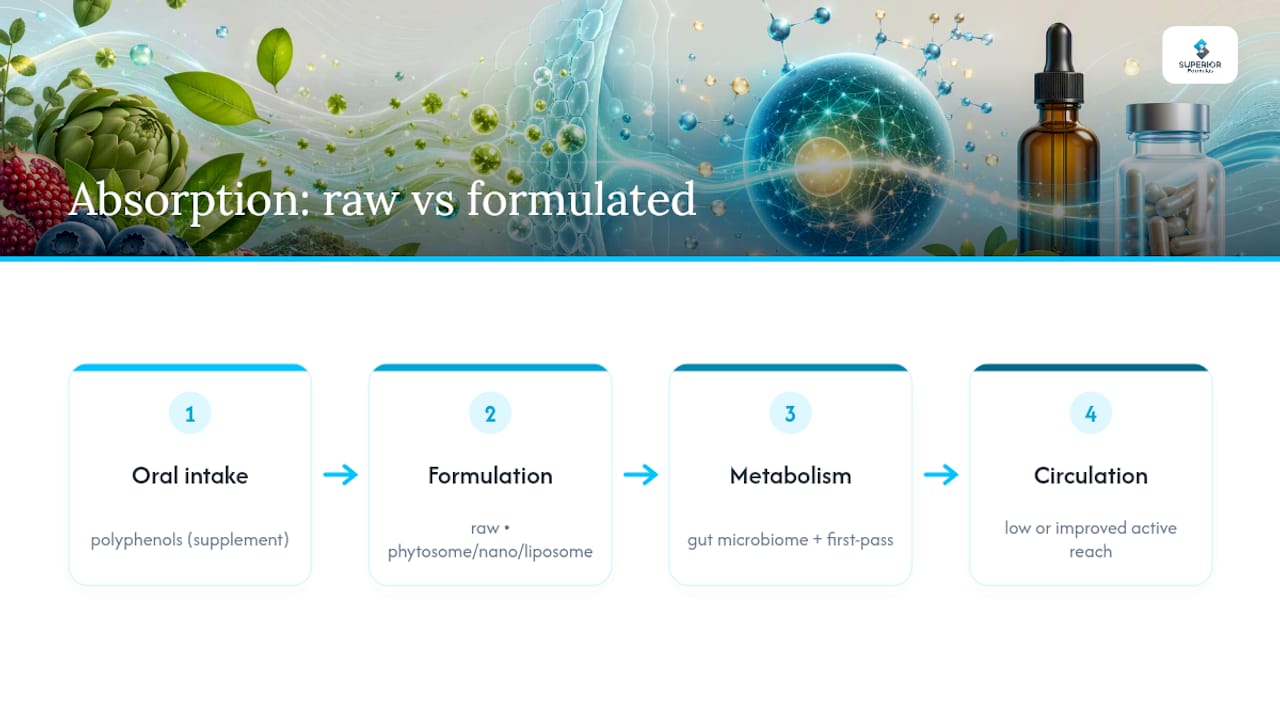
Then there’s the microbiome variable, and it’s a big one. Urolithin A production depends entirely on which gut bacteria you happen to host, which means two people taking identical ellagitannin doses can get very different mitochondrial benefits. Formulations that deliver bioactive metabolites directly, or pair ingredients to support conversion, reduce that variability instead of leaving results to chance.
Safety, Dosing, and Interactions: What to Check First
Oral antioxidants aren’t risk-free just because they’re derived from food. Resveratrol and quercetin can affect CYP enzyme activity, which matters if you take blood thinners, certain statins, or medications with a narrow therapeutic window. High-dose fish-oil-adjacent antioxidants and some polyphenols also carry mild antiplatelet effects worth flagging if you’re on anticoagulants.
Pregnant women, people managing complex chronic conditions, and anyone on multiple prescriptions should talk to a clinician before adding a new antioxidant regimen, not just check a label. There’s also a dosing nuance that generic supplement marketing tends to skip: very high doses of a single antioxidant can flip from protective to pro-oxidant under certain conditions, which is one reason lower-dose, multi-ingredient synergy tends to outperform a single megadose in practice.
On timelines, be realistic. The clinical trials with measurable skin outcomes, including the astaxanthin synbiotic trial cited above, ran eight weeks before showing elasticity and wrinkle-severity improvements. Expect weeks to months, not days.
How to Choose a Physician-Formulated Antioxidant Supplement
Shopping for oral antioxidants for skin support gets easier once you know what separates a serious formulation from a marketing label. Run through this before you buy:
- Confirm physician formulation. A product designed by a physician-scientist, rather than a generic contract manufacturer, is more likely to reflect actual dosing research instead of trend-chasing.
- Check for GMP certification and third-party testing. These confirm what’s on the label matches what’s in the capsule, and that purity has been independently verified.
- Look for clinically studied doses, not proprietary blends. If a label hides exact amounts behind a “proprietary complex,” you can’t compare it to any trial data.
- Favor ingredient synergy over single-compound megadoses. Multi-polyphenol blends that pair resveratrol, quercetin, or astaxanthin with cofactors like vitamin C for collagen support tend to align better with how these pathways actually work together.
- Ask about bioavailability technology. Phytosome or liposomal delivery listed on the label signals the formulator addressed absorption, not just ingredient selection.
- Request the clinical references. A brand confident in its formulation should be able to point to the trial durations and endpoints its dosing is based on.
Pro Tip: Before buying, search the exact ingredient name plus “clinical trial” and check whether the dose in your bottle matches the dose that actually produced results in that study. Many products use a fraction of the tested amount.
Mechanisms of Skin Aging and Oxidative Stress
Skin aging runs on two overlapping clocks. Intrinsic aging is the slow, genetically programmed decline in collagen and elastin production that happens regardless of lifestyle. Extrinsic aging, driven mostly by ultraviolet exposure, pollution, and oxidative stress, tends to move faster and does more visible damage.
Free radicals sit at the center of the extrinsic clock. UV exposure generates reactive oxygen species that activate matrix metalloproteinases, enzymes that break down collagen and elastin faster than your body can rebuild them. Over years, that imbalance between damage and repair shows up as fine lines, sagging, and uneven texture.
Your body isn’t defenseless against this. Endogenous antioxidant systems, with Nrf2 as the central regulator, normally keep oxidative stress in check. The problem is that this defense system weakens with age. Research shows Nrf2 signaling and electrophilic response decline measurably after roughly age 45, which is precisely when oxidative damage accumulates fastest and visible aging accelerates. That decline is the biological argument for targeted nutritional support in this age group specifically, rather than a one-size-fits-all antioxidant approach for every decade of life.
Topical Antioxidants for Skin: Types, Efficacy, and Comparison With Oral Antioxidants
Topical antioxidants, things like vitamin C serums, vitamin E, and ferulic acid, work by sitting on the skin’s surface and intercepting free radical damage right where UV and pollution exposure happens. Applied consistently, they can measurably reduce surface oxidative markers and offer a layer of photoprotection that complements sunscreen.
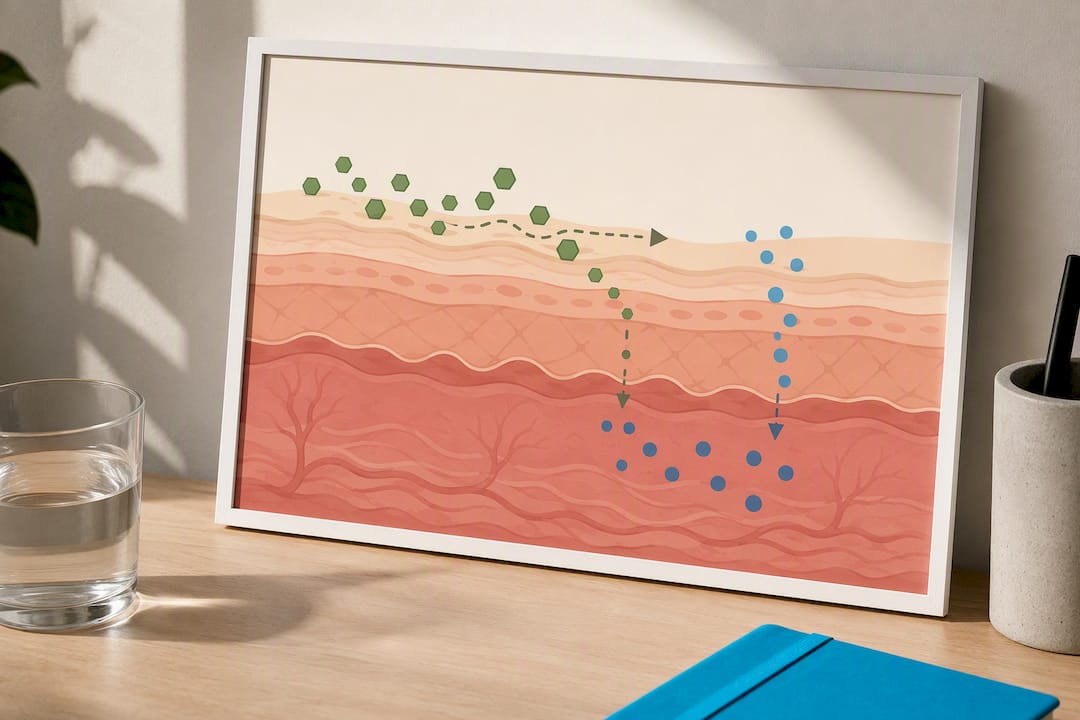
Oral antioxidants for skin work differently: they act systemically, reaching every layer of skin tissue, not just the stratum corneum a topical product can penetrate. That systemic reach means oral compounds can influence dermal fibroblasts, mitochondrial function, and inflammatory signaling deep in tissue that a serum simply never touches.
Neither approach replaces the other. A topical antioxidant defends the surface where damage originates; an oral antioxidant supports the cellular machinery that has to repair that damage from within. Practitioners generally frame oral supplementation as complementary to topical care and sun protection, not a substitute for either. If your current routine is topical-only, that’s the gap oral polyphenols are designed to fill, not replace.
Lifestyle Factors That Drive Skin Oxidative Stress
Supplements amplify a good foundation. They don’t rescue a poor one. UV exposure remains the single largest driver of extrinsic skin aging, which makes daily sun protection the non-negotiable baseline no antioxidant blend substitutes for.
Smoking accelerates oxidative damage through a double mechanism: it floods tissue with free radicals directly and depletes the vitamin C your body needs for collagen synthesis at the same time. Chronic sleep deprivation raises cortisol and disrupts the overnight repair window when skin does most of its structural maintenance. Diets heavy in refined sugar contribute to glycation, a process that stiffens collagen fibers independent of oxidative stress altogether.
This is where oral antioxidants for skin fit into a realistic picture instead of an oversold one. A polyphenol blend that activates Nrf2 gives your cells better tools to manage oxidative load, but it’s working alongside sleep, diet, and sun habits, not instead of them. Think of supplementation as raising your skin’s baseline resilience so the damage from an occasional bad night or missed sunscreen application has less lasting impact, rather than as a fix that offsets ongoing poor habits entirely.
Why We Formulate for Mechanism, Not Marketing
Most supplement shelves are stocked with single-ingredient extracts chasing a trend rather than a dose that matches the research. That gap between what’s studied and what’s sold is the real problem in this category, more than any question about whether antioxidants work at all.
The brand was created with an emphasis on clinically studied polyphenol doses, Nrf2-focused formulation logic, manufacturing to high standards, and batch testing. Mechanistic research on Nrf2 and mitochondrial support only matters if it survives translation into a product with the right dose, the right cofactors, and verified purity. If you’re managing existing conditions or taking prescription medication, talk to your healthcare provider before adding any new antioxidant regimen, including ours.
— cristopher
See Our Physician-Formulated Antioxidant Blends
Superior Formulas built its Longevity Daily Antioxidant Blend around the exact mechanism this article covers: polyphenol combinations designed for Nrf2 activation rather than a single high-dose extract. If you’ve been comparing scattered single-ingredient bottles against clinical trial doses and coming up short, that’s the specific gap this formula was designed to close.
Before you buy anything, from this brand or any other, check three things: the exact ingredient doses against published trial data, whether the label discloses bioavailability technology, and whether a physician was involved in formulation rather than a generic contract manufacturer. Superior Formulas discloses all three on its full product collection, including the Longevity Daily Antioxidant Blend and Superior Senolytic+ with fisetin and quercetin. If you’re on medication or managing a chronic condition, run any new supplement past your clinician first. Then take a look at the collection and see which formula matches what your skin and cellular health actually need right now.
Sources
- Systematic review and meta-analysis of antioxidant-rich interventions for skin health (2026).
- Emerging Therapeutic Strategies for Nrf2-Associated Skin Disorders: From Photoaging to Autoimmunity (review).
- Dietary Phytochemicals Targeting NRF2 Against Skin Cellular Senescence: Mechanistic Insights and Potential for Functional Food Development (review).
- Clinical trial: antioxidant-rich synbiotic with astaxanthin improves photoaging markers (2026).
FAQ
How Long Until Oral Antioxidants Improve Skin?
Clinical trials measuring skin outcomes typically run 8 weeks or longer before showing measurable change. The astaxanthin synbiotic trial showed improved elasticity and reduced wrinkle severity at the 8-week mark, and most polyphenol research follows a similar weeks-to-months timeline rather than days.
Should I Use Oral Antioxidants Instead of Topical Ones?
No, they serve different roles. Topical antioxidants protect the skin’s surface from UV and pollution damage on contact, while oral antioxidants for skin work systemically to support Nrf2 activation and mitochondrial function throughout deeper tissue. Practitioners generally recommend using both together rather than choosing one over the other.
Can Antioxidant Supplements Interact With Medications?
Yes, certain polyphenols like resveratrol and quercetin can affect CYP enzyme activity and may have mild antiplatelet effects. Anyone taking blood thinners, statins, or managing a chronic condition should consult a clinician before starting a new antioxidant regimen.
What Does Superior Formulas’ Antioxidant Blend Cost?
The Longevity Daily Antioxidant Blend is priced at $54.95 as a one-time purchase. It’s formulated around clinically studied polyphenol doses rather than a single high-dose extract.
Do I Still Need Sunscreen if I Take Antioxidant Supplements?
Yes. Oral antioxidants support your skin’s internal cellular defenses, but they don’t block ultraviolet radiation the way sunscreen does. UV exposure remains the primary driver of extrinsic skin aging, and no supplement replaces daily sun protection.


