


Ashwagandha, reishi, holy basil, valerian, chamomile, schisandra, and passionflower are the adaptogens most often studied for sleep, typically producing modest gains in sleep onset or quality over six to eight weeks of consistent use. Rhodiola belongs on this list too, but only for daytime energy — it can be stimulating at night. Anyone who is pregnant, breastfeeding, managing thyroid disease, or taking sedatives, blood thinners, or psychiatric medications should check with a clinician before adding any of these herbs.
TL;DR:
- Most adaptogens for sleep, like ashwagandha and reishi, require six to eight weeks of consistent use at studied doses to show modest benefits.
- Ashwagandha has the strongest evidence, mainly helping stress-related sleep issues, with doses typically between 300 and 600 milligrams daily.
- Reishi improves sleep quality and depth rather than onset, especially waking feeling rested, but formulation consistency is key.
- Rhodiola supports daytime energy and should be taken in the morning, as it can cause mild stimulation if used at night.
- Anyone on medications, pregnant, breastfeeding, or with hormone or liver concerns should consult a clinician before trying adaptogens for sleep.
Table of Contents
- Adaptogens for Sleep: What the Evidence Actually Shows
- How to Choose an Adaptogen for Your Sleep Pattern
- Safety Checklist Before You Try an Adaptogen for Sleep
- What the Research Actually Says About Adaptogens and Sleep
- A Clinician’s View on Using Adaptogens Responsibly
- Where Superiorformulas Fits Into Your Sleep Strategy
- Sources
- FAQ
Adaptogens for Sleep: What the Evidence Actually Shows
Not every calming herb qualifies as an adaptogen, and not every adaptogen helps you sleep. The term describes a specific class of botanicals believed to help the body regulate its stress response rather than simply sedating the nervous system, largely through modulation of the HPA axis and molecular stress mediators like Hsp70 and cortisol. That mechanism matters because it explains why herbs like ashwagandha show up in both energy and sleep research: the goal is regulation, not suppression.
Ashwagandha has the deepest evidence base of any adaptogen for sleep. Clinical trials commonly use 300 to 600 milligrams daily for six to eight weeks, and several small studies report improvements in both sleep quality and stress markers at those doses. The Sleep Foundation’s review notes that participants in some trials fell asleep faster and slept longer overall, though effect sizes varied by extract type and study design. Mechanistically, ashwagandha appears to lower cortisol and may support GABA activity, which is why it tends to work best for people whose minds race at bedtime rather than those with fragmented, middle-of-the-night waking. Best for: stress-driven insomnia, where anxiety delays sleep onset.
Reishi mushroom carries a longer folk-medicine history than a clinical one, but the available research points toward improved sleep depth and a more restorative quality of rest rather than faster sleep onset. Formulation matters more here than with most adaptogens: a triterpene-standardized extract behaves differently than raw powdered reishi, and dosing consistency across studies remains inconsistent. Best for: people who fall asleep fine but wake up feeling like they never rested.
Holy basil (tulsi) works through cortisol modulation similar to ashwagandha, with a gentler, more diffuse calming effect reported in small trials and traditional use going back centuries in Ayurvedic practice. It has not been studied nearly as rigorously as ashwagandha for sleep specifically, but its safety profile and mild stress-lowering effects make it a reasonable option for people who want a lighter touch. Best for: mild daily stress that spills into restlessness, not severe insomnia.
Rhodiola rosea deserves a caveat, not a recommendation, in a sleep context. Rhodiola is well-studied for daytime fatigue and mental stamina, and it is genuinely one of the better-supported adaptogens for energy. Taken close to bedtime, though, it can produce mild stimulation in some people, which defeats the purpose. If fatigue and low energy during the day are your main complaint, rhodiola fits; if sleep itself is the problem, take it in the morning or skip it.
Valerian and passionflower are technically nervines rather than true adaptogens, but they show up constantly in sleep formulas and deserve a plain-language mention. Valerian has decades of use behind it, yet the National Center for Complementary and Integrative Health notes that trial results are inconsistent, and the American Academy of Sleep Medicine has recommended against it for chronic insomnia. Rare reports of liver injury exist, particularly when valerian is combined with other sedating herbs. Passionflower has milder evidence and a gentler side-effect profile, making it a lower-risk option for occasional restlessness.
Chamomile and schisandra round out the list as low-risk, modest-benefit choices. Chamomile’s calming reputation is backed more by tradition and small trials than by large randomized studies, but its safety margin is wide. Schisandra, often included in multi-adaptogen formulas, shows some support for stress reduction and may contribute to sleep quality as part of a blend rather than as a standalone hypnotic.
A quick reference for how these herbs typically get used in research:
- Ashwagandha: 300–600 mg/day, 6–8 week trials, best for anxious sleep onset
- Reishi: variable extract doses, studies run 4–12 weeks, best for shallow or non-restorative sleep
- Holy basil: traditional and small-trial dosing, best for mild daily stress
- Rhodiola: daytime dosing only, best for fatigue, not sleep
- Valerian: inconsistent trial doses, best avoided for chronic insomnia per current guidance
- Passionflower: low-dose extracts, best for occasional mild restlessness
- Chamomile and schisandra: traditional dosing, best as gentle, low-risk additions
How to Choose an Adaptogen for Your Sleep Pattern
Matching the herb to your actual symptom pattern matters more than picking whatever ranks highest on a supplement bestseller list. Someone who lies awake replaying the day needs a different approach than someone who falls asleep fine but wakes at 3 a.m. and can’t drift back off.
- Wired-and-tired (exhausted but can’t wind down): Start with ashwagandha at the lower end of the studied range, around 300 mg, taken in the evening.
- Anxious sleep onset (racing thoughts at bedtime): Ashwagandha or holy basil, both aimed at cortisol regulation rather than direct sedation.
- Fragmented, non-restorative sleep: Reishi extract, focusing on standardized triterpene content rather than raw powder.
- Daytime fatigue with normal nighttime sleep: Rhodiola in the morning, not at night — this is an energy adaptogen, not a sleep one.
- Occasional mild restlessness: Chamomile or passionflower as a lighter, lower-risk starting point.
Whatever you choose, start at the low end of the studied dose and give it real time. Most ashwagandha trials ran six to eight weeks before measuring results, so judging an herb after three nights sets you up to quit something that might have worked. Track a simple sleep diary covering sleep onset latency, wake-after-sleep-onset, total sleep time, and how rested you feel each morning. If nothing shifts by week four, reassess before extending further, and loop in a clinician if sleep problems persist past eight weeks regardless of what you try.
One combination worth knowing about: a 2026 randomized trial found that ashwagandha root extract paired with melatonin improved sleep onset, total sleep time, and sleep efficiency more than either one alone. That is a meaningful data point, but it is not a green light to start layering supplements on your own.
Pro Tip: Change one variable at a time. If you start an adaptogen and also cut caffeine, adjust your bedtime, and add magnesium in the same week, you will have no idea what actually helped.

Safety Checklist Before You Try an Adaptogen for Sleep
Adaptogens are not automatically gentler than pharmaceutical sleep aids just because they are plant-based. Ashwagandha, for instance, carries theoretical effects on thyroid hormone levels and on liver enzymes involved in drug metabolism (the CYP pathway), which matters if you take thyroid medication or drugs that rely on the same metabolic route. Valerian’s sedating effect can stack with alcohol, benzodiazepines, or other sleep medications in ways that amplify drowsiness beyond what either would cause alone. Kava, sometimes lumped into adaptogen discussions, carries a documented liver injury risk and deserves particular caution.
A few groups should treat every herb on this list as a “talk to your doctor first” category rather than a “try it and see” one:
- Pregnant or breastfeeding individuals, since safety data for most adaptogens in these populations is limited or absent
- Anyone with autoimmune conditions or hormone-sensitive conditions, since some adaptogens influence immune and endocrine signaling
- Anyone on blood pressure, diabetes, thyroid, or psychiatric medications, given real interaction potential
- Anyone already taking a sedative, sleep medication, or drinking alcohol regularly at night, due to additive sedation risk
Ongoing NIH-supported research is actively examining how ashwagandha interacts with CYP liver enzymes, an area that remains incompletely understood even as the herb grows more popular. That gap in the science is exactly why moderation and medical input matter more than enthusiasm.
Stop and seek care if you notice severe gastrointestinal symptoms, yellowing of the skin or eyes (a possible sign of liver involvement), any allergic reaction, or new or worsening anxiety after starting an adaptogen. None of these are common, but all of them warrant stopping the supplement immediately and calling a clinician rather than waiting to see if it passes.
What the Research Actually Says About Adaptogens and Sleep
Ashwagandha has the strongest human trial record among adaptogens studied for sleep, but “strongest” here means consistent, not dramatic. Trials using 300 to 600 mg daily over six to eight weeks report real but modest improvements in falling asleep faster and sleeping longer. A separate 60-day randomized, placebo-controlled trial testing multi-adaptogen formulas containing ashwagandha and rhodiola blends found statistically significant reductions in perceived stress alongside measurable improvements on the Pittsburgh Sleep Quality Index compared to placebo.
The most notable recent development is the 2026 trial pairing ashwagandha with melatonin, which found the combination outperformed either compound alone on sleep onset latency, total sleep time, and sleep efficiency. That finding fits a broader shift in the field toward studying standardized extracts and combination approaches rather than single herbs in isolation.
Harvard Health puts it plainly: evidence for ashwagandha remains limited, effects tend to be modest, and the herb may be unsafe for people with certain medical conditions, which is why clinician consultation belongs in the process rather than getting skipped.
The honest limitations are worth naming directly. Most trials are small, extracts vary widely in standardization from one product to the next, study durations rarely exceed a few months, and outcome measures differ enough across studies that direct comparison is difficult. Harvard Health’s assessment of the evidence lands on modest but real benefit, paired with a clear recommendation to talk to a doctor first. That is the realistic takeaway: promising, not magic, and worth prioritizing safety and standardized extracts over marketing claims.
A Clinician’s View on Using Adaptogens Responsibly
Superiorformulas was founded by a physician-scientist, and that background shapes a simple filter for any adaptogen claim: does the formulation match what was actually studied? A lot of sleep-support products list ashwagandha on the label without disclosing extract standardization or milligrams per serving, which makes it impossible to know if you are getting anywhere near the doses used in the trials cited above.
Reproducible results depend on reproducible formulations. That means standardized extracts, transparent dosing, and third-party testing for purity, all manufactured in GMP-certified facilities. Readers evaluating any adaptogen product, ours or otherwise, should look for exactly those details on the label before assuming a herb will behave the way it did in a clinical trial.
— cristopher
Where Superiorformulas Fits Into Your Sleep Strategy
The brand emphasizes physician-formulated products with standardized dosing and third-party testing rather than vague “proprietary blend” labeling. When you’re evaluating any adaptogen product for sleep or stress support, check the label for the same three things this article covers repeatedly, standardized extract type, milligrams per serving matched to studied doses, and independent purity verification.
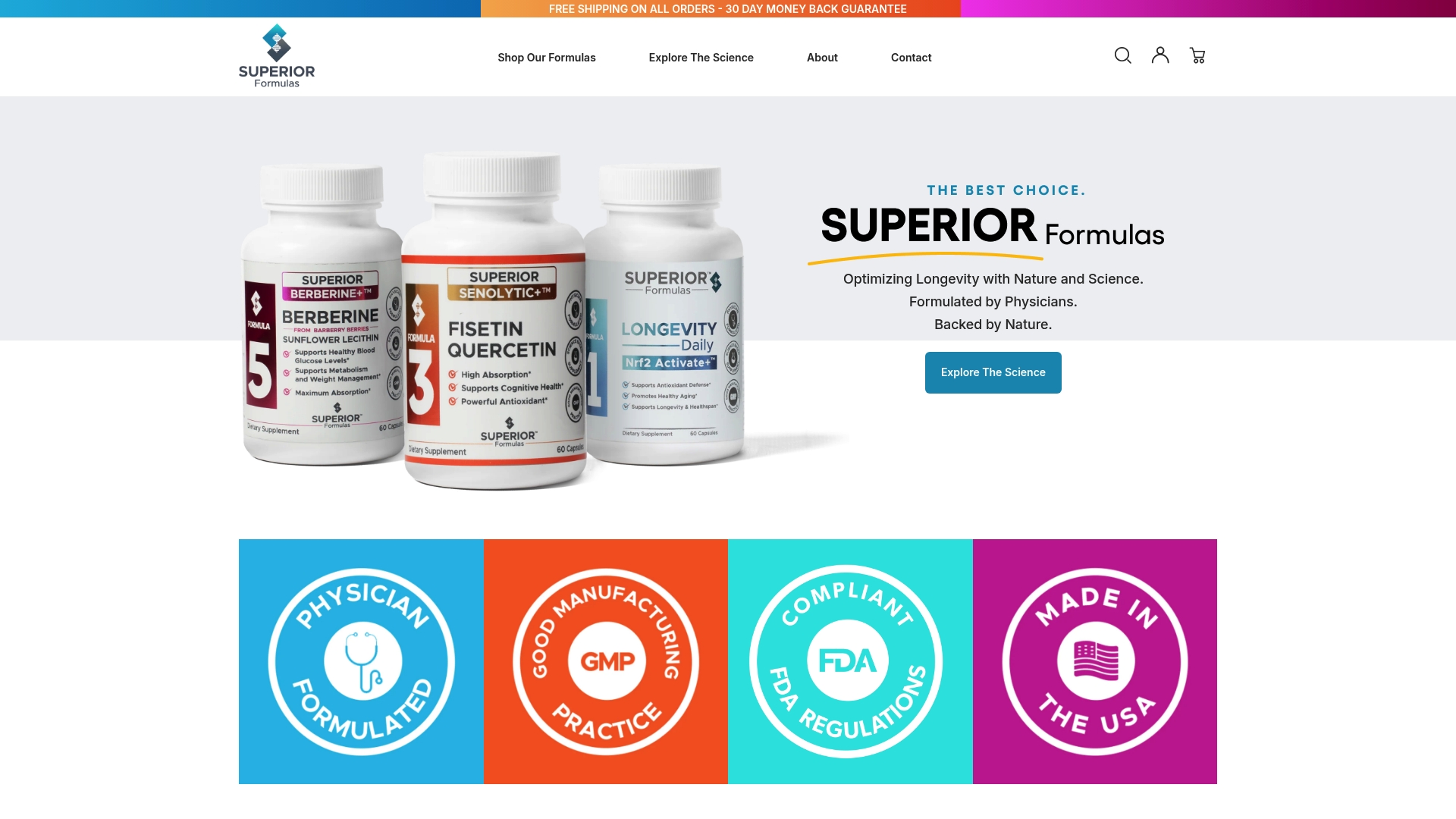
Their Explore the Science page explains the GMP-certified manufacturing and testing process behind these types of supplements, offering insight into what “clinically informed” means on a supplement label. The full product collection includes formulas built around clinically studied polyphenols and adaptogens, priced individually rather than bundled, so you can see exactly what you’re getting before you buy. If sleep and stress resilience are part of a broader longevity goal, that collection page is the place to start comparing formulations side by side.
Sources
- Combination ashwagandha + melatonin sleep trial (MDPI)
- Ashwagandha: Is it helpful for stress, anxiety, or sleep? - NIH ODS
- Ashwagandha for Sleep: Benefits, Dosage, Safety, and Side Effects - Sleep Foundation
- Ashwagandha: Benefits, side effects, and safety concerns - Harvard Health
This article is general information, not a substitute for advice from a qualified doctor. Consult a qualified healthcare professional about your own circumstances before acting on anything here.
FAQ
Who Should Avoid Adaptogens for Sleep?
Pregnant or breastfeeding individuals, people with thyroid or autoimmune conditions, and anyone taking blood pressure, diabetes, thyroid, or psychiatric medications should talk to a clinician before trying an adaptogen. People already using sedatives or drinking regularly at night should also be cautious, since several adaptogens and nervines can produce additive sedation.
Is It Safe to Take Ashwagandha Every Night?
Many trials use daily doses of 300 to 600 mg for six to eight weeks without major safety issues in healthy adults. That said, people with thyroid disease or liver concerns should check with a doctor first, since ashwagandha may affect thyroid hormone levels and liver enzyme activity.
What Is the Strongest Herb for Sleeping?
Among adaptogens specifically, ashwagandha has the most consistent clinical evidence for sleep benefits, though the effects are modest rather than dramatic. Valerian is more commonly marketed as a strong sedative, but the National Center for Complementary and Integrative Health notes its evidence is inconsistent and it isn’t recommended for chronic insomnia.
What Adaptogen Can Help With Cortisol Levels?
Ashwagandha and holy basil both show cortisol-modulating effects in research, which is part of why they show up so often in stress and sleep formulas. Superiorformulas’ Formula 1 Longevity Daily Antioxidant Blend is one option for readers looking for a physician-formulated product built around this kind of stress-support science, priced at $54.95 one-off.
How Long Does It Take for Adaptogens to Improve Sleep?
Most clinical trials measure results after six to eight weeks of consistent use, not days. Expect a gradual shift rather than an immediate sedative effect, and track a simple sleep diary so you can actually tell if something changed.


